Introduction to the Fundamentals of Garment Craftsmanship
Garment craftsmanship lies at the very core of high-quality clothing production. Understanding clothing construction basics and mastering every detail from fabric cutting through sewing to finishing enables factories and brands to deliver consistently premium garments. Whether creating everyday T-shirts or intricate coats, true craftsmanship combines technical skill, precise standards, and an unwavering dedication to quality throughout the entire manufacturing workflow.
What Is Garment Craftsmanship?
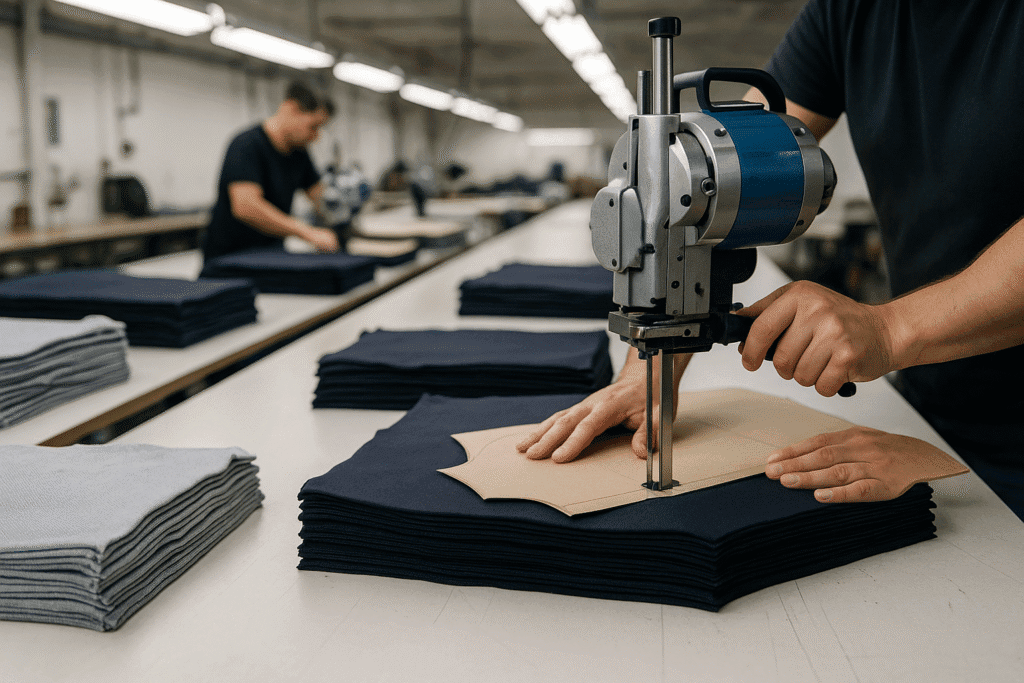
The term garment craftsmanship refers to the deep skill and attention to detail required in clothing manufacture. It is the synergy of human knowledge, technical processes, and experience applied to fabric and construction. Craftsmanship is seen in the garment’s fit, neatness of seams, consistency, and overall appearance, as well as its comfort and durability in wear.
Key Elements of Craftsmanship
- Accuracy: Precise pattern making, cutting, and stitching minimize errors and defects.
- Consistency: Uniform production results from well-controlled processes, ensuring that every garment matches its specification.
- Material Knowledge: Understanding fabric types, behavior, and handling methods is crucial.
- Technical Execution: Mastery of machines, tools, and manual steps, from spreading fabric to perfectly aligned buttonholes and sharp finishing.
- Pride in Workmanship: A craftsman’s personal responsibility for every detail, from construction to final presentation.
Precision Standards in Clothing Construction Basics
Precision is non-negotiable in every phase of garment production. Apparel Wiki’s experience on factory floors has shown that even a minor deviation, like a 3 mm misaligned seam or an uneven hem, can impact a brand’s reputation. In export-level factories, precision standards are enforced for both measurements and visual quality.
Why Precision Matters
Precise garment construction reduces waste, prevents returns, and builds consumer loyalty. Buyers and end-users quickly notice flaws such as puckered hems, twisted side seams, or mismatched stripes. Meeting exacting standards saves time and cost across production and reduces rework.
Common Tolerance Values in Garment Manufacturing
| Spec Area | Typical Tolerance (Knitwear) | Woven Garments |
|---|---|---|
| Chest width | ±1.0 cm | ±0.7 cm |
| Body length | ±1.5 cm | ±1.0 cm |
| Sleeve length | ±1.0 cm | ±0.8 cm |
| Collar stand height | ±0.2 cm | ±0.2 cm |
| Buttonhole position | ±0.2 cm | ±0.2 cm |
| Print/embroidery placement | ±0.5 cm | ±0.5 cm |
Each factory develops their own internal standards. For buyers, it’s crucial to confirm tolerance charts on spec sheets before production begins.
Workflow: From Cutting to Sewing to Finishing
Clothing construction basics rely on a developed workflow that moves efficiently from fabric cutting, to sewing, to garment finishing. Skipping or rushing these stages risks misshapen garments, weak seams, or aesthetic defects. Let’s break down the core steps as practiced in exporting factories.
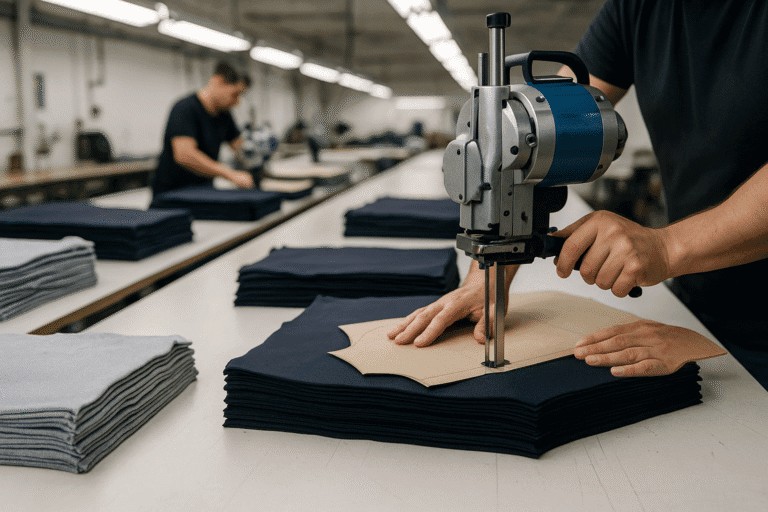
1. Fabric Preparation and Cutting
- Fabric Relaxation: Allow knits to rest 12–24 hours before cutting to prevent distortion.
- Spreading: Manual or automatic laying of fabric in layers, checking for defects, tension, and shade.
- Cutting: Executed with straight knives, band knives, or auto-cutters for bulk; maintain tight control over pattern alignment and nap direction.
- Bundling and Numbering: Pieces are grouped and tagged to preserve size/color order and ensure sewing consistency.
2. Stitching and Assembly
- Operation Breakdown: Defining and sequencing each sewing step, from joining shoulders to attaching collars and sewing side seams.
- Machine Setup: Common machines include lockstitch (ISO 301), overlock (504/514), and coverstitch (602); select thread, needle size, and stitch density (SPI) as per fabric and seam type.
- Quality Controls: Inline inspection catches errors early—often after each major operation or pattern change.
- Special Processes: Attachment of interlinings, taping, buttonholes, or decorative elements follows precise guides to avoid puckering and strength loss.
3. Finishing and Inspection
- Trimming: Remove loose threads and minor fabric flaws.
- Laundering/Finishing: Garment washing (normal, enzyme, stone, silicone softener) may be specified for shrinkage stabilization, handfeel, or color effects.
- Pressing/Ironing: Final shape is set using steam, vacuum tables, or form presses.
- Final QC: Accurate measurement checks, visual inspection, and functional tests (zipper, button) are performed prior to packing.
- Packing: Folding, polybagging (with warnings/vent holes for export), labeling, and carton packing complete the workflow.
Material Selection and Its Role in Craftsmanship
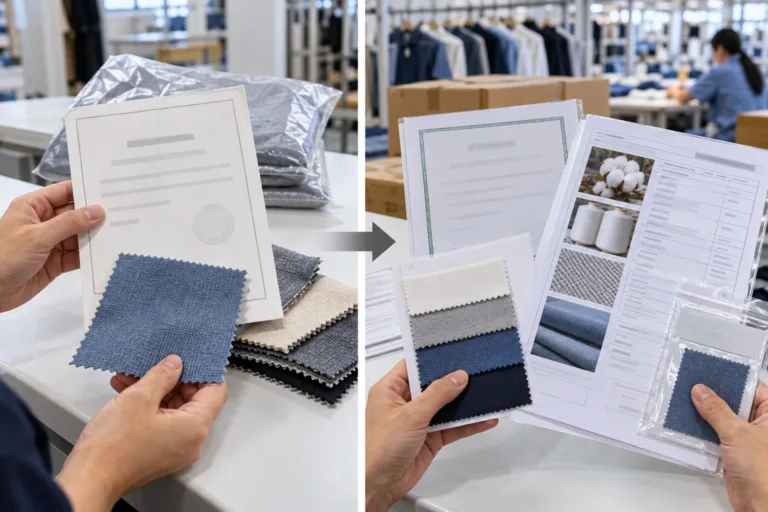
True craftsmanship begins with selecting the appropriate materials. The interplay of fiber type, fabric construction, and finishing treatments affects every stage of clothing production. For example, an open-end cotton jersey with lower twist yarn may pill and lose shape faster than a combed ring-spun fabric. Performance sportswear often uses polyester or poly-spandex blends, which require different needle types and stitch selections.
Main Fabric Types
| Fabric Type | GSM Range | Properties | Common Uses |
|---|---|---|---|
| Single Jersey (100% cotton) | 140–200 | Soft, breathable, affordable | T-shirts, underwear |
| Pique (CVC, TC, poly blends) | 180–260 | Textured, good drape, semi-formal look | Polo shirts |
| Fleece/Brushed French Terry | 240–400 | Warm, fluffy, thicker | Hoodies, sweatshirts |
| Denim (cotton, stretch) | 250–450 | Durable, structured, abrasion-resistant | Jeans, jackets |
| Softshell (nylon/poly blend, bonded) | 200–350 | Windproof, water-resistant, sporty | Outdoor jackets |
Careful selection of trims (buttons, zippers, drawcords) is also essential for consistent performance and safety. For children’s wear and export to the EU/US, always validate compliance with standards like OEKO-TEX and REACH.
Understanding Pattern Making and Fit: Craftsmanship’s Backbone
Pattern making is critical in garment craftsmanship. High-quality apparel relies on accurately drawn and graded patterns, precise seam allowances, and anticipation of fabric shrinkage and garment ease. Inconsistent or poorly thought-out patterns can produce twisting, uneven hems, or tightness in wear.
Pattern Types and Grading
- Basic Block Patterns: The foundation for each size; includes movement ease and fabric behaviour.
- Style Development: Customization for trims, pockets, collars, or silhouette changes.
- Grading: Methodical adjustment for different sizes; precise grading rules critical for retail or uniform programs.
Allowances and Control
Seam and shrinkage allowances must be accurately added to all patterns. For cotton knits, plan an extra 4–8% length for shrinkage in wash. For critical seams (shoulder, armhole), allow 0.8–1.2 cm seam width for strength.
Rain’s tip from the production line: When reviewing samples, always check for twisting or skew, especially in lightweight knits. A simple 30°C home wash can reveal problems before mass production.
Seams, Stitching, and Their Role in Garment Craftsmanship
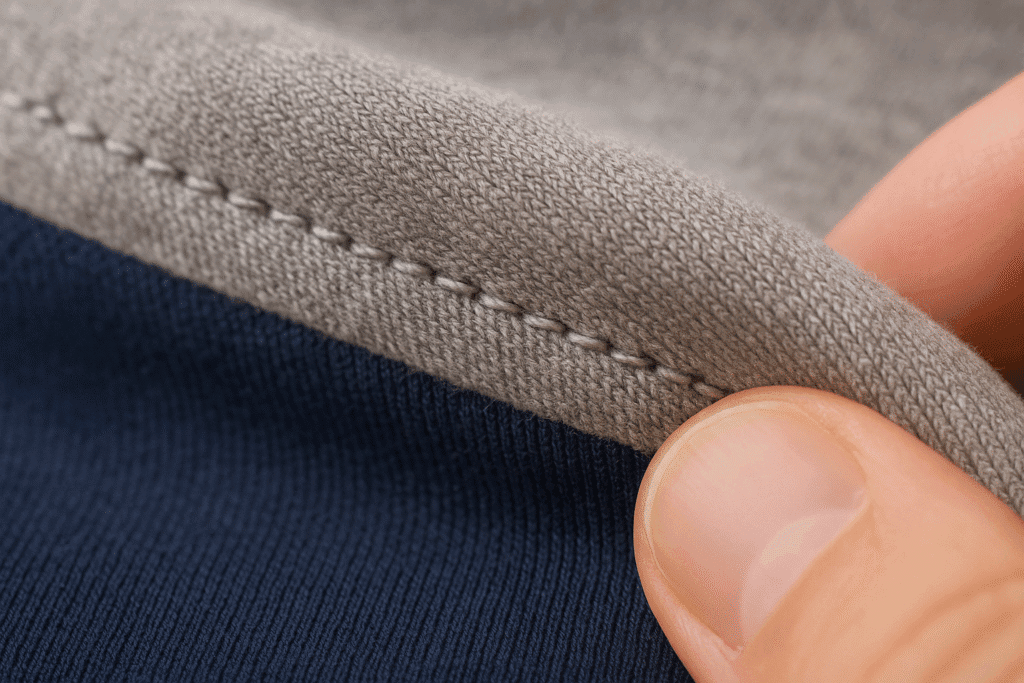
Choosing and executing the right seams and stitches ensures not only appearance but also function and longevity. For example, a sportswear T-shirt collar may use a coverstitch (ISO 602) for stretch and flatness, whereas a heavy denim jacket needs reinforced chainstitch and bartack seams for durability.
Common Seam and Stitch Types
| Seam Type | Stitch Code | Strength | Typical Use |
|---|---|---|---|
| Overlock Side Seam | 504 | Medium | T-shirts, knits |
| Coverstitched Hem | 602 | Flexible | Sportswear, casualwear |
| Flatlock Seam | 605 | Low–medium | Activewear, close-to-skin wear |
| Lockstitch Seam | 301 | High | Wovens, denim, shirts |
| Bartack Reinforcement | 304 | Very high (localized) | Pockets, plackets |
Key Stitching Parameters
- Stitch density (SPI): 8–12 for heavy knits, 12–16 for wovens or light knits.
- Thread type: 100% polyester for strength and shrinkage resistance; cotton for casual look.
- Needle size/shape: Ballpoint for knits, sharp for woven fabrics.
Regular machine maintenance and operator training are critical for consistent, fault-free seams. Skipped stitches, needle damage, and thread breakage all affect the durability of a finished garment.
Finishing, Inspection, and Quality Expectations in Factories
Finishing determines a product’s acceptance and reputation. Professional factories emphasize clean finishing: removing threads, pressing, functional testing (such as pull tests for attachments), and rigorous quality control checks before any item is packed.
Major Finishing Steps
- Trimming excess threads and tidying up seams.
- Pressing to restore and set final shape.
- Ironing collars, cuffs, and plackets for crisp lines.
- Measurement and visual checks against spec sheets.
- Metal detection (if export or required).
- Packing as per client instructions: folding method, polybagging, warning labels, carton marking, and barcodes.
Factory Quality Benchmarks
- Defect rates below 2% for export-quality bulk shipments.
- Inline QC at least once per operation, end-line QC before packing.
- Colorfastness, shrinkage, and pilling tests on each production lot.
- Measurement tolerances never exceeded.
Buyers should always request PP (pre-production) samples, size sets, and top-of-production (TOP) samples to verify all finishing and construction elements before greenlighting shipment.
Decoration, Branding, and Aesthetic Detailing
Decoration and branding transform a functional item into a distinctive product. Techniques like embroidery, screen printing, heat transfer, sublimation, and appliqué each require separate sample approval and quality checks. Placement accuracy (within ±0.5 cm), color match, and wear resistance must be verified for each lot.
Decoration Techniques and Considerations
- Screen Printing: Rich colors, cost-effective for 100+ pcs, best on stable surfaces.
- Direct-to-Garment (DTG) Printing: Good for small runs, high detail, but limited color vibrancy on darks.
- Embroidery: Durable, premium feel, can cause puckering on light knits—always use stabilizers.
- Badges/Patches: Flexible, removable, suitable for workwear or seasonal designs.
Labeling elements—care, size, and brand labels—must be attached cleanly and according to specified location. For children’s and sensitive applications, use soft backing and low-irritation threads.
Packaging and Presentation in Garment Craftsmanship
Proper packaging preserves the garment’s crafted quality during transit and enhances its appeal upon delivery. Factory best practice dictates that each folding style, polybag thickness, and carton dimension match the buyer’s requirements precisely.
Key Packaging Steps
- Standard folding (straight, cross, or tissue interleaved by garment type).
- Polybag unit packing: 30–40 microns for basic; thicker for retail, with warning print and vent holes for children’s items.
- Barcode and care label checks prior to sealing.
- Carton packing: matched to shipment ratio, with reinforced seams and clear outer marking.
- Moisture control for sea freight via silica gel sachets or special carton liners.
Fundamentals of Garment Craftsmanship
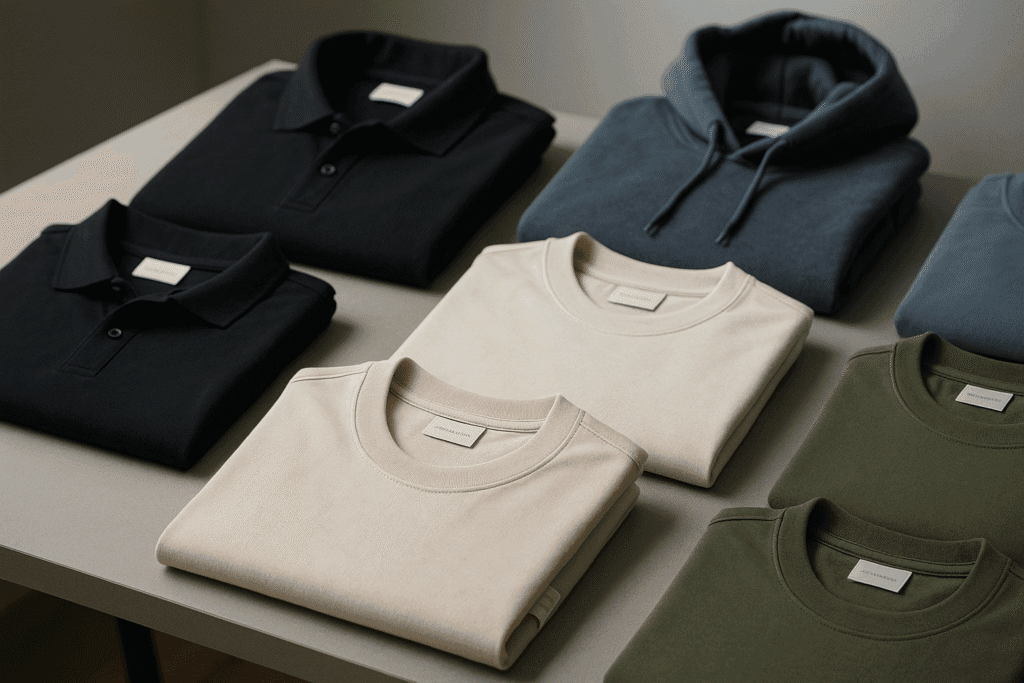
The fundamentals of garment craftsmanship center on skill, precision, and continuous improvement at every stage—cutting, sewing, finishing, and final inspection. This not only means understanding clothing construction basics—the technicalities of stitches, seams, and fits—but also maintaining the standards that separate high-quality garments from mass-market goods. Poor craftsmanship is quickly exposed by measurement errors, loose threads, puckered seams, or inconsistent branding details.
Key Parameters to Monitor
- Material selection and alignment to product use.
- Pattern accuracy and grading for fit consistency.
- Cutting and stitch precision according to spec sheet.
- Process flow efficiency and in-line QC monitoring.
- Rigorous inspection before final packing and shipping.
Common Mistakes and How to Avoid Them
- Ignoring fabric shrinkage rates—leading to post-wash fit issues.
- Improper machine setup—causing skipped stitches or fabric damage.
- Underestimating the skill needed for specialty seams or finishes.
- Skipping inline inspections—resulting in defects progressing through production.
- Miscommunicating decoration type or position—leading to costly rework or returns.
Practical Tips from Apparel Wiki
- Double-check all spec sheet measurements before confirming production.
- Run trial washes and measure shrinkage/dimensional changes on development samples.
- Request and review finished bulk samples for packing and branding checks before shipment.
- Keep open, regular communication with your factory about any process changes or challenges—especially during style launches or high season.
Frequently Asked Questions
What is garment craftsmanship?
Garment craftsmanship refers to the advanced skill, knowledge, and pride applied throughout the process of making clothing, resulting in precise, durable, and visually appealing garments.
Why are precision standards important in garment production?
Precision standards ensure every garment meets strict measurement, seam, and visual quality requirements, reducing defects and returns while preserving the brand’s reputation.
What does the typical workflow from cutting to finishing involve?
The typical workflow covers fabric preparation and cutting, accurate sewing and assembly using the right stitches, followed by thorough inspection, finishing, and professional packing.
How do factories maintain quality expectations?
Factories maintain quality through layered inspections, strict tolerance control, ongoing operator training, and verifying samples and bulk goods align with approved specifications and standards.
What checks should I do when evaluating garment samples?
Check measurement accuracy, seam strength, fabric appearance, decoration quality, label attachment, and care instructions. Washing trials help verify stability and durability.
How do materials affect garment craftsmanship?
Materials directly influence garment performance, look, and longevity—choosing the correct fabrics and trims is vital for ensuring the garment meets end-use expectations and quality standards.