Textile Journey: From Fiber to Finished Fabric
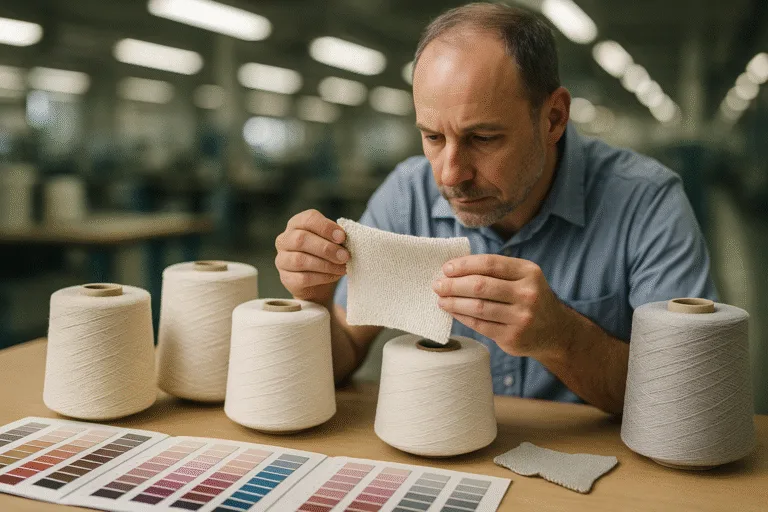
The textile supply chain transforms raw materials into usable apparel fabrics through a series of precise steps. Grasping this process helps both buyers and technicians anticipate fabric behavior throughout production.
Fiber Selection
Fibers are the building blocks of fabric. Choices include natural fibers (cotton, wool, linen, silk), synthetic fibers (polyester, nylon), and regenerated fibers (viscose/rayon, modal). Each fiber has unique attributes affecting comfort, performance, and cost.
Yarn Spinning
Selected fibers are twisted or extruded into yarns. Yarn attributes—twist, fineness, ply—impact the final fabric’s feel and strength. For instance, combed cotton yarns yield smoother, stronger fabrics compared to carded yarns.
Fabric Construction
- Woven fabrics (twill, denim, canvas) are interlaced for durability and structure.
- Knit fabrics (single jersey, rib, interlock) use loops, offering stretch and softness.
- Non-woven fabrics (felt, interlining) are bonded via heat, chemicals, or pressure, ideal for technical or disposable garments.
Finishing Processes
Post-construction finishes modify hand feel, performance, and appearance. Treatments include washing, brushing, mercerizing, softeners, and protective finishes (anti-pilling, moisture-wicking, flame retardant, etc.).
Natural, Synthetic, and Blended Fabrics: Core Textile Categories

Fabrics are grouped by their fiber origin. Understanding these textile categories enables manufacturers to match material to garment purpose, cost, and buyer expectations.
Natural Fabrics
- Cotton – Breathable, absorbent, easy to dye. Used for T-shirts, polos, casual shirts, kidswear.
- Wool – Natural warmth and insulation; suits, sweaters, coats.
- Linen – Lightweight, crisp hand; popular for summer wear.
- Silk – Luxurious drape, sheen, and softness; dresses, scarves, lingerie.
Synthetic Fabrics
- Polyester – Durable, wrinkle-resistant, affordable. Activewear, uniforms, linings.
- Nylon – High tenacity, fast-drying; performance wear, outerwear.
- Elastane (Spandex/Lycra) – Exceptional stretch, used in blends for athletic and close-fitting garments.
Blended Fabrics
- CVC (Chief Value Cotton) – High cotton percentage, improved durability.
- TC (Tetron Cotton) – More polyester than cotton, easy care, less shrinkage.
- Poly-cotton, cotton-modal, cotton-viscose – Tailored to balance comfort, appearance, cost, and function.
Why Blend?
Blending enhances performance—reducing shrinkage, improving wash-and-wear, or lowering raw material costs. For example, a polyester-cotton blend can provide the comfort of natural fiber with a wrinkle-resistant finish.
Woven, Knit, and Non-Woven: The Three Fabric Construction Methods
The way textiles are constructed determines drape, stretch, durability, and best-application.
Woven Fabrics
Created by interlacing warp and weft yarns. Major types include:
- Plain weave (poplin, broadcloth, voile) – Tight, stable structure.
- Twill weave (twill, denim, gabardine) – Diagonal rib, soft drape.
- Satin weave – Smooth surface, visible sheen.
Knit Fabrics
Knits are constructed from looping yarns, creating natural elasticity. Key types:
- Single jersey – Lightweight, stretchy; basic T-shirts.
- Rib knit – Heavily elastic; cuffs, collars.
- Interlock – Double faced, stable; higher quality T-shirts.
- Fleece/French terry – Looped or brushed back for insulation; hoodies, sweatshirts.
Non-Woven Fabrics
Made by bonding fibers together. Examples include felt, meltblown, and spunbonded materials, often used in disposable products, linings, and some technical applications.
How Manufacturers Choose the Right Fabric
Fabric selection is a pivotal step in apparel manufacturing. The correct fabric brings together design intent, functionality, and value-for-money—while poor selection leads to production issues and dissatisfied buyers. Factory veterans weigh multiple variables:
- End Use of Garment: Is it casual, formal, workwear, sportswear? Every purpose drives different technical requirements.
- Performance Criteria: Shrinkage, pilling, colorfastness, stretch/recovery, breathability.
- Cost and Availability: Material pricing, MOQ, and lead time.
- Processing Needs: Suitability for decoration (e.g., printing or embroidery), washing, or specific finishes.
- Consumer and Regulatory Requirements: Compliance (OEKO-TEX, REACH), child-safety for kidswear, moisture management for sportswear.
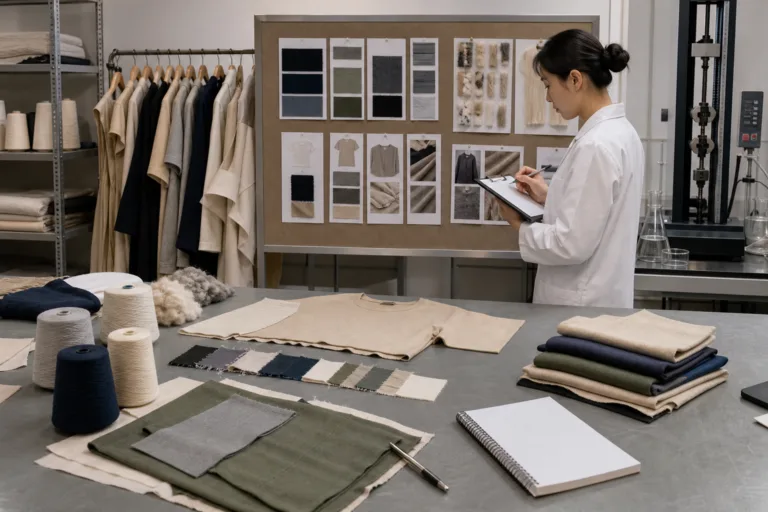
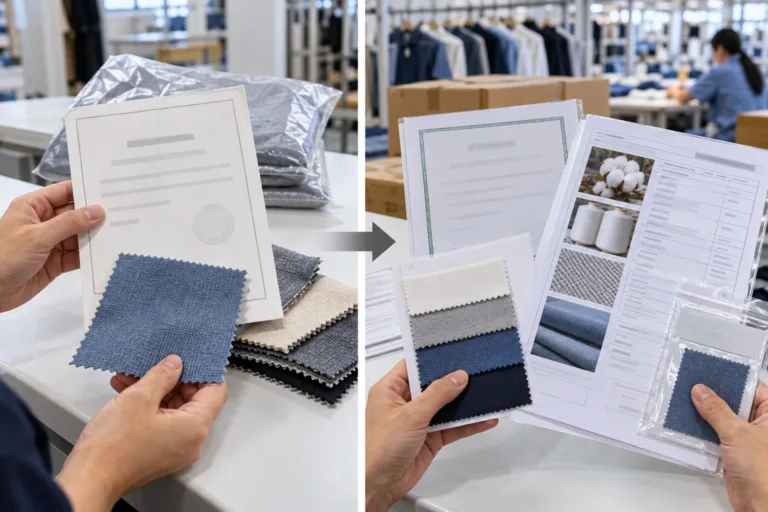
Rain’s tip from the production line: “Always request the latest bulk fabric sample for hand-feel and lab testing—not just a mill swatch. This avoids costly surprises after the first wash.”
Key Fabric Specifications in Apparel Manufacturing
Evaluating fabric suitability goes beyond just type or construction. Manufacturers rely on measurable technical parameters to ensure consistency in mass production.
Grams per Square Meter (GSM) / Ounces per Yard (oz)
GSM (for metric) or oz/yard2 (imperial) indicate weight—affecting drape, opacity, and seasonal suitability.
Yarn Count and Density
Yarn fineness and the number of ends per inch (EPI) or courses/wales per inch in knits directly impact appearance and hand feel.
Shrinkage & Dimensional Stability
Essential to control for fit and wash performance. Fabrics are routinely tested pre-cutting (ISO 6330, AATCC 135 methods) to avoid post-production issues.
Colorfastness
Measured for resistance to washing, rubbing, perspiration, and light. Poor ratings (level <4) can blemish the garment’s look after a few wears.
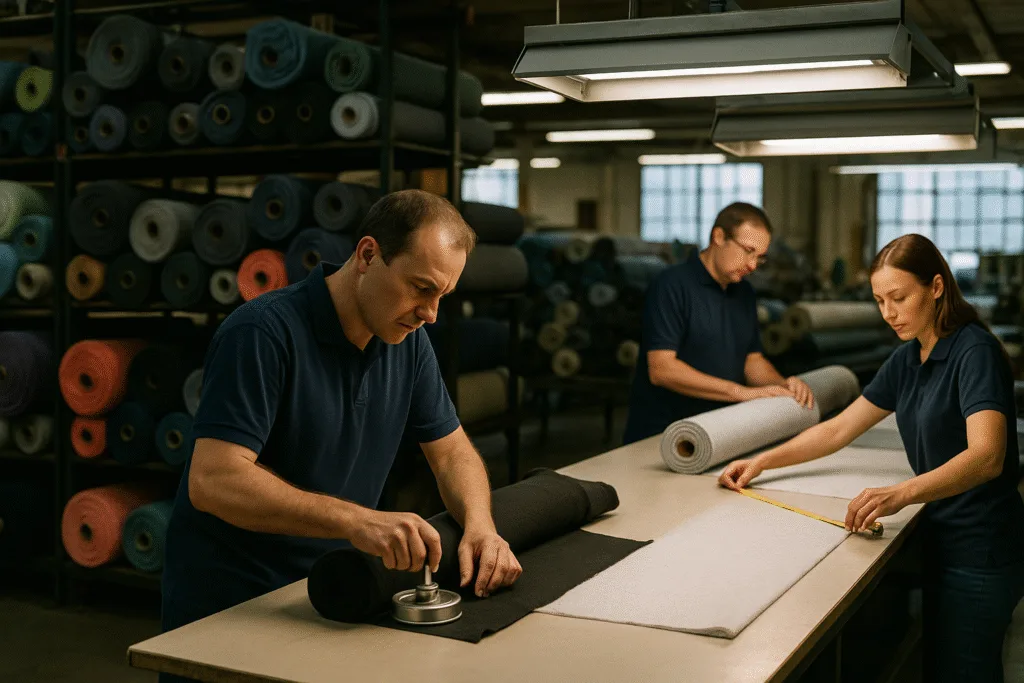
Pilling & Abrasion Resistance
High-wear areas (collars, cuffs, seat) are checked using Martindale or similar tests, especially for sports and children’s wear.
Common Fabric Comparison Table
| Fabric Type | GSM Range | Key Properties | Best Use |
|---|---|---|---|
| Single Jersey (Cotton) | 120–180 | Soft, breathable | T-shirts, kidswear |
| Pique (Poly-Cotton) | 180–230 | Structured, durable | Polo shirts, uniforms |
| Fleece (Cotton/Poly) | 220–340 | Warm, insulating | Hoodies, sweatshirts |
| Denim (Cotton/Elastane) | 260–400 | Sturdy, minimal stretch | Jeans, jackets |
Complete Guide to Fabric Classification in Apparel Manufacturing
Fabric classification in apparel manufacturing is the systematic process of sorting textiles based on their origin, construction, and properties. This ensures each garment’s purpose, construction method, and finish match the end-user’s needs and market standards.
What is Fabric Classification?
It is the methodical grouping of fabrics by fiber origin (natural, synthetic, blended), construction (woven, knit, non-woven), and functional finishing (e.g., water-repellent, flame-retardant).
Why It Matters
- Improved predictability: Matching the right fabric to garment design reduces production risks and returns.
- Process optimization: Knowing textile categories aids sewing line setup, cutting techniques, and finish selection.
- Cost control: Prevents hidden costs from excessive wastage, defects, or post-sale complaints.
Key Parameters in Fabric Classification
- Fiber content and blend ratio.
- Construction type (woven, knit, non-woven).
- Weight (GSM/oz), thickness, handle.
- Shrinkage, colorfastness, pilling grade.
- Special finishes (wrinkle-free, anti-static, UV-protective, water-resistant).
Common Mistakes & Practical Tips
- Overlooking shrinkage potential in knits—always test before bulk cutting.
- Assuming all poly-cotton blends perform the same; the actual CVC/TC ratio changes drape and hand feel significantly.
- Ignoring minimum order quantities (MOQ) for specialty fabrics can disrupt delivery schedules.
- Skipping lab dips and shade panels early may lead to shade variation issues in bulk.
- Neglecting the affect of finishing (e.g., enzyme wash, softeners) on final garment size and color.
Industry Standards and Fabric Testing in Apparel Production
Proper fabric testing protects both reputation and profit in the apparel sector. Leading export factories follow recognized protocols to guarantee compliance and performance throughout the supply chain.
Shrinkage & Stability Tests
Typically, pre-shipment fabric is subjected to wash and dry cycles according to ISO or AATCC standards. Shrinkage over 3–5% is a red flag for fit problems.
Colorfastness Tests
Essential for children’s wear, uniforms, and premium basics. Swatches are checked against standardized ratings for fading/bleeding after washing, rubbing, and sweat exposure.
Physical Performance Tests
- Abrasion (Martindale, Wyzenbeek)
- Pilling (ICI, Martindale)
- Tensile strength (ASTM D5034/5035 for wovens)
- Bursting strength (for knits)
Compliance Checkpoints
Final fabrics must clear restricted substance lists (RSLs) and safety standards, especially for hazards like formaldehyde content, azo dyes, heavy metals, and nickel for trims. OEKO-TEX® and REACH guidelines are often cited by global buyers. For children’s wear, additional checks for small parts and allergen risk are crucial.
Garment Application: Linking Fabric Classification to Product Success
The link between fabric classification and end-use shapes every garment’s fate in the market. Misalignment here causes costly reruns or customer returns.
T-Shirts & Polos
- Single jersey cotton or CVC: Soft hand, lightweight, preferred for casual and promotional T-shirts.
- Pique knit (poly-cotton): Resilient with a professional look, essential for polos and uniforms.
Sweatshirts & Hoodies
- Brushed fleece: Insulating, cozy. Commonly cotton/poly blends to balance warmth, durability, and shape retention.
- French terry: Loopback texture, medium warmth, ideal for midweight layering pieces.
Denim, Trousers & Workwear
- Denim (with or without elastane): Hard-wearing for jeans, jackets; blends improve comfort and fit.
- Twill: Smooth and tough for chinos, uniforms, chef wear.
Sportswear & Performance Apparel
- Polyester knits (mesh, interlock): Fast-drying, durable, suitable for team kits and technical T-shirts.
- Moisture-wicking treatments: Improve wearer comfort under physical exertion.
Specialty Finishes and Fabric Enhancements
Today’s consumers often expect functional extras—softness, easy care, or technical performance—beyond basic textile construction. Factory finishing techniques turn base fabrics into high-value apparel materials.
Mechanical Finishes
- Brushing: Raises fibers for warmth and softness (fleece, flannel).
- Peaching: Softens surface, popular for premium knits.
- Calendaring: Smoothes fabrics for a more lustrous finish.
Chemical Finishes
- Enzyme wash: Breaks down surface fuzz, improves hand feel.
- Silicone softener: Enhances smoothness and drape.
- Moisture-wicking, stain repellency, antimicrobial: Specialized finishes for performance and technical garments.
Shrinkage Control & Pre-setting
Manufacturers routinely pre-wash or heat-set fabrics to stabilize dimensions and reduce after-wash shrinkage, particularly critical for knits and blends.
Practical Steps to Specify and Test Fabrics in Manufacturing
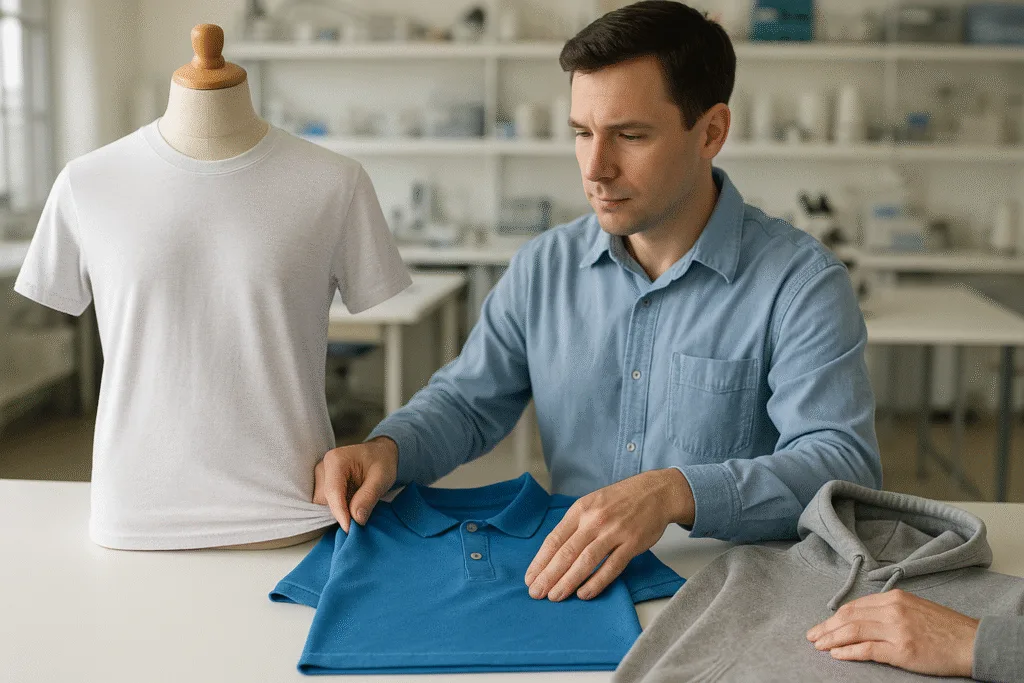
Apparel success depends on translating fabric classification into clear, documented specifications and robust testing routines.
Specification Sheet Essentials
- Fiber composition and blend ratio
- Construction (e.g., single jersey, 30s/1, 160 GSM)
- Color, dyeing process, and approved lab dip
- Finishing (washed, peached, enzyme finish, softener, etc.)
- Performance targets (shrinkage ≤5%, colorfastness ≥4, pilling ≥3–4)
Simple Incoming Fabric Inspection Checklist
- Visually inspect for knots, holes, stains, shade variation
- Measure GSM and hand feel against approved sample
- Check dyed fabric under D65 (daylight) and TL84 lamps for color consistency
- Test stretch and recovery if needed
- Verify pre-wash and after-wash measurements for shrinkage
- Document all results for bulk release sign-off
Discussion Points with Your Factory
- MOQ and lead times for base and special finish fabrics
- Bulk shade control and lab dip approval protocol
- Shrinkage allowances in pattern making
- Finishing effect on handle, color, final dimension
Clear communication and documented standards at each step prevent costly mistakes and rework during production runs.
Frequently Asked Questions
What is fabric classification in apparel manufacturing?
Fabric classification is the systematic grouping of fabrics by fiber origin, construction method, and finishing, helping factories and brands choose suitable materials for different garments.
How do woven and knit fabrics differ?
Woven fabrics are made by crisscrossing warp and weft yarns for structure, while knit fabrics are made by looping yarns to create flexibility and stretch, leading to different uses in apparel.
Why are fabric blends used in clothing production?
Blends combine the strengths of different fibers, such as cotton’s comfort and polyester’s durability, to create fabrics with balanced properties suited to various end-uses.
What performance tests are standard for fabrics in garment factories?
Common tests include shrinkage, colorfastness, pilling, abrasion, tensile or bursting strength, ensuring fabrics meet performance and quality expectations before mass production.
How does fabric GSM affect apparel selection?
GSM measures fabric weight per square meter, guiding suitability for different garment types—lightweight fabrics suit summer T-shirts, while heavier ones work for sweatshirts or outerwear.
What fabric details should be on a garment specification sheet?
A proper spec sheet lists fiber blend, construction, GSM, color/finish type, lab dip, and any tested performance targets like shrinkage or colorfastness for clear production standards.