Understanding Garment Twisting and Spirality in Knitwear
Garment twisting, also called spirality, refers to the phenomenon where a garment (mostly knits) becomes skewed after washing and drying, causing body panels and side seams to rotate or spiral. This is most evident in circular-knit T-shirts, polos, or sweatshirts. The side seam may slide toward the front or back, and the bottom hem will no longer align perpendicularly to the side seam.
- Garment twisting: The post-wash rotation of the fabric, making seams and body panels misalign.
- Spirality (in knitwear): The technical term for this sectional or whole-garment twist, mostly in single jersey fabrics.
Spirality not only affects aesthetics but can also compromise fit, comfort, and perceived quality.
Main Causes: Fabric Skew and Improper Knitting
From decades on the production floor, we see that garment twisting almost always points back to raw material and knitting process faults. It is rare for finishing or sewing alone to cause serious spirality. Below are the main root causes:
1. Fabric Skew
Skewness means the wale (vertical line) and course (horizontal line) of the knit are not at right angles. Instead, the structure is already slightly angled—this can occur during knitting or after wet processing. A fabric with high skew will, after washing, revert to its relaxed state, with the twist becoming obvious.
2. Poorly Set Knitting Parameters
- Improper yarn feeder tension or uneven yarn tension around cylinders.
- Incorrect knitting machine timing, leading to unbalanced torque in the fabric construction.
- Wrong selection of materials—singles yarn (with no twist compensation), low-stability cotton blends, or low twist yarns.
Single jersey knits made from open-end or air-jet spun yarns are most susceptible.
3. Yarn Twist and Fiber Characteristics
- Highly twisted yarns create torque, especially if S- or Z-twist is not compensated in fabric design.
- Synthetics like polyester can exacerbate spirality if produced without care, but 100% cotton is also vulnerable.
4. Process-Induced Problems
- Improper tube opening, lay-flat, or compaction after wet processing can fix existing twist or even increase it.
- Inadequate relaxation before cutting causes the body panels to later assume their natural (twisted) state after laundry.
Rain’s tip from the production line: Always ask for fabric skew/spirality test results before bulk cutting. Do not rely on visual checks alone.
How to Test for Garment Twisting and Spirality
Apparel professionals and savvy buyers use established tests to quantify spirality and ensure products meet global standards. Here’s how QC teams and factories typically test for garment twisting:
1. Pre-Wash Fabric Spirality Test
- Cut a swatch (e.g., 50 x 50 cm) from the raw fabric roll.
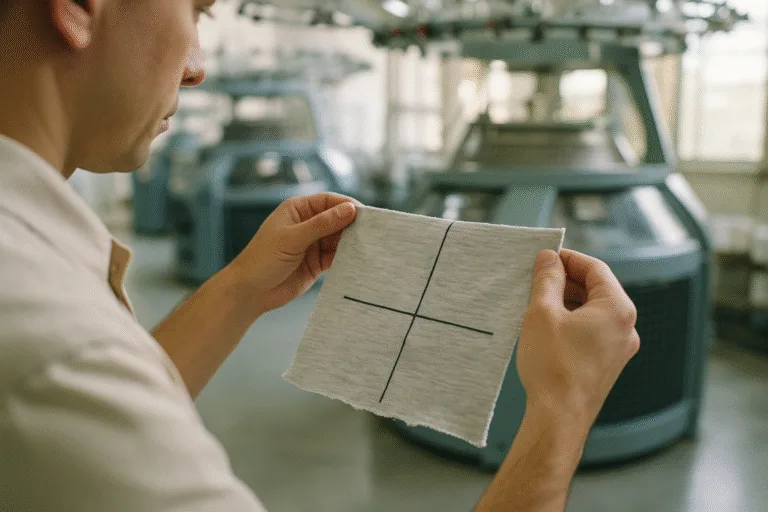
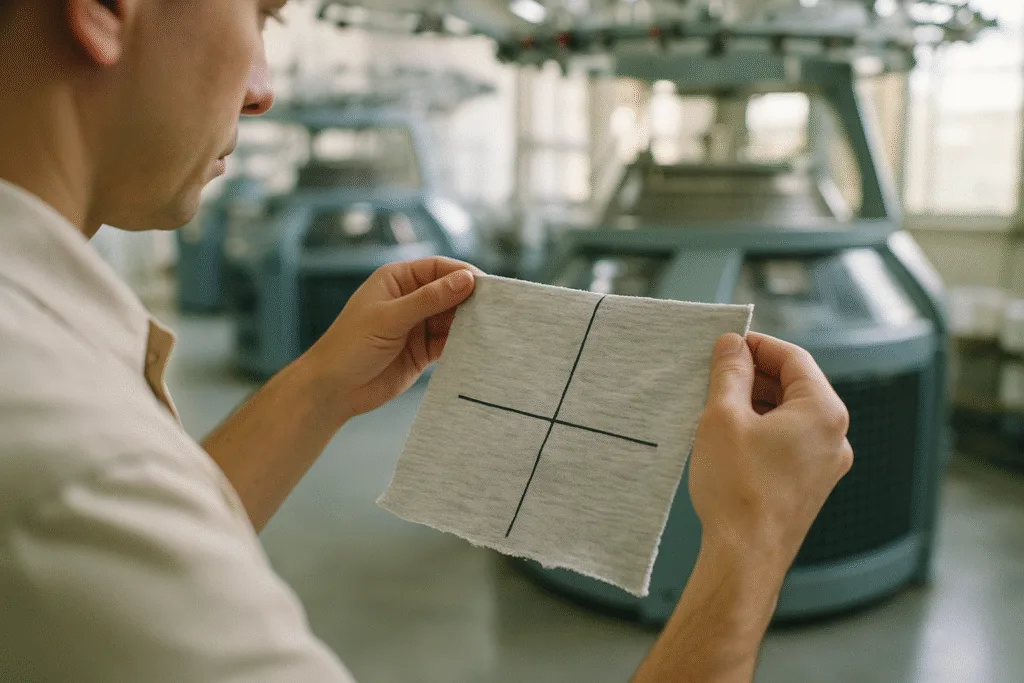
- Mark a right-angle cross (vertical and horizontal lines) using contrasting thread or marker.
- Wash per care instructions (30°C, gentle cycle), then dry and lay flat without distortion.
- Measure the angle between original marks and new angle after wash.
2. Garment Spirality Test (ASTM D3882, ISO 16322-2)
- Mark a straight line at the side seam (from underarm to hem) before washing.
- Wash and tumble dry as per the garment’s care label.
- Lay garment flat and measure the new position of mark from original.
- The spiral angle or offset should ideally be within ±5% of half chest width (industry typical tolerance).
| Fabric Type | Typical GSM | Spirality Risk | Best Use |
|---|---|---|---|
| Single Jersey | 120–220 | High | T-shirts, polos |
| Interlock | 180–260 | Low | Polo shirts, dresses |
| Rib Knit | 200–300 | Moderate | Cuffs, collars |
| French Terry | 220–350 | Low | Sweatshirts, shorts |
How to Prevent and Minimize Garment Twisting in Production
Once twisting finds its way into a bulk order, correcting it usually requires costly alterations or rework. Prevention is key. Here are effective strategies:
- Source Quality Yarns: Specify balanced or low-twist yarns. Blended yarns should have correct S and Z twist compensation.
- Monitor Knitting Parameters: Set feeder tension, stitch density, and cylinder timing to minimize torque. Use double-knit where possible for stability.
- Pre-Relax Fabric: Allow adequate resting time (12–24 hours) before spreading and cutting to let the fabric relax into its final state. Factories should avoid tension during rolling.
- Hydro and Compaction Finishing: Use modern wet processing and compaction calendering to set the fabric, reducing post-wash movement.
- Sewing Best Practices: For critical styles, reinforce side seams and use panel joining to counteract twist. Always align fabric grain during cutting.
- Strict QC for Spirality: Test every new lot for spirality post-wash and enforce a <5% tolerance policy.
Choosing the Right Fabric and Construction for Minimal Spirality
Material selection and correct fabric construction play a pivotal role in resisting garment twisting. Here’s what to look for when specifying or buying fabric for knits:
Single Jersey vs. Interlock
- Single Jersey: Prone to higher twist due to its asymmetric structure—ideal for lightweight, fashion T-shirts but needs close monitoring.
- Interlock: Naturally balanced, heavier, and less likely to spiral—best choice for quality polos and premium sportswear.
Yarn Composition and Quality
- CVC (Chief Value Cotton) and TC (Poly/Cotton) blends offer more stability than pure cotton, reducing risk of skew after wash.
- Spandex blends add stretch; properly set spandex minimizes irreversible torque.
Practical Selection Tips
- Review lab dips and pre-production swatches for twist after test washing.
- Check with suppliers for spirality specs and request actual third-party reports when possible.
Buyer and Factory Checklist for Controlling Garment Twisting
If you are sourcing or overseeing knit garment production, addressing twisting risk early saves time and cost. Use this checklist in every development season:
- Obtain fabric technical datasheets (specify spirality/torque limit, e.g., ≤5%).
- Ask for production swatch wash tests, not just fabric roll inspection.
- Ensure fabric relaxation time is documented before cutting.
- Review operation breakdowns for seam placement and panel cutting direction.
- Check finished garment measurements post-wash using standard QC forms.
Always confirm with the factory that tolerance limits for spirality are strictly included in the quality manual. In bulk audits, garments with excessive twist should be marked and segregated.
Production Solutions to Fix or Reduce Spirality Post-Wash
Occasionally, bulk garments show twist after wash. While best practice is prevention, here are some real-world corrections:
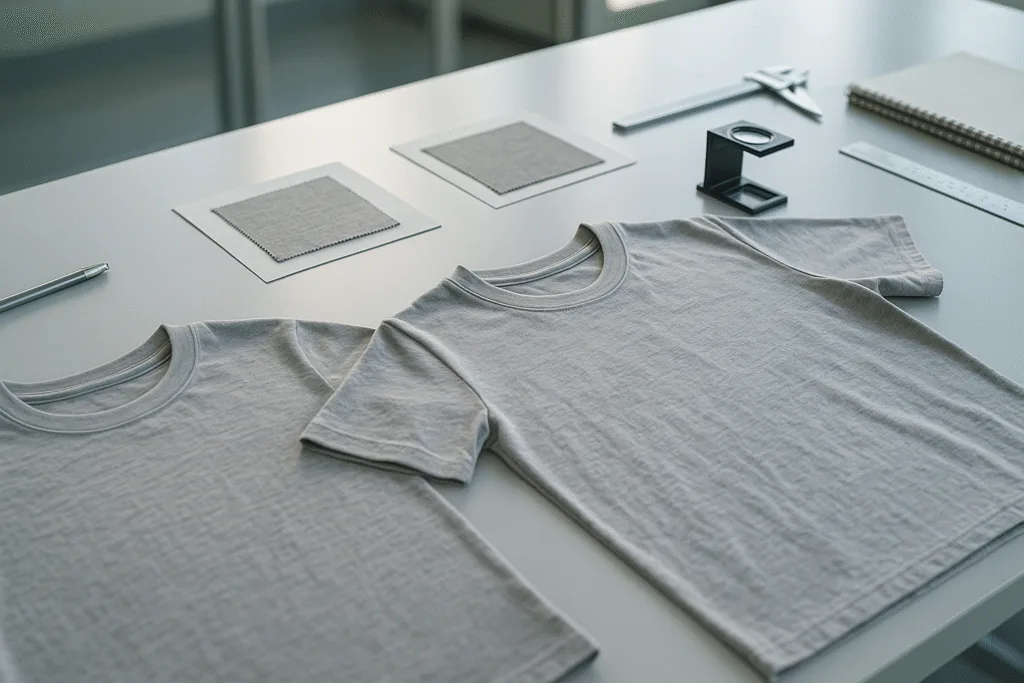
- Re-compaction Finishing: Where possible, garments may be re-pressed on compaction machines to set a straighter shape.
- Panel Adjustment: In severe cases, side seams can be re-sewn to align panels, though this increases lead time and unit cost.
- Pressing and Steam Blocking: Professional steamers can align seams temporarily for display (not permanent in laundry).
For mass market, factories should agree with buyers on post-wash tolerance levels and sampling plan. If an unacceptable rate is observed, hold the shipment until re-inspection or repair is agreed upon.
Why do garments twist after washing?
Garments twist after washing mainly due to spirality in knitwear and fabric skew introduced during knitting and finishing. Raw single jersey knits, if not properly set, will relax to their natural (twisted) state after exposure to water and drying. Key reasons include imbalances in yarn twist, excessive machine tension, lack of proper compaction or relaxation during manufacturing, and poor quality assurance of spirality before bulk production. Once these factors align, even precise garment sewing cannot prevent twisting post-laundry.
This matters for comfort, appearance, and long-term wear. Twisted side seams tug at the garment’s structure, impacting fit and brand reputation. Handling twisting at the source—ensuring fabric construction and process controls—is the best way to assure quality and customer satisfaction. Always specify clear spirality tolerances, test production swatches, and choose stable knits for best results.
Best Practices: Reducing Twisting in Knitwear Styles
Some product categories are more susceptible to twist than others. Follow these special tips for high-risk knitwear:
- T-Shirts: Use interlock for premium lines, single jersey for basics only with strict QC.
- Polo Shirts: Specify pique or double-knit with CVC blends for better structure.
- Sweatshirts & Hoodies: Opt for French terry or fleece in heavier GSM for naturally straighter finish.
- Children’s Wear: Double-check spirality as repeated wash cycles amplify twist.
Collaborate with fabric mills on specification sheets, and don’t skip bulk wash tests before approving cutting for high-volume runs.
Testing Standards and Key Quality Metrics
Testing for garment twisting follows international protocols. The most common laboratory and in-house tests include:
- ISO 16322-2: Specifies methods for measuring spirality after laundering.
- ASTM D3882: Widely accepted for knitwear in export markets.
- Buyer AQLs: Most buyers specify maximum spirality within a tolerance (commonly ≤5%).
Testing is carried out on both fabric rolls and finished garments. Reporting must include: swatch size, care instructions, number of laundering cycles, method of measurement, and test results as a percentage of body width or spiral angle (in degrees).
Frequently Asked Questions
What is garment spirality?
Garment spirality refers to the twisting or rotation of a fabric or garment after washing, often seen as misaligned seams or body panels, mostly in knitwear.
Which fabrics are most prone to twisting?
Single jersey knit fabrics, especially from 100% cotton or low-twist blended yarns, are most susceptible to twisting after wash.
How can I test my garments for twisting at home?
Mark the side seam or sleeve line, wash per care instructions, then lay flat to check if the line has shifted more than 2 cm or 5% of half-chest width.
Can garment twisting be fixed after production?
Minor twisting can be reduced by re-compaction or pressing, but severe spirality typically requires costly panel adjustment or rework, so prevention is best.
Is spirality covered by quality standards?
Yes, spirality is included in standards like ISO 16322-2 and ASTM D3882, which most major apparel buyers follow in their QC manuals.
Does blending fibers help prevent garment twisting?
Yes, blending cotton with polyester or using yarns with balanced twist can help improve dimensional stability and minimize twisting after washing.