T-shirt Losing Shape: The Real Reasons Unraveled
T-shirt losing shape after a few washes is a common headache for consumers and factories alike. Whether you notice a baggy neckline, twisted sleeves, or an uneven hem, the root causes often trace back to fabric selection, rib construction, stitch quality, and garment finishing. Understanding why knit deformation happens is key to producing lasting garments and making smarter buying decisions.
Understanding Knit Deformation in T-shirts
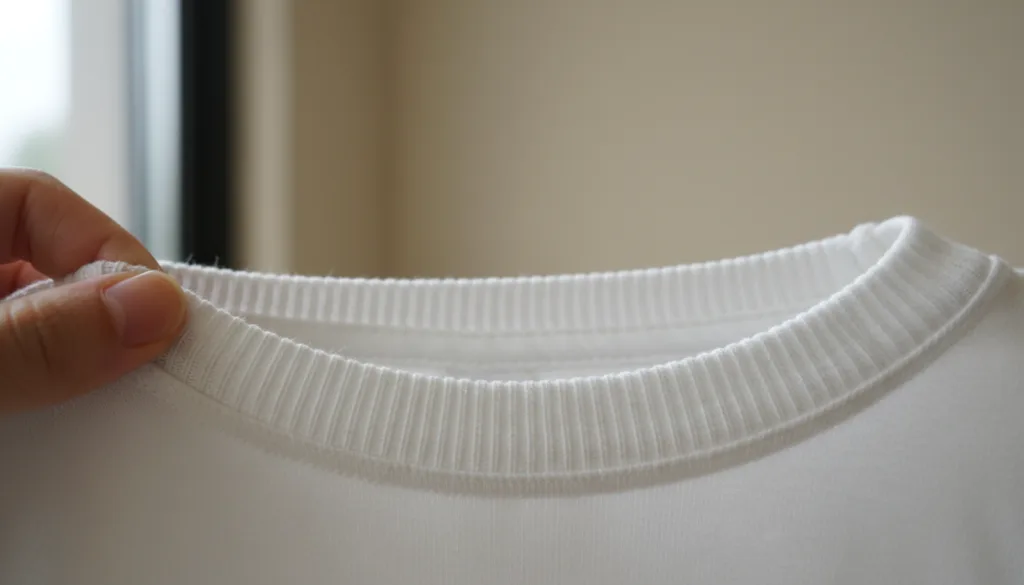
Knit deformation refers to the unwanted stretching, distortion, or warping of knit fabrics, especially common in T-shirts after repetitive washing and wearing. Single jersey cotton, the fabric most T-shirts use, is naturally stretchy. But if not properly engineered, it can ‘grow’ or twist, leading to a misshapen silhouette.
Common Knit Fabric Types Used for T-shirts
- Single Jersey – Lightweight, breathable, but prone to twisting if not stabilized.
- Rib Knit – Used for neck and sleeve trims; elasticity protects shape but quality varies.
- Interlock – More stable than jersey; less likely to deform but costlier.
- Blends – Polyester/cotton (CVC, TC) can help reduce shape loss.
Why Knit Deformation Matters
Deformed knits don’t just look untidy—they impact comfort, garment longevity, and brand reputation. Apparel Wiki’s factory audits regularly see shape issues triggering customer complaints or bulk order rejections.
Poor Rib Construction: The Neckline Culprit
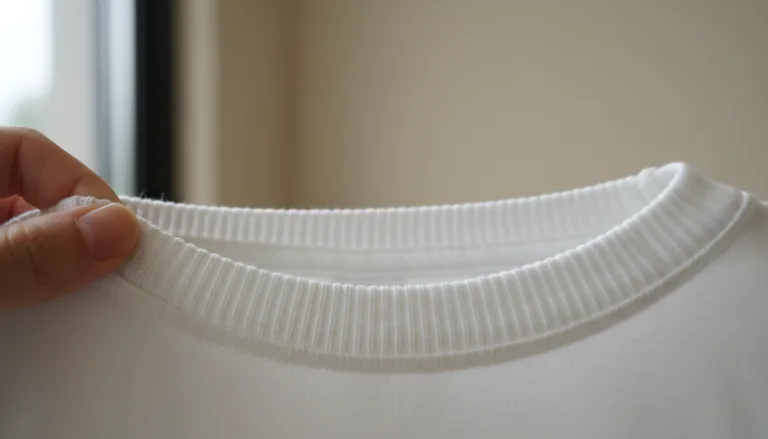
Rib trim at the collar and sleeves is designed for elasticity and recovery. When rib quality is poor—loose knitting, wrong yarn, or low GSM—necks stretch out and won’t bounce back.
Rib Knit Parameters That Matter
- GSM (grams per square meter): Ideally 220–260 GSM for neckline rib to maintain shape.
- Composition: Blended yarns (cotton/poly/spandex) offer better elasticity and recovery than 100% cotton.
- Construction: 1×1 rib or 2×2 rib—tighter structures are more resistant to stretching out.
“In many export factories, the most common reason for a T-shirt losing shape is substandard rib. Too many brands chase cost, accepting lower GSM or pure cotton rib. This almost always leads to neck drop after wash.” – Rain Chen, Apparel Wiki
Rib Knit vs. Jersey Comparison Table
| Fabric Type | Typical GSM | Elasticity | Recovery | Best Use |
|---|---|---|---|---|
| Single Jersey | 140–180 | Medium | Low | Body panel |
| Rib Knit (1×1) | 220–260 | High | High | Neck & cuff |
| Blended Rib (CVC/TC) | 240–270 | High | Very High | Premium trims |
Weak Stitches and Poor Construction: Critical Failure Zones
Stitch choice and seam quality are as vital as fabric. Weak stitches—low SPI (stitch per inch), poor tension, improper thread—cause stretching, holes, and early seam slippage. For T-shirts, typical high-risk seams are the shoulders, neckline attachment, and sleeve heads.
Essential Stitch Types for Shape Stability
- Overlock (ISO 504): Used for side seams; moderate strength
- Coverstitch (ISO 602): Preferred for hem—offers stretch and durability
- Lockstitch (ISO 301): Used for shoulder tape; strong but less flexible
Stitch Density: Why It Counts
For T-shirts, stitch density (SPI) should be 10–14 for jersey seams and 16–20 for rib attachment. Low density leads to seam gaps, while high density (overly tight) may cause puckering or breakage. Seam allowances must anticipate knit stretch and shrinkage.
Wrong GSM: How Fabric Weight Predicts T-shirt Shape Loss
Fabric GSM is the primary metric for weight and thickness. T-shirts made from fabrics below 140 GSM have high risk of losing shape, especially after washing. Heavier GSM helps with drape and resilience but can affect comfort.
GSM Ranges for Different T-shirt Qualities
- Lightweight (<140 GSM): Fashion tees; tendency for rapid deformation
- Medium weight (140–180 GSM): Everyday wear; balance shape and comfort
- Heavyweight (180–220 GSM): Premium tees; robust, stable shape
Why GSM Alone Isn’t Enough
Yarn twist, knitting density, and even finishing (preshrunk or not) add to GSM’s impact. Always request factory swatches and shrinkage specs before bulk orders.
Additional Factors: Pattern Cutting, Pre-Washing, and Finishing
Knit garments are sensitive to cutting direction—cutting ‘off-grain’ amplifies twisting. Best practice is to relax, spread, and cut fabric after moisture equilibrium. Pre-washing (enzyme, silicone) and compacting reduces post-production distortions.
Pattern & Cutting Checklist
- Ensure lay cutting follows fabric grain (wale alignment).
- Allow 3–5% shrinkage for pure cotton knits.
- Review bulk fabric for torque/skewness before cutting.
Industrial Finishing Methods That Protect Shape
- Enzyme wash: Smooths and controls shrinkage; softer handfeel
- Preshrink treatment: Key for pure cotton
- Compacting: Mechanically stabilizes knits
Prevention Tips: How Factories and Buyers Can Stop T-shirt Shape Loss
Preventing T-shirt losing shape starts with raw material selection, through to final QA. These best practices—fine-tuned over years in the garment trade—drive results for both mass production and boutique runs:
What to Discuss with Your Factory or Supplier
- Demand rib trims with blended yarns and ≥220 GSM
- Specify stitch types and minimum SPI for key seams
- Request shrinkage and torque (twisting) test reports—before and after wash
- Ask for pre-washed or compacted fabrics if using pure cotton
- Check bulk fabric handfeel and recovery: stretch it firmly and see if it bounces back
In-House Checks and Simple Garment Tests
- Measure body and neck widths before and after a standard machine wash at 30–40°C
- Inspect neckline for puckering or roll—signs of poor rib or stitch tension
- Test by pulling the rib gently sideways; quality rib snaps back, poor rib sags
- Check seams for visible holes or stretching after manipulation
Care Tips for Consumers
- Wash T-shirts inside out in a mesh bag to minimize agitation
- Avoid high-temperature drying; line dry or tumble on low
- Fold, don’t hang, lightweight tees to prevent shoulder distortion
Quality Control and Testing for T-shirt Shape Retention
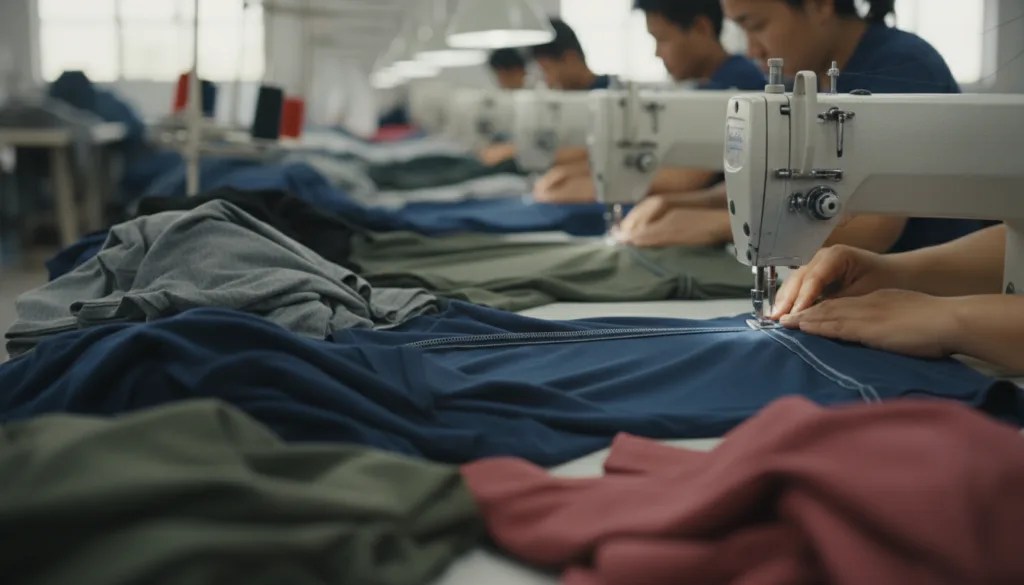
Export factories rely on strict QC to avoid bulk T-shirt losing shape issues. Essential tests include:
Dimensional Stability (Shrinkage & Growth)
Measure garment dimensions pre- and post-wash per ISO 5077. Shape loss tolerance: ≤5% for chest and length, ≤8% for rib width.
Twist & Skewness Control
Knits must display minimal twist (≤1.5 cm on body length after wash). Test by aligning side seams; avoid panels that spiral or torque.
Visual and Mechanical Checks
- Puckering or seam distortion analysis
- Bursting strength for seams (via ASTM D3786 for knits)
- Pilling and abrasion resistance for longevity
T-shirt Losing Shape: Common Pitfalls and Red Flags
Brands and buyers should know the classic warning signs of future T-shirt deformation. These red flags in factories or samples help prevent bulk issues:
- Neck rib feels thin, loose, doesn’t snap back
- Stitch gaps visible along rib attachment or shoulders
- No shrinkage or torque data provided by factory
- Factory offers only 100% cotton rib, no blends
- Very low GSM for body or rib (<140 and <220 GSM respectively)
- Poor handfeel—fabric feels limp and ‘grows’ under gentle stretching
“Quick sample checks save months of headache in bulk. Always pull, stretch, and wash before approving. Listen to experienced merchandisers—they can spot a bad rib or dodgy GSM at a glance.” – Rain Chen
Knit Deformation in T-shirts: Technical Solutions and Innovations
Modern textile mills and brands are adopting new solutions to combat shape loss:
Fiber Engineering
- Spandex/isolate blended ribs for improved snap-back elasticity
- Silicone softener washes for ongoing shape retention
- Polyester blends (CVC, TC) for shrinkage control in mass production
Advanced Knitting Technology
- Computerized flatbed knitting for consistent rib structure
- Compact spinning for higher yarn twist and lower pilling
- Circular knitting with real-time QC sensors
Responsible Sourcing and Sustainability
Certifications like OEKO-TEX®, and investing in eco-friendly blended yarns not only improve durability but also signal quality commitment in fashion supply chains.
Why do T-shirts lose shape after a few washes?
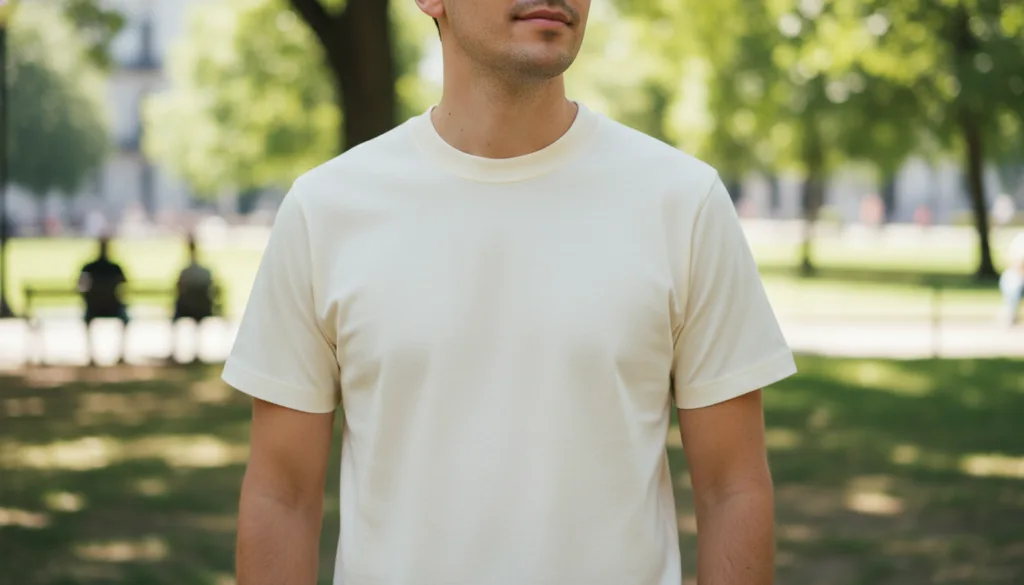
The main reason T-shirts lose shape after a few washes is the interplay of poor rib construction, weak stitches, and wrong fabric GSM. Knit deformation is aggravated by insufficient elasticity in trims, loose or low-density stitches at critical seams, and lightweight (sub-140 GSM) fabrics that lack resilience. Preventing this requires deliberate material choices, proper construction, and rigorous testing both in the lab and with real-world wash trials. Brands, buyers, and factories must work together—specifying blended ribs, adequate GSM, defined SPI, and robust garment finishing—to deliver shape-retaining apparel at scale.
Frequently Asked Questions
Why does the T-shirt neckline stretch out and sag?
Poor quality rib trim and low GSM, especially with 100% cotton yarns, cause the neckline to lose elasticity and stretch out after washing.
How can I check if a T-shirt is likely to lose shape?
Test the rib by stretching and releasing; check for weak seams and request shrinkage/torque data from the supplier before bulk purchase.
Do blended fabrics help prevent losing shape?
Yes, using polyester/cotton blends or adding spandex to rib trims improves elasticity and reduces post-wash deformation.
Is higher GSM always better for shape retention?
Heavier GSM helps, but fabric quality, yarn twist, and finishing are equally important for maintaining a T-shirt’s shape.
Can poor stitching cause T-shirt deformation?
Yes, weak stitches with low density or loose thread tension at key seams contribute significantly to garment shape loss.
What garment care tips help prevent T-shirt losing shape?
Wash inside out, avoid high-temperature drying, and fold instead of hanging lightweight T-shirts to minimize stretching.