Introduction to Industrial Sewing Machine Types and Their Uses
In garment manufacturing, choosing the right industrial sewing machine is vital for achieving speed, seam strength, and desired finish in apparel production. Each machine type—lockstitch, overlock, coverstitch—serves distinct purposes, tailored to different fabrics, seam constructions, and apparel categories. Understanding how these machines work, their stitch types, and functional applications ensures both quality and cost-effectiveness on the factory floor.
Industrial Sewing Machine Types and Their Uses
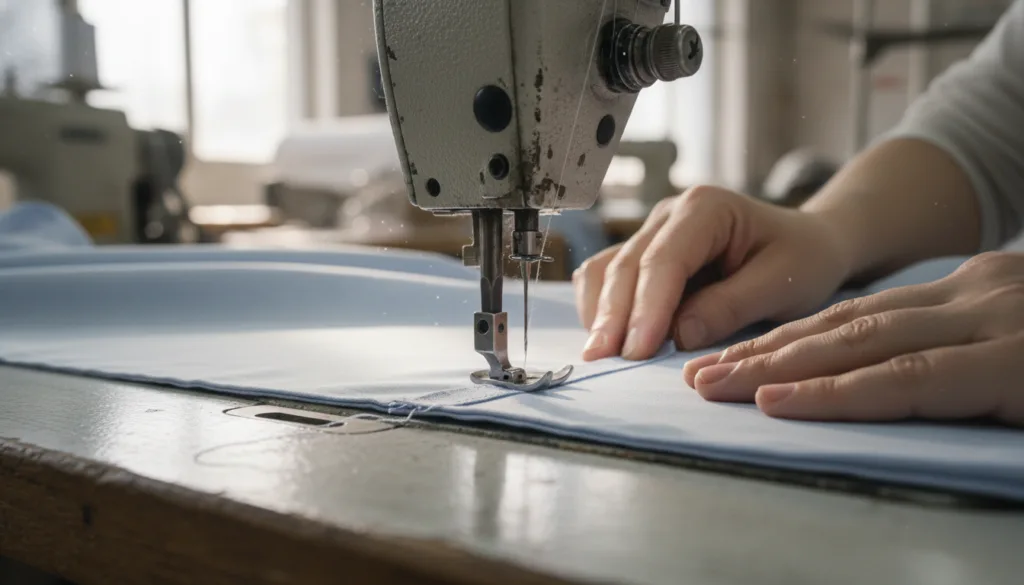
This dedicated section dives into the defining aspects of industrial sewing machine types: what they do, their distinguishing features, typical stitch codes, and pitfalls factories need to avoid. A well-set sewing line combines machines strategically to build every garment part to spec—neckline, seams, hems, trims, and decorative finishes—so understanding machine applications saves costly rework and guarantees production consistency.
Why Machine Types Matter in Apparel Production
Each sewing machine type is engineered around specific garment construction needs—from basic assembly (lockstitch) to seamless edge finishing (overlock) and flexible hemming (coverstitch). Using the wrong machine can weaken seams or cause visible defects, disrupting workflow and risking reject rates. Therefore, factories must match machine type to fabric, design, and production volume for optimal results.
Key Parameters to Evaluate
- Stitch formation and stability (lockstitch vs. chainstitch vs. overlock)
- Production speed (SPM—stitches per minute)
- Adjustability—stitch density, thread tension, differential feed
- Common errors—skipped stitches, seam puckering, overtrimming
- Maintenance needs and downtime
Common Mistakes with Sewing Machine Selection
- Mismatching machine to fabric type (e.g., using lockstitch on loose knits, leading to seam breakage)
- Incorrectly set differential feed causing gathered edges
- Failing to maintain thread tension, risking uneven seams
- Underestimating skill needed for complex operations (multi-needle coverstitch, flatlock seams)
Practical Tips from the Factory Floor
“Always request a sew test for critical seams before bulk production. It’s better to catch skipped stitches or weak seam strength in a trial than in final QC.” — Factory advice from Rain Chen
1. Lockstitch Machines: Foundation of Garment Sewing
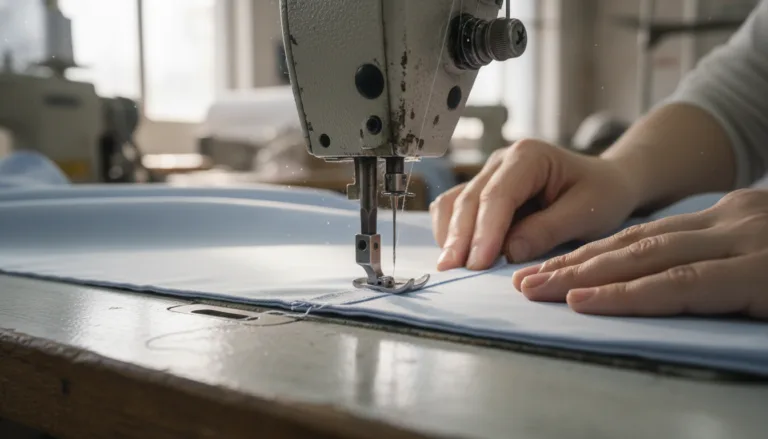
The lockstitch machine forms the backbone of apparel production lines. Its stitch—classified as ISO 301—interlocks upper and lower threads for flat, secure seams. Versatile and reliable, lockstitch is essential for straight seams, attachments, topstitching, and various garment components.
Functionality and Usage
- Primary seam assembly—shoulders, side seams, pockets, plackets
- Topstitching for reinforcement and decor (e.g., jeans, shirts)
- Buttonhole and button attach machines (specialized lockstitch)
- Accepts a wide range of threads, needles, and attachments
Technical Details
Standard lockstitch machines feature stitch length adjustability, reverse feed for backtacking, and can operate at 3,000–5,000 stitches per minute. Key specifications include:
| Machine Type | Stitch Code | Seam Strength | Typical Garment Use |
|---|---|---|---|
| Lockstitch | ISO 301 | High | Shirts, pants, dresses, uniform tops |
| Chainstitch | ISO 401 | Moderate | Side seams, waistband (jeans) |
| Overlock | ISO 504/514 | Edge finishing | T-shirts, knits, sportswear |
Common Lockstitch Applications
- Collar and cuff attachment
- Pocket sewing (patch and welt)
- Pleats and darts
- Label attachment
- Garment assembly on woven fabrics
Spec Sheet Tips and Inspection
Factory specs should indicate stitch density (4–7 stitches per cm), thread type (polyester/cotton core, ticket size), and maximum seam allowance. Inspection involves pulling seams to check for breakage and reviewing seam appearance for puckering or skipped stitches.
2. Overlock Machines: Seam Finishing and Edge Protection
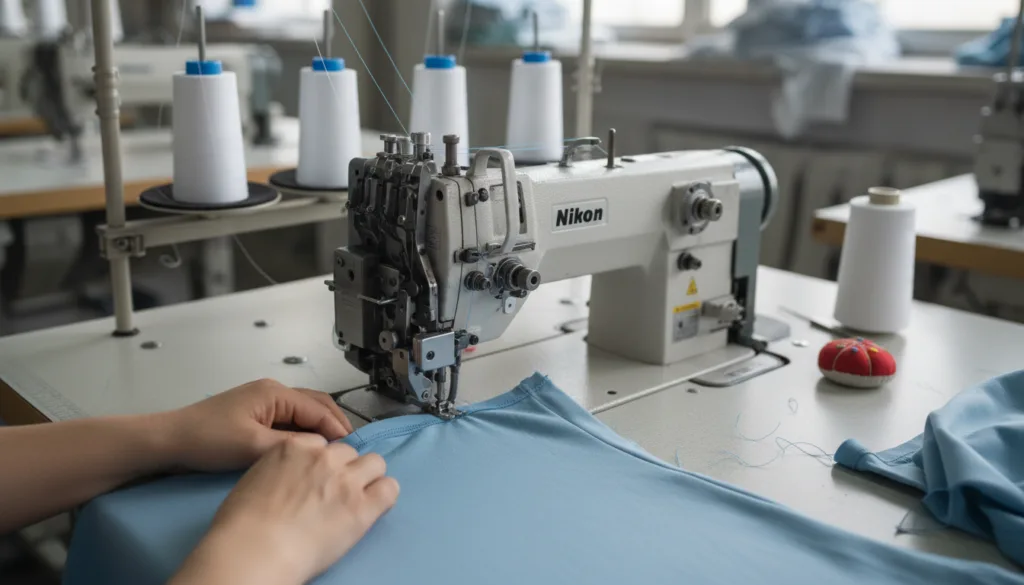
Overlock machines—often called “sergers”—form multi-thread stitches that trim, seam, and encase raw edges in one operation. The ISO standard 504/514 overlock is critical for knit and stretch fabrics, preventing fraying and producing clean, flexible seams. Overlock is essential for mass production of T-shirts, sportswear, kidswear, and activewear.
Key Functions
- Edge seaming and overedging
- Seam trimming—integrated blade cuts excess fabric
- Differential feed for gathering or stretching edge
- Supports 3-, 4-, or 5-thread setups
Technical Features
- Variable stitch width (2–7 mm)
- Adjustable blade position for cleaner trims
- High-speed operation (up to 6,500 SPM)
- Ability to use textured or stretch threads for soft seams
Applications in Apparel Production
- Side seams for T-shirts and sweatshirts
- Sleeve attachment and armhole joins
- Raw edge finishing for knits, fleeces, jerseys
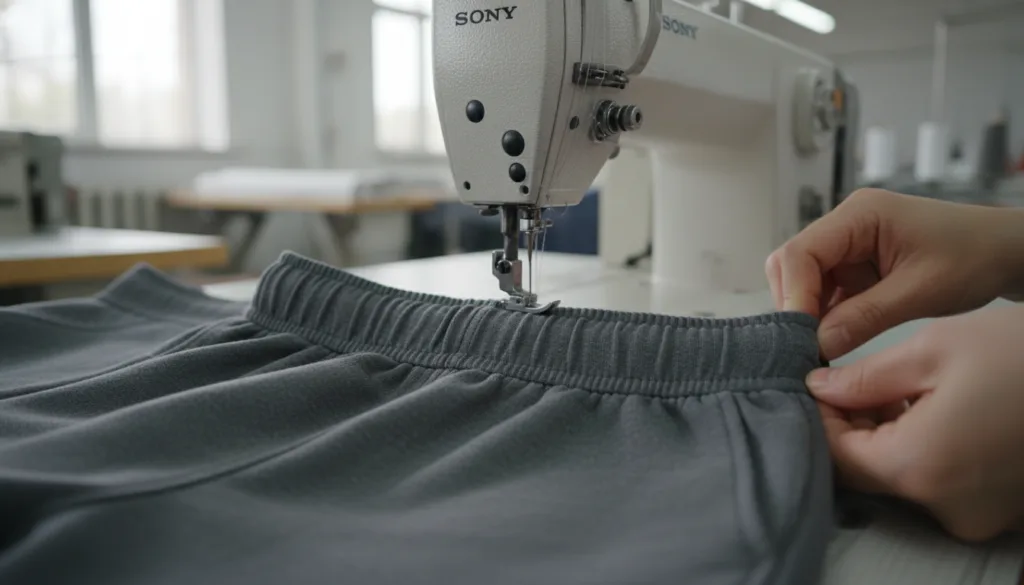
- Rib trim attachment for cuffs, necks, waistbands
- Underwear and activewear seams
Quality Control and Inspection Notes
Inspect for overtrimming, thread breakage, and loose seams. Differential feed allows adjustment for fabric stretch, so operators should test settings per style and fabric batch.
3. Coverstitch Machines: Hemming and Elastic Seam Construction
Coverstitch machines produce flat, stretchable seams ideal for garment hems and bindings—most recognizable by parallel topstitch lines and a looping underside. This technique is widely used in sportswear, casual knits, activewear, and children’s wear. ISO coverstitch codes include 602, featuring two or three top threads and one or more looper threads beneath.
Common Functions
- Bottom hems for T-shirts and sweatshirts
- Sleeve hemming and neck bindings
- Elastic insertions for undergarments or waistbands
- Decorative two-needle finishing on performance wear
Technical Details
Coverstitch machines support single-needle, double-needle, and triple-needle setups. Factories tune stitch length, thread tension, and looper feed to balance seam stretch and recovery. Flat coverstitch seams stay flexible and resist popping, especially important for high-movement applications.
Best Practices and Common Pitfalls
| Hemming Method | Seam Appearance | Risk Factors |
|---|---|---|
| Lockstitch hem | Single line, may pucker or pop | Poor stretch recovery |
| Coverstitch hem | Parallel lines, stretchable, neat | Skipped stitches |
| Blind hem | Invisible from front, for trousers | Skill-dependent |
4. Specialized Sewing Machines in Apparel Production
Beyond the big three, garment factories employ numerous specialized sewing machines for finishing, reinforcement, decoration, and specialty garments. Each plays a role in maximizing production efficiency:
- Flatlock Machines: Used for flat, non-bulky seams in sportswear and activewear—especially for yoga garments, cycling shorts, and compression gear.
- Bartack Machines: Automated lockstitch clusters to reinforce stress points—pocket corners, fly openings, belt loops (ISO 308).
- Buttonhole & Button Attach Machines: Programmed for rapid, standardized buttonholes and precise button placement at scale.
- Zigzag Machines: Execute zigzag stitches, decorative finishes, and stretch seam applications (used in swimwear and soft trims).
- Pattern Sewing Machines: CNC-driven to create appliqués, badges, or exact shape stitching for branding and complex decorations.
Where Specialized Machines Excel
High-speed pattern machines streamline repetitive deco operations. Bartack units strengthen key wear points. Flatlock ensures comfort and prevents seam marks in performance garments—especially important for athletes and kids.
5. Stitch Types and Their Impact on Finished Apparel
Stitch type directly affects garment durability, appearance, and wearer comfort. Factories must choose based on fabric, use case, and required aesthetics:
Main Industrial Stitch Types
- Lockstitch (ISO 301): Flat, strong, limited stretch—best for woven seams, topstitching.
- Chainstitch (ISO 401): Good for long seams and waistbands, moderate strength, some stretch.
- Overlock (ISO 504/514): Edge finish, high flexibility; ideal for knits, prevents fray.
- Coverstitch (ISO 602): Stretchable, decorative, flat hems and elastic applications.
- Bartack (ISO 308): Short zigzag clusters—reinforcement only.
- Flatlock: For flat seams, low bulk, used widely in sportswear.
How Stitch Density and Thread Type Influence Strength
Stitch density (SPI—stitches per inch/cm) should match fabric type. Too few stitches risk seam failure; too many can cause stiffness or puckering. Factories should spec threads (polyester for toughness, cotton for comfort, core-spun for strength) and needles with appropriate tip and count for fabric weight.
6. Machine Selection by Garment Category
The selection of machines depends on garment style, fabric, and expected performance:
| Garment Type | Main Fabric | Key Sewing Machines | Critical Seams/Stitches |
|---|---|---|---|
| T-shirt | Single jersey (cotton, CVC) | Overlock, coverstitch | Shoulder, side seam, hem |
| Polo shirt | Pique, CVC, TC | Lockstitch, overlock, coverstitch | Collar join, placket, hem |
| Jeans/trousers | Denim, twill | Lockstitch, chainstitch, bartack | Inseam, outseam, waistband |
| Sportswear | Polyester/spandex knits | Flatlock, overlock, coverstitch | Panel seam, hem, elastic join |
| Shirt/blouse | Poplin, chambray | Lockstitch, overlock, button attach | Collar, placket, cuff, hem |
Checklist for Machine Selection by Product
- Review technical pack for seam types and stitch specs
- Match machine to fabric stretch, weight, and shrinkage risk
- Confirm required seam aesthetics—flatness, bulk, stretch
- Plan backup machines for QC fails or breakdowns
- Test on production sample before bulk
7. Performance Testing and Seam Quality Control
Regular performance tests help ensure seam strength, flexibility, and aesthetic quality meet buyer and industry standards. Factories use in-house and external labs for the following:
- Seam slippage and burst strength tests—critical for knits and woven trousers
- Dimensional stability (shrinkage) before and after washing
- Stretch and recovery for sportswear seams
- Torque/skewness checks for circular knits (T-shirts, polos)
- Pilling resistance for soft knits/flannels
- Colorfastness after sewing—thread must not bleed or fade
Practical In-house Tests
- Pull seam by hand to check for breakage
- Inspect stitch appearance for puckering, skipped stitches, thread tension
- Wash sample garment to monitor seam distortion, color retention
Compliance Considerations
Factories producing for EU or US buyers should verify component compliance (OEKO-TEX for threads, restricted substance lists for trims). Children’s wear may require extra seam strength and metal detection for safety.
8. Sample Development and Production Planning
Garment factories begin with first samples, size sets, and pre-production (PP) samples to validate machine selection and seam methods. Bulk production only starts after all parties—buyer, factory, quality team—approve seam quality and machine use.
Sample Review and Approval Steps
- Technical review: Match machine, thread, seam, stitch to spec sheet
- Inline QC: Inspect main seams at various line stages
- Size set: Confirm machine settings across size range
- Fabrics tested for shrinkage and twist after sewing
- Buyer approval: TOP (top of production) sample with finalized machine/seam description
Common Challenges and Solutions
- Skill gaps—train operators regularly on new machine types
- Maintenance issues—schedule downtime to avoid unexpected delays
- Bulk consistency—document machine settings, thread lots, and seam methods in SOPs
Frequently Asked Questions
What is a lockstitch machine and where is it used?
A lockstitch machine produces tight, secure seams on woven fabrics, used for garment assembly, collars, cuffs, pockets, and topstitching in shirts, pants, uniforms, and more.
How does an overlock machine differ from a lockstitch machine?
An overlock machine trims and sews edges with multi-thread stitches, ideal for finishing knitwear edges and stretch seams, while lockstitch is for main seam assembly on wovens.
What is the main function of a coverstitch machine?
A coverstitch machine creates flat, stretchable hems and edge finishes, commonly used for T-shirt bottoms, sleeve hems, and stretchy activewear seams.
When should flatlock stitching be used in garment production?
Flatlock stitching should be used on sportswear and activewear needing low-bulk, flat seams, ensuring comfort during high activity and frequent movement.
Why does stitch density matter in apparel manufacturing?
Stitch density affects seam strength, appearance, and flexibility; correct SPI prevents breakage, puckering, and maintains garment durability after washing.
What steps do factories take to test seam performance?
Factories perform seam strength, stretch, and stability tests, inspecting for seam slippage, skipped stitches, and appearance before approving bulk production.