The Importance of Stitch Types in Apparel Manufacturing
Stitch types affect everything from seam strength and garment comfort to production efficiency and final appearance. Selecting the right apparel stitch can mean the difference between a shirt that survives repeat washes and one that unravels after a few wears. Factories carefully match stitch type to fabric, garment function, and customer expectations for optimal results.
- Seam durability: Increases garment lifespan and consumer satisfaction.
- Elasticity: Lets seams stretch with knitted fabrics or fitted styles.
- Aesthetics: Influences how clean, neat, or decorative a seam appears inside and out.
- Production considerations: Stitch selection impacts machine setup, operator skill, and workflow.
Lockstitch: Structure, Strength, and Application
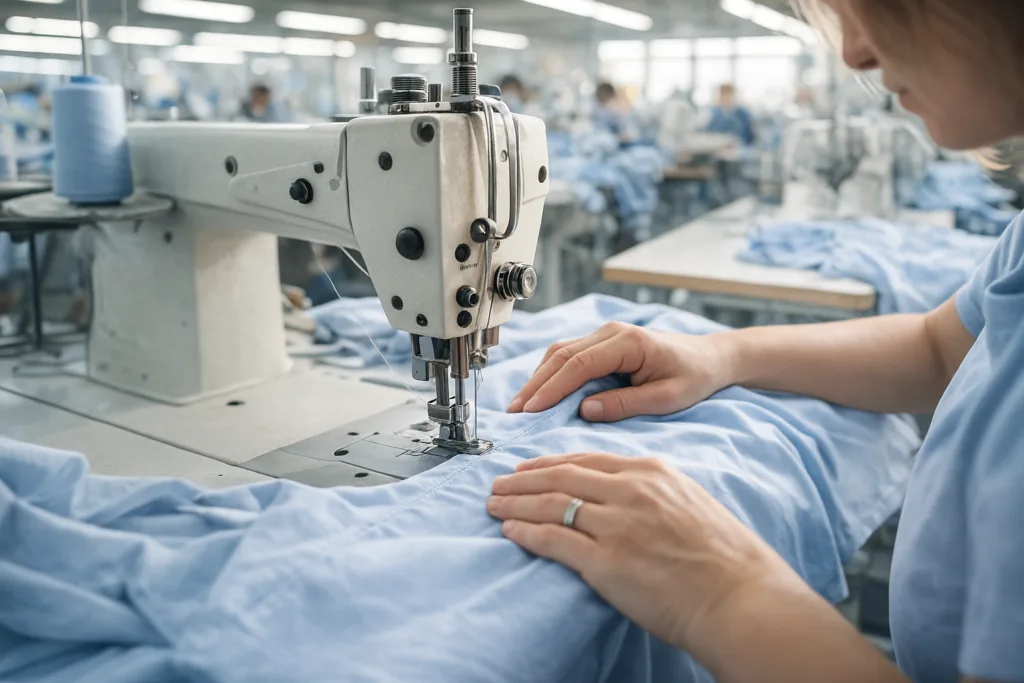
The lockstitch is the backbone of garment construction. Created by interlocking a needle thread with a bobbin thread, it forms a tight, flat seam that looks identical on both sides. Most home and industrial straight stitch machines use the lockstitch (stitch code 301).
Stitch Structure and Diagram
Lockstitch consists of one upper (needle) thread and one lower (bobbin) thread forming interlocking loops.
- Upper thread: Passes through fabric.
- Bobbin thread: Loops with upper thread underneath fabric.
- Seam look: Neat, flat, symmetric; often used for topstitching.
Strength and Elasticity
- Strength: High seam strength, limited primarily by thread quality and fabric integrity.
- Elasticity: Low. Lockstitch seams do not stretch, so they can break under high tension or in stretch fabrics.
Best Garment Applications
- Wovens: Shirts, pants, jackets, uniforms, bags.
- Stable knits: Collars, plackets, pockets, where stretch is not needed.
- Topstitching: Jeans, workwear, decorative surface seams.
Rain’s tip from the production line: Always check lockstitch seam tension on fabric. Too tight and you get puckering; too loose invites seam slippage or skipped stitches, especially in lightweight wovens.
Chainstitch: Structure, Advantages, and Uses
Chainstitch, commonly coded as 401 (double needle) or 101 (single thread), forms a series of interlinked loops on the underside of the seam. Unlike lockstitch, it does not require a bobbin, making it faster for long, uninterrupted runs such as side seams.
Stitch Structure and Diagram
Chainstitch uses two or more threads (needle and looper threads) that interloop beneath the fabric.
- Underside: Series of visible chain-shaped loops.
- Topside: Appears as parallel straight stitches.
Strength and Elasticity
- Strength: Moderate to high (good for side seams, waistband attachment). However, if a loop breaks, the whole seam can unravel quickly.
- Elasticity: Good. Excellent for seams needing some stretch, such as waistlines or knit garments.
Best Garment Applications
- Knitwear: T-shirts side seams, sweatpants crotch seams, lingerie.
- Denim/jeans: Classic for hem and waistband attachment, allows some expansion during wear.
- Socks, activewear, uniforms
Rain’s tip from production: Watch for chainstitch overrun at start/end: apply backtacking or bartack to anchor the threads and prevent run-out in high-stress areas.
Overlock Stitch: Structure, Stretch, and Seam Finishing
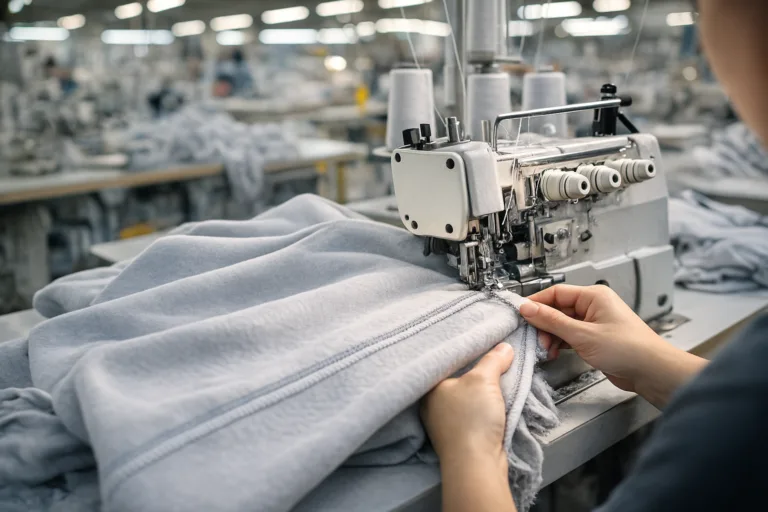
The overlock stitch (often 504 or 514 for 3- or 4-thread) is crucial in modern apparel for seam finishing, edge neatening, and constructing knit garments. The overlock machine trims the raw edge while enclosing it in thread loops, yielding both strength and stretch.
Stitch Structure and Diagram
Overlock uses one or two needles and a pair of loopers to create a series of thread loops wrapping the fabric edge.
- Needle threads: Penetrate fabric and hold seam together.
- Looper threads: Encapsulate the raw edge, preventing fraying.
Strength and Elasticity
- Strength: Excellent for knits, moderate for wovens. Multi-thread overlocks provide increased burst resistance.
- Elasticity: Very high, ideal for seams subject to lateral stretch.
Best Garment Applications
- Knit T-shirts: Side seams, armhole seams, rib attachments.
- Activewear, yoga wear, underwear: Essential for fabric stretch and comfort.
- Seam finishing: Raw edge covering in jackets, dresses, and lightweight wovens.
Rain’s production insight: Ensure knives and loopers are sharp and properly aligned. Dull blades or misaligned loopers cause edge nicking, unbalanced stitches, and skipped loops—a sure cause of customer complaints.
Comparing Stitch Types: Structure, Strength, and Garment Suitability
The table below summarizes the key differences between lockstitch, chainstitch, and overlock—essential knowledge for technical designers and factory production managers alike.
| Stitch Type | Stitch Code | Strength | Elasticity | Best Apparel Uses |
|---|---|---|---|---|
| Lockstitch | 301 | High | Low | Wovens, topstitching, pockets |
| Chainstitch | 401 | Moderate/Strong | Medium | Knitwear, denim side seams |
| Overlock | 504/514 | Moderate/Strong | High | Knit seams, edge finishing |
How to Choose the Right Stitch Type
- Identify fabric type: Is it woven or knit? Check elasticity requirements.
- Assess seam function: Will the seam take strain, stretch, or aesthetic load?
- Check garment use: Sportswear demands stretch; uniforms require durability; fashion pieces may prioritize appearance.
- Evaluate equipment and skills: Not all factories can handle all stitch types efficiently.
- Confirm compliance: Children’s wear and workwear may have specific seam security needs.
Stitch Density, Thread Types, and Seam Performance
Stitch types alone do not determine seam quality. Thread quality, stitch density (SPI – stitches per inch), and needle size influence whether a seam will withstand real-world use.
Optimizing Stitch Density
- Too few stitches/inch: Weak seams; common on overlock for lightweight knits or open structure fabrics.
- Too many stitches/inch: Causes puckering; increases production time and thread cost.
- Standard SPI for lockstitch: 8–12 for medium cotton shirtings, 10–15 for dress shirts, 7–9 for denim.
Thread Choices and Needle Selection
- Use core-spun polyester for strength in high-stress seams.
- Opt for textured or soft threads for seams next to skin (activewear, underwear).
- Match needle size and point to fabric (ballpoint needles for knits; sharp points for tightly woven fabrics).
Common Stitching Mistakes and How to Avoid Them
Stitch failures consistently appear in factory QC reports. Most can be traced back to either the wrong stitch type or poor setup.
Frequent Problems
- Popped seams: Using lockstitch on high-stretch knits.
- Seam unraveling: Failure to secure chainstitch ends.
- Fabric puckering: Overly dense lockstitch on lightweight fabric.
- Skipped stitches: Dull or wrong-sized needles, or uncalibrated tension.
- Unfinished raw edges: Skipping overlock on woven or easily fraying materials.
Checks to Prevent Defects
- Review all sewing operations versus fabric properties during sample stage.
- Inspect first-out samples for seam stretch, appearance, and bulk.
- Test seams by gentle stretching and pulling after sewing.
- Audit machines for correct tension, stitch density, and needle integrity.
Stitch Types Explained: Lockstitch, Chainstitch, Overlock
The term “stitch types” in apparel covers the distinctive ways threads are interlaced to form seams—each with unique behavior in wear, washing, and aesthetics. Lockstitch (301), chainstitch (401), and overlock (504/514) make up the core trio in garment manufacturing. Mastery of their structure and application leads to robust, comfortable, and professional-looking apparel.
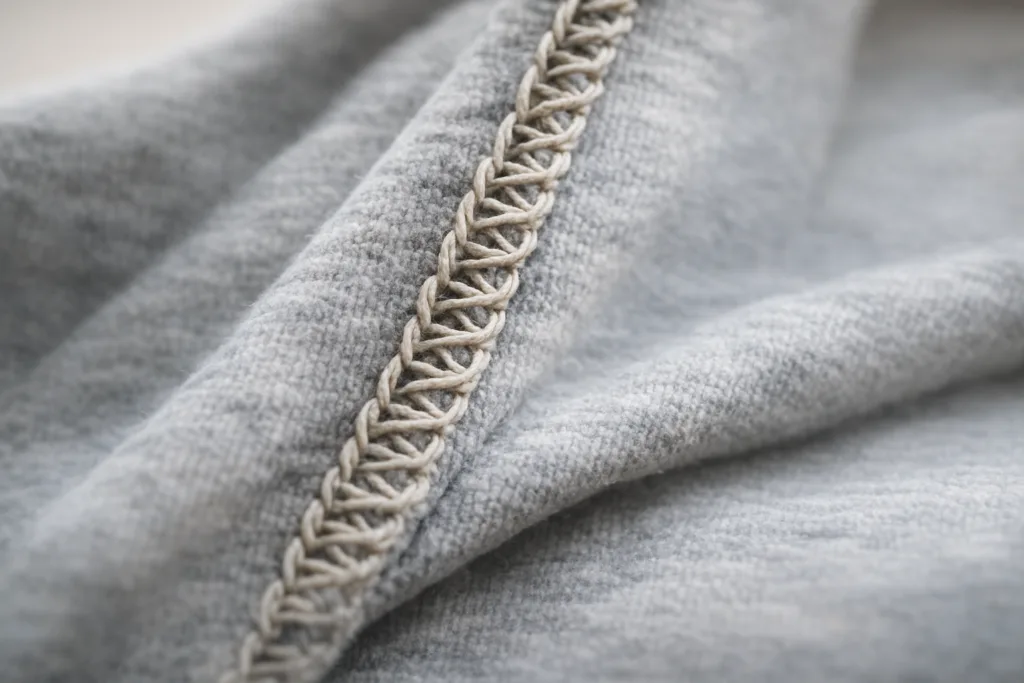
Why Stitch Types Matter
Designers and manufacturers must understand stitch types to ensure every part of the garment—from armholes to side seams—functions as intended. Poor stitch choices lead to costly repairs, returns, and dissatisfied customers.
Key Parameters to Evaluate
- Seam security: Will the stitch hold up under strain?
- Appearance: Is the seam neat, consistent, and appropriate for visible areas?
- Comfort: Are the seams bulky, rough, or likely to irritate?
- Production efficiency: Does the factory have the right machines and operators?
Common Mistakes in Stitch Selection
- Choosing lockstitch for stretch activewear
- Underestimating seam abrasion in jeans (upgrade to chainstitch or reinforced overlock)
- Neglecting edge finishing on good-quality wovens (should always overlock or bind)
Practical Tips from the Factory Floor
- Always order pre-production samples with correct stitch types for approval.
- Test seams with stretch and tensile checks in-line and end-line during production.
- Include stitch type codes and diagrams in tech packs/spec sheets to align with factory setup.
- Discuss with your supplier any need for bartacking, seam tapes, or elastic threads for special applications.
Seam Construction Diagrams and Real-World Examples
Seeing the anatomy of each stitch clarifies when—and why—to use it for a specific garment. Below are simplified seam diagrams and short examples for each apparel stitch type.
Lockstitch – Flat Felled Seam Example
Typically seen on denim outer leg seams: interlocked upper and bobbin threads, with raw edges enclosed for maximum durability.
Chainstitch – Side Seam in T-shirts
Overlapping fabric panels with double needle rows on top and loopers on reverse, providing both strength and stretch.
Overlock – Sweatshirt Side Seam or Rib Attachment
Raw edges trimmed and enveloped in thread loops for smooth, elastic, and neat-finished joints.
Apparel Category Examples: Matching Stitch to Garment Type
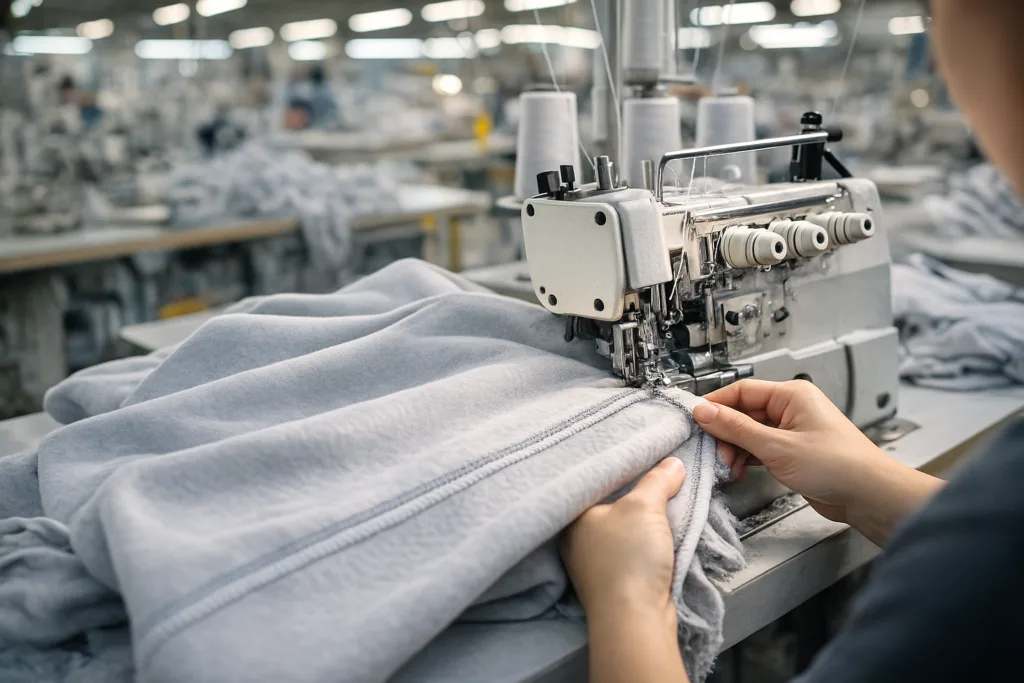
The right stitch elevates performance and customer satisfaction. Here are garment-specific recommendations based on decades of factory observations:
- Shirts (wovens): Lockstitch main seams, overlock edge finishing.
- Denim jeans: Lockstitch plus chainstitch for hems and waistbands, bartack reinforcements.
- T-shirts (knits): Overlock on side seams, chainstitch at shoulder and hem, coverstitch at hems for flatness.
- Sportswear/activewear: 4-thread overlock or flatlock for high-stretch seams, soft thread for comfort.
- Uniforms/workwear: Lockstitch for structure, chainstitch bartack for belt loops.
- Children’s clothing: Always use secure, enclosed seams and avoid exposed overlock on sensitive skin areas.
Frequently Asked Questions
What is the difference between lockstitch and chainstitch?
Lockstitch uses two threads that interlock for a strong, flat seam while chainstitch forms loops on the underside, offering more elasticity but risk of unraveling if cut.
When should overlock stitches be used?
Overlock is best for knit fabrics, edge finishing, and any seam that must stretch without losing strength or neatness, such as T-shirt sides or activewear joints.
Can I use the same stitch type for all garments?
No, garment type, fabric structure, and seam function determine stitch selection; mixing lockstitch, chainstitch, and overlock is industry best practice for durability and comfort.
How do stitch density and thread affect seam strength?
Proper stitch density avoids weak or puckered seams, while quality threads matched to fabric type ensure strength and minimize seam failures during wear or washing.
What causes apparel seams to unravel?
Chainstitch seams unravel if not backtacked or bartacked, lockstitch may slip with wrong thread tension, and poor overlock formation can lead to loose or fraying edges.
How can I specify correct stitch types in tech packs?
Include ISO stitch codes, detailed diagrams, and clear seam placement instructions in the tech pack; discuss sample approvals and machine capability with your factory before bulk production.