Interfacing Meaning: A Foundation for Garment Structure
Interfacing is a textile material added between layers of fabric to give support, shape, or firmness where required. Think of it as the ‘hidden skeleton’ behind the tailored look in shirts, dresses, jackets, and countless other apparel products. From crisp shirt collars to structured plackets on polos and secure cuffs on formalwear, interfacing ensures garments hold their intended form and smoothness during use and after repeated washing.
- Definition: A supporting material, usually textile, sewn or fused between outer and lining fabrics for stability and shape.
- Common Materials: Nonwoven, woven, or knit constructions, often made from polyester, cotton, rayon, or blends.
- Core Function: Preventing stretching, wrinkling, or collapse in key areas of garments.
PURPOSE: Why Interfacing Is Essential in Modern Apparel
Interfacing is much more than just stiffness. Factories rely on it for technical reasons:
- Shape retention: Ensuring collars, cuffs, and button plackets keep their character and stand up to repeated handling, ironing, and laundry cycles.
- Improved sewing quality: Providing a stable ground to support buttonholes, snaps, embroidery, or dense seams—reducing the risk of puckering or fabric distortion.
- Comfort & appearance: Giving the correct drape—neither cardboard-stiff nor floppy—so that the garment feels good and looks neat through wear.
Rain’s tip from the production line: In bulk shirt production, inconsistent interfacing application is a key cause of collars curling, cuffs puckering, or plackets twisting after wash. Always check for properly chosen and bonded interfacing in PP (pre-production) samples.
Types of Interfacing: Choosing the Right Foundation
Interfacings are classified by structure and method of application. Each type has unique pros and cons in bulk production and garment performance.
By Structure
| Type | Construction | Common Use | Pros | Cons |
|---|---|---|---|---|
| Woven | Yarns interlaced (like standard fabric, often with a plain weave) | High-end shirts, jackets, dresses | Good stability, natural drape, durable | Can shrink; higher cost; must match grain |
| Knit | Loops of yarn (stretchy structure) | Knits, lightweight blouses, stretch fabrics | Flexible, follows garment stretch | Less structure for crisp areas |
| Nonwoven | Bonds fibers together without weaving | Collars, cuffs, plackets, pockets (mid/low cost) | Stable, easy to cut (no fraying), lower cost | Can be stiff, less breathable, pilling risk |
By Method of Application
- Sew-in Interfacing: Attached by stitching into the seam; used for high tailoring, soft shapes, or areas needing re-workability. More time and skill required.
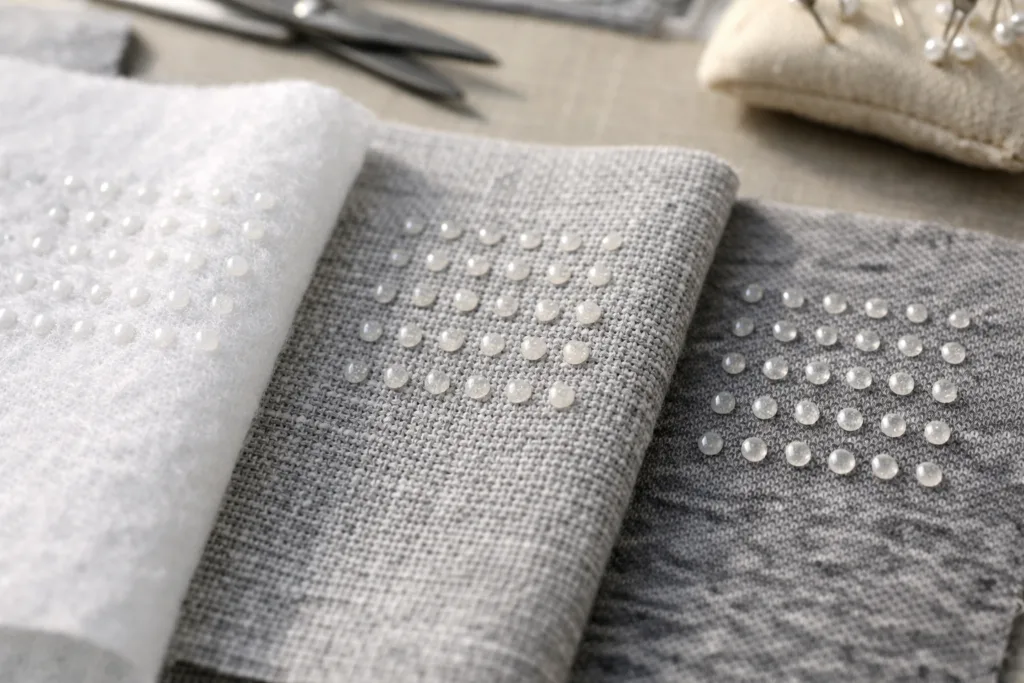
- Fusible Interfacing: Has a special adhesive (resin or glue) on one side that bonds to the fabric using heat and pressure—typically with an iron or a heat press. It’s the standard choice for mass production due to consistency and speed.
Fusible Interfacing: The Backbone of Factory Efficiency
Fusible interfacing is the industry mainstay. With proper heat and dwell time, it creates a strong, even bond that resists wash and wear. In most export shirt, blouse, and uniform factories, over 90% of collars, plackets, and cuffs use fusible interfaces unless a specific drape or softness is demanded.
Advantages
- Quick to apply (ironed or pressed in seconds)
- Reduces labor and QC steps in mass production
- Makes shaping and cutting more precise
Risks and Controls
- Poor bonding leads to bubbling, delamination after wash
- Heat-sensitive fashion fabrics (e.g., some viscose, synthetics) can be scorched; test before bulk
- Fusing parameters (temperature, time, pressure) must be adjusted for each interfacing and base fabric—factory testing is key
Where Interfacing Is Used: Collars, Cuffs, Plackets & Beyond
Interfacing finds its place in all structured components of a garment, but is mission-critical in:
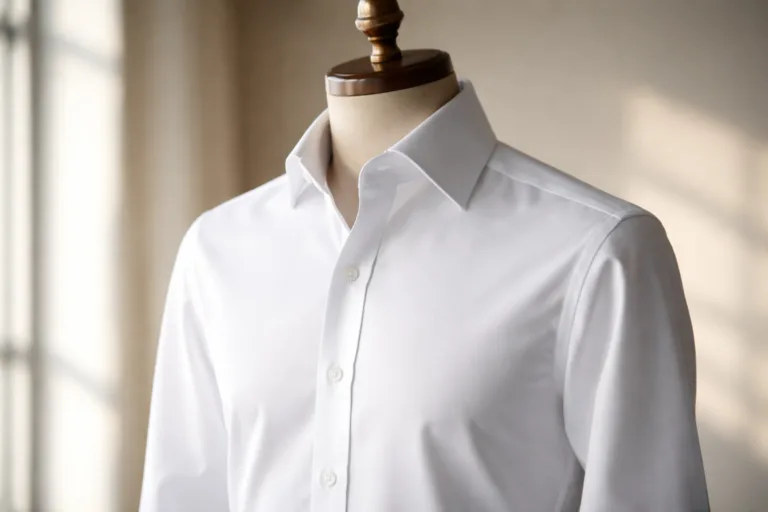
- Collars: Shirt, polo, uniform, and jacket collars all require interfacing to achieve a crisp edge, stable roll, and non-collapsing shape.
- Cuffs: Prevents cuffs from wrinkling, curling, or losing shape as they’re worn and laundered repeatedly.
- Plackets: (The reinforced band of fabric where buttons/snaps are sewn)—interface ensures the placket stays flat, doesn’t stretch or sag, and tolerates repeated buttoning/unbuttoning.
Other common zones are waistbands (especially for dress pants/skirts), pocket openings, lapels, brims on hats, and even side tabs or decorative patch elements on workwear and uniforms.
Key Decision: Matching Interfacing to Fabric & Design
- Assess the base fabric: Is it lightweight, medium, or heavy?
- Test for shrinkage and compatibility. A 2-3% shrink template is common in woven shirts; test bonding and see if puckering occurs after wash.
- Choose interfacing weight and structure accordingly. Lightweight poplin collars need a soft woven or nonwoven fusible; heavy denim or canvas uses firmer options.
How Interfacing Changes Garment Performance
Using optimal interfacing delivers:
- Smoother, cleaner appearance in high-stress areas
- Improved dimensional stability during and after sewing
- Longevity—garment shape resists the impact of repeated washing, drying, and wear
- Higher value perception (especially important in formal shirts and uniforms)
On the other hand, mismatched interfacing leads to ‘bubbling’, stiffness, or visible lines—immediately downgrading garment quality.
Choosing Interfacing: Industry Steps & Quality Controls
Lab & Production Testing
- Bond strength and delamination tests: Confirm proper fusing with the intended fabrics
- Wash and shrinkage simulation: Ensure no bubbling, puckering, or adhesion failure
Sample Stage
- PP sample check: Collars, cuffs, and plackets must be cut and pressed for production-fused stability
- Bulk fabric/lot tests: Factories often cut and fuse a swatch from each new shipment to spot batch inconsistencies
Example Factory Checklist
- What is the base fabric composition and weight (GSM)?
- Which interfacing has been specified—structure, application method, weight?
- Is the fusing temperature compatible with the main fabric? (Usually 125–160°C for most fusibles)
- Has wash testing been done at least twice for delamination?
- Are collars/plackets finished without bubbling, hard spots, or separation?
How Interfacing Is Applied in Garment Factories
Bulk Production Process
- Fabrics are relaxed and inspected for faults
- Patterns are cut for garment panels and for interfacing (mirrored or slightly smaller, depending on design)
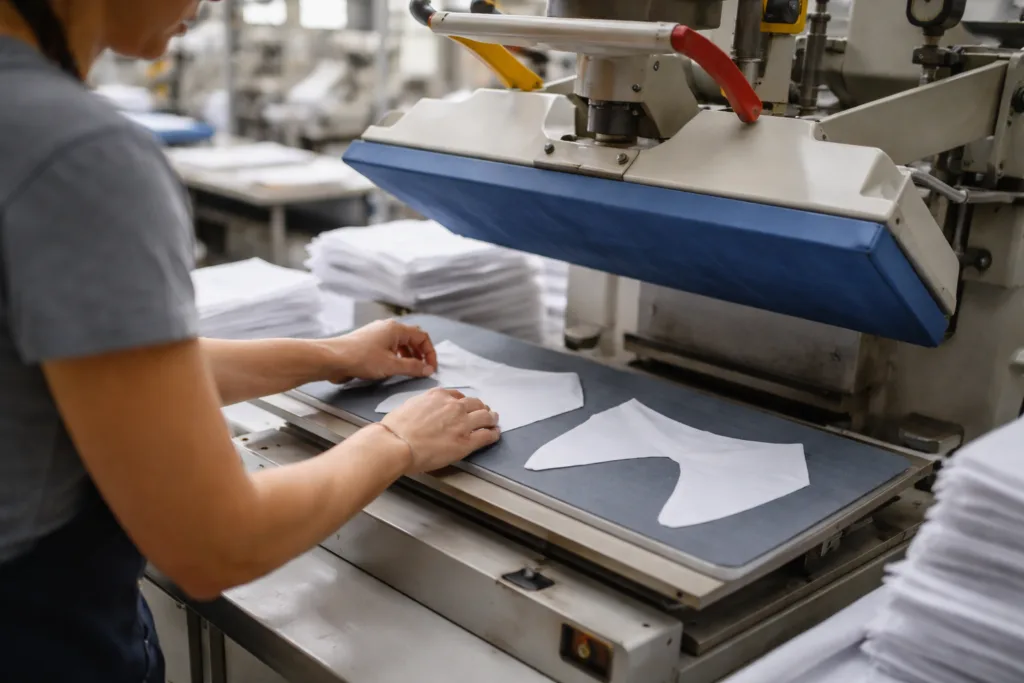
- Fusible interfacing is placed adhesive-side down, then pressed using a heat fusing machine or iron under controlled temperature, pressure, and time
- Bonded pieces cool and are checked for bubbles or delamination
- Panels are assembled into collars, cuffs, plackets, etc., and topstitched for reinforcement
Small-Batch/Sample Making Differences
- Hand-application with home iron, checking for even bond
- Sew-in interfacing can be hand-basted for unique fabrications or very soft variations
Special Considerations by Garment Type
Shirts (Formal & Casual)
Both formal dress shirts and casual polos rely on interfacing for crisp collars and stable cuffs. Nonwoven fusible is standard for everyday styles; woven or knit fusibles add luxury in premium lines.
Dresses & Blouses
Delicate fabrics (e.g., silk) may demand lightweight sew-in or knit interfacing to prevent stiffness, while structured segments (waistbands, lapel facings) benefit from higher weight fusibles.
Jackets & Outerwear
Heavier, more rigid interfacings are used, often layered, to build body into lapels, pocket flaps, or brims. Some tailored jackets combine sew-in and fusible structures for superior drape and recovery.
Real-World Issues: Interfacing Defects & Troubleshooting
Bubbling & Delamination
Occurs when fusing parameters are incorrect or incompatible materials are combined. Always test on actual garment batches due to supplier variations.
Puckering
Stiff interfacing combined with lightweight or stretchy base fabrics causes puckering. Solution: match stretchiness/weight and test fusing lines for visual impact after wash.
Yellowing, Odor, or Visible Glue Lines
Can result from over-fusing, contaminated interface, or poor-quality adhesives. Confirm supplier QC certificates or consider OEKO-TEX certified interfacings for safety in children’s wear.
What Is “Interfacing”? (Definition & Practical Guide)
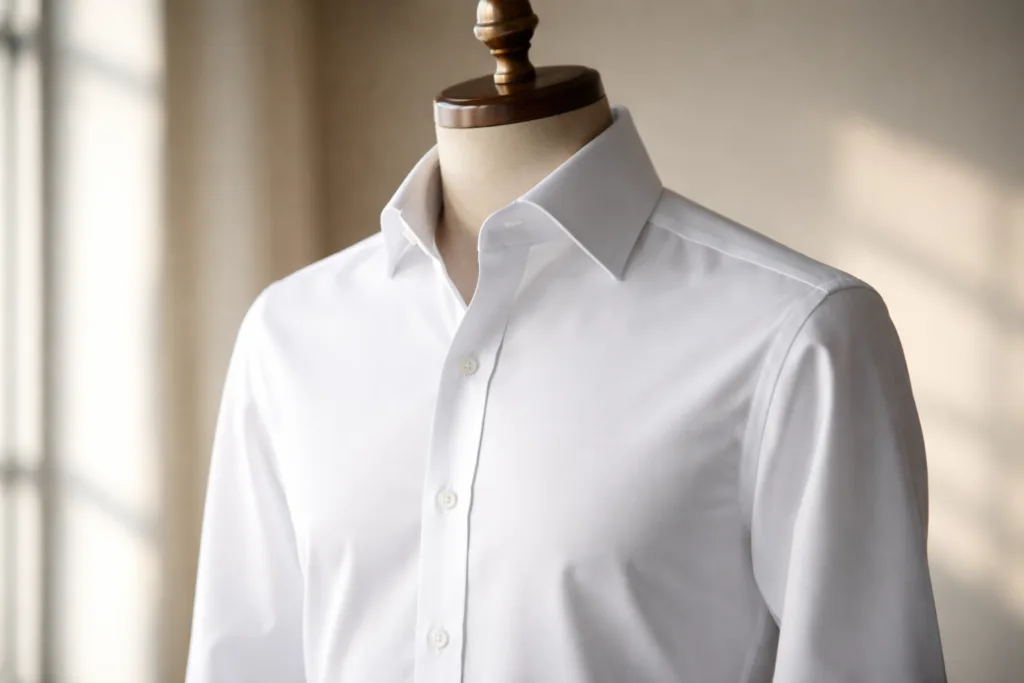
Interfacing is a supportive material (woven, nonwoven, or knit) applied to key areas of garments—most commonly collars, cuffs, and plackets—to provide extra body, prevent wrinkling, and preserve design shape. The interfacing meaning goes beyond just ‘stiffener’: it is the technical solution for making garments look neat, resist wear, and function as intended. The most widely used is fusible interfacing, which bonds to the main fabric using heat and pressure, delivering efficiency and reliability in production.
What to Discuss with Your Factory or Supplier
- Exact interfacing structure (woven/knit/nonwoven, composition, weight in gsm)
- Fusing machine temperature and pressure setup
- Testing: Shrinkage, delamination, and wash durability
- Visual approval of collars, plackets, and cuffs in size set and PP samples before bulk
In practice, interfacing choice directly affects cost, perceived quality, and bulk consistency. Proper alignment with fabric and intended use is a hallmark of a well-run apparel QC program.
Frequently Asked Questions
What does interfacing mean in garments?
In garments, interfacing refers to a textile material inserted between layers of fabric to provide support, stability, and structure, commonly in collars, cuffs, and plackets.
What is the difference between fusible and sew-in interfacing?
Fusible interfacing bonds to fabric using heat and pressure, while sew-in interfacing is sewn into the seam. Fusible is faster and used more in bulk production.
Where is interfacing used in shirts?
Interfacing is typically used in the collar, cuffs, and placket of shirts to maintain crisp shape and provide reinforcement at stress points.
Can interfacing be washed and ironed?
Most commercial interfacings are designed to withstand normal washing and ironing, but they must be correctly chosen and bonded to prevent bubbling or delamination.
How do I test if fusible interfacing is properly fused?
Check by trying to separate layers gently—if the bond is strong with no bubbles or peeling after washing and ironing, fusing is successful.
What happens if the wrong interfacing is used?
The wrong interfacing can cause stiffness, puckering, delamination, or bubbling, leading to reduced garment appearance and shorter life span.