Introduction: The Pivotal Role of Tech Pack vs. Spec Sheet
When launching a new apparel line or fine-tuning a garment in production, professionals often encounter two essential documents: the Tech Pack and the Spec Sheet. Though these terms are sometimes used interchangeably, their differences play a critical role in the apparel design and manufacturing workflow. Understanding how a Tech Pack serves as a comprehensive blueprint and how a Spec Sheet summarizes precise specifications can dramatically impact product quality, timeline, and cost. This article demystifies the unique purposes, key elements, and best practices of both, empowering designers, product developers, and brand managers to communicate more effectively with manufacturers and avoid costly mistakes.
Defining Tech Pack vs. Spec Sheet
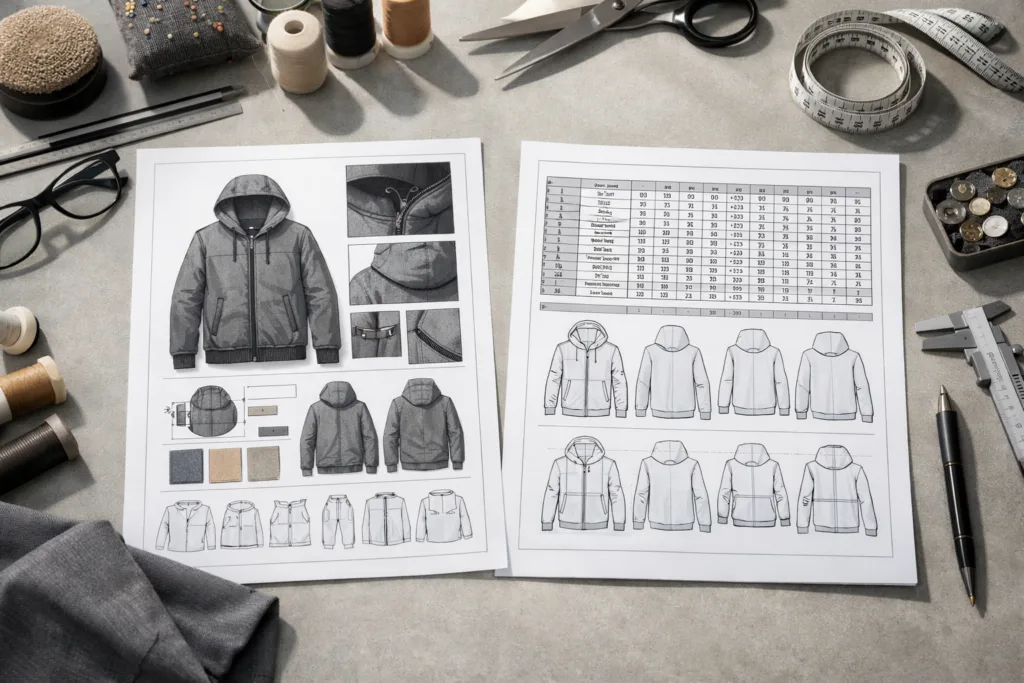
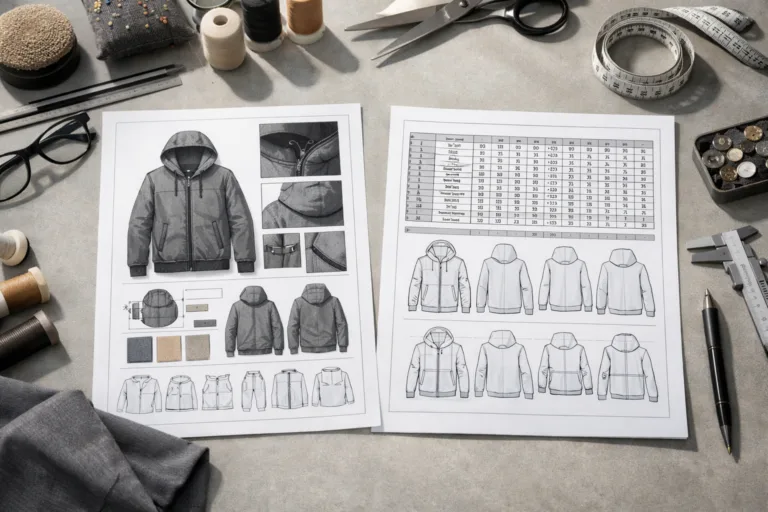
At their core, a Tech Pack is an in-depth construction guide for a garment, while a Spec Sheet is a streamlined summary focused on measurements and essential data. Tech Packs drive development from conception to bulk manufacturing, while Spec Sheets are typically used for clarity and control throughout sample review and production. Apparel Wiki defines the Tech Pack as “the master reference for design intent,” contrasting with the Spec Sheet, which acts as the “snapshot” for production details.
What is a Tech Pack?
A Tech Pack is a collection of documents containing every detail necessary to manufacture a garment, including technical drawings, materials, measurements, trims, construction instructions, and labeling requirements.
- Design sketches and flats
- Fabric and trim info
- Garment measurements and size grading
- Construction and stitching methods
- Packaging and labeling details
What is a Spec Sheet?
A Spec Sheet (or Specification Sheet) distills essential measurements, materials, and tolerances needed for sampling or bulk production. It is typically one component of a Tech Pack or provided as a standalone reference. Key elements include:
- Measurement chart for each size
- Material composition and trims
- Sizing tolerances
- Basic construction details
Key Differences: Tech Pack vs. Spec Sheet
| Feature | Tech Pack | Spec Sheet |
|---|---|---|
| Purpose | Full design and manufacturing guide | Quick reference for measurements/materials |
| Contents | Drawings, fabrics, stitching, labels, QC points | Measurement chart, tolerances, materials list |
| Audience | Designers, sample makers, factories | Quality control, sampling, production teams |
| Usage Stage | Concept, sampling, production, revisions | Sampling, QC, mass production |
| Level of Detail | Comprehensive (all design intent) | Summary (essential data only) |
Why Both Documents Matter
Neglecting either document can lead to miscommunication, production errors, and increased costs. A Tech Pack aligns the factory with every design nuance, while a Spec Sheet streamlines quality control and ensures size consistency across runs. Consider referencing the Anatomy of a Tech Pack guide by Apparel Wiki for an in-depth breakdown.
Anatomy of a Tech Pack: Essential Sections
Developing a thorough Tech Pack requires multiple interlocking sections:
- Cover page (style name, season, designer)
- Technical sketch or flat drawing
- Bill of materials (fabric, trims)
- Measurement chart by size
- Construction instructions
- Grading rules for sizes (Grading Rules)
- Labeling, packaging requirements
- Quality checkpoints
How to Build a Measurement Chart
Measurement charts are the backbone of both Tech Packs and Spec Sheets. For guidance on point-of-measure (POM) selection and chart creation, see Apparel Wiki’s How to Create a Measurement Chart.
Spec Sheet Essentials: What Makes a Good Sheet?
Accuracy, clarity, and completeness are critical for a reliable Spec Sheet. At a minimum, include:
- Style code and product name
- Measurement specs for each size
- Material and trim details
- Sizing tolerances and QC notes
- Any critical construction points
When to Use a Tech Pack vs. Spec Sheet?
Use a Tech Pack for all initial development, sample making, and whenever new design details or construction changes occur. Use a Spec Sheet for communications about measurements, during factory QC, and at final production handoff.
Real-World Impact: Errors and Successes
Many production errors stem from missing details in Tech Packs or ambiguous tolerances in Spec Sheets. In one case, a brand reported receiving hundreds of shirts with the wrong cuff width—an oversight traced back to a truncated Spec Sheet. Maintaining both documents, clear and current, heads off disputes and keeps production moving smoothly.
Best Practices for Creating a Tech Pack
- Work cross-functionally with design, technical, and QC teams
- Use clear language and visual aids
- Include stitch types, trims, and labeling images (see Stitch Types)
- Update with every design revision
- Store versions securely for reference
Best Practices for Creating a Spec Sheet
- Reference main Tech Pack for latest updates
- Double-check all measurements and tolerances
- Include physical sample images where possible
- Clearly state permissible tolerances
- Align with factory QC protocols (Final Inspection Guide)
Collaborating Across Teams: Key Communication Tips
Garment creation is a cross-functional endeavor—from designers and pattern-makers to production leads and QC experts. Clear Tech Packs and Spec Sheets foster shared understanding and trust. Keep channels open and track revisions with each sample iteration for best outcomes.
Translating Design Vision to Product Reality
The main objective of every Tech Pack is to capture the designer’s vision and hand it off seamlessly to the factory. Spec Sheets ensure that vision is honored through measurable checkpoints and repeatability. Apparel Wiki’s approach encourages teams to treat these documents as living, breathing guides, not static checklists.
Common Pitfalls and How to Avoid Them
- Omitting stitch or seam details—refer to Types of Seams
- Confusing grading for different sizes—see Size Grading Explained
- Failing to update Spec Sheets after each sample round
- Not specifying test protocols for fabric shrinkage (Shrinkage Testing)
Apparel Wiki Insights: Tech Pack vs. Spec Sheet
Apparel Wiki cautions that relying solely on Spec Sheets may result in unexpected construction shortcuts or material substitutions. Using full Tech Packs, regularly reviewed and revised, is the gold standard for controlling costs, protecting quality, and mitigating manufacturing risks.

Integrating Tech Pack and Spec Sheet in Workflow
Optimize your product development process by using the Tech Pack for all upstream activities—design, sampling, and construction planning—then leverage the Spec Sheet during bulk production and QC checks.
Digital Tools and Software Solutions
Digital platforms and CAD tools now streamline Tech Pack creation and Spec Sheet management. Consider solutions that support real-time editing, CAD integrations, and version history to reduce manual error and offer greater transparency.
Measuring Garments Accurately: Pro Tips
Accurate measurements are the backbone of great Spec Sheets and Tech Packs. For industry-tested advice, visit Apparel Wiki’s How to Measure a Garment guide.
Quality Control and Compliance
Both documents function as pillars for product quality assurance and compliance checks. Include care standards, labeling, testing protocols, and final inspection steps to meet global compliance needs.
Sample Review and Production Approval
Use Spec Sheets for sample review and production approvals, ensuring each item matches the intended specs. Return to the Tech Pack for more complex clarifications.
Costing and Lead Time Planning
Tech Pack and Spec Sheet data can be used to inform costing and schedule estimates. More detailed data leads to fewer surprises and greater control over outcomes.
Commonly Asked: Tech Pack vs. Spec Sheet
A Tech Pack answers how, why, and what for product development. A Spec Sheet answers what and how much, for production consistency. Each serves as a critical communication tool.
Conclusion: Navigating Apparel Development with Confidence

In the world of garment manufacturing, attention to detail ensures smooth production and quality outcomes. Understanding the difference between a Tech Pack and Spec Sheet empowers teams to communicate clearly, align expectations, and prevent costly errors. Use both documents strategically for design development, production, and quality control—your products and bottom line will thank you.
Frequently Asked Questions
What is the main difference between a Tech Pack and a Spec Sheet?
A Tech Pack offers full details from design to production; a Spec Sheet summarizes key measurements and materials for manufacturing.
When should you provide a Tech Pack versus a Spec Sheet?
Use a Tech Pack for design and sampling phases; a Spec Sheet is best for QC and production rounds where concise data speeds workflow.
Can a Spec Sheet exist without a Tech Pack?
Yes, but it’s risky. A Spec Sheet alone may lack crucial construction details, leading to miscommunication and quality issues.
How often should you update your Tech Pack and Spec Sheet?
Update after every design revision, sample review, and before bulk production to avoid mistakes and maintain clarity.
Which document do manufacturers prefer for production?
Manufacturers rely on Tech Packs for thorough guidance but use Spec Sheets for rapid measurement confirmation and QC checks.
Are digital Tech Packs and Spec Sheets more effective than paper?
Digital versions are easier to update and share, reducing errors and optimizing version control throughout development.
Related Reading
- Unlock Every Section: The Complete Tech Pack Walkthrough
- 9 Expert Methods for Garment Measurement and Fit
- How Size Grading Shapes Consistent Apparel Production
- Build Rock-Solid Measurement Charts for Garment Development
- Mastering Final Inspections: Apparel Quality Control Essentials
- Demystifying Stitch Types: The Key to Quality Garment Construction
- Proven Seam Types for High-End Fashion Manufacturing
- The Ultimate Fabric Shrinkage Test Solution for Profitable Production