Introduction: Why Digital Pattern Making Matters More Than Ever
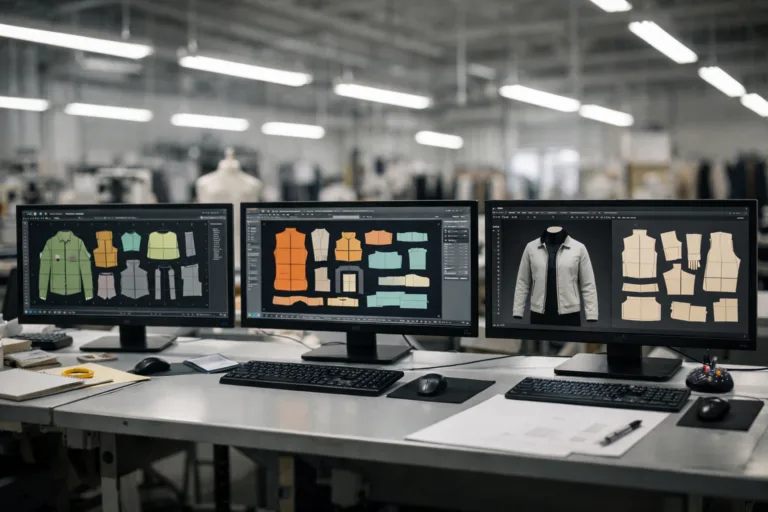
Digital pattern making, powered by advanced CAD systems like Gerber, Lectra, and CLO3D, is reshaping the fabric of the apparel industry. As fashion cycles quicken and sustainability demands rise, these technologies offer precision, efficiency, and smarter collaboration. Understanding their practical advantages and real-world integration challenges is crucial for brands, manufacturers, and aspiring pattern makers.
What Is Digital Pattern Making?
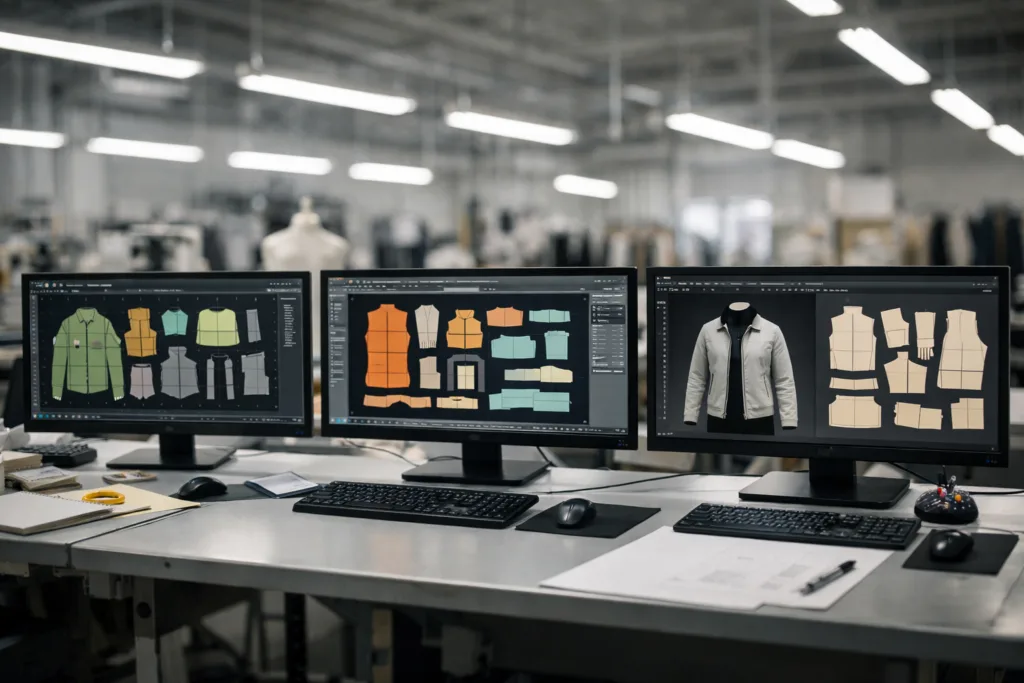
Digital pattern making replaces traditional paper-based methods with computer-aided tools. By moving to a virtual environment, designers can create, modify, and test garment patterns faster and more accurately, setting the stage for modern, responsible apparel production.
The Evolution from Manual to Digital Patterns
Manual pattern making, while still foundational, is time-intensive and leaves room for human error. With digital pattern making, repetitive tasks are automated, adjustments are seamless, and sharing files becomes instant—fundamentally transforming how garments are developed and produced.
Key Benefits of Using CAD Systems in Pattern Making
CAD systems offer unmatched benefits, including:
- Rapid editing and prototyping
- Consistent accuracy and grading
- Enhanced collaboration among teams
- Easy integration with other digital tools
- Support for sustainable practices
Major Players: Gerber, Lectra, and CLO3D
Three platforms dominate the digital pattern making space:
- Gerber: Known for robust industry features and integration with cutting hardware
- Lectra: Offers extensive automation and fabric simulation
- CLO3D: Excels in true-to-life 3D visualization, bridging designers with pattern engineers
Comparing Gerber, Lectra, and CLO3D
| Feature | Gerber | Lectra | CLO3D |
|---|---|---|---|
| User Interface | Technical, proven | Comprehensive, customizable | Intuitive, visual |
| 3D Simulation | Basic-to-moderate | Advanced fabric behavior | Photorealistic 3D drape |
| Collaboration | Strong for factories | End-to-end workflow | Designer-focused sharing |
| Sustainability | Efficient lays, fabric utilization | Automated waste reduction | Minimal prototyping waste |
How Digital Pattern Making Streamlines the Design Process
Digital systems shrink lead times. Pattern changes happen digitally, saving hours—sometimes days—over manual redrafting. For example, a size adjustment or design tweak can be tested in minutes, not weeks. Apparel Wiki notes that the most successful teams use these tools to compare flat pattern and draping approaches efficiently.
Accuracy and Repeatability in Pattern Creation
Digital CAD tools apply math to pattern construction, which means you eliminate cumulative errors that creep in with tracing and retracing. Notches, grain lines, and ease become more precise, helping ensure perfect garment fit. For more on pattern accuracy, explore our deep dive into pattern making methods.
The Role of 3D Simulation: From Flat to Fit
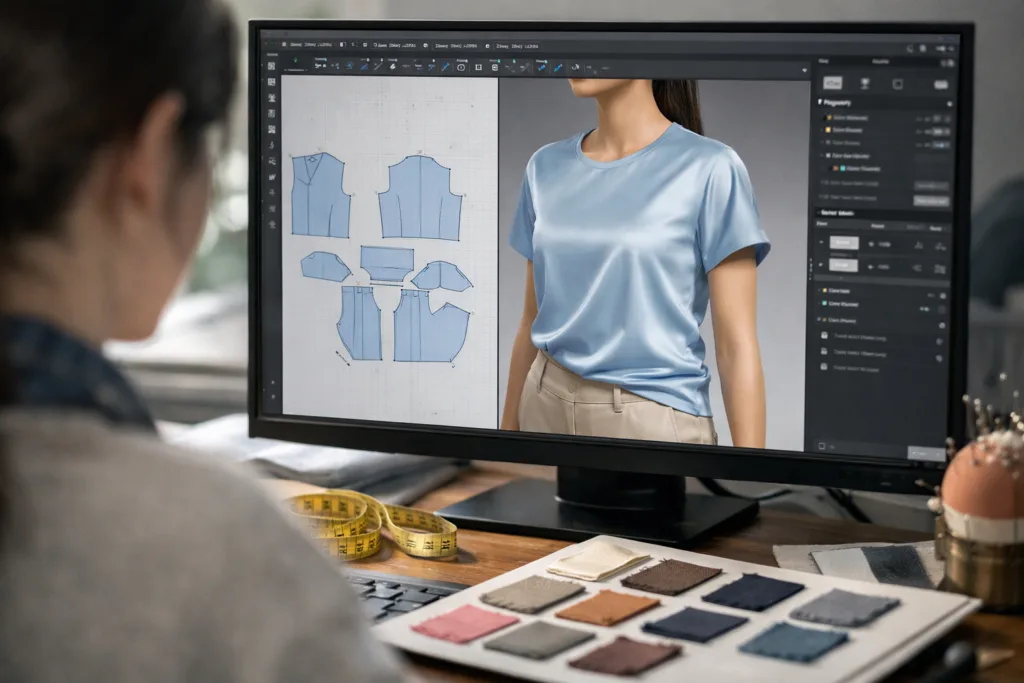
Especially with CLO3D and Lectra, 3D sample visualization helps spot design issues, fitting problems, or drape miscalculations—before a single fabric cut. Virtual avatars can display a garment in motion, giving rapid visual feedback. This is a game-changer for brands working across multiple size ranges or styles.
Integrating Digital Patterns into the Manufacturing Workflow
CAD patterns transform downstream processes. They connect directly with cutting equipment, are easily graded for size ranges, and provide spec sheets for technical teams. Digital files shorten sample development and reduce materials waste. See our complete tech pack manufacturing guide for process details.
Team Collaboration: Seamless File Sharing and Edits
Cloud-based or networked CAD allows multiple users—designers, pattern makers, sewing room managers—to access and update the same files in real time. This tightens communication, cuts down version confusion, and allows teams to work from anywhere in the world.
Sustainable Fashion: Reducing Waste with Digital Pattern Making
One of the biggest sustainability wins is material conservation. Digital pattern nesting—automatically arranging pieces for minimal fabric waste—can boost yield by 2–7%. 3D visualization reduces the need for physical samples, minimizing landfill impact. Many brands are using CAD-powered workflows to further sustainable fashion initiatives.
User Experiences: Real-World Insights from Pattern Makers
Pattern makers frequently report improved job satisfaction when using digital tools—they can focus on creative problem-solving instead of tedious redrawing. However, the learning curve can be steep, especially for team members accustomed to hand techniques. Most users agree that the productivity gains pay off quickly.
Potential Challenges When Adopting CAD Systems
Switching to digital pattern making isn’t always smooth. Common hurdles include:
- Initial software investment and licensing costs
- Training time for experienced manual pattern makers
- IT infrastructure and update management
- Compatibility when sharing between different CAD platforms
Overcoming the Transition: Training & Change Management
Progress depends on leadership support and continuous training. Brands that invest in regular workshops and peer mentoring adapt fastest. Apparel Wiki’s editorial team suggests mapping out a phased transition—starting with smaller projects before scaling to full-product lines.
Apparel Wiki’s Perspective: CAD as an Industry Equalizer
From a manufacturing editor’s viewpoint, digital pattern making flattens the learning curve for small brands entering the market. Garment fit, pattern grading, and measurement accuracy become more democratic, letting startups compete with established labels—provided the team embraces new skills.
CAD-Driven Pattern Grading: Scaling with Consistency
Automated grading in CAD ensures size run consistency. Markers and base blocks can be altered and re-saved without repeated manual work, preserving proportional accuracy and speeding up size expansion across collections.
Digital Pattern Making for Knits vs. Wovens
CAD tools handle the unique stretch and recovery needs of knits versus wovens. With digital settings, designers can adjust patterns for fabric behavior, minimizing fit issues common to different textile types. For more, see our guide on patterns for knits and wovens.
Impact on Communication: Better Tech Packs and Spec Sheets
Patterns created in CAD can export precision diagrams directly into digital tech packs or spec sheets. This visual clarity cuts production errors, delays, and misinterpretations between design and manufacturing teams.
How Digital Pattern Making Boosts Lead-Time and Quality Control
Real-time simulations and rapid edits cut lead-time dramatically. Alongside pattern digitization, spec alignment and sample reviews improve, leading to better production outcomes and reduced quality control issues.
CAD, Cloud, and Future Collaboration Models
As more CAD providers move toward cloud solutions, collaborative opportunities expand. Design, pattern making, sampling, and production can all happen synchronously—across continents—without the friction of email or version bloat.
Cost Considerations: ROI of Digital Systems
Though initial costs for CAD software (and possible hardware upgrades) are significant, the return on investment is realized quickly in reduced sampling, higher accuracy, and fewer delays. Teams typically see cost-savings within one to two seasons.
Digital Patterns and the Future of Garment Manufacturing
Looking forward, digital pattern making aligns with automated manufacturing, AI-driven fit prediction, and on-demand production. As industry needs evolve, expect tighter integration with robotics and smart factories.
Summary: Key Takeaways for Fashion Professionals
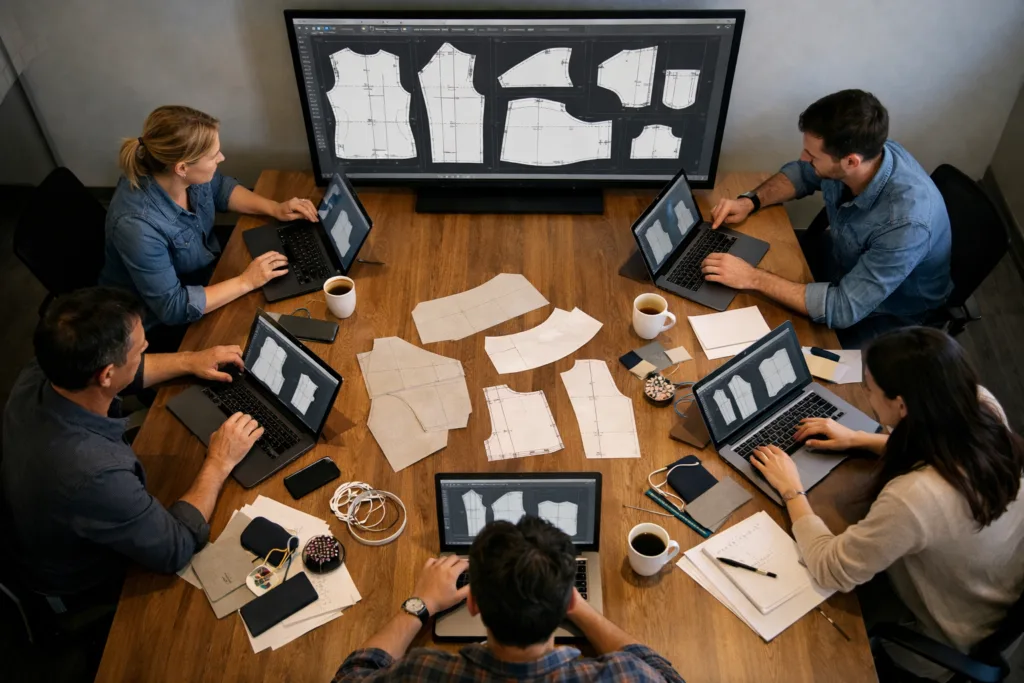
Digital pattern making with CAD systems like Gerber, Lectra, and CLO3D is no longer optional—it’s the new standard in fashion. Brands that adapt early gain flexibility, product consistency, and sustainability benefits, preparing them to compete in a digital-first marketplace.
Frequently Asked Questions
What is the main advantage of digital pattern making?
It dramatically increases pattern accuracy, accelerates design changes, and improves collaboration between teams by centralizing pattern files online.
Are digital CAD systems difficult to learn?
While they have a learning curve, most pattern makers adapt with proper training and hands-on practice. Ongoing support helps bridge any initial technology gaps.
Can digital pattern making software work with any fabric type?
Yes, leading CAD systems let users create and adjust patterns for both knits and wovens, factoring in stretch, recovery, and drape through simulation features.
How do CAD systems support sustainability initiatives?
Digital pattern making reduces physical sampling, paper waste, and fabric offcuts, making production more environmentally friendly while maintaining quality.
Is it possible to integrate CAD systems with tech pack tools?
Absolutely. Most major CAD platforms allow users to export accurate measurements, diagrams, and details directly into tech packs or spec sheets for clear communication.
What challenges should brands expect when adopting digital pattern making?
Transitioning from manual methods requires investment, time for upskilling staff, and planning for system compatibility across teams, but these hurdles are temporary.