Introduction: Understanding Pattern Block vs. Sloper
Establishing a recognizable apparel brand relies heavily on the foundational tools used in pattern making. Two terms that often cause confusion but are crucial for consistent quality are pattern block and sloper. This article thoroughly examines Pattern Block vs. Sloper: Building Your Brand’s Foundation, helping designers, developers, and brand owners navigate the subtle but important differences, craft better sizing systems, and create garments that fit and flatter consistently.
Defining the Pattern Block
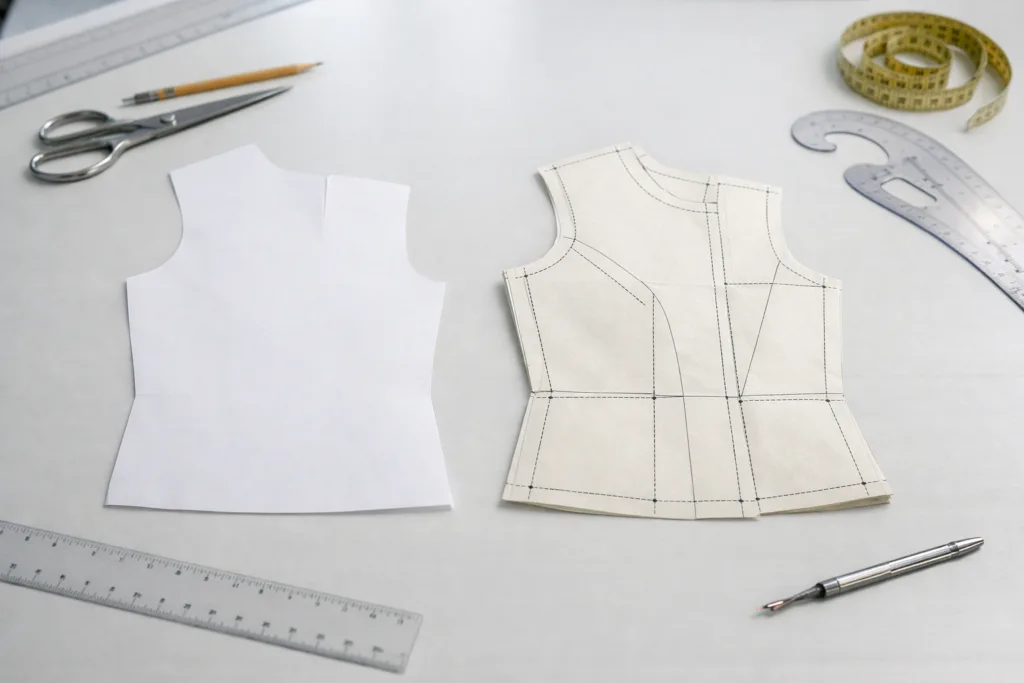
A pattern block is a pre-developed template, usually with basic style and fit attributes, used repeatedly in the pattern making and production process. It is often tailored for a company’s target customer and product category—like a classic sweatshirt body block for knits or a dress pant block for tailored lines. Pattern blocks are perfected over time, reflecting the brand’s sizing, fit philosophy, and standard measurements.
What Is a Sloper?
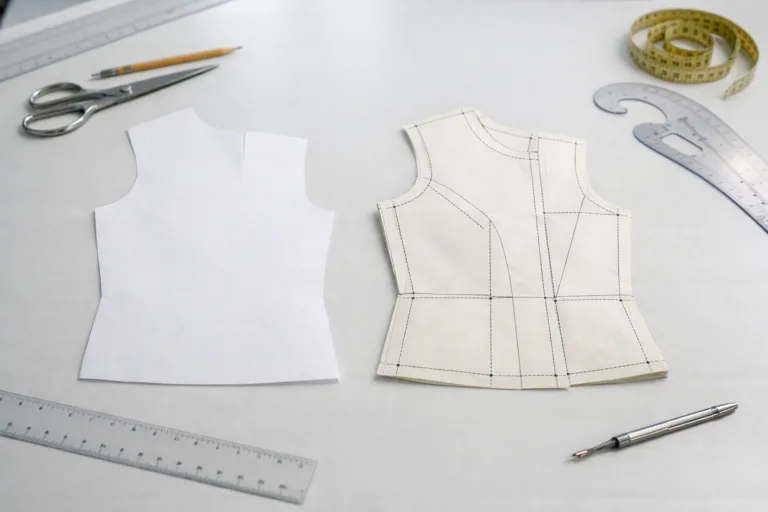
A sloper, sometimes called a “master block,” is a basic, body-fitting pattern used as a starting point for developing new garment styles. Unlike a pattern block—often including allowances and shaping—slopers are unadorned, without seam allowance, style lines, or design details. Essentially, a sloper is a pure representation of a body or fit model’s measurements in flat form. It serves as a measuring stick for all subsequent patterns and helps keep sizing consistent throughout a collection.
Pattern Block vs. Sloper: Building Your Brand’s Foundation
Brands committed to growth and customer loyalty need to know how pattern blocks and slopers contribute differently. A sloper acts as the fitting “baseline,” while pattern blocks reflect design intent and manufacturing parameters. Both underpin sizing strategies, style variations, and rapid development. Apparel Wiki often clarifies that mislabeling these two can cause sampling errors and inconsistencies, so team-wide definition alignment is essential for smooth production.
Historical Context: How Pattern Block and Sloper Emerged
The tradition of using slopers originates from bespoke tailoring, where custom-fit was paramount. As ready-to-wear manufacturing grew, brands developed standardized pattern blocks to maintain consistency at scale. Modern digital pattern making now leverages both concepts with advanced CAD tools, allowing rapid adaptation and version control. For deeper insights into digital transformation in patterns, check out the advantages covered in Digital Pattern Making with Gerber, Lectra, and CLO3D.
Key Visual Differences: Sloper vs. Pattern Block
- Sloper: Has no seam allowances or design features, straight lines
- Pattern Block: Includes seam allowances, modest shaping, and sometimes notches, grainlines, or fold lines
Need help decoding pattern markings? See this comprehensive symbol guide.
When to Use a Sloper
- Developing new silhouettes or core fit changes
- Adapting designs for different target body types
- Serving as the “mother” pattern when creating block libraries
When to Use a Pattern Block
- Creating production-ready patterns for seasonal collections
- Ensuring standardization for recurring products (e.g., best-selling jeans)
- Accelerating development for style updates or material changes
The Role of Pattern Block in Brand Consistency
Pattern blocks allow brands to launch new items with familiar sizing, making style extensions and colorways simple. By relying on well-developed blocks, brands can offer seasonal “updates” that still fit like customer favorites. This practice boosts customer satisfaction and reduces returns caused by unexpected fit changes.
The Role of Sloper in Garment Fitting
Slopers are used for technical fit sessions and as benchmarks when grading up or down for other sizes. A robust sloper, fine-tuned to your ideal customer, is the first defense against ill-fitting garments and costly returns.
How to Develop a Brand-Specific Sloper
This process generally involves:
- Drafting a basic pattern based on standard or proprietary body measurements
- Conducting fit sessions with models matching your target demographic
- Iterative adjustments for posture, ease, and movement
- Locking the shape once the desired fit is achieved
Curious about “ease” in fit development? Our guide to ease in pattern making explains its impact.
How to Create and Refine a Pattern Block
- Select your brand’s master sloper as the foundation
- Add desired ease, seam allowances, and style lines
- Test in fabric and review—tweaking as needed for production requirements
- Document adjustments and finalize for re-use
The Tech Pack Connection: Block, Sloper, and Communication
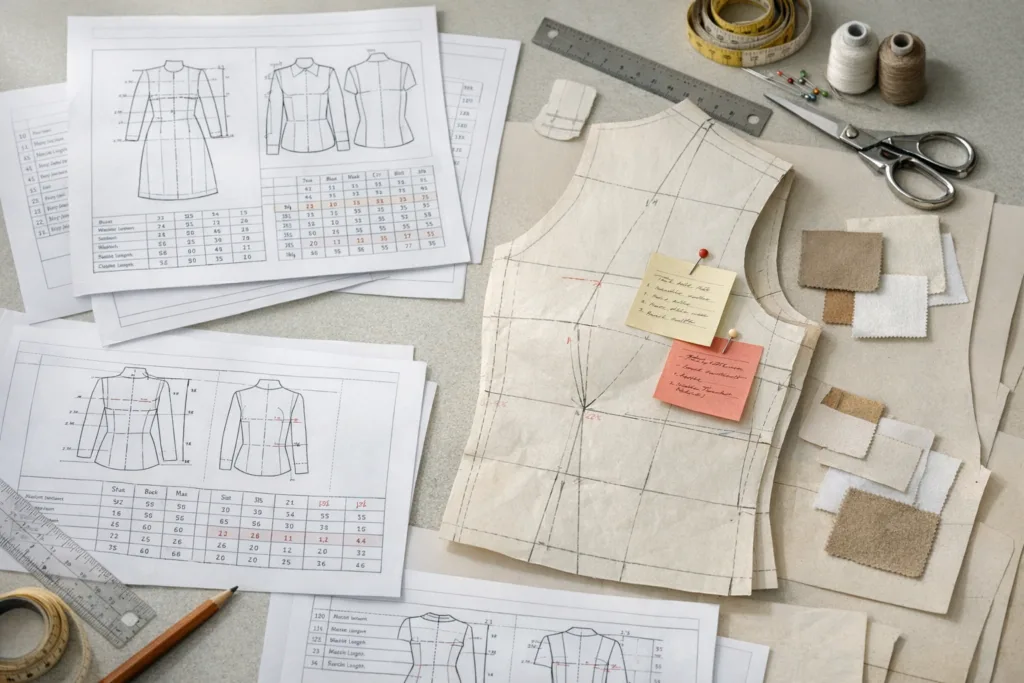
Both slopers and pattern blocks are referenced in tech packs, the “master file” for product development. Precise documentation and clarity in notes help the factory reproduce your vision without ambiguity. For best communication methods with suppliers, refer to clear callouts for factories.
Use of Digital Tools in Block and Sloper Development
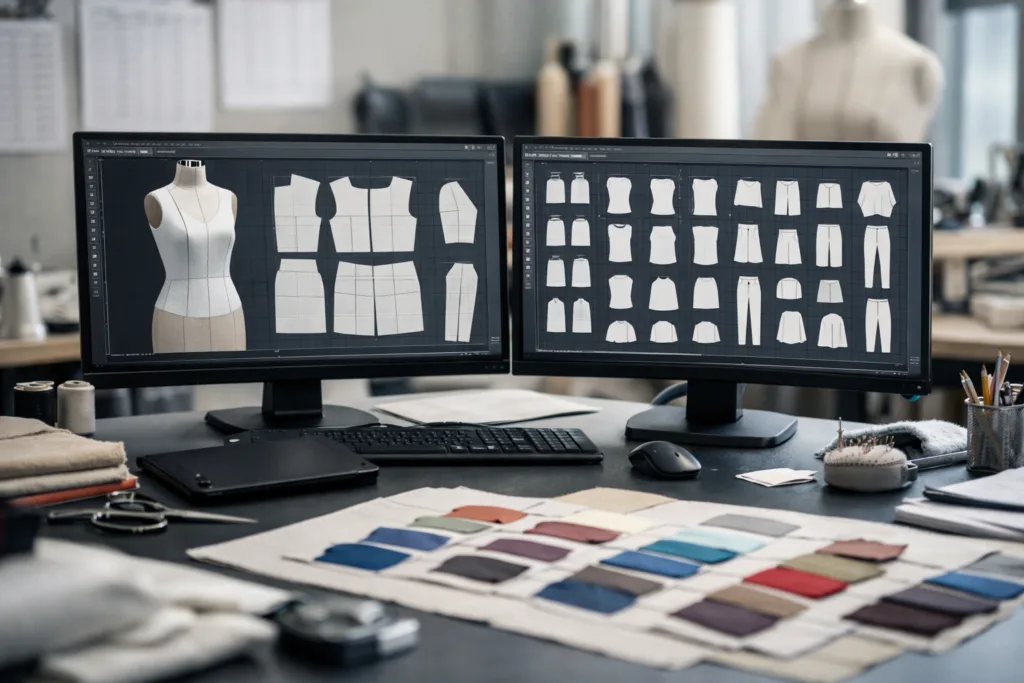
Modern brands often turn to CAD systems to build, grade, and store both slopers and pattern blocks. This digital-first approach reduces error, speeds up revisions, and creates seamless linkage between design iterations, fit approvals, and manufacturing hand-offs. See more in Digital Pattern Making: CAD Tools in R&D.
Managing Sizing and Grading for Brand Cohesion
Sizing expansion—”grading”—starts with slopers and blocks. A consistent grading rulebook means your XS through XXL maintain the same characteristic fit, no matter the style. Apparel Wiki notes that inconsistent grading from poor base blocks can lead to off-brand sizing, which confuses customers and damages trust. Understanding grading principles further? Study grading rules for size expansion.
Common Pitfalls: Avoiding Brand Identity Erosion
- Using inconsistent blocks across departments
- Letting slopers drift with incremental “fixes” without root cause corrections
- Failing to update blocks when the target customer shifts
Best Practices for Documenting Pattern Blocks and Slopers
- Version-control all master files
- Document measurement charts and visual references
- Always include “date last updated” and fit session notes
For step-by-step measurement chart creation, review measurement chart for development.
Achieving Consistent Sizing and Brand Loyalty
Brands like Apparel Wiki emphasize that standardized use of blocks and slopers delivers consistent fit, helping to boost repeat sales and word-of-mouth appeal. Think of every loyal customer as a testament to your brand’s fit reliability—and those results directly stem from how you manage your foundational templates.
Tips: Leveraging Both Tools for Design Coherence
- Begin all new shapes from your sloper to stay consistent
- Regularly compare blocks to slopers to catch “pattern drift”
- Develop sub-blocks for product families (eg. knits vs. wovens)—See developing patterns for knits vs. wovens
- Routinely revisit sloper and block alignment during line reviews
Using Pattern Blocks and Slopers in a Startup Setting
Startups may think they can skip building these assets and work directly from style to style, but this often leads to fit chaos. Even a one-product company benefits from a simple block and sloper set—it will save time and money as the lineup grows. Read more about the broader product development steps in the complete guide to clothing manufacturing for startups.
Pattern Block Libraries: Organization and Growth
Maintain a library with thumbnails, notes on intended use, and cross-references to related styles. This fosters team efficiency and supports design innovation while safeguarding fit and production quality.
Updating and Revising Pattern Blocks/Slopers
As your customer’s needs evolve or you respond to market feedback, revise both slopers and blocks methodically—never ad hoc. Make sure changes are documented, tested, and filtered back into all dependent patterns, so fit integrity is never compromised. For updating documentation, see 10 critical steps for updating your tech pack.
Pattern Block vs. Sloper in Sustainable Design Practices
Well-managed libraries of blocks and slopers support waste reduction. Fewer mistakes mean fewer rounds of sampling and less fabric/test wasted. This approach not only meets customer expectations for sustainable practices but can also help brands achieve cost savings and carbon reduction targets.
Integrating Feedback Loops: Fit Reviews and Customer Returns
Post-production fit reviews and tracking customer returns reveal patterns that may trigger updates to blocks or slopers. Use data systematically; any frequent complaint (tight bust, short sleeves, etc.) should prompt a root-cause investigation—not just a style fix, but an update to underlying templates. Read about fixing fit issues efficiently in solving common fit issues.
Summary Table: Key Differences at a Glance
| Aspect | Pattern Block | Sloper |
|---|---|---|
| Purpose | Production template with style/fabric nuances | Fitting baseline without style details |
| Includes Seam Allowance? | Usually yes | No |
| Use in Sizing/Grading | Ensures consistent expansion across sizes | Bases for new styles and adjustments |
| Role in Brand Identity | Makes style lines recognizable and fit reliable | Keeps sizing, proportion, and measurements consistent |
Pattern Block vs. Sloper: Navigating Common Myths
- Myth: “They’re interchangeable.” Fact: Their end use and details differ.
- Myth: “Blocks aren’t needed for small brands.” Fact: Even startups benefit from blocks for efficiency.
- Myth: “Slopers only matter for couture.” Fact: All market levels gain from their use.
Conclusion: Elevating Your Brand with Foundational Tools
In summary, understanding the distinct roles of pattern blocks and slopers empowers apparel professionals to create, calibrate, and scale their collections with confidence. These building blocks of garment development drive not just operational efficiency, but also brand loyalty—ensuring that your products always deliver a reliable, satisfying fit. By investing thought and care into managing these foundational templates, your brand’s identity stands strong in a crowded market—no matter how trends shift.
Frequently Asked Questions
What’s the biggest difference between a pattern block and a sloper?
A sloper is a basic, fit-focused template with no style elements, while a pattern block is more production-ready and includes allowances and shaping for specific categories.
Can I use a sloper as a final pattern for production?
No, a sloper lacks seam allowances and stylized lines; you must add those to convert it into a production-ready block or final pattern.
How often should slopers and blocks be updated?
Update your slopers and blocks whenever fit standards, customer feedback trends, or core measurements change—usually every few seasons.
Are pattern blocks and slopers relevant for digital pattern making?
Yes. Both are core files in digital workflows and assist in rapid style adaptation, version management, and consistent sizing across computer-aided design platforms.
How do blocks and slopers impact brand loyalty?
They provide sizing and fit consistency, which keeps customers coming back to your brand for the reliable fit they trust.
Should startups invest in developing blocks and slopers from the outset?
Absolutely. Even basic, well-made blocks and slopers help startups reduce costly sampling rounds and deliver a consistent product as the brand grows.
Related Reading
- Flat Pattern vs. Draping: Ultimate Pattern Making Showdown
- How to Expand Sizes: Grading Rules Demystified
- Digital Pattern Making Showdown: Gerber, Lectra, CLO3D
- Garment Fit Secrets: Mastering Ease for Perfect Patterns
- 10 Key Steps to Update Tech Packs After Sampling
- Knits vs. Wovens: Essential Guide for Pattern Developers