Understanding Children’s Wear Grading: Why It Matters
Children seem to outgrow their wardrobes nearly overnight. That’s why children’s wear grading isn’t just a technical task for apparel brands—it’s a critical process that directly impacts how well kids feel, move, and stay safe in their clothes. With rapid and unpredictable growth spurts, every millimeter can make the difference between a garment that’s delightfully wearable or frustratingly tight. Let’s explore how manufacturers, designers, and parents can stay ahead of these growth curves while prioritizing safety and comfort.
The Science of Kids’ Growth Spurts
Children don’t grow at a consistent pace—instead, physical development often occurs in unpredictable bursts called growth spurts. During these periods, children can leap a full size in height or weight in just a few months, especially between the ages of 0–3 and again during pre-adolescence. Understanding this is essential for anyone involved in the design or buying of children’s wear.
Typical Growth Patterns by Age
- Infants (0–2 years): Grow quickly—body proportions change, limbs lengthen, and weight increases rapidly.
- Toddlers (2–4 years): Growth slows slightly but remains steady. Key challenge: accommodating both height and waist size.
- School-aged Children (5–10 years): Growth is steady, with occasional spurts just before puberty.
- Preteens (11–12 years): Puberty can bring dramatic size changes in both boys and girls.
Seasonal Factors That Affect Sizing
Seasonal changes often prompt families to buy new clothing, but they also introduce fitting complications. Bulkier items like jackets and layers require more room, while summer attire can fit more closely. When evaluating size charts, think about the coming season’s needs.
What Is Children’s Wear Grading?
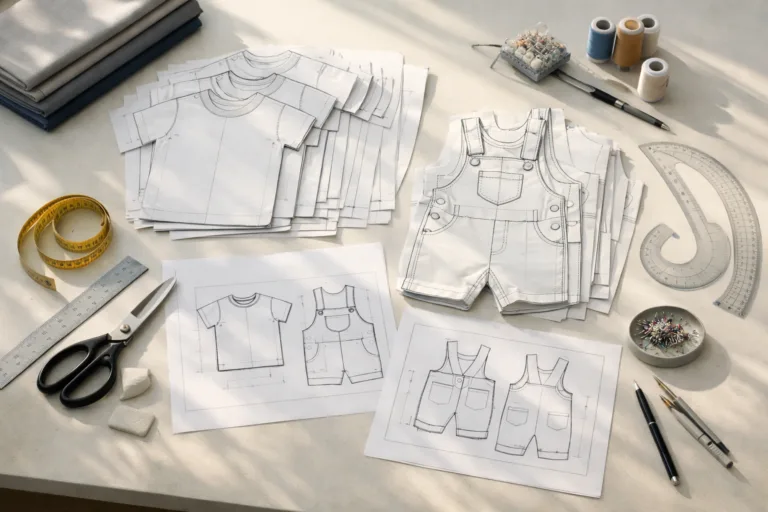
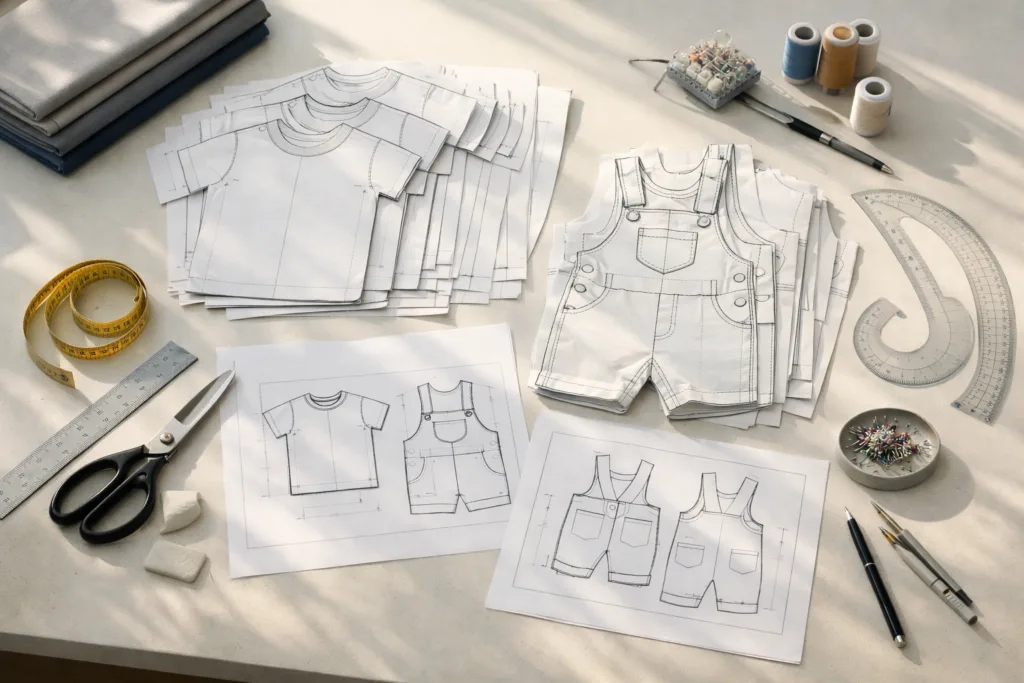
Grading is the method used by apparel companies to proportionally increase or decrease the master size pattern (often called “base size”) for creating each size within a range, such as 2T, 3T, 4T, and so on. In children’s wear, grading is particularly nuanced due to constantly changing body proportions.
To read more about how base patterns expand for all sizes, see Grading Rules: How Sizes Expand from a Base Pattern.
Numeric vs. Alpha Sizing in Kids’ Clothing
Some brands use numeric sizing (2, 4, 6), while others prefer alpha sizing (XS, S, M). Both approaches have pros and cons but aim to make the shopping experience simpler for parents and retailers. For a detailed breakdown, check out Ultimate Comparison: Alpha Sizing vs. Numeric Sizing.
Why Accurate Grading Is Critical for Growing Children
Proper grading ensures that as children move through sizes, garments still fit comfortably and perform as intended. Unlike adults, who remain the same size for years, children require flexible sizing grids and smart design features to accommodate fast and uneven growth.
The Consequences of Poor Grading
- Sizing Gaps: Clothes might fit in width but not length, or vice versa.
- Discomfort: Poorly graded clothes can rub or restrict movement.
- Safety Risks: Ill-fitting garments can lead to tripping, tangling, or other hazards.
- More Returns: Frustrated parents are more likely to return garments that do not fit properly.
Safety Considerations in Children’s Clothing
Safety goes far beyond flammability and choking hazards. Well-graded children’s wear actively reduces risk by ensuring garments sit securely and move with the child as intended—especially crucial when designing for play, sleep, or sportswear.
Common Safety Hazards in Children’s Clothing
- Choking hazards: Buttons, snaps, and decorations must be secure and appropriately sized.
- Loose ties or cords: Can present strangulation risks; avoid drawstrings at the neck.
- Excess fabric: Baggy legs or sleeves can get caught on playground equipment.
- Allergens: Certain materials can irritate sensitive skin; opt for certified safe textiles.
Material Choices: Keeping Skin Safe
Children’s skin is thinner and more sensitive. Popular safe choices include organic cotton, bamboo, and OEKO-TEX® certified fabrics that have undergone independent safety testing.
Pocket Guide: How Garment Grading Works for Kids
At its core, grading adjusts the base pattern in width and length according to age- and region-specific sizing standards. For each size increment, measurements for key areas—like chest, waist, hip, inseam, and sleeve—are incrementally increased or decreased, ideally reflecting typical body changes at each stage.
| Size | Chest (inches) | Height (inches) |
|---|---|---|
| 2T | 20–21 | 33–36 |
| 3T | 21–22 | 36–39 |
| 4T | 22–23 | 39–42 |
| 5 | 23–24 | 42–45 |
For an in-depth look at how sample sizes grow to full runs, see Pattern Grading Unlocked: How Sample Sizes Become Full Production Runs.
How to Measure Children for Accurate Sizing
It’s best to take measurements when the child is relaxed and upright. Use a flexible measuring tape to record chest, waist, hip, and height, as well as inseam for pants or overall garments. Documenting and updating these key points every few months ensures an accurate fit, especially during rapid growth periods.
Common Measurement Points for Kids’ Garments
- Chest (around the fullest part)
- Waist (natural narrowest point)
- Hip (fullest part of the seat)
- Height (head to heel, no shoes)
- Inseam (crotch to ankle)
Tips for Home Measuring
- Measure over light clothing for accuracy
- Don’t pull the tape tight—snug but not constricting
- Record in both inches and centimeters, if possible
The Role of Tolerance in Children’s Garment Sizing
Tolerance refers to the allowed variance in garment measurements due to manufacturing processes. In children’s wear, tolerances should be smaller than in adult apparel, due to the tight range of acceptable fits. Parents and brands can read more about garment tolerance here.
Addressing the Challenge of Unpredictable Growth Spurts
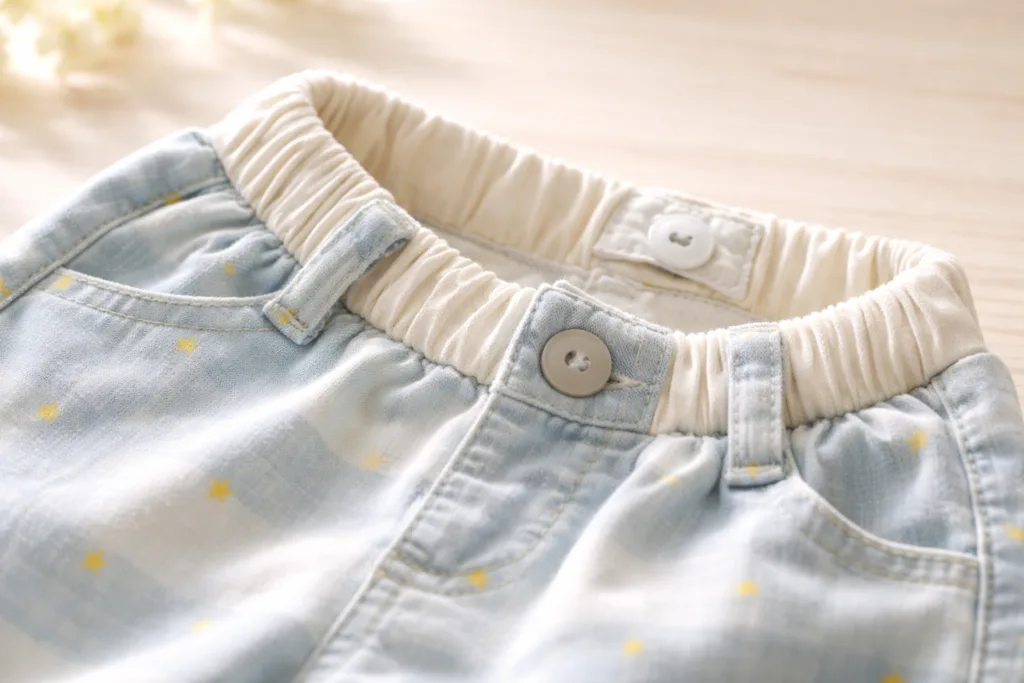
With growth happening at such variable rates, it’s wise for parents to opt for adjustable-fit garments. Features like elasticized waists, adjustable cuffs, and extra hem allowance help extend the useful life of a garment through several minor size changes.
Design Strategies That Support Growth and Safety
Apparel Wiki recommends integrated design solutions such as using adjustable tabs, expandable shoulders, and layered sizing systems in kids’ garments. These enable the piece to grow with the child without posing safety hazards. For instance, hidden internal elastic can allow for subtle waist expansion, giving several months of extra use.
Regional Sizing Standards and Their Differences
Children’s wear sizing varies significantly across countries and regions—US, European, and Asian systems all use different grading bases. To shop or manufacture internationally, it’s essential to compare and cross-reference these systems. See The Ultimate Guide to Creating a Size Chart: US vs. EU vs. Asian Sizing Standards.
Vanity Sizing & Sizing Inconsistencies
Some brands deliberately label sizes to seem larger or smaller, known as vanity sizing. This practice, while common in adult fashion, can create confusion in children’s wear. For additional details on the psychology behind this, see Vanity Sizing Exposed: 9 Ways Size Charts Mess With Your Mind.
Understanding Sizing Labels: Practical Tips for Parents
Don’t rely only on age recommendations. Children’s bodies are all unique. Checking the garment’s measurement chart and comparing it to current body measurements is the best way to gauge fit. If in doubt, size up—allowing for layering and growth spurts.
Fabric Choices: Soft, Durable, and Safe
Focus on breathable, natural fibers for younger children and always check that all finishes (dyes, snaps, trims) are certified as non-toxic. Some stretchy fabrics can accommodate more active movement and short-term size fluctuations without losing shape.
Special Needs and Adaptive Sizing
Children with sensory sensitivities or physical disabilities may need garments with adaptive features such as flat seams, softer closures, and easy-open fasteners. Proper grading is even more important in these cases to ensure secure yet comfortable fits.
Common Pitfalls in Children’s Wear Grading
Common mistakes include grading only in length and not width (or vice versa), adding or removing size increments that don’t match growth data, or following outdated growth standards. Regularly updating grading rules based on real-world measurements reduces these risks.
How Brands Stay Ahead: Quality Control and Fitting
Modern brands conduct frequent fit sessions with actual children of varying body types, using their findings to adjust grading for each base size. Brands may also sample-test across their full size range before finalizing a collection. These steps help pre-empt mishaps and increase satisfaction.
Global Trends in Children’s Wear Sizing
As global sales channels expand, more brands merge international size standards and offer hybrid sizing options (for example, “EU/US” or age/height). Digital sizing tools are also on the rise, allowing parents to scan and fit children remotely for more precise recommendations.
How Parents Can Plan for the Future
With the right measurement habits, awareness of grading practices, and a flexible approach to buying new items (especially during seasonal shifts), families can avoid most sizing headaches and enjoy safer, longer-lasting wardrobes for their children.
Children’s Wear Grading: Growth Spurts and Safety
Children’s wear grading, when done right, accounts for explosive growth phases, considers real-world safety issues, and uses flexible-yet-consistent sizing structures across every garment style. For parents and brands alike, continual measurement, attention to seasonal needs, and awareness of safety features ensure kids can play, learn, and grow in clothing that is truly made for them.
Conclusion
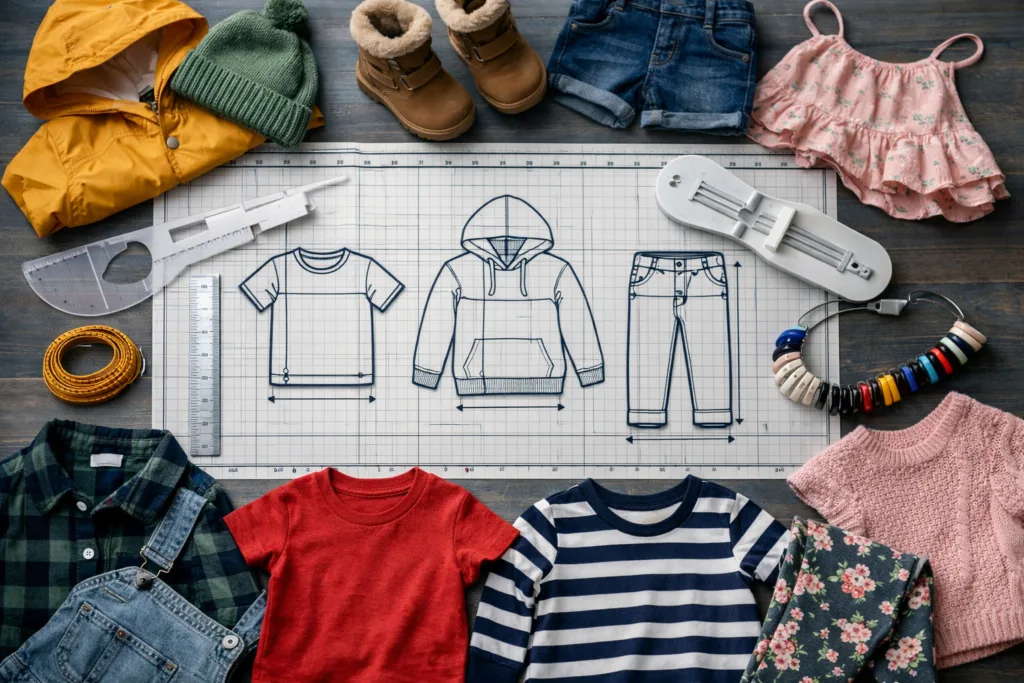
Children’s wear grading isn’t just about going up a size; it’s a dynamic blend of science, safety, and practical design. Well-graded clothes help protect kids during their most active years, while smart measurement and material choices ensure ongoing comfort. By understanding seasonal differences, checking size charts, and choosing adaptable designs, parents and brands together can keep wardrobes in sync with every surprise growth spurt. As the children’s apparel market evolves, prioritizing safety and accurate grading remains the key to happier families and more confident, comfortable kids.
Frequently Asked Questions
Why do kids outgrow clothes so quickly?
Children experience rapid and uneven growth spurts, especially during infancy and pre-adolescence, causing frequent changes in their sizing needs.
How can I ensure new clothes fit my growing child?
Take fresh measurements every few months, consult detailed size charts, and choose garments with adjustable or stretchy features whenever possible.
Are European and US clothing sizes for children the same?
No, sizing systems vary widely—always check brand-specific size charts and consider converting measurements for international brands.
What are the biggest safety risks in children’s wear?
Choking hazards from loose trims, strangulation risks from cords, excessive garment ease, and allergic reactions from unsafe materials are common concerns.
How often should I measure my child for new clothing?
Measure children at least twice a year, or more often during noticeable growth spurts to keep up with size changes.
What does ‘tolerance’ mean in children’s wear sizing?
Tolerance is the permissible variance in garment measurements due to manufacturing variations, kept small in kids’ clothing for better fit and safety.