What is AQL in Apparel?
AQL stands for Acceptable Quality Level, a globally recognized statistical standard that defines the maximum number of defective units considered acceptable in a batch of products. When used for garments, AQL acts as a yardstick for buyers and factories to agree on the inspection rigor—balancing the need for product quality with the realities of large-scale production. Commonly applied to finished garments, trims, and packaging, AQL provides a quantitative base for inspection verdicts, reducing subjective debates.
- AQL in apparel is expressed as a percentage (e.g., 2.5%, 1.5%) corresponding to the tolerated defect rate for a shipment sample.
- A lower AQL (e.g., 1.0) reflects stricter tolerance (fewer defects allowed), while a higher AQL (e.g., 4.0) is less strict.
According to Apparel Wiki’s production audits, AQL serves as the foundation for transparent, repeatable quality control in every well-managed apparel factory.
AQL Inspection Levels and Sampling Plans
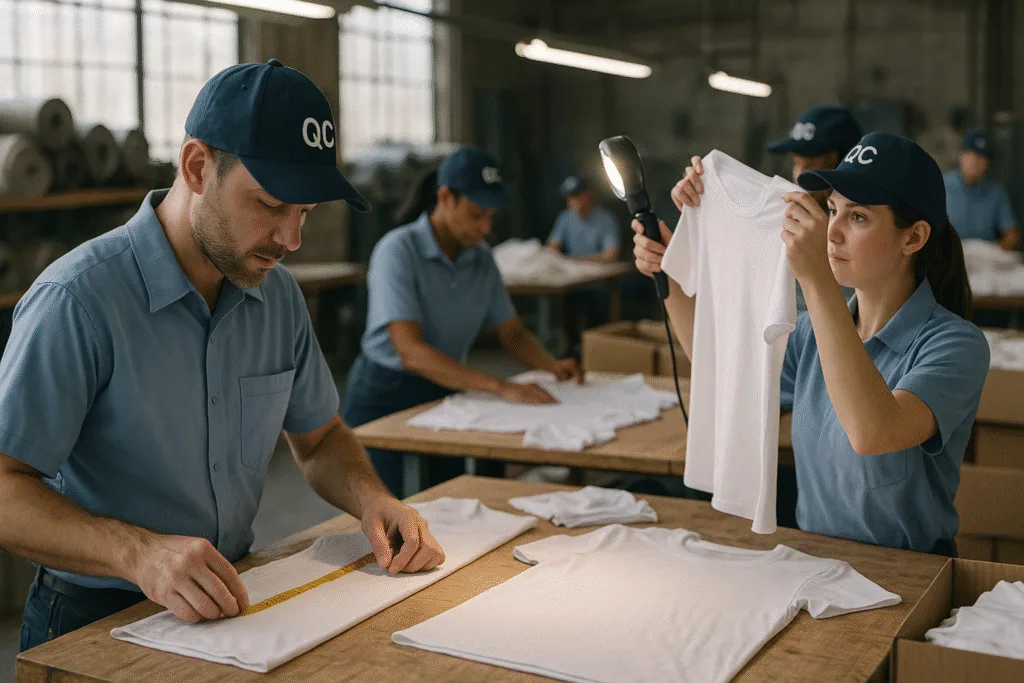
Each AQL inspection is built on a statistical sampling plan, ensuring the checked garments represent the production accurately—without inspecting every piece. Three main inspection levels allow brands to adjust the inspection intensity:
- Level I (Reduced Inspection): Used when a factory has excellent quality history. Fewer samples checked, saving time and cost, but higher risk of missed defects.
- Level II (Normal Inspection): The default industry standard. Balances detection risk and practicality by inspecting a moderate sample size.
- Level III (Tightened Inspection): Applied when previous shipments failed, or higher risk exists. Larger sample size, lower tolerance for defects.
Sampling plans—usually based on ISO 2859-1 or MIL-STD-105E tables—specify exactly how many pieces to inspect for a given shipment size and the pass/fail criteria. Factories and buyers should agree on the AQL and inspection level in advance, recording it clearly in the technical pack or purchase order.
Apparel Inspection Levels: AQL Explained
The dedicated focus here is the combination of suitable apparel inspection levels and AQL explained in actionable detail. In practice, a typical apparel QC process involves:
- Choosing the right AQL (most commonly 2.5 for major defects, 4.0 for minor, and 0/1.0 for critical in consumer goods).
- Selecting the inspection level to define sample size. Most bulk garment orders use Level II (Normal Inspection).
- Performing end-line or pre-shipment inspection following quality inspection AQL standards.
- Documenting results—each defect types logged by severity (critical, major, minor).
| Inspection Level | Sample Size | When Used | Typical Outcome |
|---|---|---|---|
| I (Reduced) | Smallest | Stable quality, low risk | Faster, less resource intensive |
| II (Normal) | Medium | Standard orders | Industry standard balance |
| III (Tightened) | Largest | Repeated issues/high risk | Higher detection rate, costlier |
The inspection level selected not only impacts sample size but also influences cost, post-production timing, and the stringency of quality expectations.
Major vs Minor Defects in Garment Quality Inspection
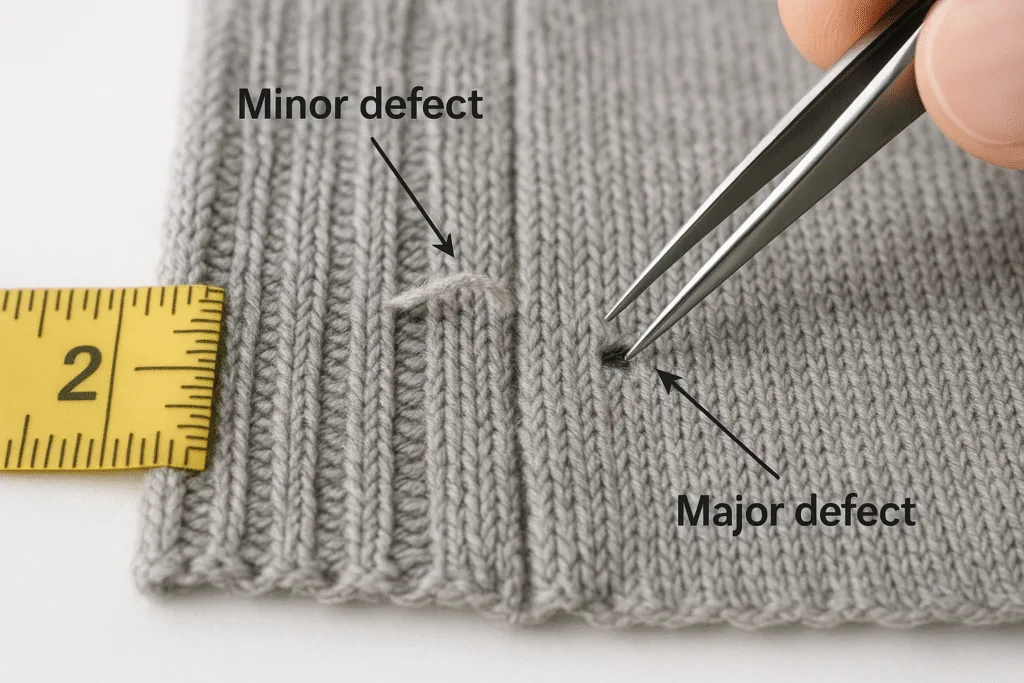
Defect classification is crucial when conducting an AQL-based inspection. Not all defects carry the same weight, so they’re divided into three main categories:
- Critical Defects: Issues making the product unsafe/unusable (e.g., sharp objects, broken needles, wrong labeling on children’s wear). Zero tolerance—AQL often set at 0 or 1.0.
- Major Defects: Defects reducing saleability or violating specs (e.g., broken seams, open holes, wrong size, severe crooked prints). Typical AQL: 2.5 or 1.5.
- Minor Defects: Defects not affecting fit or basic appearance (e.g., loose threads, minor fabric snags, slight shade variance). Typical AQL: 4.0 or 6.5.
During inspection, each defect found in the sample is logged and classified. The total of each type is compared with AQL acceptance tables—if critical/major defects exceed the allowed number, the whole lot may be rejected.
How AQL Sampling Works: Step-By-Step
To illustrate applying sample-based inspection in real factory scenarios, here’s how most apparel QC teams put quality inspection AQL into action:
- Determine Lot Size: Total pieces in the shipment (e.g., 15,000 T-shirts).
- Select AQL and Inspection Level: E.g., Major 2.5 (Level II); Minor 4.0; Critical 0.
- Use AQL Sampling Tables: Refer to ISO 2859-1 or similar to get sample size (example: for 15,000 units at Level II, inspect 315 pieces).
- Inspection Execution: Randomly pick the sample from packed cartons, check for all required parameters (measurement, seams, trims, etc.), classify defects as found.
- Decision: Compare defect counts with allowed AQL table. If within limits, pass; if not, fail/reject/require corrective action.
Rain’s tip from the production line: “Always verify that random samples are truly random—never let anyone cherry-pick garments from only the top layer of cartons. True randomness is the secret to inspection accuracy.”
Key Elements of Garment Quality Inspection AQL
A robust AQL-based inspection goes beyond quick visual checks. For a comprehensive audit, experienced QC teams examine these main points:
- Measurements: Body length, chest width, sleeve length, with tolerances (e.g., ±1 cm for knits).
- Workmanship: Stitch consistency, seam strength (overlock, coverstitch, etc.), missing stitches, skipped seams.
- Fabric and Finish: Color shade, pilling, surface defect checks, shrinkage allowance (usually 3-5% for cotton knits).
- Trims and Accessories: Button attachment, zipper function, correct branding labels, safety of metal trims (nickel-free, proper attachment).
- Packaging: Correct folding, polybag spec (thickness, warning), carton packing/integrity, barcode accuracy.
Apparel Wiki’s team consistently finds that tightly managed AQL inspections lead to measurable cost savings and fewer late delivery headaches.
Differences Between Fabric, Trims, and Finished Garment AQL
While AQL is most talked about for finished apparel, it’s equally important to apply sampling logic to incoming fabric rolls, trims (buttons, zippers, cords), and even packaging materials. For example:
- Fabric: Use a 4-point system for surface defects, but still apply AQL for major faults (holes, stains).
- Trims: 100% inspection for critical trims (infantwear snaps), or AQL-based for less risky items.
- Finished garments: Full AQL application by lot, as described above.
This integrated approach helps catch upstream issues before they reach the sewing floor or shipping dock.
| Component | Typical AQL | Inspection Focus |
|---|---|---|
| Fabric Rolls | 2.5 (major); 4.0 (minor) | Holes, color spots, shade bands |
| Buttons/Snaps | 1.0-2.5 (critical for babywear) | Attachment, sharp points, security |
| Finished Garment | 2.5 (major); 4.0 (minor); 0 (critical) | Stitching, fit, labeling, trims |
Common Challenges and Mistakes with Quality Inspection AQL
Mishandling AQL and inspection levels leads to quality failures, rejected shipments, and angry clients. Here are frequent pitfalls from apparel manufacturing:
- Ambiguous AQL definition in contracts—always specify exact AQL values and defect classifications per order.
- Non-random sample selection—sampling bias leading to unrepresentative QC results.
- Ignoring minor defects that accumulate—when too many ‘minor’ issues become a major customer complaint.
- Not adjusting inspection level for quality history—if prior issues exist, always move to tightened (Level III) inspections temporarily.
- Poor documentation—no photographic evidence or individual lot result tracking makes disputes harder to resolve.
In Apparel Wiki-guided factory trainings, standardizing how AQL is recorded in PP meetings and pre-production samples is the #1 improvement for reducing post-shipment disputes.
Best Practices: Setting and Managing AQL in Apparel Production
Establishing clear, effective AQL-based processes ensures both buyers and factories can achieve win-win outcomes in garment production. Here’s how seasoned QC teams make it work:
- Align on AQL and inspection level before production—no surprises after goods are sewn.
- Use AQL as one part of broader quality planning (including fabric inspection, in-line checks, and final audits).
- Combine written records, defect photos, and sign-off from both QC and production managers.
- Consider periodic training for sewing line operators to reduce recurring defect types identified in AQL audits.
- Adjust AQL and inspection rigor based on complaint feedback, returns data, or factory performance over time.
Integrating AQL with Other Apparel Quality Systems

AQL works best when paired with other specialized textile and garment QC systems. Examples include:
- Fabric 4-Point System: Prior to cutting, helps weed out major roll defects.
- In-Line End-Line QC: Reduces defect buildup by catching issues at early sewing/finishing stages rather than only at pre-shipment.
- Lab Testing: For fabric performance (shrinkage, pilling, colorfastness) and restricted substance compliance (for example, OEKO-TEX® or REACH regulations).
- PP/TOP Sample Approval: Ensures reference samples matched to production for ongoing comparisons.
The integration creates a safety net, ensuring quality not just at the final inspection point, but throughout the entire garment manufacturing lifecycle.
Frequently Asked Questions
What is AQL in apparel quality inspection?
AQL in apparel quality inspection refers to the Acceptable Quality Level, a statistical threshold set by brands or buyers to determine the maximum number of allowable defects in a sample from a production batch, ensuring consistent product quality.
How do you select the right AQL level for garments?
The right AQL level is chosen based on product risk, customer expectations, and past factory performance. Typical AQLs are 2.5 for major defects, 4.0 for minor, and 0 or 1.0 for critical defects in apparel shipments.
What is the difference between Level I, II, and III inspections?
Level I requires the smallest inspection sample and is used for low-risk, high-quality history production; Level II is standard for most orders; Level III uses the largest sample size and is applied when there’s a higher risk or history of defects.
How are major and minor defects defined during apparel inspections?
Major defects affect the function, fitting, or salability of the garment (like large holes or incorrect sizing), while minor defects are cosmetic and do not prevent the garment from being sold or worn (such as small snags or loose threads).
Can you use AQL for fabric and trims inspection?
Yes, AQL-based sampling is effective for inspecting fabric rolls and garment trims. For critical trims, especially in children’s wear, 100% inspection may be required, whereas fabric is commonly checked using a combination of AQL and visual standards.
What are the common mistakes when implementing AQL in apparel QC?
Common mistakes include unclear AQL agreements, poor sample selection, neglecting minor defects, not tailoring inspection rigor to factory history, and inadequate documentation of results and defects.