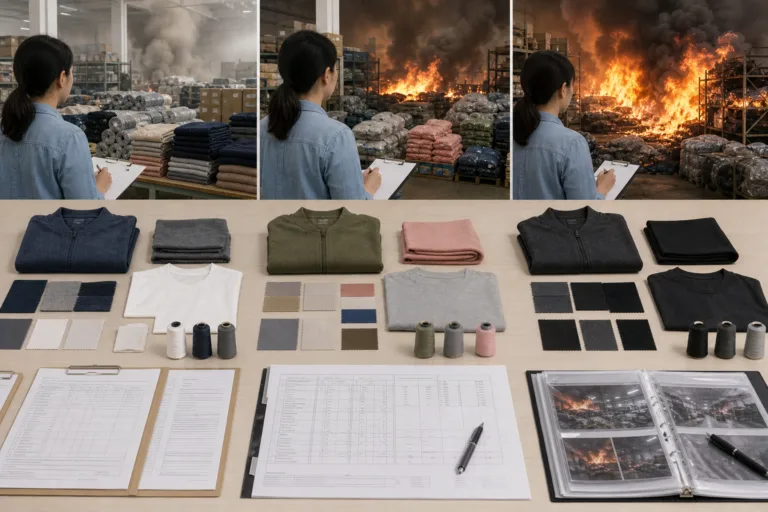
Apparel warehouse fire scenario planning starts with a clear description of what could happen, where it could happen, and what the event would affect. A fire scenario assumption is a documented statement about a possible ignition, the way the fire might develop under the stated conditions, and the stock, operations, and people that could be affected. It is a planning input that brand founders, sourcing teams, and warehouse operators must own and date. Apparel Wiki is an independent educational publication; its editorial work is separate from any Sponsor relationship.
In practical terms, “warehouse fire risk is high” is too vague to guide a decision. A more useful statement might describe an ignition near racked cartons that blocks a picking aisle during peak season, potentially affecting several product lines and customer commitments. The scenario rating that follows is a judgment tool for planning, not a statistical probability. The quality of the exercise depends on the assumptions being visible, specific, and grounded in the reader’s actual facility.
What Scenario Assumptions Mean in Warehouse Fire Risk Assessment
A fire scenario definition connects an event to a cause and an affected objective. It should identify what may ignite, such as material near electrical equipment or stored packaging, and describe the relevant starting location. It should also state which conditions matter at that moment: the storage configuration, the operating shift, the available staff, and the protection systems assumed to be present.
The purpose is not to predict an exact fire path. A scenario helps a team ask consistent questions about prevention, disruption, response, and recovery. For example, an ignition in a rack aisle could affect inventory access even if the fire remains limited to one area. A blocked route may delay picking, isolate particular SKUs, or interrupt replenishment. Those business effects belong in the scenario because the planning objective is broader than the physical event alone.
Keep three kinds of statements distinct. A definition explains what the planning term means. Typical industry practice may suggest useful categories to consider, but it does not prove that a particular facility has the same conditions. Project-dependent choices, such as which zone to assess first or how many scenarios to document, must be selected and recorded by the responsible team.
Why Apparel Stock Changes the Fire Picture
Apparel warehouses can contain folded garments in cartons, hanging garments on racking, poly bags, tissue, labels, and other packaging materials. These items may be stored together or in separate areas, and their arrangement can shape how an incident develops. A carton-storage assumption therefore should not automatically be applied to hanging garment storage, automated systems, or high-bay racking without checking the actual layout and load configuration.
Storage height, aisle arrangement, rack design, packaging density, and building features can all change the questions a scenario needs to answer. The National Fire Protection Association describes warehouses as presenting distinct fire-protection challenges related to storage arrangement, commodity type, and building conditions. For planning purposes, this supports a qualitative rule: use the facility’s real configuration rather than relying on a generic label such as “apparel warehouse.” Exact ignition, heat, and spread behavior require authoritative technical review for the specific arrangement.
Seasonality adds another planning variable. Before a product launch or peak selling period, more units may be concentrated in one zone, or temporary overflow storage may change normal travel routes and access. A scenario should state whether it represents a low-season, normal, or peak-season condition. It should also identify whether hanging stock, cartoned stock, returns, packing materials, or work-in-process goods are closest to the assumed ignition point.
Core Variables to Set Before You Assess
Use the following checklist to make warehouse fire risk scenario assumptions explicit. The appropriate level of detail depends on the facility and the decision being supported, but each item should have an owner rather than being filled with optimistic defaults.
- Ignition source: List plausible sources in this facility, such as electrical equipment, charging stations, forklifts, lighting, hot work, or exposure from outside the building. Do not include a source merely because it appears on a generic list.
- Starting location: Identify the zone, rack aisle, mezzanine, dock, packing area, office, or other location where the event begins. Note nearby doors, walls, separations, and access routes as they actually exist.
- Stock and load: Record what is stored, whether it is hanging or cartoned, how the goods are arranged, the approximate storage height, and how full the relevant racks or floor areas are at the assumed time.
- Operations: State the time of day, staffing level, picking activity, packing activity, shift pattern, and season. A scenario during an active pick wave may affect people and orders differently from one during an unstaffed period.
- Protection systems: Describe the detection, suppression, alarm, and compartmentation features that exist. State whether the scenario assumes they work as intended, are unavailable, or have an unknown condition. Actual system documentation should determine these assumptions; marketing descriptions should not.
- External conditions: Add relevant assumptions about weather, neighboring occupancies, site access, and the ability of responding services to reach the facility. Keep these points general unless the site team has validated the details.
This checklist is not a substitute for an engineered assessment, code review, or qualified fire-protection advice. It is a way to prevent a planning discussion from silently assuming an ideal layout, full system performance, or unlimited staff availability.
How to Build a Small Set of Fire Scenarios Step by Step
A small, deliberate set of scenarios is usually easier to maintain than an unbounded catalogue. The number is a project-dependent choice: additional scenarios can improve coverage, but they also require more time to describe, compare, and review.
- Walk the facility. Identify credible ignition sources and the materials, equipment, and activities located near them. Include normal operations and temporary conditions such as peak-season overflow.
- Select the starting set. Choose a most-likely operational scenario and, where relevant, one or two higher-impact scenarios. Write each as an observable event statement, not as a broad rating. For example: “An ignition near charging activity affects access to the adjacent storage aisle during a peak shift.”
- Fix the assumptions. For every scenario, record the location, stock configuration, operating period, staffing, protection-system condition, and external conditions. Avoid changing several assumptions between discussions without documenting the change.
- Trace dependencies. Work backward from critical products and delivery promises. If one storage zone contains stock for multiple SKUs, losing access to that zone may affect several orders, replenishment plans, or launch commitments. A single warehouse disruption can therefore cascade through connected decisions.
- Record ownership and date. Note who assessed the scenario, when it was assessed, which documents were used, and which assumptions need confirmation. This makes the scenario revisable when the layout, stock profile, or operating model changes.
The result should be a short, readable record that connects a possible fire event to operational consequences. It should show what the team chose to examine and what it deliberately left outside the current exercise, without presenting the scenario rating as a measured probability.
Comparing Scenario Choices: Narrow, Likely, and Worst-Case
Scenario selection is a planning decision. A narrow single-ignition scenario is a useful first pass because it focuses attention on one location, one nearby stock profile, and one immediate operational disruption. It usually takes less effort to describe, but it can miss dependencies beyond the starting aisle or zone.
A likely operational scenario follows the facility’s actual workflows. It might examine an ignition near charging activity while picking teams are working, or an event affecting a dock used for inbound seasonal stock. This approach is more useful for day-to-day decisions because it connects the event to staffing, access, orders, and replenishment. Its blind spot is that familiar operations can make teams overlook unusual but consequential conditions.
A broader worst-impact scenario considers how a fire could affect a major storage area, a shared access route, or a concentration of peak-season inventory. It requires more discussion and should not be treated as a prediction. Its value is in testing contingency and recovery choices. Modern warehouse layouts, storage arrangements, and stock characteristics can produce different fire-protection challenges, so a broad scenario should reflect the facility’s actual design rather than a generic warehouse label. The NFPA discussion of modern warehouses provides useful background for this kind of context, while project-specific conclusions still require appropriate validation.
Consider this hypothetical example: a direct-to-consumer apparel brand holds peak-season inventory in one 3PL storage zone. The team assumes a fire during the busiest operating period and traces the consequences. It discovers that the zone supports a large share of sellable inventory for the quarter, so the disruption could affect several product launches and delivery promises at once. This is an invented planning example, not a case study or measured loss estimate.
A practical set can combine all three perspectives: one narrow scenario for a quick operational review, one likely scenario tied to real workflows, and one broader scenario for contingency planning. A low-probability, high-impact possibility may still deserve documentation even when the business chooses to accept the remaining risk. This comparison is a decision framework, not a substitute for a qualified fire-risk assessment.
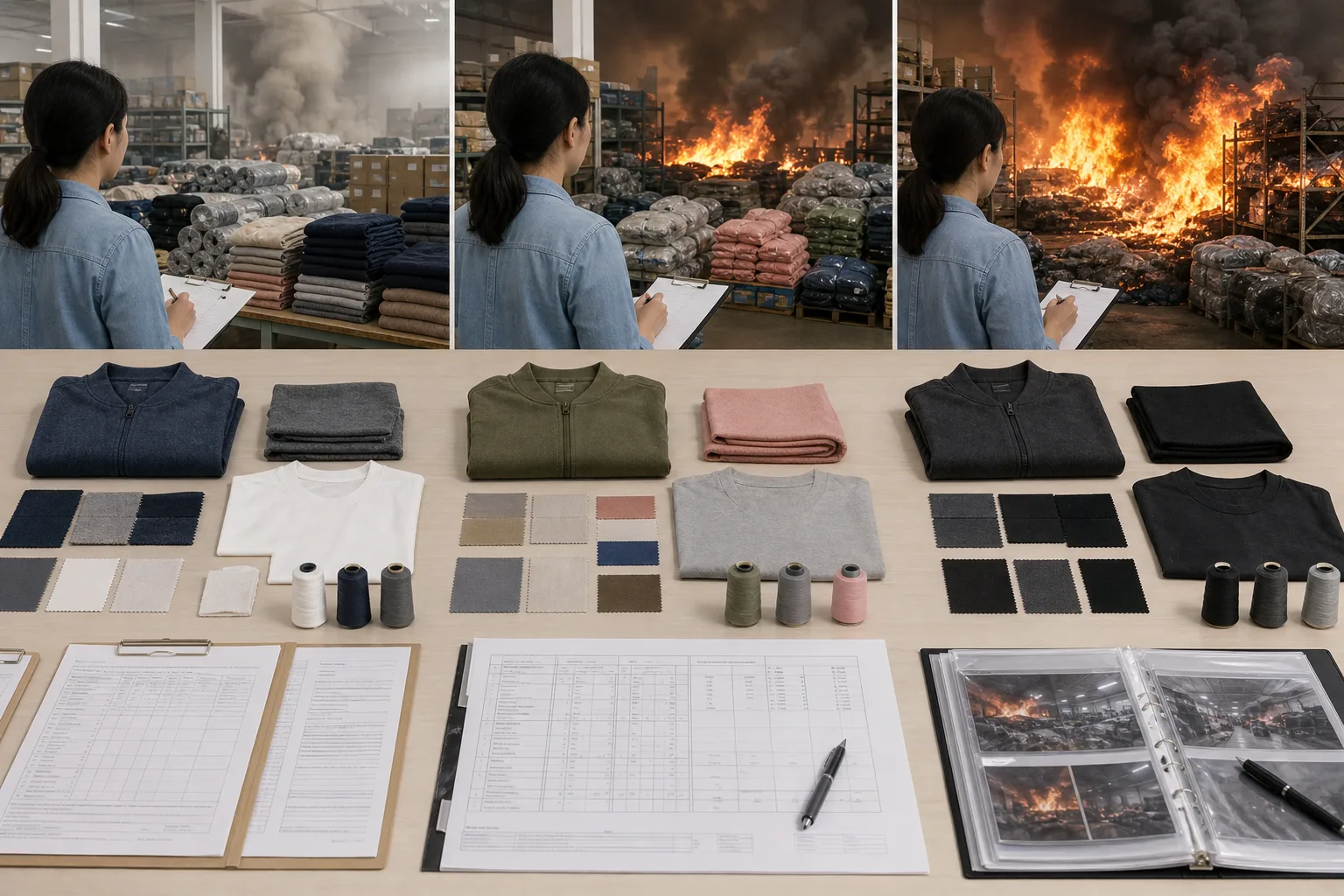
Turning Scenarios into Prevention, Mitigation, and Response Choices
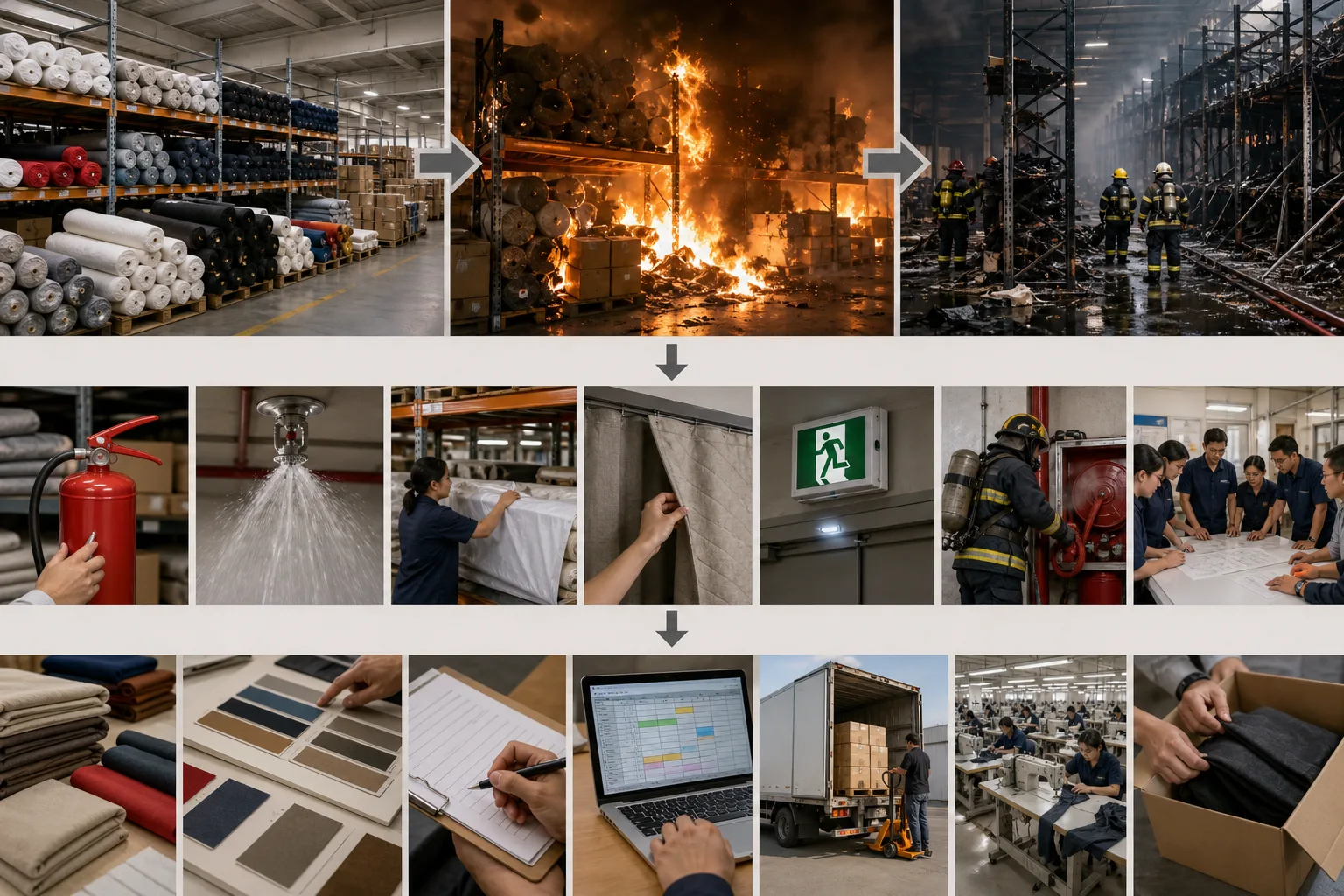
Once a scenario is written, decide how the business will treat it. Four treatment routes are distinct: reduce the likelihood of the event, reduce its impact, transfer part of the financial loss through arrangements such as insurance or contracts, or accept the risk consciously. One scenario can use several routes together.
For example, a charging-area scenario may lead to a prevention action, a mitigation action that protects access to adjacent stock, and a response action for moving orders to another location. Record the action in terms the team can verify. A documented housekeeping routine near charging areas, with a named owner and review evidence, is more useful than a general instruction to “keep the area safe.”
Each treatment should have an owner, a trigger point, required resources, and evidence that the measure is in place. The trigger could be a layout change, a peak-season stock build, a failed check, or a change in 3PL operations. The evidence might be a current layout record, an inspection log, an agreed escalation contact, or a tested continuity arrangement. Use actual system documentation when describing detection, suppression, or compartmentation assumptions.
Insurance and contracts may reduce financial exposure for some losses, subject to their specific terms, but they do not remove operational consequences. Lost sales windows, unavailable stock, customer communication, and replacement lead times can remain important even when a financial loss is partly transferred. Record which risks are treated and which are accepted so that acceptance is a deliberate business decision rather than an unexamined gap.
Limitations of Scenario-Based Fire Assessment
A scenario exercise depends on the judgment used to select events and assumptions. A narrow set may miss a credible ignition source, a shared dependency, or an access problem that becomes important during response. Revisit the boundary of the exercise whenever the team makes a major decision based on it.
Assumptions also age. Order volumes, storage layouts, operating rules, technology, staffing, supplier arrangements, and available cash can change the consequences of the same event. A scenario that was reasonable before a site change or peak-season commitment may no longer represent the business. Keep each record dated and identify assumptions that still need confirmation.
This method does not determine code compliance, replace an engineered fire model, or establish what a particular jurisdiction, insurer, or contract requires. Those questions need qualified professionals, applicable documents, and validated methods. Scenario ratings are judgment tools for planning; presenting them as statistical probabilities would overstate their precision.
Next Steps: Documenting and Reviewing Your Warehouse Fire Scenarios
Create a short record for each selected scenario. Include the observable event statement, ignition location, stock configuration, operating conditions, protection assumptions, affected products and orders, chosen treatments, owner, supporting evidence, unresolved questions, and review date. Ask the warehouse operator or 3PL to check the record because its layout and operating details often determine whether the assumptions are realistic.
Review the scenarios before peak season, after a layout or storage-system change, and when supplier or 3PL arrangements change. Use the review to identify new dependencies and confirm which actions are complete. For further apparel operations planning, explore the relevant Apparel Wiki knowledge resources and the Apparel Manufacturing Tools area. Apparel Wiki is an independent educational publication, so use qualified fire-protection or legal advice when a decision requires technical, regulatory, or policy-specific determination.
How many fire scenarios does a small apparel warehouse actually need to assess?
There is no universal number. Start with a narrow scenario, a likely operational scenario, and a broader impact scenario where the facility has concentrated stock or important shared dependencies. The right set depends on the warehouse, layout, operations, and decisions the exercise must support.
Do I need a fire engineer to set scenario assumptions, or can my team do it?
Your team can document business operations, stock, dependencies, and practical consequences. Involve a qualified fire professional when the work requires technical evaluation, engineered analysis, code interpretation, or validation of protection-system assumptions.
Should I assume sprinklers and alarms work when I build a fire scenario?
State the assumed condition explicitly. Use actual system documentation rather than optimistic defaults, and consider whether a second scenario should examine partial failure or unavailable protection. Do not infer performance from product marketing material.
How do peak-season inventory levels change my fire scenario assumptions?
Peak periods can change stock concentration, aisle access, staffing, order commitments, and the operational impact of losing one zone. Update the scenario with the actual seasonal layout and inventory dependencies rather than using low-season conditions.
How often should warehouse fire scenarios be reviewed or updated?
Review them before major peak-season commitments and after meaningful changes to layout, storage systems, technology, staffing, suppliers, or 3PL arrangements. A dated review schedule helps prevent old assumptions from guiding current decisions.
What is the difference between a fire scenario and a fire risk rating?
A fire scenario describes a possible event, its conditions, and its consequences. A risk rating is a judgment used to compare or prioritize that scenario. The rating does not make the scenario a measured probability.