Introduction
Calculating fabric consumption (yield) for your Bill of Materials (BOM) is a crucial step in garment manufacturing, impacting both cost efficiency and sustainability. Understanding how to determine the exact fabric quantity ensures that you minimize waste, optimize your budget, and empower your production planning. This guide demystifies yield calculation, explains key influencing factors, and offers actionable formulas so you can confidently improve your BOM strategy.
What Is Fabric Consumption (Yield)?
Fabric consumption, or yield, describes how much fabric is required to manufacture a single garment or product unit. Yield calculation is the foundation of an efficient BOM. If calculated correctly, it helps manufacturers avoid fabric shortages, overspending, and production delays. It also directly influences costing and sustainability.
Why Accurate Calculation Matters in BOM
Precision in fabric consumption affects every dimension of your business: cost, quality, environmental impact, and production schedules. Accurate BOM calculations allow you to:
- Reduce raw material waste
- Avoid costly over-ordering
- Support responsible sourcing strategies
- Maintain consistent product quality
- Meet tight production timelines
The Concept of Yield in Fabric Calculation
Yield reflects the ratio between usable garment pieces and total fabric used. Higher yield means greater material efficiency. Understanding yield helps interpret the effectiveness of your cutting layout and pattern placement, ensuring optimal utilization of fabric rolls or sheets.
Factors Affecting Fabric Yield and Consumption
Fabric Width
The width of the fabric roll is a major variable. Wider fabrics often lead to greater efficiency, while narrower widths can increase waste. Choosing the appropriate fabric width impacts both yield and potential material wastage.
Pattern Layout and Marker Planning
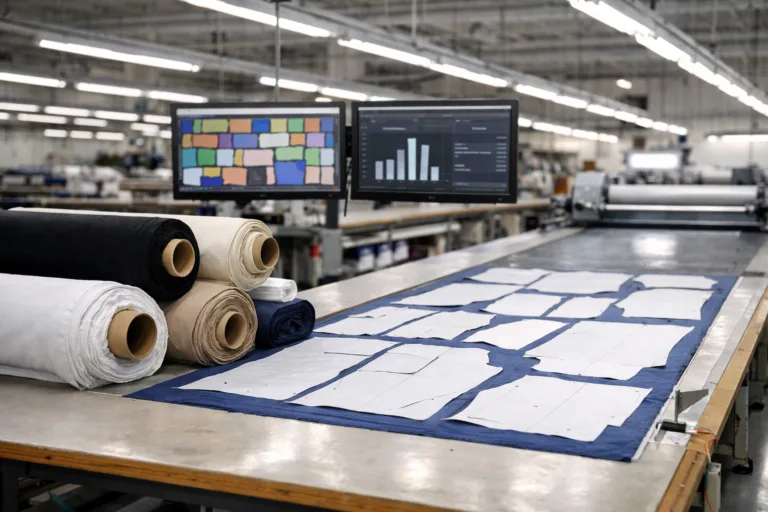
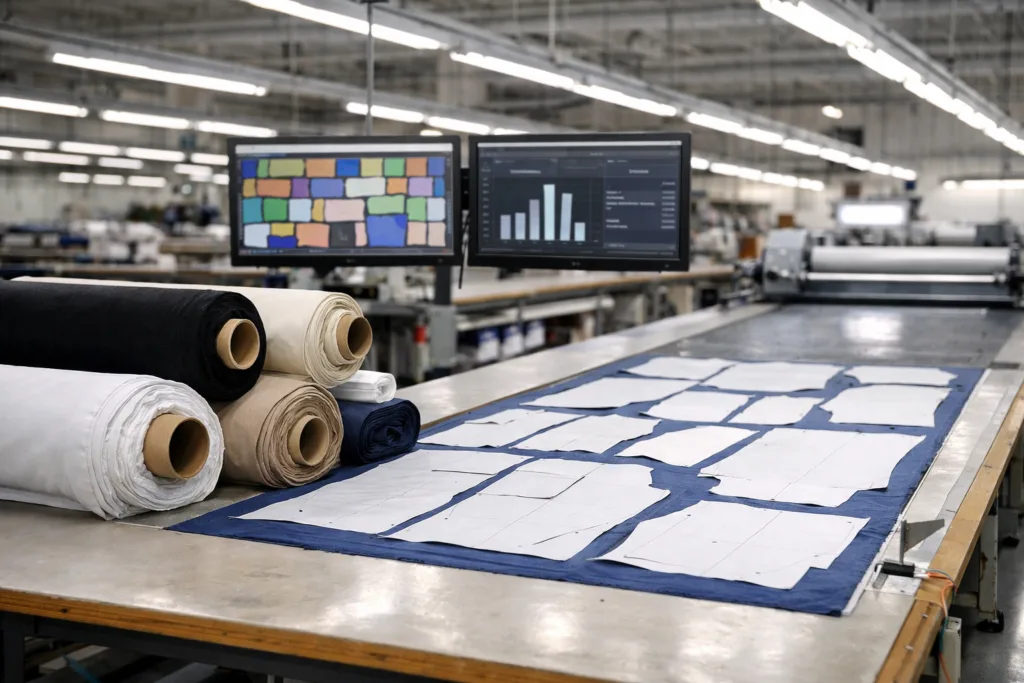
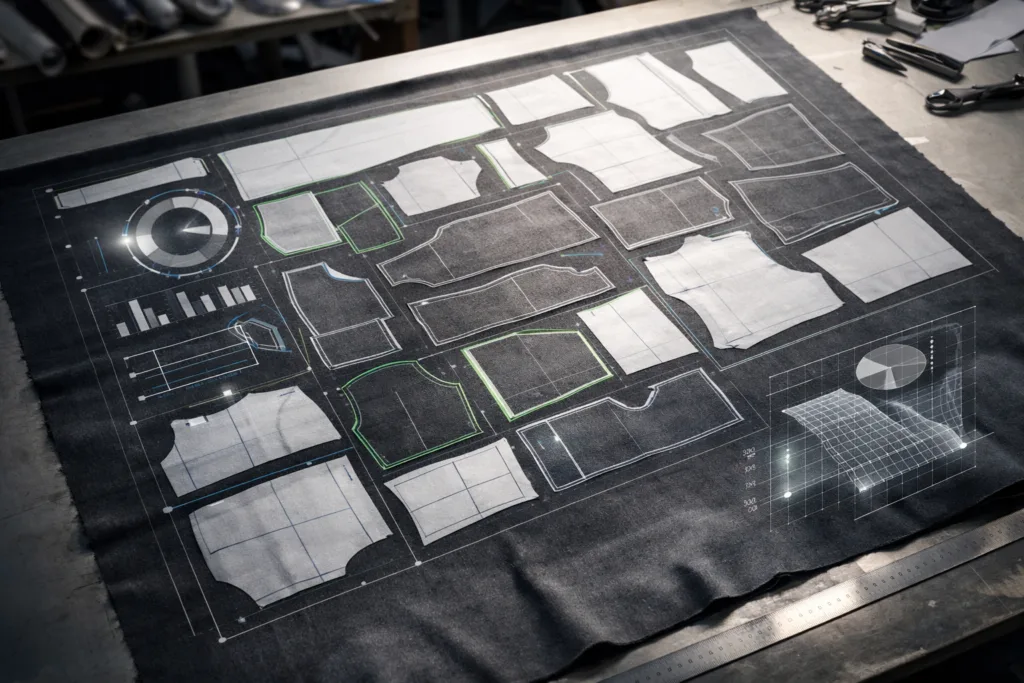
How you arrange patterns during marker planning impacts yield. Optimizing layouts minimizes gaps, overlaps, and remnant waste. Digital marker planning solutions help maximize fabric use, especially for complex shapes.
Cutting Techniques
Manual vs. automated cutting methods result in different yields. Automated cutters generally offer higher accuracy and less waste, while manual cutting may require additional allowances for human error.
Fabric Type and Quality
Stretch, shrinkage, print placement, defects, and grain direction all contribute to variations in consumption and yield. For instance, woven vs. knit fabrics behave differently when cut and assembled.
Seam Allowances and Finishing Details
Sewing allowances, hems, facing, pleats, and extra details must be factored in. These additions increase the total fabric required beyond the basic pattern outline.
Understanding Bill of Materials (BOM) Linking Yield Calculation
The BOM is a comprehensive list of every material needed to produce one garment or product. Yield calculation feeds directly into BOM accuracy. To create a stress-free and effective BOM, see Apparel Wiki’s step-by-step guide on creating a Bill of Materials for apparel.
Step-by-Step Guide: Calculating Fabric Consumption (Yield) for Your BOM
Step 1: Define the Garment or Product Dimensions
Start with the technical specifications or finished measurements. Include all panels, linings, and any extras required (such as trims or interfacings).
Step 2: Select Fabric Width and Type
Record the width of the fabric roll/sheet and its characteristics. This dimension is essential in all further calculations.
Step 3: Prepare Pattern Pieces and Layout
Gather your patterns, considering grain line direction and required seam allowances. Arrange them using marker planning tools or manually on paper to estimate occupied area.
Step 4: Calculate Area Needed Per Unit
Sum up the total surface area of all pattern pieces per garment. Add allowances for finishing and handling losses (typically +2–5%).
Step 5: Factor in Fabric Width
Divide the total area by the fabric width, yielding the linear length required per unit.
Step 6: Apply Consumption Formula
A common formula for woven fabrics:
- Fabric consumption (meters/unit) = Total area of garment pieces (cm2) / Fabric width (cm) / 100
For knits, you may add more for shrinkage or stretch allowance. For mass production and complex designs, specialized apparel manufacturing tools and calculators can streamline calculations.
Step 7: Validate with Sample Cutting and Marker Efficiency
Cut samples and evaluate real marker efficiency. Use actual consumption data to revise calculations as needed. Sampling processes are detailed further at Apparel Wiki in size set quality assurance.
Example: Calculating Fabric Consumption for a T-Shirt BOM
| Component | Pattern Area (cm2) | Fabric Width (cm) | Consumption (m/unit) |
|---|---|---|---|
| Body (Front & Back) | 3400 | 160 | 0.21 |
| Sleeves | 1200 | 160 | 0.075 |
| Rib (Neckband) | 200 | 160 | 0.0125 |
| Total | 4800 | 160 | 0.2975 |
Add handling and allowance (e.g., 5%): 0.2975 × 1.05 = 0.312 meters per t-shirt.
Common Formulas and Adjustments for Fabric Consumption
Different garment types and fabrics may require unique formulas. For example, when working with patterned or printed fabrics, you need to account for repeat alignment. For knits or dimensional shrinkage, add a percentage to the calculated length.
Basic Formula for Woven Garments
- Fabric consumption (meter/unit) = Total area of pattern pieces (cm2) / Fabric width (cm) / 100
Adjustment for Pattern Repeats
- Add repeat length of print or woven design to total required area
Adjustment for Shrinkage
- Add shrinkage percentage (typically 2–5%) to final consumption
How Marker Planning Software Improves Yield
Advanced marker planning software analyzes pattern layouts on virtual fabric to achieve maximum yield and minimize waste. It simulates different orientations and repeat alignments, providing real-time data to help manufacturers optimize their BOMs. Benefits include faster calculation, reduced risk of errors, and better sustainability outcomes.
Sustainability Practices in Fabric Consumption Calculation
Reducing Fabric Waste
Responsible manufacturers use yield calculation to support more sustainable production. By maximizing marker efficiency and selecting fabric widths wisely, they cut waste significantly.
Choosing Sustainable Materials
Yield calculations can inform material selection by favoring fabrics that allow for higher marker efficiency, less waste, and easier recycling. Sustainable BOMs also factor in recycled content and biodegradable options.
End-to-End Material Tracking
Tracking fabric consumption from purchase to finished product offers transparency and supports certifications for eco-friendly production.
Yield Calculation Pitfalls and How to Avoid Them
Common mistakes include underestimating seam allowances, overlooking pattern repeats, and neglecting actual marker efficiency. Apparel Wiki recommends always validating calculations with physical or digital samples before bulk orders. This proactive approach prevents costly production errors.
Integrating Fabric Consumption with Costing and Pricing
Yield data is the backbone of accurate costing and pricing. By precisely measuring fabric consumption, manufacturers set better price points and avoid unexpected expenses. For industry-specific solutions, view Apparel Wiki’s fabric converters and costing tools.
Industry Best Practices for Yield Optimization
- Regularly update marker plans based on real production data
- Train cutters to minimize losses
- Use digital layouts and tools for complex production runs
- Validate consumption with physical samples
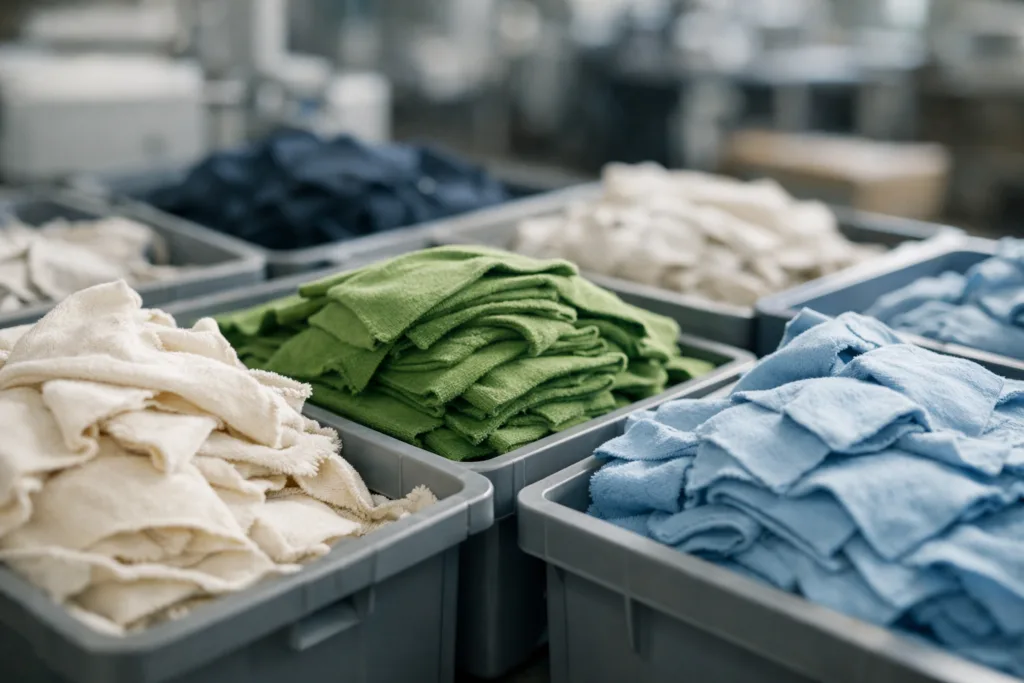
- Monitor residual fabric for possible reuse or recycling
How Sample Lead Times Impact Fabric Consumption
Delays in sample lead time can throw off fabric consumption estimates. Upfront sampling—described in expert guides on managing sample lead times—helps refine actual consumption and improve marker planning strategies.
Yield Calculation in Different Garment Types
Simple Garments (T-Shirts, Shorts)
These are easier to calculate since there are fewer panels and fewer allowances.
Complex Garments (Jackets, Dresses)
Yield calculation must include linings, facings, multi-layer panels, and often multiple fabrics. Pattern complexity increases the importance of marker planning and digital tools.
Yield Calculation for Knits vs. Wovens
Knit fabrics might stretch during cutting and sewing, so additional shrinkage allowance is needed. Wovens require precise grain orientation and alignment, impacting layout efficiency.
Practical Tips: Reducing Fabric Consumption Waste
- Invest in accurate marker planning technology
- Choose optimal fabric width for your garment types
- Reuse cutting remnants when possible
- Continuously audit consumption patterns in production
Summary Table: Fabric Consumption Factors
| Factor | Impact on Yield | Tips |
|---|---|---|
| Fabric width | Determines linear consumption | Select wider rolls for better efficiency |
| Pattern layout | Affects waste and yield | Use digital marker tools |
| Cutting methods | Impacts accuracy | Adopt automated cutters |
| Shrinkage allowance | Prevents shortages | Add 2–5% extra material |
| Seam/hem allowance | Increases needed material | Include all details in calculation |
Focus Section: Calculating Fabric Consumption (Yield) for Your BOM
This section distills the article’s most critical message: Get clear on your garment plans, check finished measurements, collect patterns, and calculate fabric needed for each unit using width and layout. Factor in all allowances and validate with sample cutting. Proper yield calculation ensures accurate BOM, controls costs, reduces waste, and supports sustainability.
Conclusion
Mastering fabric consumption and yield calculation is fundamental for any apparel manufacturer or designer aiming for cost-effective, sustainable production. By understanding the influencing factors, applying step-by-step methods, and integrating technology, you unlock accurate BOM creation and support greener manufacturing practices. With rigorous calculation and practical audit tools, you can confidently manage material use, avoid costly errors, and drive your business forward.
Frequently Asked Questions
What is the most common mistake in fabric consumption calculation?
Underestimating seam, hem, and shrinkage allowances is the most frequent error, often resulting in fabric shortages or unexpected costs.
How do you calculate fabric yield for printed fabrics?
Include pattern repeat alignment in your area calculation and add extra length to match prints correctly across garment pieces.
How can I validate my fabric consumption estimates before bulk production?
Sample cutting and marker tests help validate estimates—adjust your calculations based on real marker efficiency data before placing large orders.
Do automated cutting tools improve yield?
Yes, automated cutters enhance accuracy and reduce waste, making yield calculations more reliable and efficient compared to manual cutting.
How does fabric width affect BOM planning?
Fabric width is critical—it determines how many garment pieces fit across the roll. Wider fabrics generally reduce consumption per unit.
Are there software tools for calculating fabric consumption?
Many industry tools and calculators help automate fabric consumption calculations, saving time and reducing risk of manual errors.
Related Reading
- Stress-Free BOM Creation: 9 Essential Steps for Apparel Brands
- Delay-Free Sample Lead Times: 9 Proven Critical Path Strategies
- Quality-First Size Set Samples: 8 Ways to Guarantee Fit Before Cutting
- Unlock Costing & Fabric Tools for Efficient Apparel Manufacturing
- 13 Must-Check Points: The Designer’s Ultimate Sample Review Checklist
- Pattern Grading Demystified: scaling from sample to bulk production runs