Introduction to Custom Clothing Manufacturing for Brands
Custom clothing manufacturing is the bedrock of many apparel brands seeking reliable production solutions for distinctive designs and quality standards. Modern brands, whether emerging labels or established retailers, often operate with OEM/ODM partners in B2B arrangements to realize their collections efficiently. Understanding the full process—from initial concept to bulk shipment—ensures brands can navigate production, minimize risks, and maintain the intended look and performance of their garments.
- OEM/ODM definitions
- B2B ordering processes
- Development stages: sample, bulk, QC
- Fabric sourcing insights
- MOQ and delivery timeframes
- Factory capability alignment
OEM & ODM: Definitions and Key Distinctions
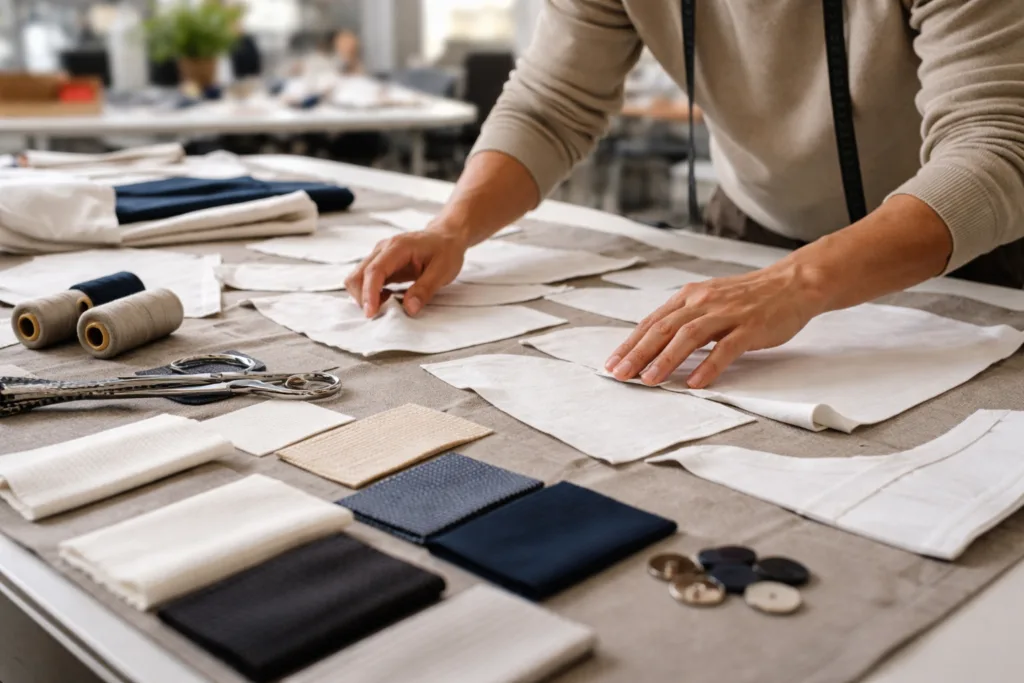
OEM (Original Equipment Manufacturer) and ODM (Original Design Manufacturer) are central concepts in custom clothing manufacturing. Grasping their differences helps brands choose the right production partner for their vision.
OEM: Brand-Driven Customization
OEM means the brand supplies design, tech packs, or style references, and the factory follows exact specifications. Brands control fabric, fit, trims, and quality standards—but rely on the factory for execution. This is ideal for brands with unique identities or signature silhouettes.
ODM: Factory-Led Product Creation
ODM involves factories offering ready-made designs, which brands customize with labels, colors, and select details. ODM suits brands seeking speed-to-market, lower R&D investment, and less technical oversight. Factories manage pattern making, fit standards, and core specifications, simplifying the process for buyers.
| Aspect | OEM | ODM |
|---|---|---|
| Design Ownership | Brand | Factory |
| Spec Detail | Full (tech pack, custom) | Limited (core style) |
| Pattern Making | Based on brand input | Factory developed |
| Flexibility | High (custom fabric, trims) | Moderate (color, branding) |
| MOQ | Usually higher | Often lower |
What Brands Should Consider
- Customize vs. fast track: Choose the model that aligns with your brand stage and market needs.
- Check intellectual property: Ensure your designs are protected under OEM, and review exclusivity in ODM arrangements.
- Evaluate supply chain transparency and communication style; both models require clear spec documentation.
B2B Ordering Modes in Custom Clothing Manufacturing
Business-to-business (B2B) ordering in custom clothing manufacturing emphasizes scalability, cost efficiency, and risk control. Factories and brands negotiate bulk orders, balancing unit economics, production lead times, and technical demands.
Standard B2B Workflow
- Inquiry/Quotation: Brand sends request for price (RFQ) with designs or mood boards.
- Sample Development: Factory provides samples for fit, construction, and decoration approval.
- Order Confirmation: PO issued, payment terms decided.
- Bulk Production: Garments are mass-produced, inspected, and packed.
- Logistics: Goods shipped via air/sea as per brand’s delivery instructions.
Key B2B Considerations
- Minimum order quantity (MOQ) impacts unit cost, flexibility, and eligibility for preferred suppliers.
- Production lead time ties directly to fabric type, decoration methods, and inline QC requirements.
- Clear specs and communication reduce risk of misinterpretation, critical for both OEM and ODM models.
Custom Clothing Manufacturing: Essential Stages
The success of every apparel collection rests on careful management of the three production stages: development, sampling, and bulk manufacturing. Each phase affects fit, material quality, and cost dynamics.
Design & Development
Brands submit tech packs or choose from factory design portfolios. For OEM, detailed specs on construction and finishing are required; for ODM, customization options are noted.
Fit and Pattern Approval
Pattern makers build base blocks or adapt standard fits. Sample grading for size sets ensures proportional fit across XS to XXL, with key measurements adhered to within ±1 cm tolerance for knits.
Sample Making (Proto/PP Samples)
- Prototype samples: Initial check for silhouette and stitch type.
- PP (pre-production) samples: Full execution with planned fabric, trims, decoration.
- Size set: Samples across ranges for fit and shrinkage tests.
Testing & Quality Control
Garments are checked for shrinkage (e.g., <3% after wash for knitted tees), colorfastness to washing and rubbing, seam integrity (lockstitch/bar tack for stress points), and compliance to brand standards.
Bulk Production
- Fabric inspection with a 4-point system.
- Fabric relaxation (for knits) before cutting—minimizes torque/skew.
- Layer spreading & cutting: Straight knife, auto-cutter, or band knife.
- Sewing: Line balancing—SMV calculated, common stitches (ISO 301, 401, 504) applied as per spec.
- Inline & end-line QC: Checklists for measurement, defects, decoration alignment.
- Finishing: Ironing, thread trimming, metal detection (where required), folding & packing.
Fabric Sourcing Decisions in Custom Manufacturing
Fabric choice dictates performance, appearance, cost, and compliance. Brands must collaborate with suppliers to select suitable textiles, monitor shade consistency, and validate lab dips before bulk approval.
Common Apparel Textiles
| Fabric Type | GSM Range | Main Properties | Best Use |
|---|---|---|---|
| Cotton Jersey | 140–180 gsm | Soft, breathable, moderate shrinkage | T-Shirts, casualwear |
| Pique | 190–220 gsm | Textured, body, good drape | Polo shirts |
| Fleece | 250–350 gsm | Warm, brushed back, thick | Hoodies, sweatpants |
| Polyester Mesh | 120–160 gsm | Lightweight, moisture-wicking | Sportswear |
Fabric Approval and Bulk Readiness
- Lab dips match final garment color; variations handled before order sign-off.
- OEKO-TEX® compliance for skin-contact garments—key for EU/US markets.
- Procurement schedules, with buffer for lead time (dyed yardages, imported trims).
Rain’s tip from the production line: Always request shade bands for large orders to control bulk dye variations, and specify allowed tolerance on GSM (±5%) up front.
MOQ and Lead Time: Setting Realistic Expectations
Minimum order quantities (MOQ) and delivery timelines are pivotal factors for brands engaging in custom clothing manufacturing. They impact cost breaks, supply chain reliability, and your ability to launch collections on schedule.
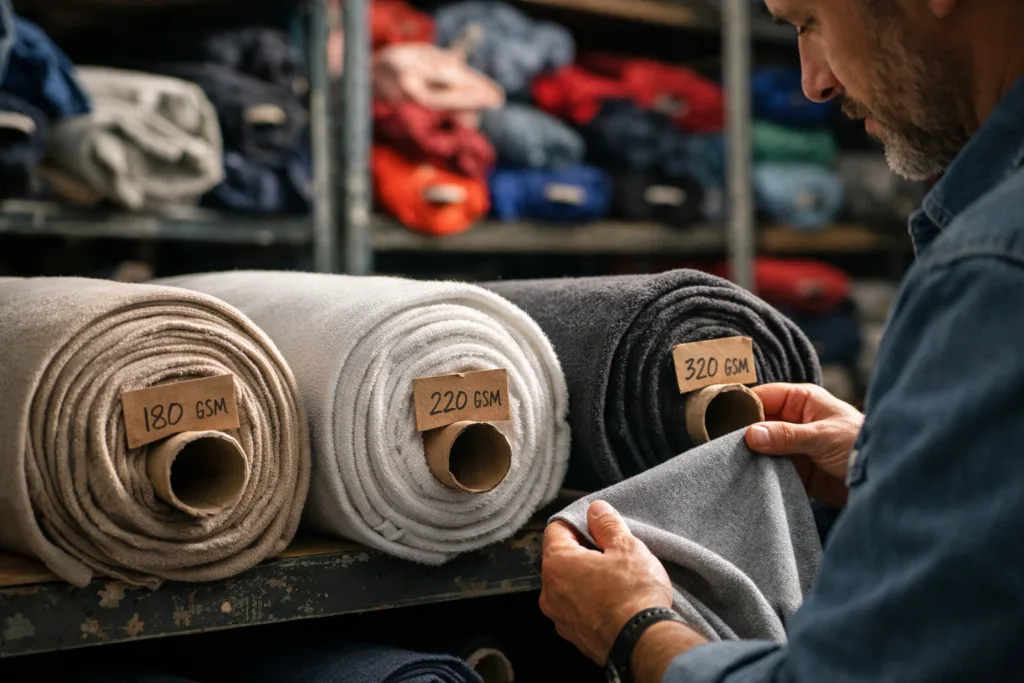
MOQ: Balancing Scale and Flexibility
- Basic knits (T-shirts): MOQ 300–1,000 pcs/style/color
- Complex/embellished garments: MOQ 500–2,000 pcs
- Premium fabrics/multi-step finishes: MOQ may push to 3,000+
- ODM sometimes offers lower MOQs due to stock support.
Lead Time: Key Milestones
| Stage | Duration |
|---|---|
| Sample Development | 2–4 weeks |
| Bulk Fabric Sourcing | 2–6 weeks |
| Bulk Production & QC | 4–8 weeks |
Managing Risk and Variability
- Plan for possible re-sampling, particularly on first-time styles or new factories.
- Pre-book seasonal fabrics to avoid shortages at peak times.
- Always lock trims and auxiliary materials before bulk launch to protect your timeline.
Aligning Factory Capabilities with Brand Needs
Choosing the right factory means matching their strengths to your garment type, quality goals, and production complexity. Not every plant is equipped for high-detail fashion, specialty printing, or precise finishing.
Core Questions for Factory Selection
- What are their main product categories (e.g., knits, wovens, outerwear)?
- Can they manage your target stitch types (e.g., flatlock for sportswear, overlock for tees)?
- Do they have certified compliance for markets (e.g., OEKO-TEX®, REACH)?
- Is their sewing line balanced for your order size/SMV requirements?
- How do they handle on-time delivery and bulk QC?
Evaluating Sample Room and Bulk Execution
- Visit sample rooms: Check pattern tables, machinery, and finishing tools.
- Review past customer profiles; ask for references on comparable styles.
- Inspect output stability: Look for consistency in fabric shade, sizing, decoration alignment.
Production Line Insights
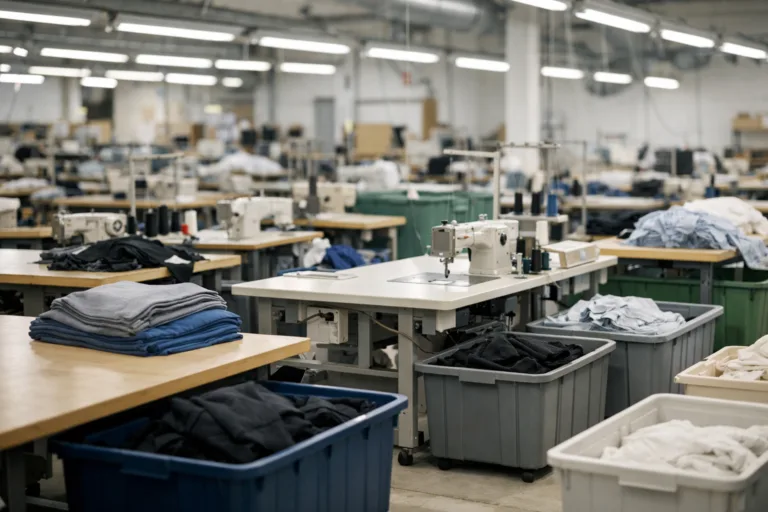
In many export factories, sewing operations are broken into specialized segments: operators for main body sewing, neckline attachment, topstitching, and QC stations. Strong process management translates directly to fewer rejects and higher first-pass yield.
How Custom Clothing Manufacturing Works for Brands with OEM/ODM Needs
Custom clothing manufacturing for brands with OEM/ODM needs hinges on integrating product vision, clear specs, and disciplined factory execution. The workflow starts with the choice between OEM and ODM models—each with distinct responsibilities for design ownership and process control.
Critical Parameters
- Design specification: Precise tech packs, annotated samples, or detailed briefs (for OEM).
- Fabric standards: Agreed GSM, composition, shrinkage requirement, color/finish.
- Production timeline: Realistic scheduling with checkpoints for sample approval, bulk readiness, final QC.
- MOQ and cost structure: Tiered pricing, clear cost breakdowns, payment term flexibility.
- Factory fit: Ability to manage quantity, technical complexity, and compliance.
- Quality controls: Inline/end-line inspections, shade bands, measurement spec sheets.
Common Mistakes to Avoid
- Insufficient tech pack detail (missing size chart, construction specs, trim placements).
- Fabric changes after sample approval causing delays.
- Poor communication of bulk color vs. lab dip acceptance.
- Underestimating decoration lead time for embroidery/print.
- Wrong factory type for garment complexity (e.g., basic T-shirt line for tailored jackets).
Practical Tips for Brands
- Use annotated photos for tricky construction areas.
- Ask for third-party QC summaries if you cannot visit.
- Include time buffers for unforeseen changes or approvals.
- Regularly confirm packaging and marking specs before bulk shipment.
- Develop long-term relationships for better flexibility and cost negotiation.
Branding, Decoration, and Compliance in Custom Apparel
Brand identity is shaped not just by silhouettes, but also by decoration and trim execution. Custom clothing manufacturing allows application of brand logos, print graphics, embroidery, and specialty patches—each chosen for its durability, cost, and visual impact.
Decoration Methods
- Screen print: Crisp for bold designs, best on cotton/jersey.
- Sublimation: Sharp, all-over prints for polyester sportswear.
- Heat transfer: Complex color gradation, manageable for small runs.
- Embroidery: Flat or 3D, ideal for brand logos on polos, outerwear.
- Appliqué/badges: Adds tactile depth for premium categories.
Compliance Essentials
For children’s wear and major retailers, compliance demands must be factored from the start—nickel-free trims, label regulations, restricted substance lists (RSL), and appropriate warnings on packaging and polybags. Always request documentation for OEKO-TEX® or similar standards prior to production.
Packing, Shipping, and Bulk Delivery in Custom Clothing Manufacturing
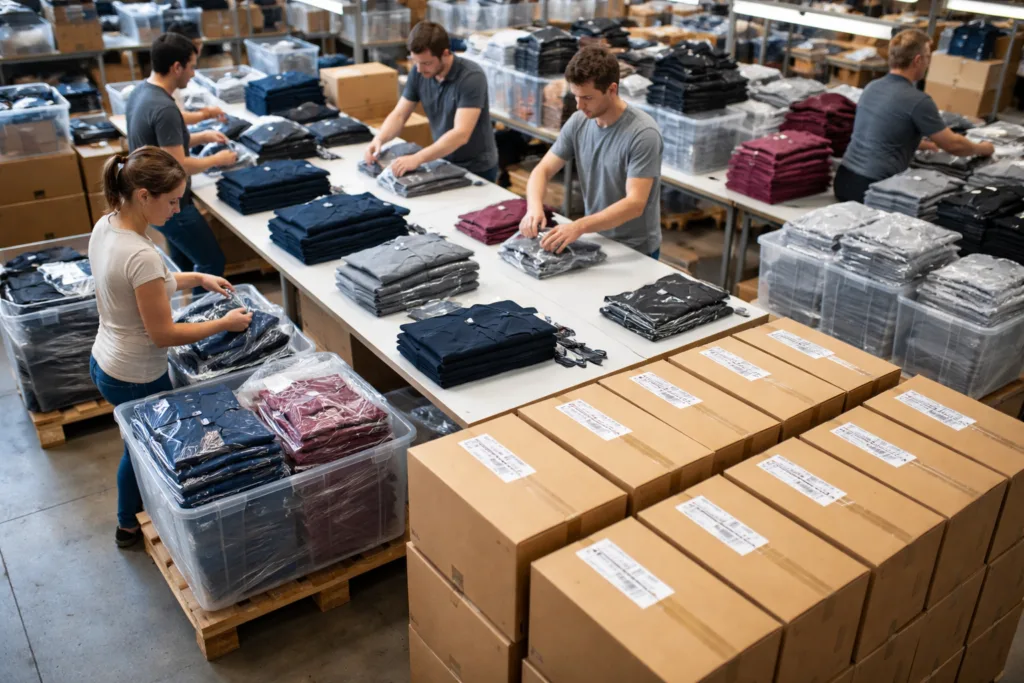
Finished garments move from factory floor to distribution centers through standardized packaging and robust logistics planning. Packing accuracy ensures products arrive without damage and in correct size ratios for market launch.
Garment Packing Components
- Folding method: Factory follows spec (e.g., center fold, retail fold, hanger pack).
- Polybag selection: Thickness, vent holes, warning labels, easy opening.
- Carton packing: Strength, marking, barcode/scanning compliance.
- Size ratio: Distribution by country, channel, or market.
Bulk Shipment Steps
- TOP (top of production) samples approved before shipment.
- Packing lists and carton counts double-checked.
- Final QC summary and AQL inspection reports.
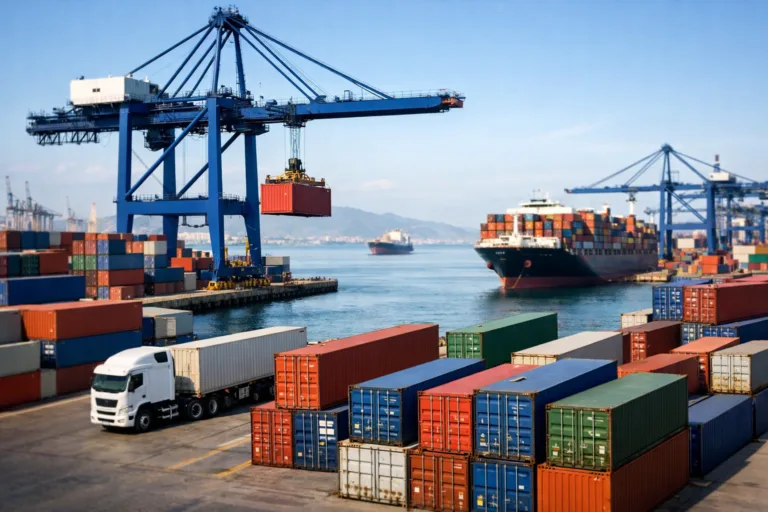
- Dispatch via sea/air as per coordination.
Frequently Asked Questions
What is the difference between OEM and ODM in custom clothing manufacturing?
OEM means the brand controls designs and specs while the factory produces accordingly. ODM involves factory-created designs that brands can modify with their own logos and details.
How do I choose the right fabric for my custom brand collection?
Base selection on intended use, target GSM, performance properties, and compliance needs. Always approve lab dips and request sample yardage before mass production.
What are realistic minimum order quantities (MOQ) for custom clothing manufacturing?
MOQs range from 300 to 2,000 pieces per style/color depending on complexity, factory scale, and decoration methods.
How long does custom clothing manufacturing take from sample to bulk shipment?
Lead times are typically 8 to 16 weeks, covering sample development, fabric sourcing, production, and final packing/shipment.
What quality control steps should brands demand from their factories?
Brands should insist on inline and end-line QC, measurement spec sheets, third-party testing for compliance, and approval of TOP samples before bulk shipment.
Can custom clothing factories handle complex trims or branding decorations?
Some specialized factories excel at embroidery, printing, and premium trims; always ask for sample references and verify relevant machinery before placing bulk orders.