Introduction: Why the Comments Phase Matters in Sample Feedback
The “Comments” phase for sample feedback is more than a checkpoint—it’s the foundation of quality and collaboration between brands, factories, and designers. Providing detailed feedback on samples shapes the final product, keeps specifications in check, and prevents costly production mistakes. Whether you’re in apparel, metal goods, or any manufacturing niche, mastering feedback on samples helps you drive precision, reduce iterations, and ensure every team member is moving in sync.
The Essential Role of Feedback in Sample Development

Feedback on samples (the “Comments” phase) is where creators, brands, and factories come together to refine prototypes into production-ready products. Effective sample feedback isn’t just about pointing out errors—it’s about explaining what works, what doesn’t, and why. At this stage, your input steers improvements, clarifies expectations, and ensures specifications are met. A well-executed comments phase empowers the team to deliver results that match your intent and market needs.
Understanding the Comments Phase: Sample Review Fundamentals
Before diving into feedback, it’s critical to understand what the comments phase encompasses. Typically, it follows initial prototype delivery and precedes size set and pre-production sampling. You’ll evaluate samples against the original tech pack, spec sheet, and design intent—providing comments that are actionable, specific, and measurable.
How to Give Feedback on Samples (The “Comments” Phase)
Effective feedback on samples is structured, direct, and supportive. Here’s a step-by-step approach:
- Evaluate against the spec: Check for fit, construction, fabric type, color, and measurements using references like How to Measure a Garment.
- Record clear observations: Use bullet points for specific issues (e.g., “shoulder seam too wide” or “pocket depth meets requirement”).
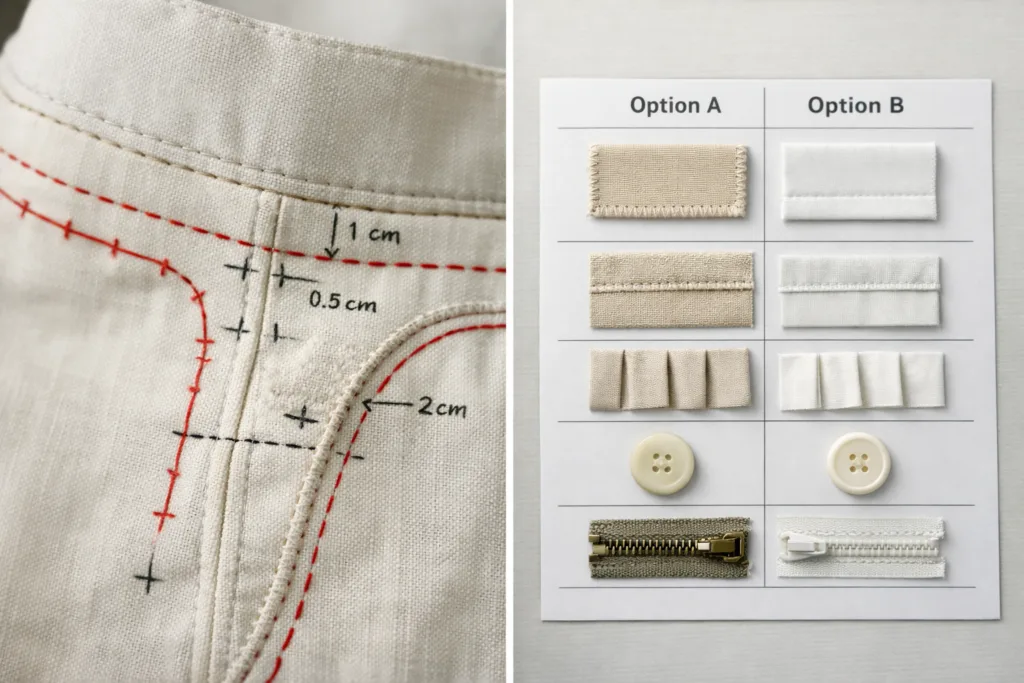
- Reference visual evidence: Attach annotated photos, markups, or drawings for clarity.
- Highlight positives as well as negatives: Encourage improvement and confirm correct details.
- Suggest actionable fixes: E.g., “Reduce sleeve length by 1cm” or “Apply tighter stitching (SPI).”
- Ask for confirmation: End your comment with a request—”Can you confirm adjustment before next sample?”
Structuring Sample Comments for Maximum Clarity
Organized comments prevent confusion at the factory and speed up iteration. Consider structuring feedback by garment section (e.g., “Collar,” “Cuff,” “Body”), referencing the relevant tech pack areas. Apparel Wiki recommends separating size/fitting issues from construction and aesthetic points.
Using Visual Aids and Side-by-Side Comparisons
Visual tools like annotated images, comparison tables, and diagrams make feedback more precise. For instance, a side-by-side table comparing sample measurements with spec sheet values clarifies discrepancies and ensures alignment:
| Sample Area | Spec Measurement | Actual Sample | Comment |
|---|---|---|---|
| Sleeve Length | 60cm | 61.5cm | Reduce by 1.5cm |
| Hem Width | 50cm | 50cm | Meets standard |
Tips for Constructive and Productive Sample Feedback
- Be specific: Vague comments (“looks odd”) don’t guide improvement.
- Focus on measurable criteria.
- Balance critique with recognition.
- Phrase feedback as collaboration.
- Reference sample version or date to avoid confusion.
Best Practices for Written Sample Comments
Directness and Respect
Always write with clarity. Use concise sentences and avoid jargon unless both parties understand. While direct, remain respectful—your feedback should foster partnership and encourage the factory or designer to see your perspective.
Using Comment Sheets and Tech Packs
The industry standard is to annotate your sample feedback directly onto organized comment sheets or use digital annotation tools embedded in tech packs. For further guidance, review Clear Factory Communication techniques.
Common Pitfalls When Giving Sample Feedback
- Poor documentation or missing references.
- Unclear or ambiguous suggestions.
- Failing to measure samples (quantify the issue).
- Not confirming fixes before next round.
Collaborative Discussions in the Comments Phase
Sample feedback thrives on two-way communication. Invite questions, encourage clarifying calls, and discuss rationale behind your requests. This helps all parties develop mutual understanding and speeds up iterations.
Sample Feedback for Different Product Types
Apparel Samples
Feedback focuses on fit, fabric, stitching, and style details. Address ease, grain line, and seam allowance using resources such as Ease in Pattern Making.
Metal Product Samples
Comments relate to material finish, tolerances, weight, and function, referencing digital patterns (see Digital Pattern Conversion for details).
Sizing and Grading Samples
Review size set samples for grading accuracy—helpful links include Size Set Quality Assurance.
Integrating Sample Feedback into the Manufacturing Process
After commenting, update your tech pack and share revised specifications. Always track which changes were implemented. For detailed workflow, visit Updating Your Tech Pack After Sampling Reviews.
Feedback Iteration: From Proto to Pre-Production Samples
Sample feedback is a repeating cycle from proto sample to fit sample to pre-production sample. Each stage requires new review criteria. See the Apparel Wiki breakdown on Proto Sample vs. Fit Sample.
Balancing Design Intent and Technical Feasibility
Sometimes your design vision won’t match manufacturing constraints. Feedback during the comments phase should address technical limitations and propose compromises. Document changes for traceability and future reference.
Guiding Creators Toward Continuous Improvement
Encourage creators to learn from every iteration. Positive, actionable feedback builds skill and confidence. Highlight strengths (“excellent pocket placement, consistent topstitching”) alongside suggestions.
Common Feedback Terminology Explained
Industry terms include “POM” (Point of Measurement), “SPI” (Stitch Per Inch), and “Tolerance.” Apparel Wiki provides definitions for these and guidance on Understanding Tolerance in Garment Measurements.
Feedback Tools and Digital Solutions
Leverage digital platforms for sample review. Tools like Techpacker or Excel templates allow structured feedback and easy communication with factories. Check out Creating a Tech Pack in Excel for practical solutions.
Sample Feedback Case Study: Avoiding Production Headaches
One Apparel Wiki reader found ambiguous comments (“Fix neckline”) led to a misaligned collar in bulk production. Switching to annotated comment sheets—“Reduce collar width by 0.5cm, reposition button stand”—helped resolve issues quickly and prevented costly remakes.
Addressing Factory Communication Barriers
Factories may face language or technical gaps. Using diagrams, reference photos, and bullet points over paragraphs makes information digestible. Request factory feedback to identify potential misunderstandings early.
Maintaining Professionalism in the Feedback Cycle
Professional, courteous comments help build long-term trust. Document every change; avoid blame—focus discussion on solutions and learning.
Optimizing Sample Feedback for Quality and Consistency
Consistency in feedback ensures future samples align with the brand’s quality standards. Use templates, keep a feedback log, and maintain records for every sample iteration.
Feedback Integration: Next Steps After the Comments Phase
Once feedback is provided, update your production documents, confirm factory understanding, and schedule follow-up sample reviews. Maintain open channels for ongoing questions.
How to Foster a Culture of Collaborative Feedback
Create an environment where team members and external partners feel comfortable sharing and receiving critiques. Regular review meetings and clear documentation encourage transparency and accountability.
Apparel Wiki’s Industry Insights: Navigating Feedback for Sample Success
Apparel Wiki emphasizes that successful feedback combines technical accuracy, clarity, and positive framing. Avoid common errors like skipping measurements or failing to check tolerance—refer to resources such as Final Quality Check Production Samples for practical guidance.
The Impact of Clear Feedback on Scaling Production Quality
Structured sample comments help brands and suppliers shift from prototypes to mass production with confidence. Issues caught at this stage reduce returns, improve brand reputation, and speed up lead times.
Conclusion

Constructive and precise feedback during the comments phase is the backbone of quality manufacturing. Simple, clear sample comments build better products, streamline communication, and ensure successful launches. By focusing on measurable, collaborative, and actionable input—and updating documents accordingly—you help transform a good sample into a great final product.
Frequently Asked Questions
What is the comments phase in sample feedback?
The comments phase is when a product sample is reviewed, and constructive feedback is provided to guide improvements before mass production.
How should I structure my sample feedback?
Feedback must be clear, actionable, and organized by garment or product section, using bullet points, visual aids, and references to specifications where possible.
What tools help with sample feedback?
Digital tech packs, annotated comment sheets, comparison tables, and platforms like Techpacker or Excel streamline sample review and documentation.
How do I handle disagreements during the comments phase?
Open discussion, mutual clarification, and compromise based on technical and design considerations foster effective resolution.
Why is specific feedback better than general feedback?
Specific feedback ensures the factory understands the exact issue and how to fix it, minimizing confusion and costly errors in production.
How often should sample feedback be documented?
Every iteration should be logged, with updates to tech packs or comment sheets after each review to track progress and ensure consistency.
Related Reading
- 9 Steps to Clear Sample Feedback That Prevents Production Errors
- Strategic Feedback for Better Sample Quality: 9 Smart Steps
- 8 Critical Ways to Guarantee Size Set Sample Quality Before Cutting
- Designer’s Ultimate Sample Review Checklist: 13 Must-Check Points
- 10 Steps to Seamlessly Update Your Tech Pack After Sampling Feedback
- Mastering Factory Comments and Callouts for Clear Communication