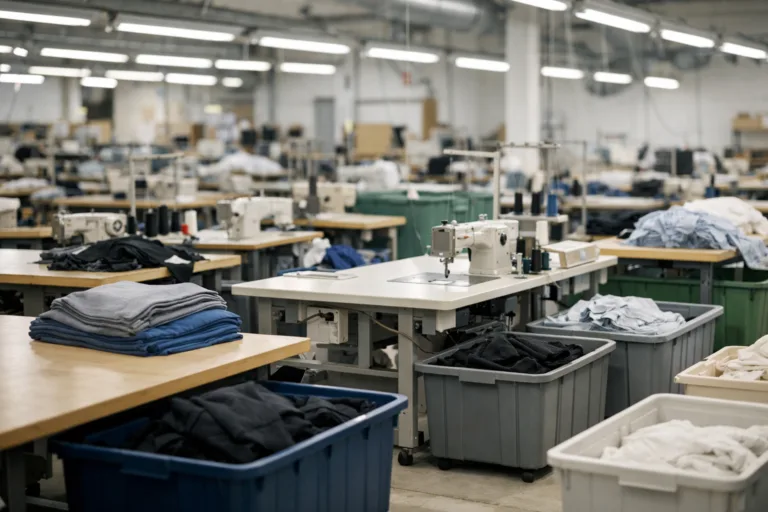
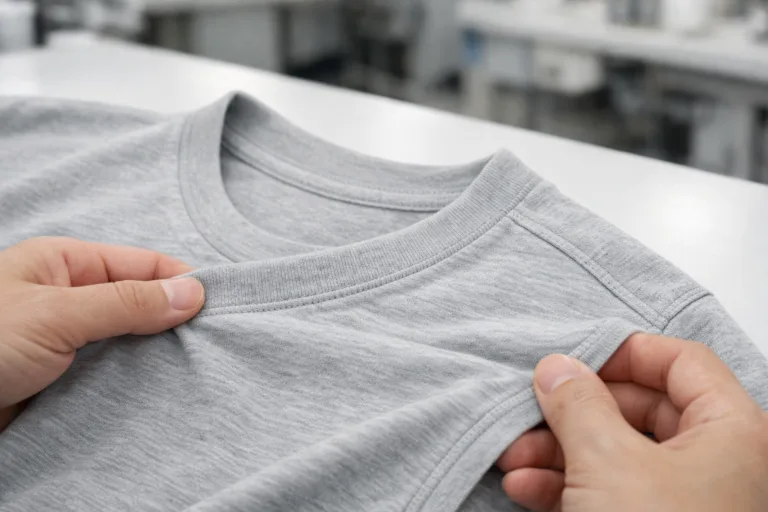
Understanding Cost vs. Quality Prioritization
Choosing the right clothing manufacturer begins with an honest assessment of your brand’s priorities. Are you aiming for mass market affordability, premium craftsmanship, or a balance between the two? Cost and quality often exist on a sliding scale; understanding this relationship is crucial for new and growing apparel businesses.
Key Factors Influencing Cost and Quality
- Fabric Selection: Natural fibers like organic cotton usually cost more but outperform basic polyester in comfort and durability. Specialty blends for performance wear (like nylon/spandex) also command higher prices.
- Construction Techniques: Garments with durable seams (like flatlock or reinforced bartacks) or complex structures (e.g., lined jackets, gusseted sportswear) take more time and skill, raising costs.
- MOQs (Minimum Order Quantities): Higher MOQs often lower per-unit cost but increase upfront investment. Small-batch or made-to-order production is flexible but pricier per piece.
- Quality Control: Rigorous inspection (e.g., 100% inspection, lab testing for shrinkage and colorfastness) can increase overhead but reduces risk of returns and complaints.
- Branding and Trims: Custom labels, high-quality zippers, specialty buttons, and modern packaging add both value and cost.
Three Common Prioritization Models
| Model | Cost Focus | Quality Focus | Typical Applications |
|---|---|---|---|
| Mass Market | Low | Basic, acceptable | Promotional T-shirts, budget uniforms |
| Balanced | Competitive | Medium-High | Branded streetwear, upscale basics |
| Premium | Secondary | Top-Tier | Designer, technical sportswear, luxury lines |
Cost-Saving Without Sacrificing Core Quality
- Define your non-negotiables: fabric weight (e.g., 180gsm single jersey for T-shirts), seam strength, branding details.
- Optimize processes: Choose classic constructions; avoid unnecessary complexity at startup.
- Negotiate trims: Use standard trims for mainline, reserve custom elements for hero products.
Rain’s tip from the production line: “Some cost can be trimmed by starting with smaller size runs or fewer colorways, but never skimp on core stitching or fabric grade. Poor structure means high return rates and damage to your brand reputation.”
Building Your Manufacturer Shortlist
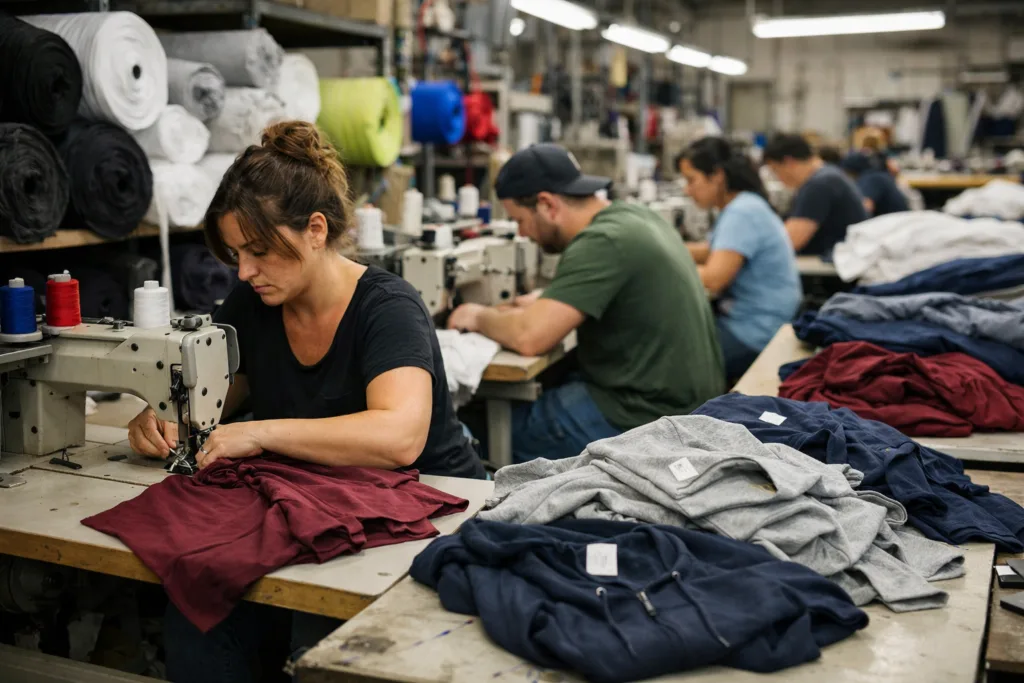
The right factory is often found through organized search—not from chance. Here’s how to construct a shortlist that suits your brand’s budget and quality needs, filtered by real experience and proven capability.
Step 1: Define Your Product
- Garment category (T-shirts, polos, hoodies, outerwear, dresses, uniforms, childrenswear, etc.)
- Target material: 100% combed cotton, 60/40 CVC, performance polyester meshes
- Key features: embroidery/print, technical function, special seams
- Order volume: MOQ, scale-up potential
Step 2: Source Candidates
- Industry directories: Alibaba, Global Sources, Manufacturer.com for an overview, but look for those with verified audits, active export experience, and multiple recent buyer reviews.
- Trade Shows & Fairs: Attend major expos (e.g., Canton Fair, Intertextile Shanghai) or local fashion shows. You can see and touch physical samples, speak to owners, and compare capabilities in real time.
- Buyer Networks: Connect through LinkedIn, industry forums, or apparel sourcing groups to gather peer-recommended contacts.
- Online Research: Check manufacturer homepages for company history, certificates (e.g., ISO 9001, OEKO-TEX® Standard 100), and a range of product photos (not just catalog images).
Step 3: Qualify and Rank
- Check their product focus (e.g., know-how in knits vs. wovens, sportswear vs. workwear).
- Inspect their factory certification, and real production photos (machinery, sewing lines, QC labs).
- Shortlist those who respond promptly, offer clear answers, and can show recent work similar to your request.
Sample Manufacturer Shortlist Template
| Factory | Product Type | MOQ | Certifications | Location | Buyer Reviews |
|---|---|---|---|---|---|
| Jinhua Knitting | T-shirts, Polos | 500 pcs/style | OEKO-TEX®, BSCI | Zhejiang, China | 4.7/5 (23) |
| Bangla Apparel Ltd | Sweatshirts, Hoodies | 1,000 pcs | ISO 9001, SEDEX | Dhaka, Bangladesh | 4.5/5 (18) |
| Luxe Stitch Studio | Dresses, Blouses | 100 pcs | SGS Audited | Ho Chi Minh, Vietnam | 4.8/5 (11) |
Critical Quality and Cost Pitfalls to Avoid
In production, small errors can snowball into costly disasters. By knowing the common ‘minefields,’ you’ll sidestep painful lessons that many new brands endure.
Pitfall 1: Blindly Chasing Lowest Price
Ultra-low quotes often hide shortcuts—thin fabrics, uneven sewing, re-used pattern blocks, or poor QC. Savings vanish if you end up with unwearable stock, delays, or chargebacks. Always request a breakdown, confirming materials, trims, and finishes in writing.
Pitfall 2: Vague Specs and Poor Communication
Loose instructions lead to loose results. Supply a tech pack with clear measurements (body width, chest, sleeve, length), material GSM, finish details, color references (Pantone code), artwork placements, and sample photos when possible. Factories respond best to specifics.
Pitfall 3: Ignoring Sample Approval
Never confirm production without a signed pre-production (PP) sample. This lets you double-check sizing, stitching type (e.g., 301 lockstitch for main seams, 504 overlock for knit edges), thread color, trims, and label position. Any mismatch is fixed before mass production.
Pitfall 4: Overlooking Trim and Accessory Quality
Cheap zippers, buttons, and labels undermine an otherwise well-made garment. Specify trusted brands (e.g., YKK for zippers), check attachments, and ask for component cuttings if quality is critical.
Pitfall 5: Underestimating Lead Times
Sampling, raw material procurement, batch dyeing, printing, sewing, washing, and packing all take time. Pad your plan by 2–4 weeks above a factory’s estimate, especially on dyed/printed fabrics or busy seasons.
Factory insight: “About one in three startups face delay because a print screen, label, or material is held up. Confirm every component’s timeline and get update photos from the line.”
How to Find Clothing Manufacturers That Fit Your Brand’s Budget & Quality Needs
Finding a manufacturer aligned with your budget and quality expectations takes methodical searching and practical testing. The journey is as much about clarity and expectation management as factory capability. Here’s how to open the search, manage communication, and lock in reliable partners—delivering the results your brand (and your customers) deserve.
What Does ‘Fit’ Actually Mean?
It’s not just about price. A manufacturer that fits your brand will:
- Match your target price range and advise where compromises may impact final quality.
- Understand your fit, target market, and brand values (e.g., eco-friendly materials, safety for kidswear, athletic cut).
- Possess technical know-how (e.g., flatlock seams for activewear, pigment dye for street style) and relevant machinery.
- Communicate transparently and proactively throughout sampling and production.
- Be able to scale with you as you grow, adjusting MOQs, fabric ordering, or decoration methods to match need.
Where To Search Smartly
- Domestic factories offer easier communication, lower shipping times, and stronger IP control, but often come with higher unit cost. Best for high-mix, low-volume brands or fast local drops.
- Overseas factories (China, Bangladesh, Vietnam, Turkey, India) provide scale and cost efficiency; the trade-off being longer supply chains, higher MOQs, and more hands-on quality monitoring needed.
Validating the Match
- Share project specs and request detailed quotes—watch for clarity, responsiveness, and questions that show technical understanding.
- Request material swatches (with weight, composition), and arrange for a sample run.
- Inspect sample for geometric accuracy (measurements ±1 cm for knits), construction (e.g., correct SPI—stitches per inch, evenness, finish), wash performance (shrinkage <3% after test wash), and branding details.
- Do a trial order and build quality review loops (inline QC photos, final inspection reports).
- Secure clear terms: payment schedule, rework policy, compliance guarantees (especially critical for children’s wear or certified uniforms).
Why Manufacturers Reject Orders (And How to Avoid It)
- Tiny order size below MOQ—combine SKUs or choose flexible lines if possible.
- Extremely complex specs for the first run—launch with a streamlined product, evolve as the relationship builds.
- Unclear or changing requirements—prepare your tech pack and purchase plan before reaching out.
Key Communication Terms You Should Master
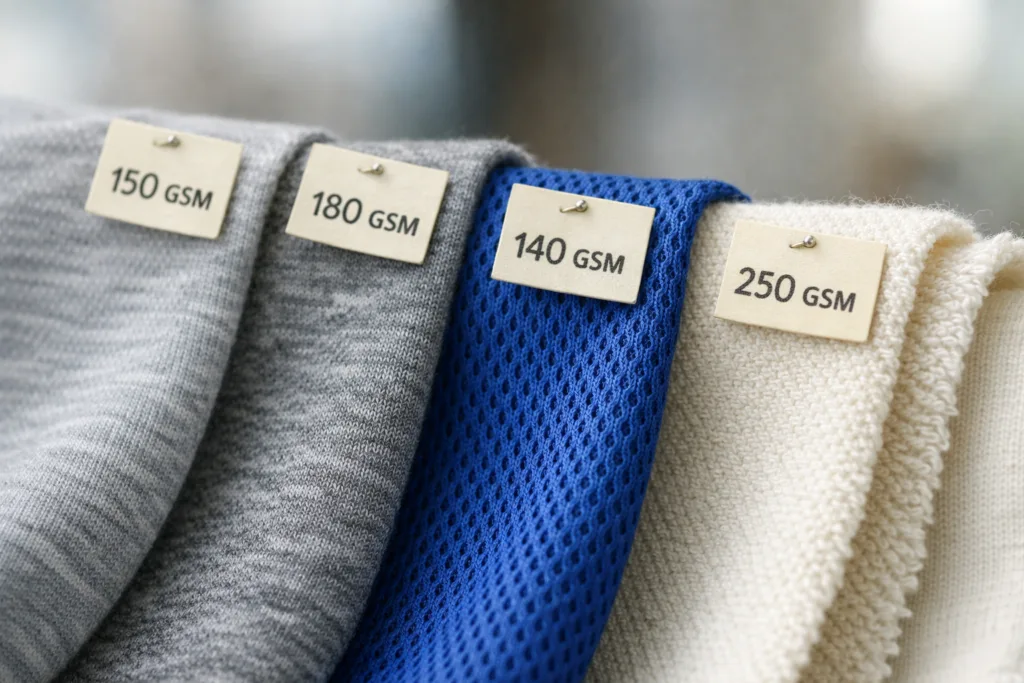
- GSM (grams per square meter): Essential for fabric weight selection, especially in T-shirts and sweatshirts.
- Spec sheet (tech pack): The blueprint for your garment—measurements, stitch type, trims, artwork.
- PP sample: The approved sample before bulk production starts.
- TOP sample: First piece out of bulk—checks if everything matches.
- Tolerance: Allowed measurement deviation (e.g., ±1 cm for body width in cotton knits).
- Bulk shade control: Color consistency monitoring between lab dips and production lot.
Fabric, Trims, and Technical Choices Affecting Budget & Quality
Material selection isn’t just about feel; it steers the batch price, MOQ, finishing, and post-wash results. Understanding real-world textile options helps you negotiate with confidence—and avoid common hidden costs.
Popular Apparel Fabrics and Their Trade-Offs
| Fabric | GSM Range | Main Properties | Typical Use |
|---|---|---|---|
| Combed Cotton Jersey | 140-220 | Soft, breathable, moderate shrinkage | T-shirts, polos |
| CVC (Cotton/Poly Blend) | 160-260 | Durable, less shrinkage, colorfast | Uniforms, promo wear |
| Polyester Mesh | 120-160 | Wicking, stretch option, quick dry | Sportswear, tanks |
| French Terry | 240-340 | Soft loopback, comfortable, some bulk | Sweatshirts, joggers |
| Denim (Cotton/Poly) | 280-450 | Stiff, robust, abrasion-resistant | Jeans, jackets |
Trims and Decorations: Where to Invest
- Pocket, collar, and cuff styles drive both assembly cost and the final ‘hand’ (feel) of the garment.
- Prints: Screen printing is cost-effective at high volume; digital (DTG) suits low MOQ or multicolor. Embroidery adds perceived value but must be specified (flat, 3D, patch).
- Zippers/snaps: YKK or SBS are reliable; cheap fasteners risk customer complaints and early garment failure.
- Labels and tapes: Brand and wash labels are non-negotiable. Consider eco-labels (recycled, OEKO-TEX® certified) for select lines.
Rain’s Production Reality Check
“In many export factories, the number one hidden cost is rework from unclear trim specs. Ask for a full trim card (sample of every button, zipper, tape), and quickly check all components when your PP sample arrives.”
Pattern, Fit, and Sizing Consistency
Proper fit and spec control protect against high defect rates and customer dissatisfaction. This goes far beyond just sending a retail reference; real factories work from technical patterns that allow for shrinkage, ease, and production tolerance.
Basic Blocks vs. Fit Development
- Basic block: Standard pattern used as a foundation (e.g., classic crew T, standard hoodie).
- Custom fit: Developed for your brand, adjusting measurements, shape, and ease to suit your target customer (slim, regular, oversized, unisex, gendered, athletic).
Pattern Components
- Body panels—front, back, sleeves
- Collar/cuff/rib trims
- Pockets, plackets, hoods (stylized or technical)
- Shoulder and neck tapes for structure and durability
How Factories Control Sizing
- Shrinkage allowance (1–3% for cotton knits, less for poly blends)
- Tolerance for each POM (point of measurement), e.g., ±1cm for chest, ±0.5cm for collar width
- Inline size set approval before bulk cutting
- Wearer trials—especially for athletic, kids, or technical clothing
Fit Issues to Guard Against
- Twisting side seams (especially in single jersey)
- Poor neck/collar set-in (wave or puckering)
- Sleeve length inconsistency after wash
Quality Control and Production Line Management
Even with a perfect sample and pattern, maintaining quality during mass production requires a systematic approach. Brands that skip on process monitoring often find bulk quality below sample standard.
Core Sewing Line Techniques
| Stitch Type | ISO Code | Typical Use | Key Benefit |
|---|---|---|---|
| Lockstitch | 301 | Main seams on woven, knits | Strong, versatile |
| Overlock | 504/514 | Edge seaming on knits | Stretch, prevents fray |
| Coverstitch | 602 | Hems, neck, armholes | Neat, elastic finish |
| Bartack | 101/304 | Pocket edges, stress points | Prevent tearing |
| Flatlock | 605 | Sportswear, seamless look | Flat, no bulk |
Quality Control Flow (Factory Perspective)
- Fabric Inward: 4-point system fabric inspection for flaws, holes, uneven dye.
- Pre-production: PP sample review, spec confirmation, shade banding for colors.
- Inline QC: Supervisors check random pieces every hour—monitor measurements, per SPI density, and trims.
- End-line QC: 100% inspection or 2.5 AQL sampling, checking garment measurements, seam strength, print quality, and branding accuracy.
- Final Inspection: Before packing, loose threads trimmed, care labels verified, metal detection for children’s wear, pressing and folding as per buyer standard.
Key Tests for Bulk Approval
- Shrinkage: <3% after specified wash (cotton knits)
- Colorfastness: To washing, sweating, rubbing—tested to local and regional standards
- Seam stretch: No breaking/stitch popping at 2x intended garment use
- Measurement: Within agreed tolerance table
Packaging, Shipping, and After-Sale Safeguards
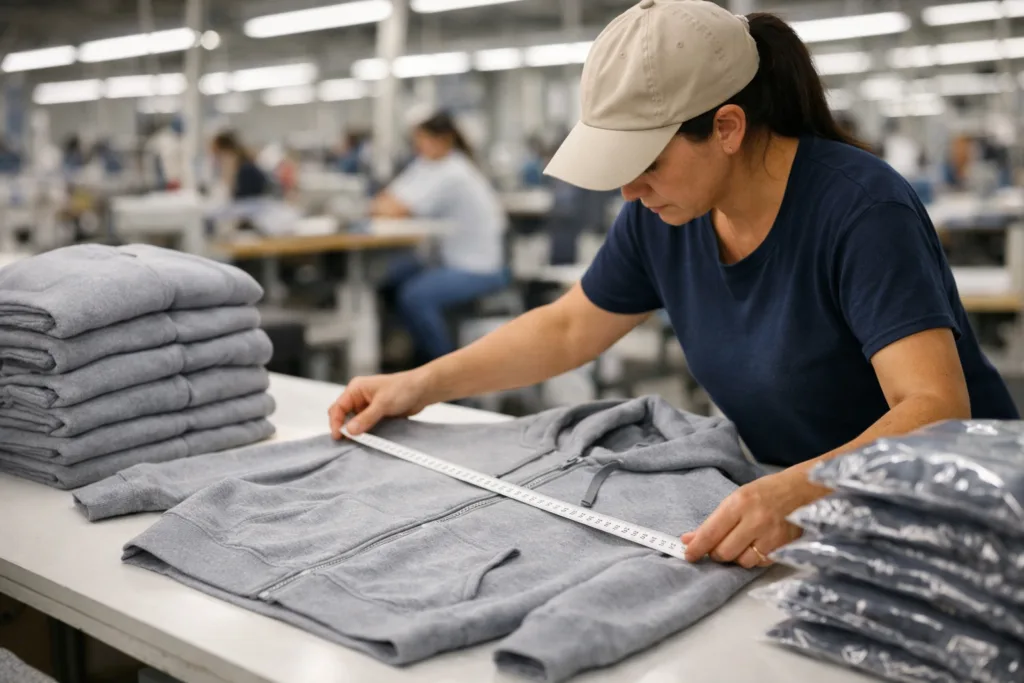
Final presentation—how your garments arrive and survive transit—also impacts brand value and sales returns. Packaging choices and shipment checks should match your quality expectations, not merely cost-saving strategies.
Garment Folding and Packing Standards
- Standard folding: Side to side, sleeve tuck, neck up for T-shirts and polos
- Polybag thickness: At least 30–40 microns for basic wear; vent holes for moisture control, warnings for suffocation as needed
- Carton packing: 5-ply cartons, strength-tested to 15–25kg load if exporting
- Labeling: Clear carton marking, size ratio breakdown (S/M/L/XL), and barcoding for bulk shipments
Shipping and Documentation
- Commercial invoice, packing list, and shipping docs match garment count and SKU
- If exporting, confirm commodity codes, certificate of origin, and compliance docs (as required per region)
- Always check a portion of boxes for final QC on arrival at warehouse—catch shortages, size mix-ups, and handling damage early
After-Sale Recovery and Claims
- Never release full payment before a satisfactory final inspection report
- Set clear guidelines (in the PO) for handling returns or defects over an agreed threshold
- For long-term growth, keep detailed production documentation and sample archives for at least 2 years—critical for repeat style runs or complaint resolution
Frequently Asked Questions
How do I find reliable clothing manufacturers near me?
You can start with industry directories, attend local trade shows, and network with nearby fashion entrepreneurs or sourcing consultants to get hands-on recommendations for local clothing factories.
What is the minimum order quantity (MOQ) most factories require?
MOQs can range from 100 pieces for boutique or sample units to 1000+ for more competitive pricing; it depends on the garment type, material, and the manufacturer’s standard production line setup.
How do I communicate my quality requirements to a factory?
Use detailed tech packs, clear measurements, sample references, and request physical samples for approval before bulk production; check responsiveness and ask factories how they typically control quality on the line.
What signs suggest a manufacturer may not meet my quality needs?
Red flags include unclear or vague answers, unwillingness to provide samples, very low pricing with minimal explanation, and lack of recent product photos or production certificates.
Why do garment costs vary so much between factories for the same style?
Variations come from differences in fabric quality, trims, construction methods, labor cost, production location, and how much quality control each factory invests in during the process.
What should I do if my first production run has too many defects?
Document all issues, notify the factory with photos and counts, refer to your agreed tolerance and quality terms, and arrange rework or compensation according to your contract or purchase order terms.