What Is “Interfacing”?
In garment manufacturing, interfacing is a specialized textile material applied between layers of fabric to provide shape, support, and durability to critical parts of a garment. Understanding interfacing meaning goes beyond the dictionary definition—it’s about recognising its backbone role in professional apparel construction. Whether it’s for collars, cuffs, or plackets, interfacing is what keeps these areas crisp and lasting after many wears and washes.
Interfacing Meaning: Key Points
- Purpose: Adds strength, rigidity, or enhanced handfeel where a garment needs it most.
- Placement: Used in places that experience extra handling: collars, cuffs, waistbands, lapels, plackets, button areas.
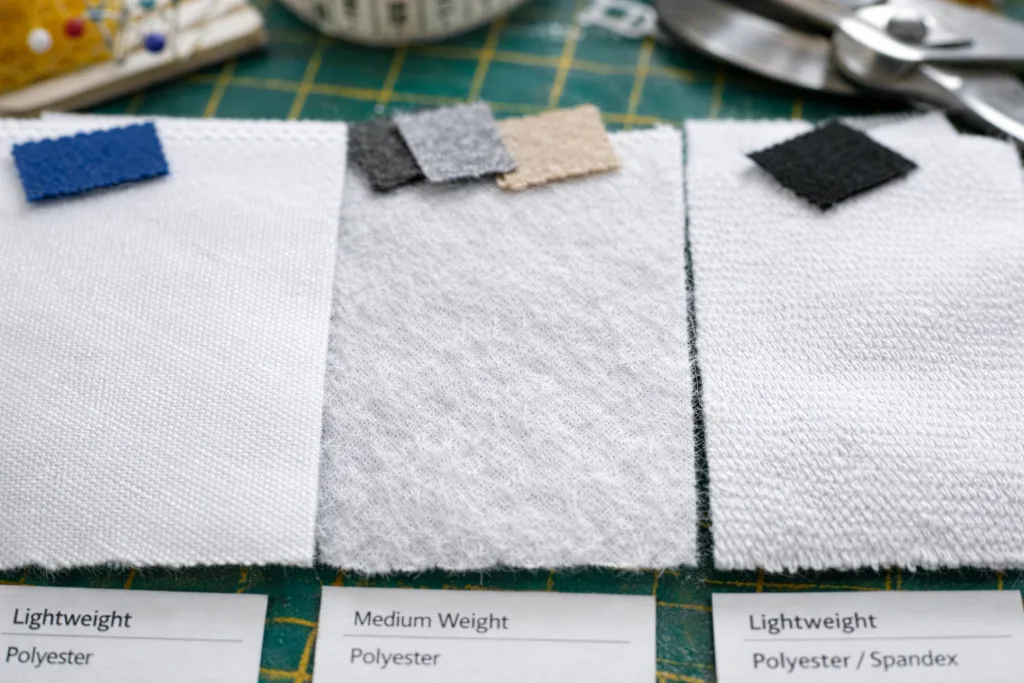
- Types: Fusible (iron-on), sew-in (stitched), and specialty versions (knit, woven, nonwoven).
- Selection: Must match base fabric in weight and care requirements—too stiff or too limp leads to quality issues.
Why Interfacing Matters in Garment Quality
As seen in many export factories, poorly chosen interfacing can lead to bubbling, puckering, or early failure, especially in high-contact zones. Professional patternmakers and buyers check for correct interfacing grade (GSM, structure, compatibility) during sample review and pre-production meetings. Smart selection minimizes returns and elevates brand reputation.
The Role of Interfacing in Garment Structure
Interfacing creates the structural backbone that defines a garment’s silhouette and wearability. Without suitable interfacing, critical garment details lose their shape. Collars flop, cuffs collapse, and plackets twist after washes. A high-quality polo shirt or dress will use interfacing strategically for both function and appearance.
Structural Support: How Interfacing Works
- Stability: Prevents stretching or distortion during wear, wash, or ironing.
- Shape Retention: Maintains the crisp look of collars, cuffs, and edges.
- Button Area Reinforcement: Stops buttonholes and placket seams from tearing or warping.
- Improved Handle: Enhances tactile feel and perceived value of garment details.
Factory Insights: Common Issues to Watch
- Incorrect fusing temperature or dwell time causes bubbling (especially in fusible interfacing).
- Excessive interfacing stiffness leads to poor drape and customer discomfort.
- Mismatched shrinkage rates trigger puckering after washing.
- Cheap nonwoven grades feel papery and degrade quickly in daily wear.
Rain’s tip from the production line: Always ask for base fabric and interfacing shrinkage data before bulk production—minimize garment distortion risk!
Types of Interfacing: Fusible, Sew-In, Specialty
Interfacing can be categorized by application method and base construction. Knowing the distinctions means better garment specs and fewer QC problems.
| Type | Base Construction | Main Properties | Best Use |
|---|---|---|---|
| Fusible | Nonwoven, Woven, Knit | Adhesive backing bonds to fabric with heat/pressure | Collars, plackets, cuffs, facings |
| Sew-In | Woven, Canvas, Haircloth | Attached with stitching, no adhesive | Tailoring, outerwear, children’s wear |
| Specialty | Lace, Knit, Stretch | Designed for stretch or delicate fabrics | Swimwear, performance, lightweight clothes |
Fusible Interfacing: Production View
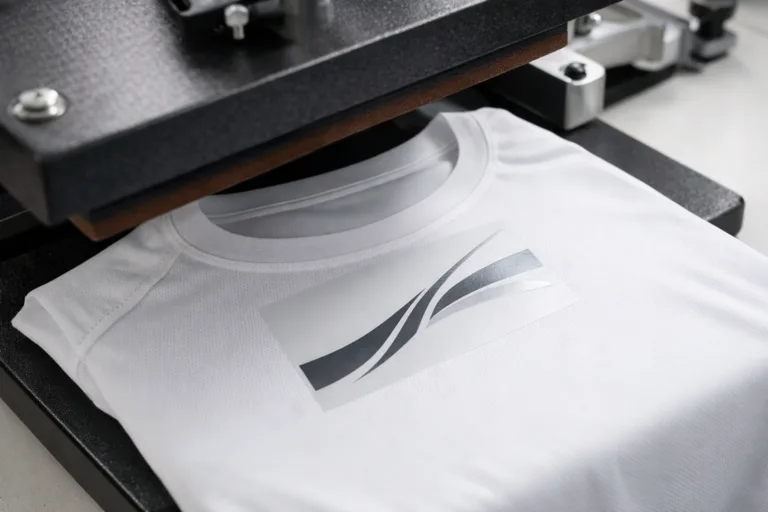
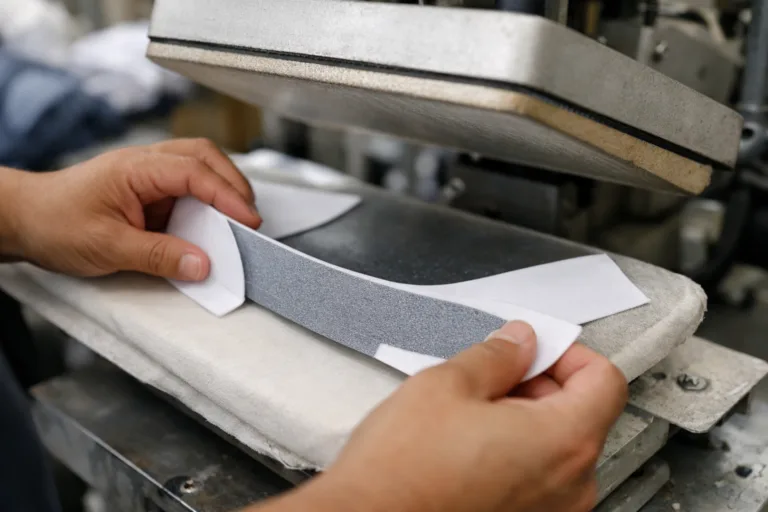
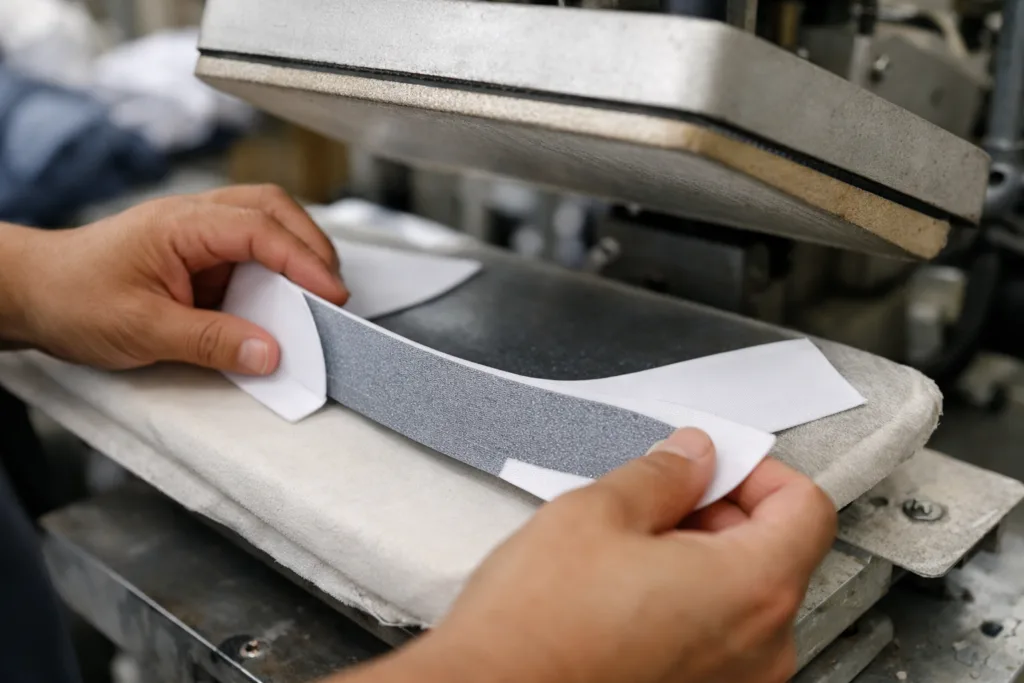
Fusible interfacing is the most common type in mass manufacturing, due to speed and consistency. It has thermoplastic adhesive dots on one side—when pressed at correct temperature, it bonds tightly to the main fabric. Key parameters include:
- GSM (grams per square meter): Typical range for shirts = 30–55 GSM; for heavy jackets up to 100 GSM.
- Adhesive Strength: Must balance bonding with wash durability; too weak leads to delamination.
- Curing Temp: 120–150°C for optimal results, determined by adhesive chemistry and base fabric heat tolerance.
Sew-In Interfacing: When to Use
Sew-in interfacing is stitched into place and has no adhesive. It’s favored in tailored garments, high-end blouses, and outerwear where extra body is needed and heat sensitivity or finish requirements rule out fusing. Cotton canvas, haircloth, or soft woven types are common here.
Where Is Interfacing Used? Key Garment Areas
Interfacing’s most important roles are in garment details that see repeated manipulation and need to look polished. Here’s how it supports function and finish:
Collars
Maintains collar stand, resists rolling, preserves sharp edges. For shirts and polos, woven fusible interfacing (40–60 GSM) is standard. For outerwear, heavier sew-in canvas may be used.
Cuffs
Provides crispness, prevents folding, and reinforces button attachments. Fusible interfacing is preferred for production efficiency. A mismatch in interfacing weight/fabric GSM can cause stiffness or droopy cuffs.
Plackets
Ensures buttonhole/closure stability, stops warping with repeated stress. Proper fusing and width specification (typically 3–4 cm wide) are critical, especially for woven shirts and polos.
Other Applications
- Waistbands: Adds stability in trousers, skirts.
- Lapels and Facings: Maintains sharp jacket or coat silhouette.
- Pocket Flaps: Prevents sagging/deformation.
Choosing the Right Interfacing: Material, Weight & Compatibility
Proper interfacing choice depends on main fabric specs (fiber blend, GSM, finish), end-use requirements, and wash/dry cycles. Apparel Wiki recommends this simple checklist to specify interfacing for any project:
- Identify stress points (collar, cuff, placket, etc.) and intended garment use.
- Match interfacing base type to garment material—woven for woven, knit/stretch for knitted base.
- Check GSM compatibility to avoid stiffness or excessive limpness.
- Conduct shrinkage and wash tests for both main fabric and interfacing.
- Review adhesive/cure spec for fusible interface; ensure it lasts through specified washes (typically 10–30 cycles in spec sheets).
- Sample with actual trims (buttons, snaps) for real-world stress simulation before bulk approval.
Common Compatibility Mistakes
- Selecting non-stretch interfacing for stretch garments—causes seam puckering or movement restriction.
- Using high-temperature adhesive on heat-sensitive synthetic fabrics—leads to scorching or bonding failure.
- Ignoring chemical finish compatibility—e.g., silicone softener may reduce adhesive strength on fusible interfacing.
Testing Interfacing Performance in Production
Reliable garment quality relies on verifying interfacing performance before scaling up. Key factory tests include:
- Bond Strength Test: For fusibles, forcibly peel after heat curing to assess adhesion.
- Dimensional Stability: Measure shrinkage/twist after mock laundering.
- Handle Evaluation: Subjective drape, stiffness, and tactile feel post-application.
- Color Fastness: Ensure interfacing doesn’t bleed color or affect main fabric under typical wash and dry conditions.
Most factories use 4-point or AQL systems in final inspection (see Apparel Wiki’s quality control guides) to catch faults in interfacing application—especially in bulk runs where temperature/time may drift.
Documentation & Spec Sheet Tips
- Always specify interfacing type, GSM, width, and fusing method on technical packs.
- Include durability requirements and maximum shrinkage rates (typically <2–3% for luxury shirting).
- Attach A/B samples to PP approval documents so buyer and factory teams are aligned.
- Require a minimum wash test and visual inspection for each bulk order before shipment.
How Interfacing Impacts Cost, Comfort, and Lifespan
Though often unseen, interfacing can make or break the profitability and reputation of a garment. Here’s how it influences key business and user outcomes:
| Factor | Impact | Production Risk | Recommended Action |
|---|---|---|---|
| Unit Cost | Higher-grade interfacing raises BOM cost, but reduces returns | Cheap grades trigger defects, rework | Balance spec per target retail, ensure supplier quality |
| Comfort | Poor match makes collars stiff or scratchy | Customer complaints, poor repeat sales | Test fabric/ interfacing combo with wearer trials |
| Lifespan | Quality interfacing maintains structure after washes | Bubbling, distortion, loss of shape | Specify credible durability test with every order |
What Buyers Should Ask Factories
- Is the interfacing sourced from OEKO-TEX or REACH-compliant suppliers?
- Have shrinkage and fusing tests been documented for bulk lots?
- Can the factory provide production samples with real trims?
- Is the interfacing consistent in GSM and adhesive across the PO?
- What’s the recommended fusing temp/time for main fabric + interfacing?
Expert takeaway: Quality interfacing skips invisible headaches—spec right, test early, and audit every lot for consistent results.
Care and Maintenance: Interfacing Longevity
To maximize garment lifespan, interfacing must survive typical consumer care. Here’s how to optimize:
Wash Durability
- Verify that fusible interfacing adhesive withstands at least 10–30 home wash cycles per product spec sheet.
- Pre-wash interface in sampling stage to check for loss of bond or bubbling.
Care Labeling
- Align garment care labels with interfacing tolerance. E.g., avoid high-temperature iron symbol if using low-temp fusible.
- Provide specific guidance for buyers and QC teams on steam/press settings.
Repairs & Aftermarket Guidance
If interfacing peels or bubbles post-purchase, repair is usually difficult without professional tools. Guide consumers to avoid excessive heat, aggressive wringing, or unsupported garment storage for best longevity.
Advanced Interfacing Choices: Innovations & Compliance
Recent years have seen an expansion of interfacing technologies: bio-based adhesives, stretch and breathable nonwovens, and recycled-content options are being adopted in higher-end and sustainable collections. Compliance to OEKO-TEX® and REACH, especially for trims and kidswear, ensures chemical safety and consumer trust.
Green Interfacing Options
- Low-formaldehyde adhesives for fusibles
- Recycled polyester or cellulosic nonwovens
- Certifiable traceability for eco-friendly garment programs
Demand for innovation in interfacing is driven not just by sustainability trends, but by the quest for better comfort and longer wear.
What Is “Interfacing”? (Deep Dive)
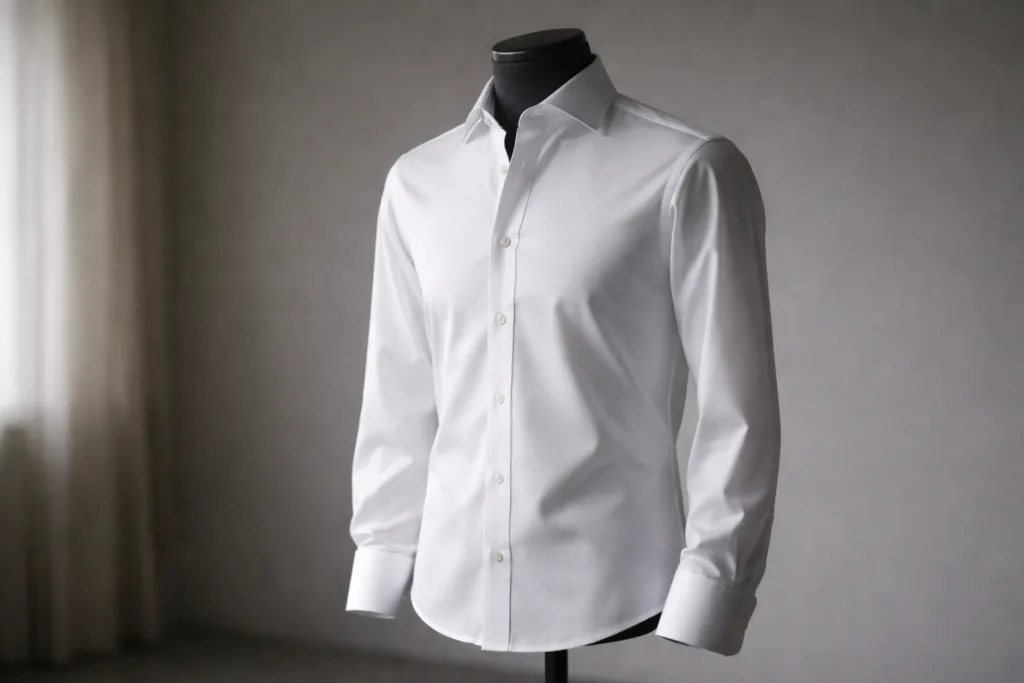
Let’s recap the essentials: Interfacing is a key material layer that turns flat fabric shapes into lasting, functional garment details. It supports structure, comfort, and brand quality in areas under stress—collars, cuffs, and plackets being the most widely specified. Practical selection, real-world testing, and precise QC checks at each production stage keep defects away and customers satisfied.
Key Practical Takeaways
- Interfacing meaning: It’s more than a fabric—it’s the hidden foundation of tailored quality.
- Use fusible interfacing for fast, consistent mass production; sew-in for specialized or sensitive applications.
- Match GSM, shrinkage, and care needs for best outcome—always sample before bulk.
- Document, test, and inspect: Avoid last-minute QC headaches.
For deeper technical guides on fusing processes, pattern drafting, or factory troubleshooting, see other Apparel Wiki articles covering hands-on inspection and sample development workflows.
Frequently Asked Questions
What is interfacing in garment construction?
Interfacing is a material added between fabric layers to provide structure and stability to parts such as collars, cuffs, and plackets.
How is fusible interfacing applied in factories?
Fusible interfacing is bonded to fabric with heat and pressure, using press machines or iron, according to the adhesive’s recommended temperature.
When should you use sew-in rather than fusible interfacing?
Use sew-in interfacing for heat-sensitive or tailored garments where adhesive might affect fabric texture or durability.
Can interfacing affect wash durability?
Yes, incorrect interfacing choice or poor bonding can lead to bubbling, peeling, or shape loss after washing.
Is interfacing necessary in all garments?
No, but it is essential in details needing reinforcement, particularly collars, cuffs, plackets, and areas under repeated stress.
What is the difference between woven and nonwoven interfacing?
Woven interfacing uses yarns interlaced for strength, suitable for crisp structure; nonwoven has fibers bonded randomly, often used for fast production.