Introduction: The Importance of Garment Measurement and Standard Points of Measure (POM)
When it comes to clothing, fit is everything. Accurate garment measurement using precise Points of Measure (POM) forms the backbone of quality, consistency, and customer satisfaction in the apparel industry. Whether you’re a designer, manufacturer, or consumer, understanding how to properly measure a garment ensures great fit, reliable sizing, and smoother grading for different body types. Well-documented POMs are a critical foundation for creating tech packs, producing samples, and managing bulk production.
What Are Standard Points of Measure (POM)?
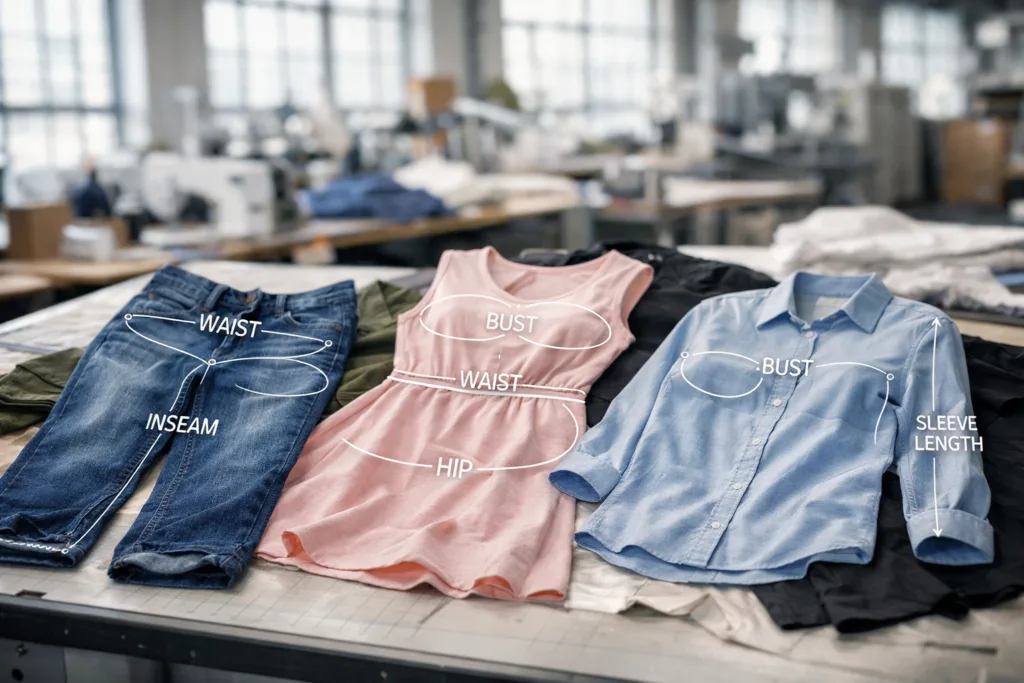
Standard Points of Measure (POM) are the specific parts of a garment where measurements are taken to communicate its dimensions and fit. Each garment type—be it shirts, pants, dresses, or jackets—has unique POMs, such as bust, waist, hip, inseam, and sleeve length, which together define the overall fit and structure.
Key Garment Measurements: Definitions and How to Measure Each POM
Bust/Chest Measurement
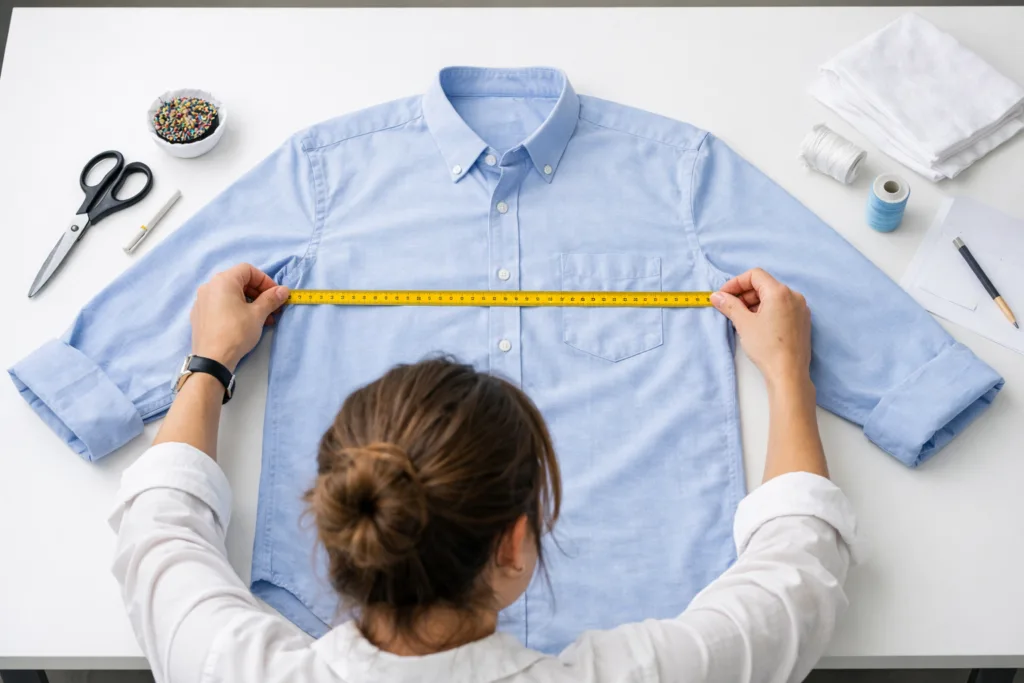
Bust (for women) or chest (for men) is measured across the fullest part of the garment, typically 1″ below the armhole. Make sure the garment is laid flat and smoothed out, and measure from edge to edge.
Waist Measurement
The waist is the narrowest part of a garment and is measured horizontally about halfway between the bust and hips. Always align with the garment’s intended waistline for accuracy.
Hip Measurement
Measure the fullest part of the garment’s lower section, usually 7″–9″ below the waist, depending on the design.
Inseam Measurement
The inseam runs from the crotch seam to the bottom hem along the inner leg. Lay the pants flat and measure straight down.
Sleeve Length Measurement
Sleeve length is taken from the shoulder seam to the bottom edge of the sleeve. Keep the sleeve straight for the most accurate result.
Additional Important POMs
- Shoulder Width: From one shoulder seam to the other.
- Front Length: From the high shoulder point to the hem.
- Back Length: From the center back neck seam to the hem.
- Armhole: Circumference or straight edge, depending on construction type.
- Neck Opening: The circumference or straight edge of the neck seam.
Essential Measurement Tools and Preparation Steps
- Flexible measuring tape
- Flat surface for laying out the garment
- Pins or weights for flattening curved seams
- Notebook or digital spreadsheet for recording measurements
Before you begin, make sure the garment is clean, buttoned or zipped, and completely flat. This ensures consistency and avoids skewed results.
How to Measure a Garment: Step-by-Step Guide
- Identify the POMs relevant to your garment style.
- Lay the garment flat, making sure seams align.
- Use the measuring tape to record each POM precisely.
- Double-check your readings for accuracy.
- Record all measurements clearly for easy reference.
For an in-depth walkthrough, Apparel Wiki provides a comprehensive measurement chart tutorial in their guide on how to create a measurement chart for development.
Common Mistakes to Avoid in Garment Measurement
- Measuring over wrinkles or folds
- Pulling the tape too tight or leaving slack
- Not aligning at designated seam points
- Ignoring closures like zippers or buttons
- Not following consistent measurement methods between sessions
The Role of Accurate Measurement in Apparel Sizing and Grading
Accurate garment measurement is vital for translating physical clothing into reliable size charts and for grading (creating different sizes from a base sample). Factory teams rely on POMs during sample reviews and production approval. Consistency is everything—incorrect POMs cause misfits, extra revision rounds, and wasted resources.
Standard Garment Measurement Chart Example
| Garment Type | Bust/Chest | Waist | Hip | Inseam | Sleeve Length |
|---|---|---|---|---|---|
| Women’s Shirt | 18″ | 16″ | – | – | 24″ |
| Men’s Pant | – | 16.5″ | 19″ | 31″ | – |
| Dress | 17.5″ | 15″ | 19.5″ | – | 22″ |
Industry Usage: Measurement in Tech Packs and Quality Control
POMs are foundational to tech packs—the master documents sent to manufacturers specifying fit, construction, and tolerances. Accurate measurements are equally essential during final inspection and for ensuring garments pass quality control checks.
How Points of Measure (POM) Differ by Garment Type
While some POMs are universal (like chest/bust or waist), others change with garment category. Pants require rise, inseam, and leg opening measurements, while jackets include shoulder width, back length, and sometimes collar circumference.
Visual Diagrams and Layouts: Enhancing Accuracy
Visual guides and diagrams are invaluable for beginners and professionals alike—they clarify seam locations, measurement start and stop points, and reinforce standardized technique. Apparel Wiki resources often incorporate measurement diagrams for clarity and reduced error.
The Impact of Measurement on Fit: Real-World Examples
Even 0.5″ can mean the difference between a perfect and poor fit. Brands investing in precise measurement and rigorous checking reduce returns, increase customer satisfaction, and streamline production practices.
Measurement Differences for Women’s and Men’s Garments
Women’s and men’s apparel feature distinct curves and proportions, so the placement of POMs can differ. For example, bust measurements on women’s garments are taken at the fullest part, while men’s shirts use chest width.
Using Measurement to Solve Fit Issues
If a garment fits poorly, reviewing POM data often pinpoints the problem—wrong shoulder width, misgraded sleeve length, or inaccurate waist placement. Tackle fit complaints methodically, referencing your measurement sheets and charts.
Best Practices for Measuring Garments in Bulk Production
- Use checklists and standardized templates
- Train teams to align seams and measure flat
- Audit a random sample of finished garments
- Document any variations found and communicate with production partners
Measurement Tips for Manufacturers and Apparel Brands
Manufacturers should standardize their measurement processes and use clear communication through tech packs. Brands benefit from spot-checking goods on arrival and maintaining consistent measurement records. For further reading, see The Complete Guide to Tech Packs.
Measurement Tips for Consumers
- Ask for the size chart or measurement chart before ordering
- Compare the chart with a garment you own
- Consider ease and fit preferences
For consumer-facing clarity, Apparel Wiki provides a detailed resource on measuring garments correctly.
How Fabric Type Affects Measurement and Fit
Stretch fabrics (like spandex blends) may require relaxed and stretched measurements, while non-stretch materials rely solely on flat measurements. Shrinkage rates can impact sizing—always measure after pre-washing if applicable.
The Importance of Recording and Auditing Measurement Data
Maintain digital or handwritten records of all measurements from development to production. Spot audits identify systemic errors and support continuous improvement. Brands with robust auditing systems report far fewer fit complaints.
Measurement Challenges for Unusual Garment Shapes
Draped, bias-cut, or asymmetrical garments require special techniques for accurate POM documentation. Reference measurement guides for each design type, and consider bespoke points of measure as needed.
Integrating Points of Measure Into Pattern Making and Grading
POMs directly inform pattern development, grading rules, and size scale creation. Seam allowance adjustments and ease are incorporated based on these data points, as explored in Apparel Wiki’s resources on pattern ease.
Factory Pitfalls: When Measurement Goes Wrong
Common errors include mismatched grading increments, skipped POMs, or misunderstanding the technical pack layout. Prevent these issues by training teams and enforcing regular peer review.
Global Standards: How POMs Vary by Region
Measurement conventions differ internationally—some regions use centimeters, others inches. Be clear about units in all documentation to prevent confusion in cross-border production.
Summary Guide: Quick Reference for Measuring Garments
- Identify required POMs
- Lay the garment flat
- Measure edge-to-edge, aligning seams
- Double-check each POM
- Record measurements carefully
Packing It All Together: Why Measurement Is the Foundation of Fit

Quality starts with accurate measuring. When manufacturers and brands invest time in careful POM tracking, they build a foundation for successful sizing, happier consumers, and efficient production.
Frequently Asked Questions
What’s the difference between bust and chest measurement?
Bust refers to the fullest part of a woman’s upper body measured across the garment; chest is used for men’s apparel and measured similarly.
How can I avoid measurement errors when using a tape?
Always lay the garment flat, align seams, avoid wrinkles, and use consistent tension on your tape for reliable results.
Why are POMs critical for clothing manufacturers?
POMs provide exact measurements needed for consistent sizing, quality control, and clear production communication.
Can I measure garments that contain stretch fabrics using the same method?
For stretch fabrics, measure both relaxed and stretched dimensions, as these materials behave differently when worn.
How do I pick the right Points of Measure?
Select POMs based on garment type, style, and fit intent, ensuring all crucial fit zones are covered for your design.
Does measuring after washing impact garment measurement accuracy?
Yes, always measure after pre-washing if a fabric shrinks, since post-wash measurements reflect actual fit and handling.