Merino wool processing is a connected sequence of fiber preparation and yarn-forming operations, not one treatment applied to raw wool. Fineness, staple length, crimp, cleanliness, moisture, blending, and mechanical handling all influence how consistently the fiber can be opened, aligned, drafted, and eventually spun. This guide explains the preparation challenges that occur before spinning and the variables that make one fiber lot behave differently from another. Apparel Wiki is an independent educational publication; its Sponsor page describes the separation between sponsorship and editorial control.
The sequence below is a practical framework rather than a universal mill layout. Equipment, fiber condition, yarn system, and intended fabric can change which stages are used and how they are controlled. Raw-fiber characteristics also should not be confused with finished-yarn properties: later spinning, winding, finishing, and fabric construction can change the final result.
What Happens to Merino Wool Before Spinning
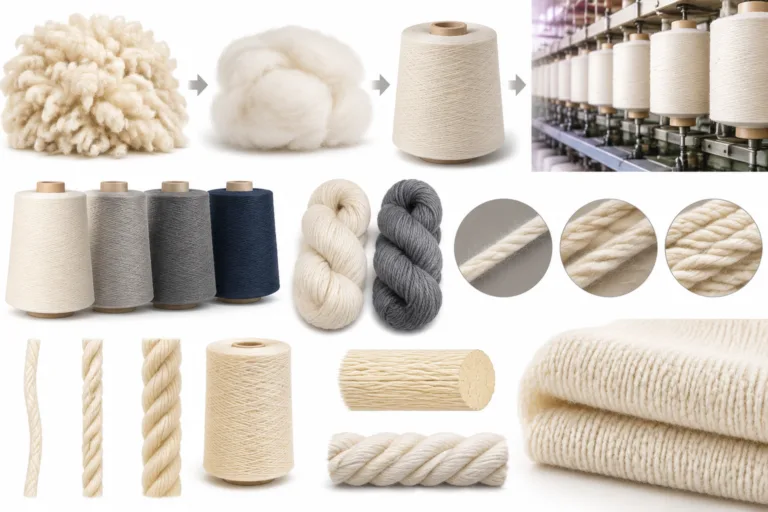
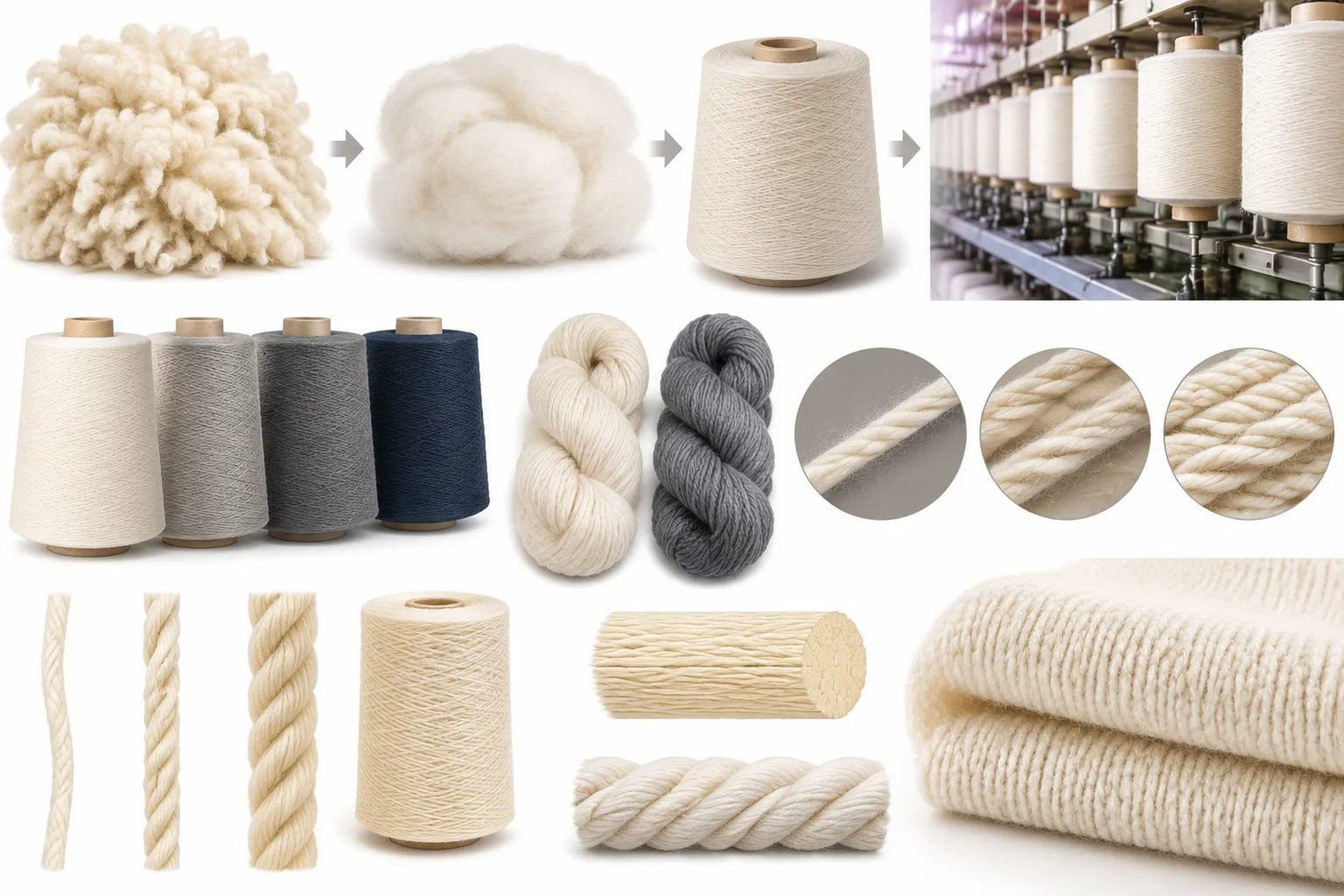
Merino wool preparation begins with an incoming fiber mass that may vary in fineness, staple length, crimp, cleanliness, moisture, and fiber condition. Processing turns that variable material into a more controlled feed for spinning. In practical terms, it includes operations that identify and sort material, loosen compacted fiber, remove unwanted matter, combine compatible lots or fibers, and form a more regular assembly.
Early sorting and inspection help separate fiber according to relevant characteristics and identify contamination or excessive vegetable matter. Opening then loosens compressed tufts so later equipment can act on individual fibers more evenly. Cleaning removes unwanted matter through a combination of mechanical action and separation. These operations must be effective without applying unnecessary stress: excessive handling can contribute to fiber damage or loss of usable length, depending on the fiber and equipment conditions.
Moisture is another handling variable. Uneven moisture can change friction, cohesion, and the way fibers move through preparation equipment. A controlled condition may support more consistent feeding, but the suitable condition depends on the fiber, machinery, ambient environment, and process route. It should therefore be treated as a process-control consideration rather than a universal setting.
Carding separates and distributes fibers into a more uniform web or sliver while beginning the alignment needed for later drafting. Some yarn routes add combing or other preparation to remove shorter fibers and improve fiber arrangement, while others use a different sequence. The first-stage wool-processing overview from the International Wool Textile Organisation is useful context for the early route, but individual operations remain route-dependent.
The main point is that merino wool preparation balances opening and cleaning against fiber preservation. Settings and outcomes depend on the equipment, fiber lot, blend, and yarn system. A common sequence can explain the logic of processing, but it cannot serve as a guaranteed recipe for every merino wool to yarn route.
The Fiber Variables That Make Merino Difficult to Process
Merino fiber properties interact during preparation, so no single attribute predicts processing success by itself. A specification can identify useful inputs, but a sample, controlled comparison, or applicable test may be needed to understand how those inputs behave together. The practical question is not whether one feature is “best,” but whether the fiber condition suits the intended yarn and fabric system.
| Observable input | Likely processing implication | Initial question or choice | Variables that could change the decision |
|---|---|---|---|
| Fiber fineness | Can affect handle, fiber control, and the sensitivity of later surface evaluation. | Does the desired yarn and fabric require a particular handle or surface character? | Yarn structure, twist, fabric construction, finishing, abrasion, and use conditions. |
| Staple length and variation | Can influence cohesion, drafting control, and the consistency of the fiber stream. | Is the length distribution suitable for the selected preparation and spinning route? | Blending, drafting conditions, twist, equipment, and lot variation. |
| Crimp | Can affect bulk, cohesion, and how fibers move and arrange during preparation. | How should the desired bulk or fiber control be balanced? | Fiber form, moisture, processing route, and yarn construction. |
| Strength and fiber condition | Can influence resistance to handling and the risk of damage during repeated mechanical action. | Does the preparation route preserve adequate fiber integrity? | Equipment settings, previous handling, lot condition, and testing method. |
| Cleanliness and vegetable matter | Unwanted material can interrupt preparation or contribute to visible yarn irregularity. | What cleaning and inspection steps are appropriate for the incoming lot? | Contaminant type, concentration, removal route, and acceptable end use. |
| Moisture and entanglement | Uneven conditions can affect feeding, cohesion, and separation. | Is the fiber condition sufficiently consistent for controlled feeding? | Ambient conditions, storage, fiber preparation, machinery, and process timing. |
Short or highly variable fibers can make control more difficult because the fiber assembly may draft less evenly. That does not establish a universal defect or threshold. It indicates why blending, drafting, and twist decisions deserve attention when the lot differs from the material used to develop the yarn.
Finer merino may contribute to a soft handle, but softness should not be treated as proof of durability, low pilling, or suitability for every garment. Those outcomes depend on the yarn structure, fabric construction, finishing, laundering, and wear conditions. Fineness can also make fiber control and surface evaluation more consequential, especially where abrasion or visible irregularity matters.
Cleanliness, vegetable matter, uneven moisture, and entanglement are observable concerns, while strength, evenness, abrasion, and pilling conclusions require appropriately controlled evaluation. Fiber origin, the generic fiber name, the processing route, and any commercial brand or trademark are separate classification questions. Recording each clearly prevents a material description from carrying claims that the specification does not establish.
Blending, Carding, and Drafting: Where Uniformity Is Won or Lost
Blending combines fibers or lots to pursue a more consistent balance of handling and end-use behavior. The result depends on the form and proportion of each component, as well as the yarn structure and fabric construction. Blending can reduce lot-to-lot variation, but it cannot make unlike materials behave identically in every process or guarantee a particular garment result.
Carding opens and distributes the fiber assembly. Drawing then brings prepared material together and progressively improves alignment and mass consistency before spinning, where that stage is included in the selected route. The machinery and order are not identical for every merino system. These terms describe functions within preparation, not a mandatory production layout.
Uniformity can be lost through uneven feeding, inconsistent blending, moisture differences, entanglement, or insufficient fiber control. Possible downstream signs include variation in yarn mass, neps, weak points, or irregular surface effects. These observations suggest mechanisms to investigate; they are not, by themselves, proof that one specific preparation error caused the result. A finished-yarn finding should be separated from a process observation and checked under comparable conditions.
For a lightweight knit that requires a smooth, consistent yarn, a product or quality team would generally prioritize control of fiber variation and surface irregularity. The preferred preparation route could change with yarn count, twist, fabric structure, finishing, and the required garment appearance. Gentler handling may help preserve fiber condition, while insufficient opening or blending may leave nonuniformity unresolved.
When comparing samples, record the fiber lot identity, blend composition, preparation or spinning route when available, yarn construction, and the method used for each observation. This record helps distinguish a difference in raw material from a difference in processing. Sliver evenness or a visible yarn issue can guide investigation, but it should not be treated as a finished performance result without the relevant controlled comparison.
Spinning Choices and Yarn Construction
After preparation, the fiber assembly enters a yarn-forming route. Drafting controls how much fiber mass reaches the spinning zone, while twist helps hold the fibers together as a coherent yarn. Their balance can influence handle, apparent strength, hairiness, and surface character, but the outcome also depends on fiber condition, equipment, yarn size, and finishing.
Spinning routes are not interchangeable labels. Ring, compact, air-jet, woollen, worsted, and other systems arrange and control fibers in different ways. They may therefore produce different yarn structures and surface effects. Without route-specific evidence, those differences should be treated as possible characteristics rather than guaranteed performance advantages. A route that suits a smooth lightweight knit may not suit a lofty yarn or a fabric designed for a more irregular surface.
Yarn specifications also need to be read as a group. A single-yarn count describes the yarn before plying, while a plied yarn combines two or more single yarns. A notation such as 30/2 should be confirmed with the supplier or test report because commercial notation can vary by counting system and context. Recording only “30” would leave unclear whether it refers to a single yarn, a final plied construction, or another convention.
Direct linear-density systems and indirect count systems express different relationships. Tex, denier, and dtex describe mass per a specified length; an indirect system such as English cotton count relates length to mass. Their numbers should not be compared as though they use the same scale. Keep the original unit, system, and whether the value applies to a single or plied yarn when transferring information between a specification, sample card, and test record.
For garment development, yarn construction should be considered alongside fabric structure. Twist, ply, fiber arrangement, and linear density can affect surface appearance, drape, warmth, abrasion exposure, and response to finishing. None is universally superior. The useful question is whether the documented construction supports the intended fabric and use, and whether comparisons were made between equivalent yarn systems.
How to Evaluate Merino Yarn After Processing
Begin with a complete specification record. Include the fiber composition, generic fiber description, spinning system when available, count or linear density, ply, twist information, lot identity, finishing, and intended fabric construction. Keep fiber origin, processing route, and any commercial name as separate pieces of information rather than treating them as interchangeable classifications.
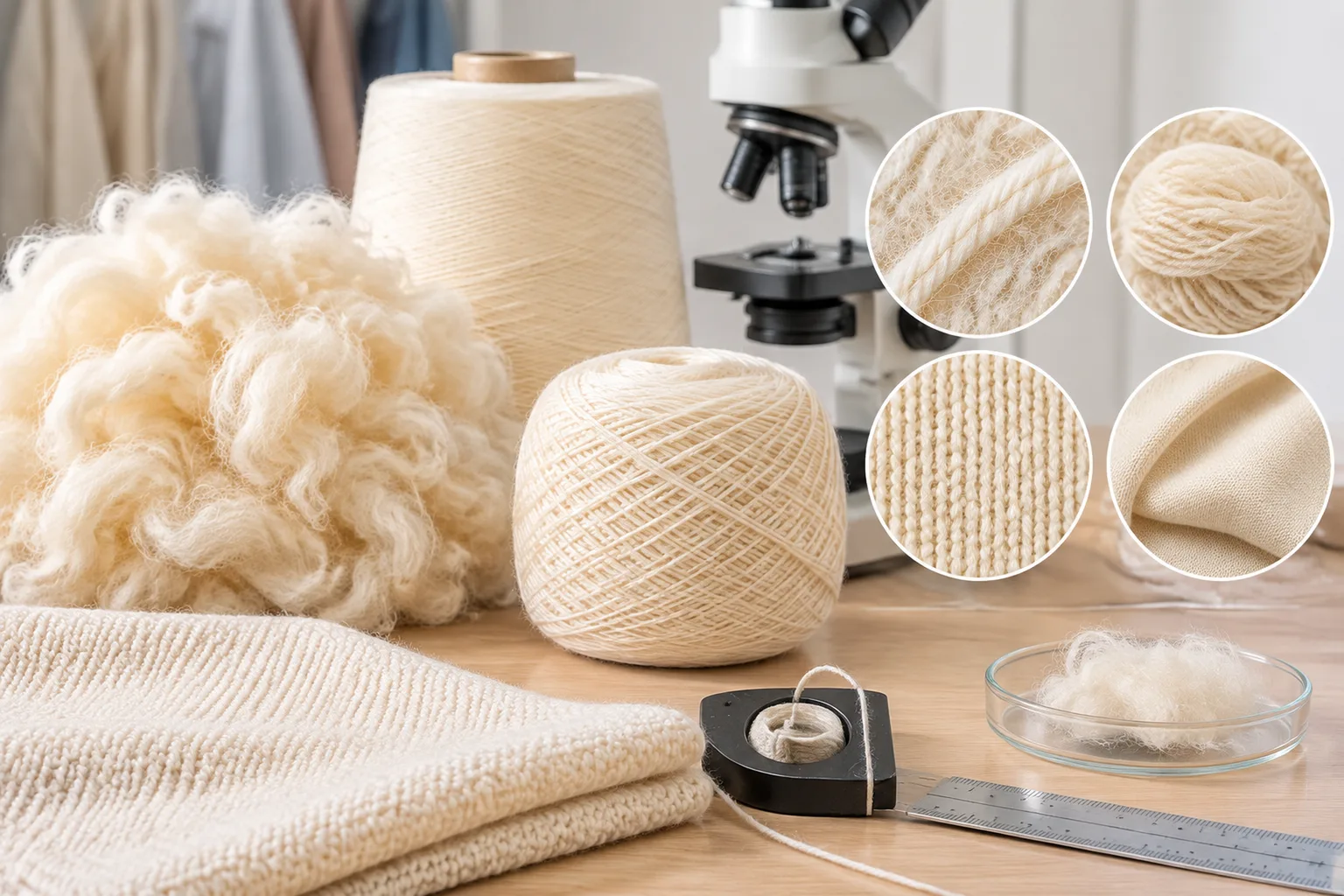
A visual and handling review can identify issues that deserve investigation. Compare packages for apparent consistency and look for thick or thin places, neps, excessive hairiness, contamination, color variation, winding defects, and package-to-package differences. These observations can guide questions about preparation or spinning, but they do not establish a laboratory result or prove the cause of a defect.
Use a practical decision sequence:
- Define the garment requirement, such as a smooth surface, controlled warmth, drape, or resistance to expected abrasion.
- Compare like-for-like yarn samples with matching composition, count system, ply, fabric route, and relevant finishing conditions.
- Identify the processing variable most closely connected to the observed difference, such as lot variation, moisture control, fiber alignment, twist, or winding.
- Check the applicable evaluation method when the decision has significant product or quality consequences.
Formal comparisons require more control than a hand-feel review. Yarn, fabric construction, conditioning, instruments, and test methods can all affect the result, so findings from different methods or constructions should not be treated as directly equivalent. Softness, warmth, durability, pilling, and dimensional behavior are system outcomes shaped by yarn, fabric, finishing, laundering, and wear. The word “merino” alone cannot establish any of them.
Key Takeaways for Choosing a Merino Yarn Route
Merino wool processing is a connected chain. Fiber variation, preparation control, blending, drafting, spinning, yarn construction, and intended garment use can interact, so a visible issue is not necessarily caused by one isolated stage. A complete yarn description is more useful than a single fineness, softness, or count claim.
As an educational next step, compare complete specifications and like-for-like samples, record which variables differ, and check the applicable evaluation method before making a material decision. Treat unsupported or method-dependent claims as questions to verify, not as established evidence.
Frequently Asked Questions
What is the difference between merino wool preparation and merino wool spinning?
Preparation makes incoming fiber more suitable for yarn formation through operations such as sorting, opening, cleaning, blending, carding, and route-dependent drawing or combing. Spinning then forms the prepared fiber assembly into yarn through drafting and twist. The exact sequence depends on the fiber, equipment, and yarn route.
Which fiber properties create the most processing challenges when making merino yarn?
Fineness, staple length, crimp, strength, cleanliness, moisture, vegetable matter, and entanglement can all affect handling. Their interaction matters more than any single property. Lot variation and the chosen preparation or spinning route can change which issue is most important for a particular yarn.
Why do yarn count and ply need to be recorded together?
Count may describe a single yarn, while ply identifies how multiple single yarns are combined. The same-looking count notation can be interpreted differently across systems or commercial specifications. Recording the count system, single-yarn value, final construction, and ply helps prevent misleading comparisons.
Can a soft merino fiber automatically produce a soft or durable garment?
No. Fiber handle is only one input. Yarn construction, twist, fabric structure, finishing, laundering, and wear conditions also affect softness and durability. A soft fiber description cannot substitute for a matched sample comparison or an appropriate evaluation when the garment decision is consequential.
What should be compared when evaluating two merino yarn samples?
Compare composition, fiber or lot identity, spinning route when known, count or linear density, ply, twist information, finishing, package consistency, and intended fabric construction. Record the observation method as well. Differences in fabric structure or finishing can make otherwise similar yarns appear to perform differently.
When is a visual yarn inspection insufficient for a material decision?
Visual inspection is insufficient when the decision depends on measurable evenness, strength, hairiness, pilling, dimensional behavior, or another controlled performance attribute. It can identify questions and visible irregularities, but a consequential comparison should use the applicable method and matched test conditions.