Introduction: Decoding the MOQ and Unit Price Link for Metal Products
When sourcing metal products, Minimum Order Quantity (MOQ) impact on unit price can be a game-changer for both budding businesses and established manufacturers. MOQ is the smallest amount a supplier is willing to produce or sell at one time. But how does this threshold influence the cost per piece, project profitability, and strategic sourcing? In this article, we’ll break down the direct and subtle ways MOQs interact with unit pricing for metal products, supported by real supplier scenarios, buyer strategies, and hands-on cost management tips.
What Is Minimum Order Quantity (MOQ)?
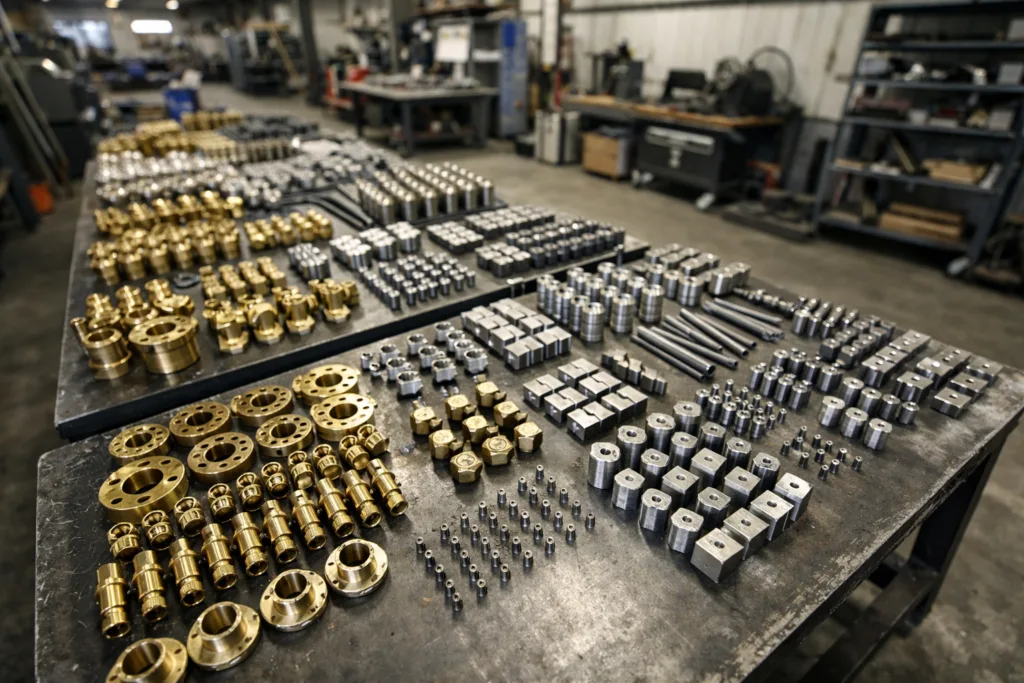
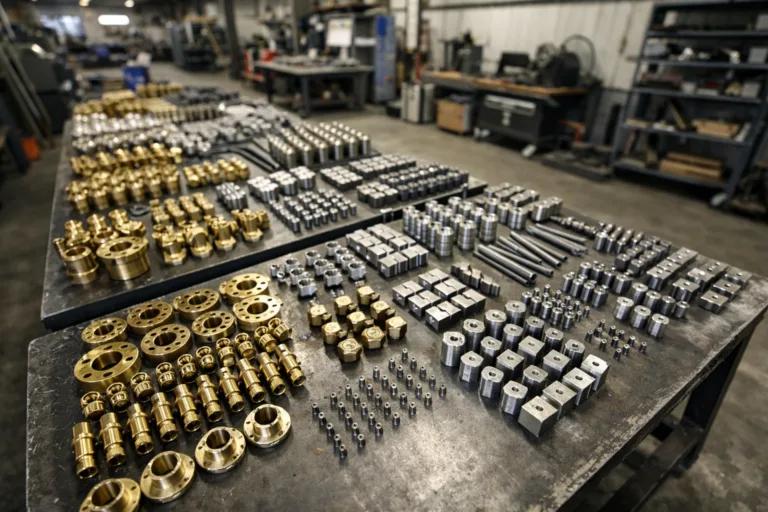
Minimum Order Quantity, or MOQ, is a supplier-set minimum purchase requirement for a specific product or production run. For metal products, this could mean a minimum of 100 brass hinges or 2,000 steel brackets per order. MOQs can be as low as a handful of prototypes or as high as several thousand units, depending on the factory’s setup costs, the complexity of the part, and raw material requirements.
Why Do Suppliers Set MOQs in Metal Manufacturing?
Suppliers implement MOQs for several reasons:
- Offsetting setup costs (tooling, machine calibration, and labor initiation)
- Lowering production inefficiency for small batches
- Simplifying logistics and inventory management
- Standardizing pricing and negotiation
Metal product factories especially need MOQs to justify machine time and material procurement, which become uneconomical for one-off or tiny production runs.
Unit Price Explained: The Cost per Piece
Unit price is simply the final cost for each metal part you purchase. For buyers aiming to maintain healthy margins, the tug-of-war is clear: higher MOQs tend to lower the unit price, but increase cash outlay and potentially the risk of unsold stock.
The MOQ–Unit Price Relationship: How Scale Changes Everything
Here’s the basic principle: increasing order size (hitting higher MOQs) usually reduces your unit price. Why? Factories can spread fixed costs across more units and may pass these savings to you. However, the curve isn’t always linear—after a certain point, further increases in order size give only marginal price improvement.
| Order Quantity | Unit Price ($) | Notes |
|---|---|---|
| 100 | 5.00 | Minimum batch, high unit overhead |
| 500 | 3.20 | Lower setup impact |
| 2,000 | 2.30 | Approaching optimal scale |
| 5,000+ | 2.15 | Marginal savings beyond this point |
How Economies of Scale Work in Metal Products
Economies of scale describe how increasing production volume lowers the average cost per unit. In metal manufacturing, this comes through:
- More efficient use of materials
- Spread of setup/tooling costs
- Streamlined labor deployment
- Bulk discounts on raw materials
Short Case Study: Two Metal Suppliers and Their MOQ Policies
Supplier A is a brass hardware factory with an MOQ of 250 pieces; their unit price at 250 units is $4.70, falling to $3.50 at 1,000. Supplier B specializes in stainless steel components and only accepts orders from 2,000 units up. Their unit price starts at $2.40. The takeaway? A lower MOQ gives flexibility at a slightly higher price, while a higher MOQ offers cost savings only to those who can commit volume and absorb stock.
Understanding Pricing Strategies: Fixed, Sliding, and Tiered Approaches
Metal suppliers use a few common pricing models:
- Fixed pricing: Same unit cost regardless of quantity (rare, usually for off-the-shelf parts)
- Sliding/tiered pricing: Different unit prices at pre-set quantity thresholds (very common)
- Negotiated pricing: Prices set by discussion, especially for large or ongoing contracts
Direct and Hidden Costs Associated with MOQs
Direct costs are visible—what you pay for each unit. Hidden costs include storage, insurance for extra stock, and the risk of obsolescence if you over-order aggressively to get a discount. For more details on indirect manufacturing expenses, see Avoid Surprises: 17 Hidden Costs in Apparel Manufacturing.
Budgeting for MOQ Purchases: Traps and Tactics
When calculating your purchase budget, factor in not only the unit price savings from a higher MOQ, but also the entire landed cost, including shipping, duties, and storage. Apparel Wiki suggests buyers build in a buffer for unexpected costs that can turn gains from a lower unit price into losses once overhead is included.
Inventory Management: Balancing MOQ, Cash Flow, and Storage
Higher MOQs mean more products on hand. While this can mean lower cost per item, it can place stress on inventory space and tie up working capital. Smart buyers use inventory forecasting and just-in-time (JIT) strategies to minimize unnecessary buildup from chasing low unit prices.
MOQ’s Impact on New Product Launches
Startups and new product launches often struggle with high MOQs. Committing to thousands of units for an untested item is a risk. In these cases, some metal suppliers offer pilot or sample runs (at a premium per unit) to help brands manage exposure, as explained in Why Metal Product Sampling Costs Are Triple Bulk Pricing.
MOQ vs. Lead Times: How Your Quantities Affect Delivery
Larger orders may enjoy better unit pricing but require longer lead times, due to extended production schedules and potential queuing at the factory. If you’re buying for a tight product launch, it’s wise to factor delivery timelines into your MOQ decision as highlighted in Managing Sample Lead Times: 9 Proven Strategies.
Real-World Example: Brass Hook Supplier Price Ladder
A North American buyer approaches a Chinese brass hook supplier. Quotes show:
| Qty | Unit Price | Lead Time (days) |
|---|---|---|
| 300 | $4.20 | 60 |
| 1,000 | $2.95 | 80 |
| 2,500 | $2.50 | 95 |
This example shows how higher MOQ can delay delivery alongside reducing price.
When a Low MOQ Is Worth the Higher Price
Paying a premium for a smaller order can be a strategic win, especially if it reduces your inventory risk, keeps cash free, or allows for safer new product trials.

Negotiating MOQs: Can You Break the Rules?
If an MOQ feels too high, negotiation may be possible—especially for ongoing customers, multiple SKUs, or bundling products. Mastering negotiation can make a big difference, as detailed in How to Negotiate Pricing with Factories Without Lowering Quality.
Batch Production vs. Continuous Flow: MOQ’s Role
Metal factories may run batch production (large runs at set intervals) or continuous flow (ongoing, for very large contracts). MOQs are typically higher for batch-based, custom-setup products. For further reading on production costing models, see CMT vs. FPP Pricing: The Essential Guide.
Managing Obsolete Metal Inventory from Over-Ordering
Misjudging MOQ can leave companies with obsolete or slow-moving stock if orders exceed true demand. Smart forecasting and regular inventory reviews are critical to avoid this costly scenario.
Integrating MOQ into Long-Term Purchasing Strategies
For recurring needs, buyers should work with suppliers to revisit MOQs over time. Sometimes, co-investing in optimized tooling or agreeing to blanket orders can reduce MOQs as relationships develop, enabling both sides to share the benefits and manage risks.
How International Shipping Complicates MOQ Calculation
Ocean freight is full of step-wise charges based on weight or container volumes. Your MOQ decision may also need to consider the cost breakpoints in full container loads (FCL) versus less-than-container loads (LCL)—sometimes nudging your order higher or lower for greater overall efficiency.
MOQs and Quality Assurance: A Linked Equation
Sourcing smaller batches can compromise the supplier’s willingness to invest in robust quality checks. Agree on clear quality standards and review samples before full runs. Use tips from 7 Critical Ways TOP Samples Safeguard Metal Product Quality to avoid costly errors.
Reviewing Supplier Terms: Beyond the MOQ Number
Always review what’s included in your MOQ pricing: are there extra charges for packaging, custom finishes, or expedited production? Check for clarity on defect handling, returns, and payment terms.
Factoring Duty and Delivery Into Final Unit Price
The true unit price includes not just what you pay the factory, but also shipping, duty, and receiving costs. The Landed Duty Paid (LDP) Cost Explained breakdown can help you forecast the real cost after your product lands at its destination—often altering the apparent advantage of a lower factory unit price at a high MOQ.
Tools and Techniques for Calculating MOQ Impact
Spreadsheets, costing software, and supplier quoting tools all aid in running “what if” scenarios for unit price, stock, and cash flow. Apparel Wiki provides entries and free resources on costing & pricing tools suited for apparel and metal buyers alike.
Minimum Order Quantity (MOQ) Impact on Unit Price
So, what does the data tell us? There’s almost always a direct link between MOQ and unit price for custom metal parts. Higher MOQs nearly always deliver lower unit prices—but with them come new risks: upfront capital commitment, potential for obsolete inventory, and added storage and logistics complexity. For businesses with predictable demand, leveraging economies of scale makes sense. For brands launching innovations, a cautious approach to MOQ may be smarter—even with a higher per-part cost.
Conclusion: Smart MOQ Decisions for Competitive Metal Sourcing
The relationship between MOQ and unit price is fundamental in metal products sourcing. Navigating this balance requires a clear grasp of budget, risk, and supply chain priorities. Whether you’re negotiating higher volumes for better pricing, or valuing flexible low-MOQ orders to minimize risk, always weigh the full price picture—including hidden costs, lead times, and the long-term impact on inventory. The smartest buyers use a mix of negotiation, forecasting, and post-production review tools to keep both costs and risks in check.
Frequently Asked Questions
What is a minimum order quantity (MOQ) in metal manufacturing?
MOQ is the lowest amount a supplier will produce or sell for a specific metal product in one order. It helps manufacturers recover setup, material, and labor costs.
How does MOQ affect the unit price of metal products?
Generally, higher MOQs result in lower unit prices due to economies of scale—factories can distribute fixed costs over more pieces and may offer bulk discounts.
Is it possible to negotiate MOQs with suppliers?
Yes, you can often negotiate MOQ, especially if you commit to future orders, multiple SKUs, or can bring value as a long-term partner.
What are the risks of ordering only the MOQ?
Ordering only the MOQ may result in paying a higher unit price and could leave you exposed if demand spikes, forcing last-minute, costlier reorders.
How should I factor storage and inventory costs into MOQ decisions?
Include warehouse fees, insurance, and potential obsolescence when calculating the total landed cost and risk profile of large, high MOQ purchases.
How can I make smarter MOQ decisions for new products?
Start with lower MOQs even at a premium to minimize unsold stock risk, then increase volumes as sales forecasts firm up.
Related Reading
- 11 Clever Negotiation Tactics for Factory Pricing Without Compromising Quality
- Revealed: The 17 Most Overlooked Apparel Manufacturing Costs
- Why Sampling Metal Products Costs Three Times More Than Bulk Orders
- 27 Steps to Analyze Landed Duty Paid Cost and Boost Your Margins
- How TOP Samples Safeguard Metal Product Quality Before Production