Introduction to Natural Fibers in Apparel Manufacturing
Natural fibers have shaped garment production for centuries, offering a distinctive blend of comfort, breathability, and classic textile character. In export factories and boutique workshops alike, selecting the right fiber—cotton, linen, wool, or silk—can make or break a garment’s quality, appearance, and longevity. Understanding the core attributes, practical uses, and technical behaviors of these raw materials is essential for anyone in the apparel industry, whether you’re sourcing bulk fabric, designing a new line, or implementing robust quality control on the factory floor.
Natural Fibers Explained: Cotton, Linen, Wool, Silk
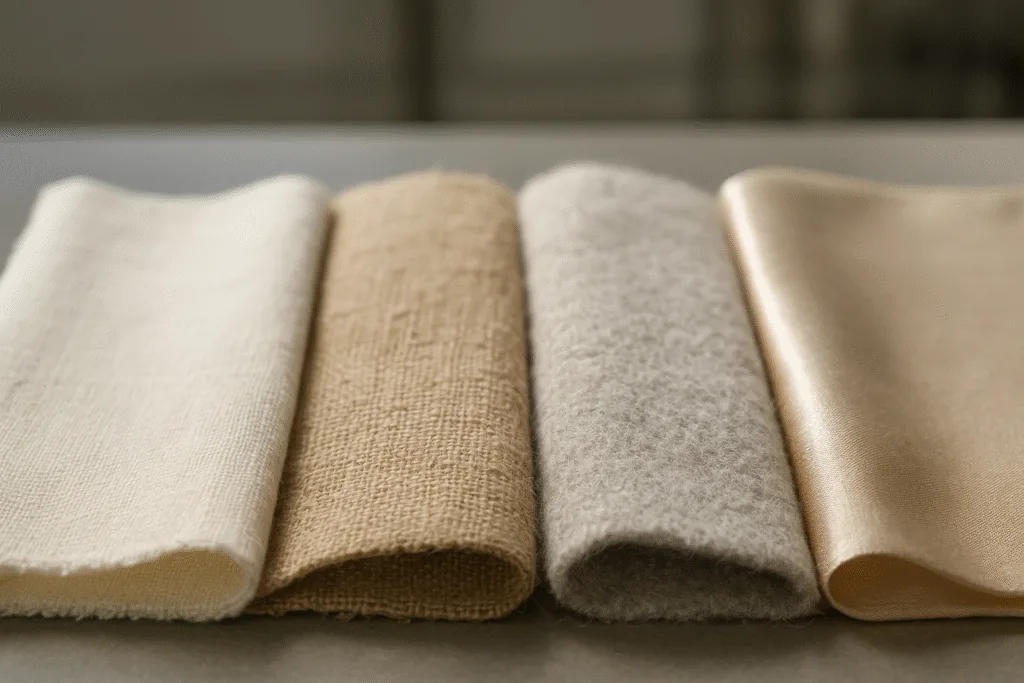
The term natural fibers refers to materials derived directly from plants or animals, offering distinctive tactile, aesthetic, and performance profiles. Cotton fabric is renowned for its softness and everyday comfort, linen fabric for airy coolness and crisp texture, wool fabric for insulation and resilience, and silk fabric for luxurious smoothness and sheen. Unlike synthetics, these fibers naturally regulate moisture, have varying shrinkage tendencies, and react differently to finishing treatments.
Why Natural Fibers Matter in Apparel Manufacturing
- Consumer Preference: Many end-users demand natural comfort and drape for wardrobe staples and premium apparel.
- Production Impact: Each fiber affects GSM (grams per square meter), shrinkage rates, hand-feel, and finishing options, dictating choices in fabric spreading, cutting, sewing, and washing.
- Sustainability: Natural fibers are typically more biodegradable, but their cultivation and processing require diligent environmental management.
Key Parameters for Natural Fibers
- GSM (Grams per Square Meter): Determines weight, drape, and suitability for garment type (e.g., summer shirts vs. winter coats).
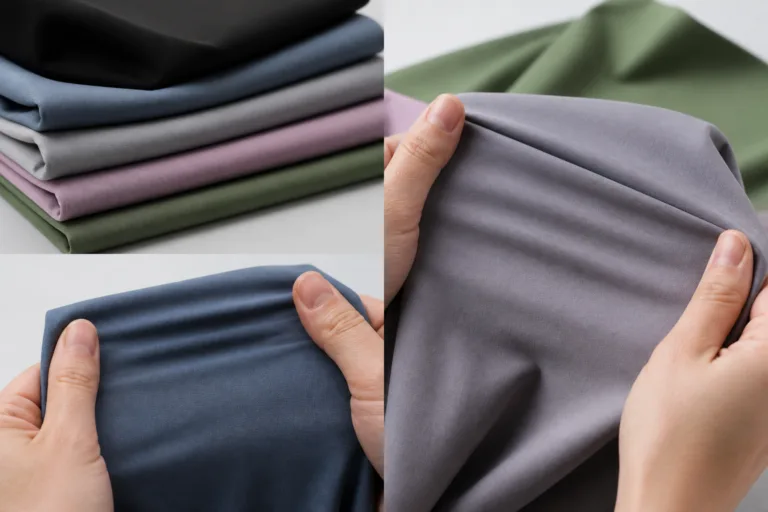
- Hand-feel: Assessed by tactile grip, softness, bounce, and surface character—critical for fashion and functional wear.
- Shrinkage: Pre- and post-wash dimensional change—must be managed from pattern block stage to bulk shipment QC.
Rain’s tip from the production line: “Never skip pre-wash shrinkage tests with natural fiber yards—10% unexpected shrinkage can ruin an entire production lot and trigger costly recalls.”
Characteristics and Structure: Cotton Fabric
Cotton is the most widely used natural fiber, prized for its versatility and comfort. Derived from the cotton plant, its hollow tubular structure traps air, making cotton both breathable and absorbent—a staple for t-shirts, jeans, shirts, and innerwear.
Main Features of Cotton Fabric
- Soft hand-feel; easily customizable through finishes (enzyme, silicone, mercerizing).
- Typical GSM range: 120–220 for knits; 130–280 for woven shirting and chinos.
- Moderate to high shrinkage unless pre-washed or sanforized (1.5–6%).
- Strong absorbency but slow drying.
- Prone to creasing and controlled pilling depending on yarn quality.
Advantages
- High comfort for skin-contact garments.
- Easy to print, dye, and finish.
- Broad global supply and standardization.
- Relatively affordable for mass production.
Disadvantages
- Shrinks under washing if not stabilized.
- Wrinkles easily; may require ironing or special finishes.
- Color can fade with repeated washing.
- Sensitive to mildew in humid storage.
Common Garment Uses
- Casual wear: t-shirts, polos, hoodies, denim.
- Children’s garments: due to hypoallergenic quality.
- Workwear, uniforms, and home textiles.
How to Identify Cotton Fabric
- Soft, slightly fuzzy hand-feel.
- Burn test: Smells like paper, leaves fine gray ash.
- Reactivity: Absorbs water rapidly and wrinkling appears with crumpling.
Production Detail
In many export quality lines, cotton undergoes enzymatic or bio-polishing, giving it a cleaner surface and less pilling. GSM must be confirmed both on raw and finished goods – many buyers specify minimums (e.g., 180 GSM single jersey for premium tees) to maintain durability and silhouette over time.
Characteristics and Structure: Linen Fabric
Linen comes from the flax plant, renowned for its crisp texture, coolness, and subtle luster. Its long, smooth fibers yield a fabric that’s naturally antibacterial, moisture-wicking, and highly breathable—a favorite in premium summer collections and formal wear in humid climates.
Main Features of Linen Fabric
- Distinctive cool hand-feel, with natural slub and irregular texture.
- GSM range: 120–220 for shirts, up to 300 for trousers and suiting.
- Highest shrinkage among plant fibers; sometimes up to 7% if unwashed.
- High moisture transfer and fast drying.
- Wrinkles very easily, delivering classic “lived-in” look.
Advantages
- Superior breathability – top choice for hot climates.
- Natural luster and rich appearance.
- Holds dye well with artisanal techniques (e.g., pigment dye).
- Antibacterial; less odor retention.
Disadvantages
- Hard to iron—creases easily and resists smooth pressing.
- Fragility at seams—must control thread tension and seam allowance.
- Shrinkage risk above 5% unless pre-washed or treated.
- Can feel rough before repeated wear and washes.
Common Garment Uses
- Summer shirts, dresses, suiting, trousers.
- Luxury home textiles and tableware.
- Sustainable fashion and resort wear.
How to Identify Linen Fabric
- Cool touch and visible slub in weave.
- Crush in hand: wrinkles instantly, slow recovery.
- Burn test: Smells like burning wood, leaves brittle ash.
Production Detail
In the workshop, linen’s GSM can vary with finishing—washed linens often weigh less due to fiber loss. Always specify allowance for shrinkage in cutting. For buttoned garments, reinforce seams with extra bartacks or underlays where needed.
Characteristics and Structure: Wool Fabric
Wool, sourced mainly from sheep, is distinct among natural fibers because of its remarkable warmth, elastic recovery, and moisture management. Its microscopic scales trap air and repel liquid, making it key for both classic tailoring and technical outerwear.
Main Features of Wool Fabric
- Naturally crimped fibers create insulation and bounce.
- GSM range: 150–350 for suiting; up to 500 for coats and knits.
- Moderate shrinkage (1–4%)—much higher with heat and agitation.
- Repels light rain and stains; maintains warmth even when damp.
- Good flame resistance; less prone to static buildup.
Advantages
- Excellent thermal regulation for cold climates.
- Pill-resistant (especially with worsted or fine spun).
- Can be tailored to sharp shapes—favored in suiting.
- Long lifespan when properly cared for.
Disadvantages
- Shrinks and felts with improper washing.
- Can be itchy (depends on micron count and processing).
- Moth sensitivity; storage requires care.
- Higher unit cost compared to cotton and linen.
Common Garment Uses
- Suits, trousers, skirting.
- Sweaters, cardigans, and knitwear.
- Technical outerwear, uniforms, and specialty workwear.
How to Identify Wool Fabric
- Elastic crimp—springs back when stretched.
- Distinctive “wooly” scent when damp.
- Burn test: smells like burning hair, forms hard bead ash.
Production Detail
In experience, always run shrinkage and felting tests before committing bulk orders. For delicate woolens, recommend dry cleaning or gentle hand-wash finish. Seam construction uses lower tension to prevent puckering and distortion in tailoring.
Characteristics and Structure: Silk Fabric
Silk, traditionally reeled from silkworm cocoons, stands out for its lustrous sheen and extraordinary drape. With unrivaled smoothness and fine aesthetics, silk remains the fabric of choice in premium fashion, intimate apparel, and accessories.
Main Features of Silk Fabric
- Highest natural sheen; smooth, slippery hand-feel.
- GSM range: 35–120 for lightweight scarves and lining; 80–180 for dresses and tailored blouses.
- Low shrinkage in pure forms, but blends can shrink.
- Breathable and quick-drying.
- Delicate fiber—susceptible to abrasion, snags, and UV damage.
Advantages
- Unmatched drape and luxurious appearance.
- Excellent dye uptake; vibrant colors and effects possible (tie-dye, digital prints).
- Hypoallergenic, gentle against the skin.
- Cools in summer, insulates in winter.
Disadvantages
- Requires gentle care; dry clean preferred.
- High sensitivity to sunlight and perspiration.
- Costly; labor-intensive spinning and finishing.
- Slippery—needs experienced machinists to avoid seam slippage and puckering.
Common Garment Uses
- Luxury blouses, dresses, sarees, scarves.
- Lingerie and lining fabrics.
- Accessories and formal wear.
How to Identify Silk Fabric
- Cool, slippery feel with brilliant reflectivity.
- Scrunch sound—”scroop”, distinct to genuine silk.
- Burn test: smells like burning hair, shrinks from flame, leaves crispy ash.
Production Detail
Specialist sewing setups are needed: fine needles (60/8–80/12), silk thread, gentle pullers. Pattern pieces must allow for very little ease—silk’s inherent movement calls for careful handling at each stage, from lay planning to final QC.
Comparison Table of Natural Fiber Fabrics
| Fiber Type | GSM Range | Hand-feel | Shrinkage (%) | Best Uses |
|---|---|---|---|---|
| Cotton | 120–220 (knit), 130–280 (woven) | Soft, breathable, slightly fluffy | 1.5–6 | T-shirts, polos, denim, uniforms |
| Linen | 120–220 (shirts), up to 300 (trousers) | Crisp, cool, slubby | 3–7 | Summer shirts, trousers, suiting |
| Wool | 150–350 (suiting), up to 500 (coats) | Bouncy, warm, textured | 1–4 | Suits, sweaters, outerwear |
| Silk | 35–120 (scarves), 80–180 (dresses) | Ultra-smooth, lustrous, cool | 0–2 | Dresses, blouses, lingerie |
How to Identify Natural Fibers: Practical Tests and Tips
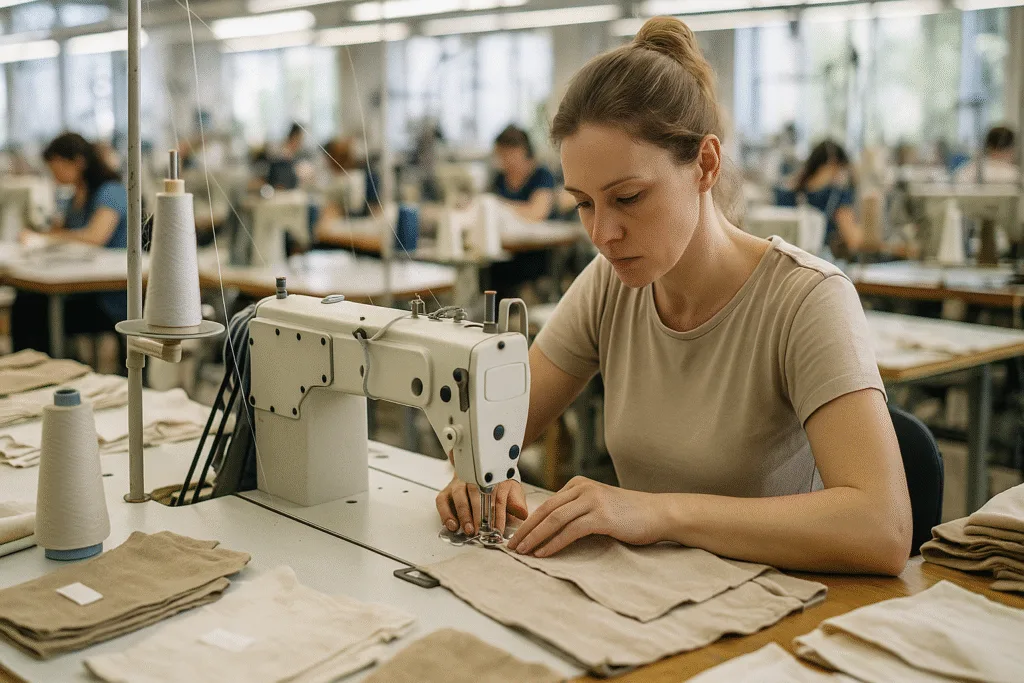
In factory inspections and sampling rooms, accurately identifying natural fibers can prevent costly mix-ups. Besides lab tests, several quick in-house methods can be applied:
Tactile and Visual Checks
- Cotton: Soft, matte appearance; subtle fuzz.
- Linen: Slubby weave, visible irregularity, cool to touch.
- Wool: Crimped fibers, slightly spongy.
- Silk: Brilliant shine, scroop (rustle) sound.
Burn Test
- Snip a small thread from the edge; use tweezers for safety.
- Hold over flame; observe odor, ash type, flame reaction.
- Compare outcome: paper odor (cotton/linen), hair odor (wool/silk).
Shrinkage Test
- Cut square (e.g., 10×10 cm); measure carefully.
- Wash as per intended bulk garment method.
- Re-measure; calculate shrinkage percentage.
Expert Guidance
“Always check fiber blend ratios and finishes—some fabrics (CVC, TC, silk blends) mimic natural hand-feel but behave differently in terms of shrinkage and durability.”
Understanding GSM, Hand-Feel, and Shrinkage of Natural Fibers
GSM (grams per square meter), tactile grip, and dimensional stability are factory-critical for commercial apparel development. GSM directly impacts cost, layering choices, and technical properties like warmth, opacity, and drape. Hand-feel is the immediate sensory impression—softness, bounce, coolness—that drives buyability and brand positioning. Shrinkage dictates pattern blocks, seam allowance, and tolerance charts for bulk cutting.
Practical GSM Ranges
- Cotton jersey: 140–180 GSM (summer tees); 200+ GSM (winter sweatshirts).
- Linen: 120–150 GSM (casual shirts); 180–280 GSM (trousers).
- Wool flannel: 180–280 GSM (shirts); 350+ GSM (coats).
- Silk crepe: 60–110 GSM (blouses); 120–180 GSM (formal dresses).
Hand-Feel Factors
- Fiber length and twist: longer, finer fibers yield softer hand.
- Fabric structure: knits are generally softer, wovens crisper (especially linen).
- Finishing: enzyme wash, silicone softener for cotton; preshrunk processes for wool and linen.
Shrinkage Behavior
- Pre-wash and post-wash measurements are mandatory for all natural fabrics.
- Specify pattern block with shrinkage allowance: e.g., add 3% for linen shirts, 1.5% for stabilized cotton.
- Bulk fabric rolls should be relaxed before cutting—minimum 24 hours recommended in high humidity areas.
Factory Guidance
Any sampling or PP (pre-production) stage must document GSM, hand-feel descriptors, and shrinkage allowances. For export buyers, request lab test reports to verify fiber content and performance prior to bulk commitment.
Applications, Garment Types, and Performance Trade-Offs
Natural fibers each bring unique strengths and production considerations. Choosing the right fabric hinges on climate, target market, desired look, and production cost control.
Cotton Garments
- Used for T-shirts, polos, sweatshirts, dresses, and kids’ clothing.
- Optimized for comfort, printability, and casual silhouettes.
Linen Garments
- Favored for summer tops, formal wear, trousers; time-honored in resort fashion.
- Provides breathability and a distinctive texture; pattern pieces require generous seam allowance for shrinkage.
Wool Garments
- Best suited for suiting, outerwear, sweaters.
- Exceptional thermal performance; needs careful blocking and finishing.
Silk Garments
- Ideal for premium blouses, dresses, scarves, and lingerie.
- Delivers luxury and fluid drape; sewing requires low-tension stitches and anti-slip handling.
Trade-Offs
- Comfort vs. durability: Cotton wins on skin-friendliness; wool prevails for winter longevity.
- SKU flexibility: Linen and silk carry higher risk on shrinkage and batch variation, needing tight QC.
- Unit cost: Wool and silk impact price points, making them niche in mass market unless blended strategically.
- Fashion vs. function: Hairline finishes (e.g., peaching cotton, washing linen) balance style needs and technical performance.
Factory-Floor Quality Control for Natural Fiber Fabrics
Whether you’re running inspectors in bulk conversion or sampling in a design room, natural fiber garments require disciplined QC and documentation to avoid discrepancies. Key checkpoints include:
Fabric Inspection
- Use the 4-point system for surface, slubs, color variation.
- Confirm GSM on relaxed, pre-cut swatches and after finishing.
- Test for fiber composition using lab analysis (optional light microscopy, chemical spot test).
Shrinkage and Skewness Control
- Wash test bulk fabric before spreading and cutting.
- Apply shrinkage allowance in pattern block—never assume stability based on supplier claim.
- Monitor skew/torque in knits, especially cotton jersey after washing.
Seam and Stitch Quality
- Choose thread compatible with shrinkage profile; avoid excessive tension in wool and linen seams.
- SPI (stitch per inch) should stay within tolerance for fiber type—typically 10–14 for cotton, 8–12 for wool.
- Bartack or reinforced seam applications for high-stress points, especially in linen trousers and cotton workwear.
Care, Washing, and Shrinkage Management for Natural Fiber Garments

The right washing and finishing approach ensures garments maintain fit, comfort, and appearance long after production. Each natural fiber behaves differently:
Cotton Care
- Machine washable, but wash cold to minimize shrinkage and fading.
- Enzyme/silicone softening boosts comfort, but may reduce GSM slightly—track after finishing.
Linen Care
- Machine or gentle hand wash; tumble dry on low to preserve texture.
- Expect some permanent wrinkling—iron while damp for best result.
Wool Care
- Never wash hot—felting risk is high. Recommend dry cleaning for tailored items.
- Use PH-neutral detergents; block to shape gently after washing.
Silk Care
- Prefer dry cleaning; gentle hand-wash using cold water only.
- Avoid direct sunlight during drying to prevent color fading.
Shrinkage Management
- Estimate post-wash shrinkage from raw yardage test—add safety margin into bulk cutting.
- Document care labels and bulk QC results for each fiber group for compliance and end-user guidance.
Frequently Asked Questions
What is the main difference between natural and synthetic fibers?
Natural fibers are derived from plants or animals and offer breathability and biodegradability, while synthetics such as polyester and nylon are petroleum-based, typically more durable and moisture-wicking but less comfortable for long wear.
How do I measure GSM for natural fiber fabrics?
Cut a swatch exactly 10×10 cm, weigh it accurately, then multiply by 100 to get GSM. Always measure after the fabric is relaxed and before any finishing treatment for reliable results.
Why does linen fabric wrinkle more than cotton?
Linen fibers are naturally stiffer and less elastic than cotton, so the fabric resists springing back after crumpling, creating immediate and long-lasting wrinkles that are part of its traditional charm.
What’s the best way to prevent shrinkage in cotton garments?
Pre-wash or sanforize bulk fabric before cutting, add shrinkage allowance to pattern blocks, and advise end-users to wash in cold water and line dry when possible.
Can natural fiber fabrics be blended with synthetics for improved performance?
Yes, blending cotton or linen with polyester or modal often improves wrinkle resistance, reduces shrinkage, and adds strength, while balancing comfort and cost for mass market apparel.
How do I verify the authenticity of silk fabric?
Do the burn test (it should smell like burning hair and form crispy ash), check for scroop sound when scrunching, and confirm lustrous shine and cool hand-feel for genuine silk identification.