Introduction: Why Negotiating Price Without Sacrificing Quality Matters
Striking the right balance between cost and quality is one of the most critical challenges in apparel sourcing and manufacturing. Knowing how to negotiate pricing with factories without lowering quality can be the difference between building a lasting brand and damaging your reputation. This guide provides proven negotiation strategies, details quality assurance musts, and walks you through the nuances of building genuine supplier partnerships—so you protect both your margins and your product integrity.
Understanding Factory Cost Structures for Smarter Negotiation

Before you even begin negotiations, it’s crucial to grasp the underlying cost drivers that define your factory’s pricing. Most garment cost structures include direct materials (like fabric and trims), labor, overhead, profit margin, and sometimes hidden costs associated with compliance or last-minute changes. When you show suppliers you understand these components, your negotiation carries weight and opens doors to meaningful savings without forcing corners to be cut. See our breakdown-of-a-t-shirt-cost-fabric-labor-overhead-margin for a hands-on example of what these elements look like.
Setting Clear Quality Benchmarks and Specifications
The foundation of any successful negotiation with a factory is mutual clarity. Precise tech packs, measurements, and quality assurance benchmarks act as your insurance policy. Define acceptable tolerances, preferred materials, and construction standards upfront. This prevents misunderstandings and acts as a safety net if a supplier suggests cost reductions that threaten product standards. Learn more about understanding tolerance-in-garment-measurements to strengthen your instructions.
Communicating Openly: Transparency Builds Trust and Savings
Suppliers appreciate buyers who approach conversations honestly. Share your quality expectations, budget constraints, and business goals. Open, two-way communication enables factories to propose creative alternatives—like sourcing different trims or adjusting packaging—that can achieve savings with no dip in quality. When both sides are clear on objectives, it’s easier to identify true win-win scenarios rather than risky cost-cutting.
Applying Negotiation Strategies That Protect Quality
Effective negotiation is about more than pushing for the lowest price. The best negotiation strategies maintain quality by emphasizing value, reliability, and ongoing partnership. Consider using tactics such as:
- Cost breakdown analysis
- Volume commitments for price concessions
- Flexible production schedules to ease factory bottlenecks
- Joint cost-reduction initiatives (lean manufacturing, standardized trims)
Negotiations framed around mutual benefit often result in sustainable savings and fewer surprises.
Analyzing Quotation Types: CMT, FOB, and LDP Perspectives
Understanding how factories present pricing helps you identify the negotiation levers. Common quotation methods include Cut, Make, and Trim (CMT), Free on Board (FOB), and Landed Duty Paid (LDP). Each allocates costs and responsibilities in different ways. For instance, CMT gives you control over fabric but increases administrative load, while FOB and LDP include more factory-supplied services. Use our cmt-fpp-pricing-garment-manufacturing and understanding-landed-duty-paid-cost guides to compare these methods and better structure your negotiation approach.
Identifying Hidden Costs and Avoiding Surprises
Hidden costs—such as extra sampling rounds, last-minute spec changes, or quality reworks—can quickly wipe out perceived savings. Build your negotiation strategy around full transparency and insist on itemized quotes. Our hidden-costs-apparel-manufacturing checklist helps you spot and plan for these hidden factors, ensuring your agreed price truly reflects the cost of delivering your quality standards.
Selecting Factories with Robust Quality Assurance Systems
Partner factories must have solid quality controls and inspection routines. Ask about their in-house systems: Do they conduct regular inline and final inspections? What is their track record for repeat defects or rejections? A factory with strong QA reduces your need for rework and costly delays—which are cost drivers often forgotten in initial pricing.
Leveraging Sample Stages to Guarantee Quality and Pricing Alignment
Sample reviews—like proto, fit, and pre-production samples—are checkpoints to validate both quality and cost. They let you spot potential compromises early, clarify expectations, and refine production parameters. Read how to give feedback on samples for practical tips on structuring your comments and ensuring your vision is protected without escalating costs later.
Exploring Alternative Cost Reduction Opportunities
Not every cost reduction has to involve cheaper materials or rushed assembly. Consider addressing excess waste in fabric cutting, optimizing pattern layouts, or refining BOMs to reduce accidental overconsumption. See the ultimate guide to fabric consumption (yield) calculation for actionable ways to save without lowering standards.
Negotiating with Data: Using BOMs and Costing Sheets Effectively
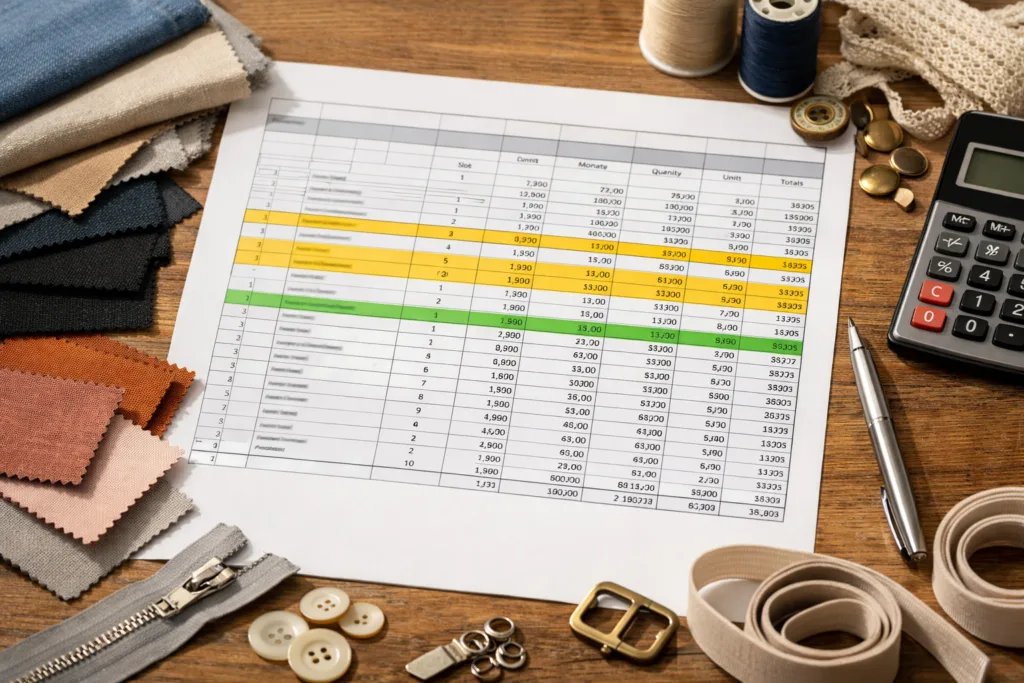
Data-driven discussions outperform guesswork. Bring a clear bill of materials (BOM) and costing sheet to negotiations, so every component—trim, label, packaging, thread—is accounted for. This lets you pinpoint which line items can be optimized and prevents sneaky quality reductions hidden in assumptions. Our relationship between BOM and costing sheet guide walks you through the practical details.
Building Strong Supplier Relationships for Long-Term Wins
Factories invest their best resources and pricing in buyers they trust will return. Treat suppliers as partners, not adversaries: keep commitments, share forecasts, and celebrate mutual wins. Over time, strong business relationships lead to faster problem resolution, better payment terms, and opportunities for exclusive price reductions without sacrificing standards.
The Role of Transparent Agreements and Correct Documentation
Once terms are finalized, secure your quality and pricing by documenting everything in clear supply agreements and purchase orders. Specify all details, from fabric grades to packaging materials, inspection frequency, and defect tolerances. This documentation is your shield if concerns arise later and streamlines communication between your team and the factory’s production and quality assurance units.
Monitoring Production Consistently to Deter Shortcuts
Even the strongest agreement can be undermined if you don’t monitor execution. Conduct regular remote or in-person quality checks and actively review inline and final inspections. Consistent oversight signals your commitment to quality and makes factories less likely to substitute materials or skip essential processes in the name of cost savings.
Empowering Both Sides: Win-Win Negotiation Techniques
The best negotiations create value for both buyer and factory. Explore cost-sharing incentives, long-term agreements, or performance-based bonuses for meeting quality and delivery targets. This encourages the factory to invest in continuous improvement and rewards results without driving price down at the expense of quality.
How to Negotiate Pricing with Factories Without Lowering Quality
Combining all the above strategies ensures you negotiate pricing with factories without lowering quality. Start with clear, transparent specifications, leverage credible costing data, and focus your conversations on shared goals. When price concessions are needed, identify options that minimize product or process risk, like adjusting order size or consolidating designs, instead of downgrading fabric or skipping critical checks.
When—and How—to Say No to a Deal
Not every negotiation will yield a deal that protects your quality. If bottom-line pricing requires you to accept a lower grade of materials or reduce essential inspections, it’s better to walk away. A short-term margin win can quickly become a costly recall or a permanent brand reputation loss.
Safeguarding Your Brand with End-to-End Quality Assurance
Building a culture where cost and quality decisions are balanced requires end-to-end quality assurance. From the first technical sketch to final inspection, involve your team and the factory at every stage. Use agreed-upon standards and audit processes so deviations are caught early, and address issues through open discussion—not through last-minute cost cutting.
Common Pitfalls: How Factories Might Lower Quality Unnoticed
Be vigilant for hidden techniques factories might use to trim costs—such as substituting subpar trims, using leftover materials, or relaxing tolerances. Regular audits, spot checks, and deep familiarity with your components (as described in specifying-packaging-materials-in-your-bom) will help you catch these concerns before products reach customers.
Case Scenario: Negotiating Without Quality Trade-Offs
Suppose you negotiate a lower unit price by consolidating your seasonal orders, allowing the factory longer lead times. In return, you maintain strict requirements on fabric grade, lab testing, and packaging standards. This trade avoids the pitfall of direct cost cutting and gives both parties room for success—demonstrating the method Apparel Wiki often recommends for building resilient partnerships.
Continuous Improvement: Learning from Each Production Run
After each completed production cycle, review what went well and what can be optimized in the future. Share production data, inspection results, and feedback so both buyer and factory adjust their processes together. Over time, this cycle raises standards and lowers costs more reliably than aggressive negotiation alone.
Industry Insights: How Top Brands Merge Negotiation and Quality Assurance
Market leaders consistently outperform by viewing negotiation as a collaborative process. They align factories on both cost goals and quality commitments, integrate robust BOM software tools, and drive continuous process improvements. This shows that the integration of negotiation strategies, quality assurance, and data-driven decision-making is the modern way to succeed in manufacturing partnerships.
Conclusion: Achieving Lasting Success with Balanced Negotiations

Negotiating pricing with factories without lowering quality is about mastering cost transparency, protecting specifications, and building long-term relationships. When you integrate negotiation strategies, robust quality assurance, and collaborative supplier relationships, you unlock sustainable margins and brand reputation. The techniques in this guide don’t just safeguard your next order—they lay the groundwork for years of dependable, high-quality production. Stay committed to transparent negotiation, strategic cost reduction, and never compromise on the standards that define your brand.
Frequently Asked Questions
What’s the best way to negotiate price reductions without risking quality?
Request a transparent cost breakdown and look for efficiencies in production—like reduced waste or improved planning—instead of asking for lower material quality or rushed work.
How do clear specifications help protect quality standards?
Detailed specifications set clear expectations and act as a contract. They help factories understand exactly what’s required and make it harder for quality reductions to go unnoticed.
Should I accept a factory’s lowest offer if quality seems questionable?
Never sacrifice quality for price. If an offer seems too low to accommodate your standards, seek clarification or walk away. Poor quality can cost much more in the long run.
Can building a relationship with a factory lead to better prices over time?
Yes. Strong, repeat partnerships foster trust, which often results in better terms, faster solutions to problems, and price concessions that don’t affect quality.
What documents should confirm agreed prices and quality standards?
Use detailed purchase orders, supplier agreements, and technical packs to formally document both price structures and all quality requirements.
How do I monitor quality once production starts?
Schedule regular inspections, request sample reviews, and maintain open communication to promptly address any deviations from agreed-upon quality standards.