Introduction to Pattern Balance & Garment Proportion
Achieving the right pattern balance and garment proportion is fundamental in apparel manufacturing. When balance is off, even the best fabrics and skilled sewing won’t save a garment from poor fit and dissatisfied customers. Pattern balance ensures that each part of a garment corresponds anatomically to the wearer’s body. Garment proportion refers to the relative sizes and shapes of different components, contributing to aesthetics and functionality. Mastering both is what distinguishes quality apparel from mass-market mediocrity.
Why Pattern Balance & Proportion Matter
A balanced pattern provides a symmetrical and harmonious drape that supports comfort, movement, and silhouette. Proper proportions ensure the finished garment looks intentional and flatters the wearer’s frame, whether it’s a fitted dress shirt, a relaxed sweatshirt, or a technical sports jacket.
What Is Pattern Balance & Garment Proportion?
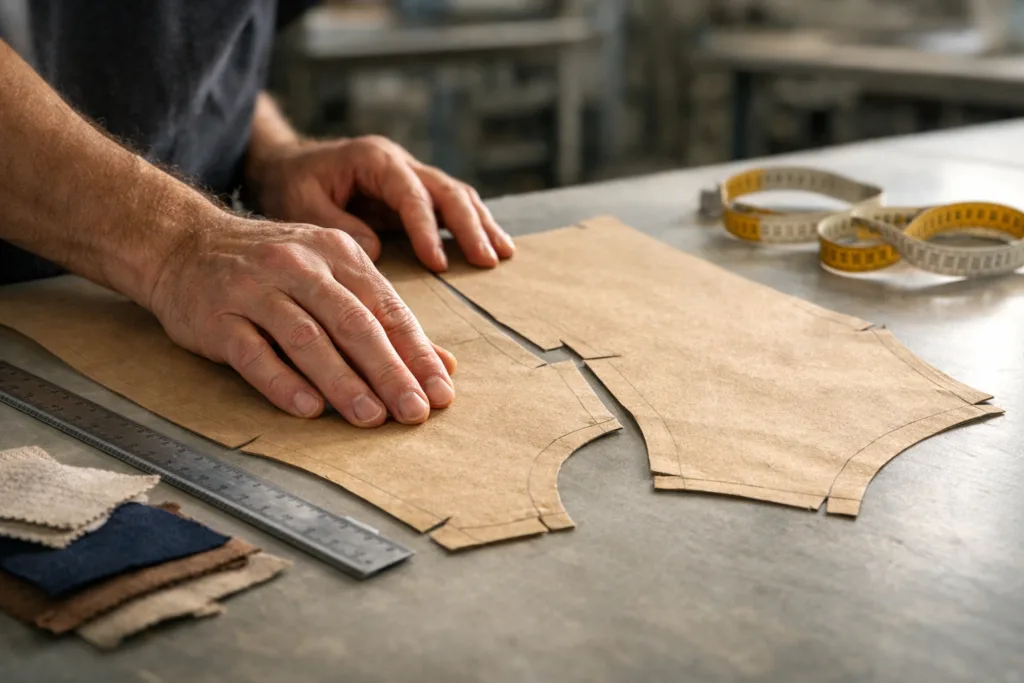
Pattern balance refers to the correct relationship between the parts of a pattern, ensuring that garments hang, fit, and perform as intended. Garment proportion addresses the size ratios among different sections—front to back, shoulder to hem, armhole to body width, and beyond. These core concepts shape everything from an entry-level T-shirt to precision-engineered workwear.
Key Parameters of Pattern Balance
- Front/back balance (body length alignment)
- Shoulder slope matching natural posture
- Armhole sizing and shape for comfort and mobility
- Symmetry across body panels and collars/cuffs
Common Pattern Proportion Mistakes
Errors here cause twisted side seams, shoulder slippage, puckering, restricted movement, or awkward drape. Brands aiming for consistent fit across sizes must also control for grading and pattern adjustments during sampling.
Production tip from Rain Chen: “Many returns happen due to subtle balance mistakes, not obvious sewing defects. Walking your patterns and checking proportions at the development stage saves much more in the long run than reworking garments post-production.”
Front/Back Balance – How It Impacts Fit
Front and back balance is crucial for a garment’s overall fit. This refers to the length and shape relationship between the garment’s front and back bodice or shell, ensuring both hang at the correct level relative to the shoulders, bust/chest, and hips. An imbalance creates fit issues such as:
- Garments swinging forward or backward, often exposing midriff or causing the back neck to ride up.
- Side seams angling incorrectly, making the piece look twisted on the body.
- Poor balance on hanger, especially critical for retail presentation.
Technically, this is controlled during pattern drafting by measuring and adjusting the shoulder-to-hem length on both the front and back, accounting for fabric properties, postural ease, and style intent.
Practical Steps for Ensuring Front/Back Balance
- Align shoulder notches and walk the front and back patterns along the side seam to check total length.
- Add bust shaping darts or raise the front length where needed for women’s garments.
- Control for fabric relaxation and preshrinkage; always check lengths after wash testing.
Symptoms of Poor Front/Back Balance
Watch out for diagonal drag lines, neck escapement, or a shirt hem that rides up. These signal that your pattern needs adjustment before bulk cutting.
Shoulder Slope in Garment Patterns
The shoulder slope is essential to matching a garment to the human form. An incorrect slope will directly impact the neck, armhole, and sleeve balance, leading to fit and comfort problems. In most patterns, the shoulder drops from neck to shoulder point at an angle of 15–22 degrees, but this varies by target wearer and garment type.
Shoulder Slope: Measuring and Adjusting
- Take body measurements with the subject standing relaxed—don’t force posture.
- Compare the body’s shoulder drop to your pattern’s draft lines before finalizing cutting.
- For tailored garments, the shoulder pad and canvas structure must also align with the slope.
Problems Caused by Incorrect Shoulder Slope
Excessively steep or shallow slopes can result in gaping or tight necklines, sleeve misalignment, or the garment sliding off the shoulders. In many knitwear lines, a mismatch here causes the dreaded ‘shoulder tenting’—an issue always called out at fit sessions.
Armhole Balance: Anatomy & Mobility
The armhole (also called armscye) is where fit, range of movement, and silhouette merge. A balanced armhole supports free movement without chafing or unsightly gaping. Its depth, width, and forward placement depend on both style and intended use—sportswear often demands deeper, forward-set armholes, while tailored jackets require precise, close-fitting armscyes.
Armhole Balance Checklist
- Walk sleeve and body armhole curves—matching seam lengths ensures accurate sewing and avoids puckering.
- Ensure level armhole height—measure high point shoulder (HPS) to the base of the armhole on both patterns and on test garments. Variations >0.7cm often cause drag lines.
- Check armhole width at the chest and back across fitting samples; muscle fit versus regular fit needs different proportions.
Example Table: Armhole Sizing for Common Garment Types
| Garment Type | Typical Armhole Depth (cm) | Best For | Notes |
|---|---|---|---|
| Men’s Dress Shirt | 22–25 | Formal, fitted | Allows for suiting movement |
| T-Shirt (Regular Fit) | 24–27 | Casual/unisex | Ease for daily wear, higher tolerance |
| Slim-fit Polo | 22–24 | Athletic, sharp finish | Less excess fabric under arm |
| Sweatshirt/Hoodie | 26–28 | Casual, layered | Accommodates thick layers |
How Pattern Imbalance Affects Final Fit
Small discrepancies between pattern parts can manifest as major fit problems after sewing and washing. Imbalances cause diagonal drag lines, twisting, sleeve movement restriction, puckered necks, and even premature seam failure. Quality control teams in factories always check measurement tolerances (typically ±0.7–1.0cm for knits, ±0.5cm for wovens) across critical joining points before proceeding to bulk sewing.
Common Signs of Pattern Imbalance in QC
- Misaligned side seams (visible twist from armhole to hem)
- Sleeve cap not sitting flush in armhole
- Uneven hemlines front vs. back
- Shoulder seams rolling forward or backward
- Poor hanger presentation and silhouette distortion
Rain’s On-Floor Solution
“Before full production, conduct a size set trial and wash test in-house. Hang each garment and check all seam lines and balance points. Quick corrections here can prevent full order defects that lead to costly claims.”
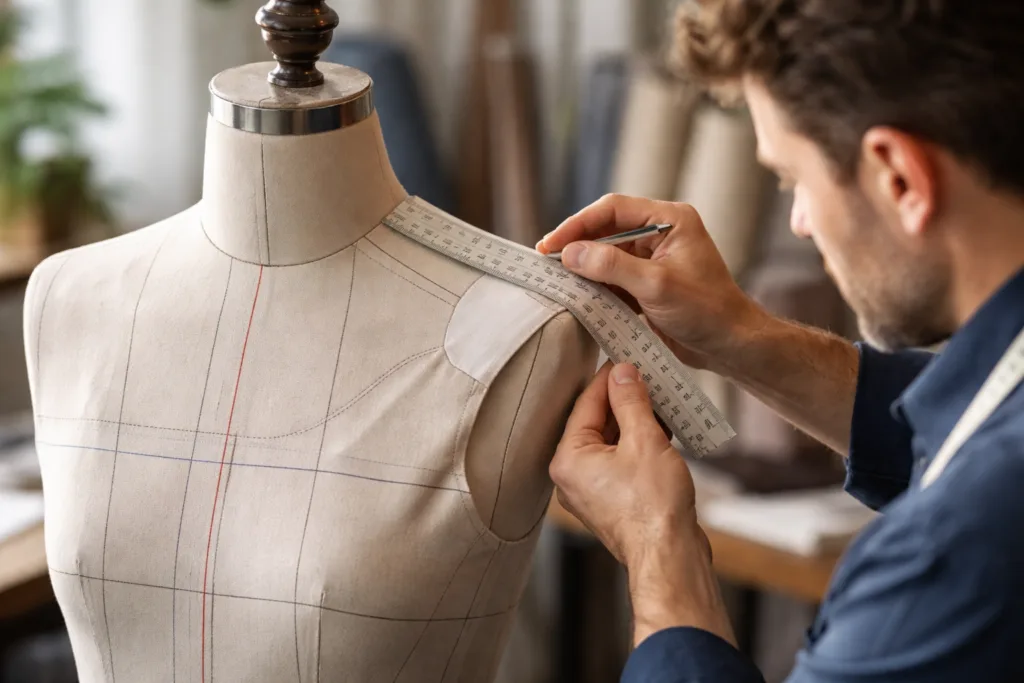
Fabric Choices, Pattern Balance, and Proportion
Diverse fabrics behave differently during cutting, sewing, and washing, affecting pattern balance and garment proportion. For example, knits (like single jersey, pique, or interlock) often require additional width and length allowances for recovery and shrinkage. Wovens (such as poplin, denim, twill) are more stable, but may need careful control at the shoulder and armhole due to their rigidity.
How Fabric Shrinkage Impacts Pattern Balance
- Always confirm fabric GSM and shrinkage percentage using lab reports before pattern finalization.
- Apply calculated allowances (e.g., +3% for cotton knits in width, +2% in length) to body and sleeve pieces.
- Test post-wash measurements for all critical balance points—shoulders, side seam length, armhole height.
Table: Fabric Type vs. Pattern Allowance
| Fabric Type | GSM Range | Shrinkage Allowance | Pattern Impact |
|---|---|---|---|
| Single Jersey (Cotton) | 140–180 | 2–5% | Extra width/length for shrinkage |
| Pique (Poly/Cotton) | 180–220 | 1.5–3% | Moderate allowance, color effect on fit |
| Twill (Woven) | 180–240 | 0.5–2% | Stability, minimal allowance |
| French Terry | 220–320 | 2–3.5% | Extra depth for layered styling |
Best Practices When Sourcing Fabrics
- Request lab dips and bulk fabric swatches to test for shrinkage and colorfastness before pattern adjustments.
- Confirm GSM, stretch, and finish treatments with suppliers early in development to minimize bulk rejections.
Engineering Proportion for Different Garment Types
Garment proportion isn’t one-size-fits-all. Each apparel category—T-shirts, polo shirts, hoodies, jackets—demands unique balance parameters. For example, oversized hoodies require drop sleeves and lower armholes, while polos depend on neat shoulder and collar balance for a polished look.
Category Proportion Examples
- T-Shirts: Balance collar opening, body width, and armhole for comfort and anti-torque (twisting).
- Polo Shirts: Collar stand must align with placket, and shoulder slope must match sleeve head angle for sharp presentation.
- Hoodies: Proportions must accommodate layering and hood fit—shoulder seams often dropped, rib trims added for shape recovery.
- Dress Shirts: Priority is precise front/back/Yoke balance for smooth drape under tailoring.
Pattern Balance in Sampling, Fitting & Production Control
During sampling and pre-production (PP) approval, fit samples reveal real-world balance and proportion issues. Fitting on mannequins and live models, then adjusting for grade rules, is standard. Most export factories employ size set samples across the full run to calibrate these aspects before finalizing bulk production.
Step-by-Step: Controlling Pattern Balance in Production
- Check all pattern notches, seam lengths, and balance marks before laying out for bulk cutting.
- Monitor for fabric relaxation and rest times (most knits require 12–24 hours after unrolling).
- Track balance and measurement deviations at the end of the sewing line with an AQL-based QC system.
- Verify post-wash dimensions and silhouette with visual inspection and tape measures, adjusting tolerance charts as needed.
Understanding Pattern Balance & Garment Proportion
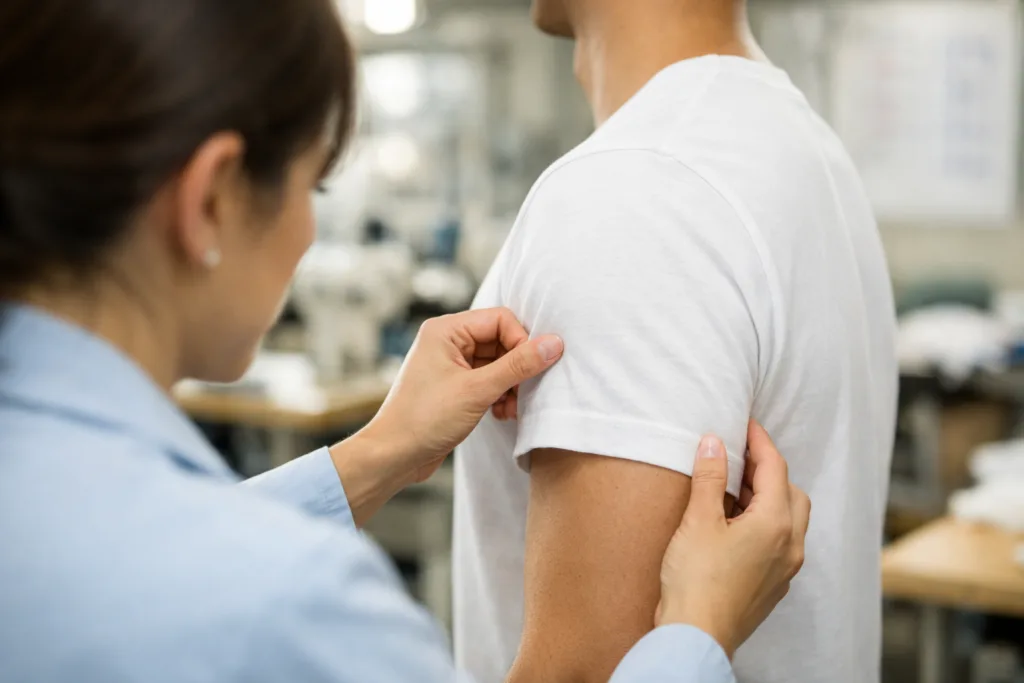
Pattern balance and garment proportion are at the core of every well-fitting and aesthetically pleasing piece, from basic T-shirts to tailored blazers. They determine not just how a garment fits and performs, but also how it is perceived by the wearer and the market. By rigorously checking front/back balance, shoulder slope, and armhole balance during all stages—design, patternmaking, sampling, and production—you ensure that the final product delivers on both comfort and appearance.
Key Takeaways for Practitioners
- Always begin with accurate body measurements that reflect your market’s posture and body type range.
- Balance key pattern pieces and apply allowances for your chosen fabric’s behavior.
- Control for balance at the style development, fitting, and bulk production stages for maximum consistency and fewer claims.
Remember, as we’ve seen over decades on the factory floor, the cost of fixing a poorly balanced garment in bulk is always higher than catching and correcting issues early. Develop a habit of measuring, checking, and balancing at every stage—and your garments will stand apart in both quality and fit.
Frequently Asked Questions
What is front and back balance in a garment pattern?
Front and back balance ensures that both front and back panels of a garment are aligned properly so the garment hangs evenly and fits the body correctly without twisting or riding up.
How does shoulder slope affect garment fit?
Shoulder slope directly impacts neck, armhole, and sleeve fit. Incorrect slope causes garments to slide off shoulders, gape at the neck, or restrict arm movement.
Why is armhole balance important?
A properly balanced armhole allows comfortable movement, prevents gaping or puckering, and maintains the intended silhouette throughout wear and washing.
What causes imbalanced side seams in clothing?
Imbalanced side seams usually result from mismatched pattern piece lengths, poor control of front/back proportion, or fabric shrinkage not accounted for in the pattern.
How do I check pattern balance before bulk production?
Align and walk your patterns, conduct fitting trials with real fabric, measure tolerance points, and always perform pre-wash and post-wash balance checks before approving for bulk.
Does fabric choice affect pattern balance and proportion?
Yes, different fabric types have unique stretch, recovery, and shrinkage profiles, so patterns must be adjusted to maintain balance and correct garment proportions after finishing.