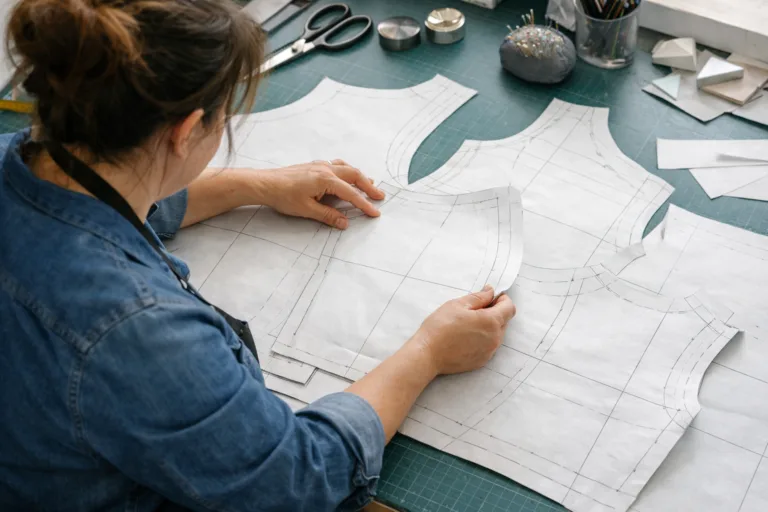
Introduction: Understanding Plus Size Grading and Pattern Scaling
When it comes to making clothes that actually fit, accurate plus size grading is a critical—yet often misunderstood—step. Many brands and designers assume they can simply scale up a garment pattern created for a standard size, but this almost always leads to disappointing results for plus size customers. In this article, we’ll uncover why you can’t just scale up a base pattern, how body proportions truly change with size, and what proper plus size grading really involves. We’ll also expose some all-too-common mistakes and explore techniques for creating clothing that is both comfortable and stylish for every body.
What is Plus Size Grading? Why Does It Matter?
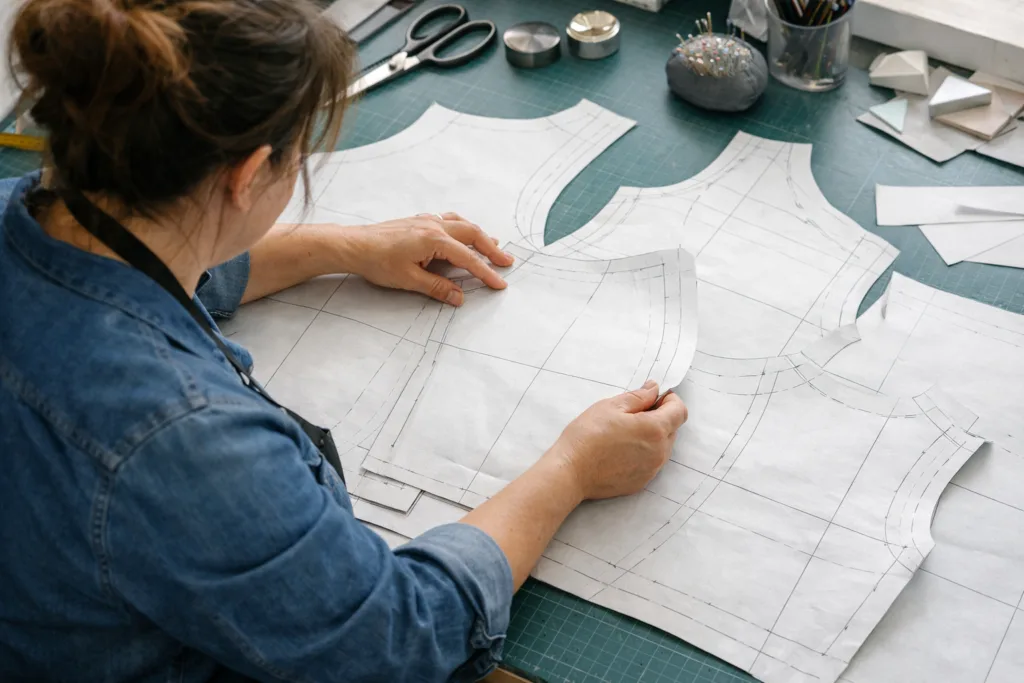
Plus size grading is the process of adapting a base pattern to fit larger sizes, ensuring each size has the right proportions, fit, and comfort. If done poorly, garments may become ill-fitting—too tight in some areas or overly loose elsewhere. That’s why expert plus size grading isn’t just about making patterns larger; it’s about respecting how real bodies change shape as they increase in size.
How Pattern Grading Works: A Quick Review
Pattern grading is a method for systematically changing the size of a pattern to create a full size range. In standard sizing, this may involve formulas or even digital automation. However, for plus sizes, unique adjustments must be made—especially around bust, waist, hips, and arms. If you’re interested, Pattern Grading Unlocked further explains the basics for scaling from the sample size to production runs.
Why You Can’t Just Scale Up: The Proportional Myth
Clothing patterns are not like simple blueprints that you can stretch in all directions. A body does not grow as a mathematically perfect enlargement—proportions and shapes shift as size increases. For example, in plus sizing:
- Waist and hip circumferences change at different rates than for straight sizes
- Torso lengths often increase, but armholes may need more radical reshaping
- Bust apex (fullest part of bust) placement can change in both vertical and horizontal directions
Therefore, plus size grading should involve strategic, targeted pattern manipulation—not merely multiplying measurements.
How Body Proportions Shift in Larger Sizes
Plus size bodies typically have:
- Higher waist-to-hip ratios
- Increased bicep and thigh circumference (sometimes outpacing bust or hips)
- Lower armholes and wider necklines for comfort
- More nuanced shoulder slopes due to posture changes
If you only scale up straight-size patterns, these dimensions rarely balance correctly.
Common Mistakes When Grading Plus Sizes
Brands new to plus size grading often fall into avoidable pitfalls:
- Ignoring Ease Adjustments: Not adding or shifting ease (the “extra room” in clothing) leads to tight, uncomfortable fits.
- Over-Scaling: Proportionally expanding all pattern pieces—such as pockets, collars, or facings—can create cartoonish, awkward details.
- Bad Placement of Key Features: Bust darts, waistlines, and pockets may not align properly for larger sizes if designs are just stretched.
- Lack of Grading Rules for Plus Sizes: Many companies apply the same grading increments from straight sizes to plus, which simply doesn’t accommodate larger bodies.
Examples: What Happens When You Just Scale Up
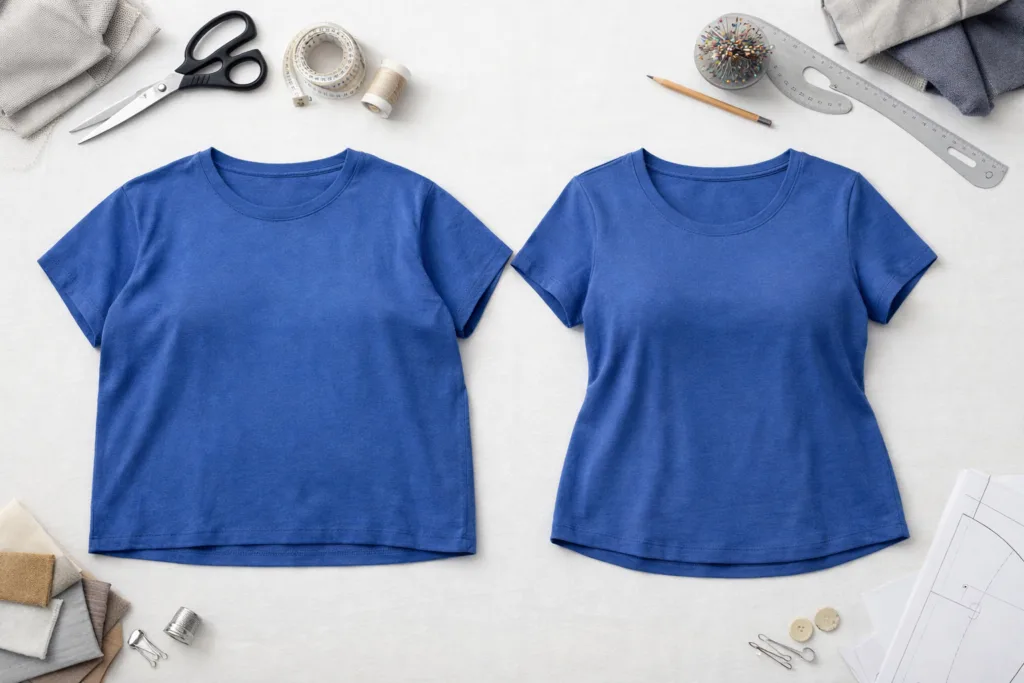
A scaled-up sleeve can become baggy and uncomfortable in the armhole. A hem may flare excessively, or the neckline may widen too much, leading to fit and comfort problems.
How to Grade Plus Size Patterns Properly
Relatively simple changes can dramatically improve plus size fit:
- Redraw curves at the armhole, waist, and hip to fit real body shapes
- Adjust placement and size of darts for bust shaping
- Increase ease in areas where movement is needed, such as biceps or thighs
Creating Adjustments for Hips, Bust, and Waist
Studies have shown that while bust and hip circumferences increase with size, the increments are not constant. Plus-size patterns often need more dramatic hip shaping and higher bust points than straight sizes.
Adding and Modifying Ease for Comfort
Ease enables natural movement. For plus sizes, ease must be thoughtfully added—especially at sleeve caps, armholes, and side seams.
Key Fit Areas: Bust, Waist, Hips—And Beyond
Bust: Plus-size customers have a wide range of bust-to-waist ratios and fuller busts that deserve customized darting and shaping.
Waist & Hips: Waists may be higher or lower, while hip fullness and length can increase at varying rates.
Arms & Thighs: Increasing ease around the arms is essential for layering and mobility. Thigh fullness often requires more room as well.
For more details on accurate garment measurement processes that ensure a better fit, see Understanding Tolerance in Garment Measurements.
The Role of Seam Placement and Pattern Shaping
Seam placement is critical in plus size grading. Shifting side, princess, and shoulder seams can dramatically improve fit and styling. Proper shaping avoids the “box effect” often seen when patterns are only enlarged outward.
Techniques for Redrawing Seams for Comfort and Flattery
Many experts recommend pivoting points on the seamline rather than simply moving them linearly. This helps fabric hang more naturally and avoids drag lines—those unsightly puckers or pulls common in poorly graded plus size garments.
Digital Pattern Tools and Plus Size Grading
Modern computer-aided design (CAD) tools, such as Gerber or Lectra, can support advanced grading—but only if the grading rules account for the unique needs of plus sizes. Automated scaling cannot replace hands-on adjustment and expert review. More on digital transformation of pattern making is covered in Expert Comparison: How Digital Pattern Making Is Transforming Garment Design.
Understanding Grading Rules for Plus Sizes
Unlike straight sizes, plus size grading must use nonlinear increments. For example, the difference between size 18 and 20 may be greater in circumference but less in length, compared to smaller sizes. This is explained in detail in Grading Rules: How Sizes Expand from a Base Pattern on Apparel Wiki, clarifying why rules for plus size grading must be unique.
Case Study: Redefining Grading Rules for Real Bodies
Brands that adopt “real body” grading rules—based on actual customer data and fit sessions—see fewer returns and higher customer satisfaction.
Pattern Testing: Fittings Across a Range of Plus Sizes
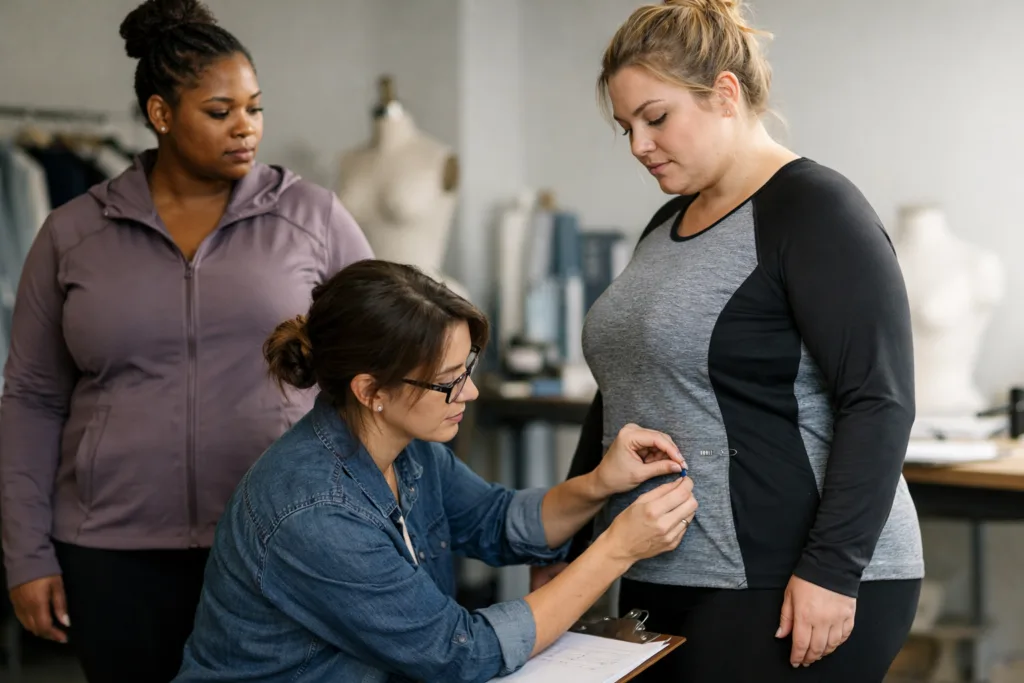
No plus size grading approach is complete without trying sample patterns on real bodies. Fittings reveal pressure points, pull lines, or proportions that look unnatural or restrict movement.
Fit Model Feedback: The Real-World Test
Fit sessions let brands fine-tune features like armhole shape, bust dart height, and pant rises.
Accounting for Fabric Characteristics in Plus Sizes
Heavier fabrics, those with less stretch, and structured materials respond differently to plus size bodies than lightweight or knitted ones. The success of plus size grading also depends on selecting the right fabric and, when needed, adjusting the pattern to account for fabric behavior. Read more about Developing Patterns for Knits vs Wovens.
Special Considerations for Garment Types
Plus size outerwear, activewear, and tailored clothing each bring their own technical challenges. For example, coats need more room at the biceps and across the back, while fitted dresses require well-placed seams and shaping to avoid a tent-like look.
Handling Plus Size Grading When Sizing Systems Differ
US, EU, and Asian plus size ranges all have different base sizing standards. To avoid confusion and fit issues, customize your grading rules to the market rather than applying a one-size-fits-all approach. Apparel Wiki offers a resource for comparing sizing systems at The Ultimate Guide to Creating a Size Chart.
The Impact of Ease on Plus Size Garments
Reintroducing the idea of “ease”—the planned extra room in a garment—it’s vital to revisit ease across all plus size points. This directly ties to garment wearability, comfort, and style confidence, especially for plus size consumers who want modern, flattering, and practical silhouettes.
How Not to Lose Style in Plus Size Grading
One frequent industry complaint is that plus size garments lose their original style during grading, resulting in unflattering or outdated silhouettes. Careful design adaptation—repositioning pockets, modern seam lines, and intentional decorative details—maintains the design vision without sacrificing fit.
Collaborating With Experts: Pattern Makers and Fit Technicians
The nuanced adjustments discussed above are usually outside the skill set of non-specialist designers. Collaborating with plus size fit technicians or certified pattern makers ensures technical precision and an inclusive customer experience.
Professional Development: Training for Inclusive Sizing
Brands increasingly invest in technical training for their pattern-making and fit teams, creating an industry-wide shift towards better inclusivity and technical skill.
Customer-Centric Plus Size Grading: Why Feedback Matters
Real-world customer input—through wear tests, feedback forms, and returns analysis—should directly influence pattern changes and grading rules. Sustainable plus size grading is always iterative; customer needs and preferences are in constant dialogue with design teams.
Summary Table: Straight Size vs. Plus Size Grading
| Aspect | Straight Size Grading | Plus Size Grading |
|---|---|---|
| Proportional Growth | Mostly linear | Non-linear, targeted |
| Ease Adjustment | Standard increments | Customized, more frequent |
| Key Fit Focus | Bust, hips, waist | Bust, hips, arms, thighs, rise |
| Testing | Sample size only | Multiple body types needed |
Plus Size Grading: Why You Can’t Just Scale Up.
To sum up, simply “scaling up” patterns for plus sizes is a recipe for disappointment. Successful plus size grading respects how bodies differ in shape and movement across the size spectrum. It demands careful fitting, customized grading rules, and consistent feedback—from expert pattern makers and real-life customers alike. When plus sizes are graded thoughtfully, brands win loyal customers, returns drop, and everyone looks and feels their best.
Frequently Asked Questions
Why can’t I use straight size grading for plus sizes?
Because body proportions change non-linearly as size increases; simply scaling up fails to account for unique plus size shape variations, resulting in poor fit and discomfort.
How does ease differ between straight and plus size grading?
Plus size grading requires more targeted and often increased ease, particularly at the bust, upper arm, hips, and thighs, to ensure movement and comfort.
What are the most common grading mistakes in plus sizes?
Typical mistakes include over-scaling all parts, not adjusting ease or darts appropriately, and failing to use proper fit models for plus sizes during testing.
How should I approach grading for non-standard body shapes?
Start with “real body” data, adjust key pattern areas (like bust points and rise), then test on multiple plus size models and gather qualitative feedback for refinement.
Does fabric choice affect plus size grading?
Absolutely. Stiffer or less stretchy fabrics often require more ease and pattern compensation to maintain comfort and a flattering silhouette for plus sizes.
Where can I learn more about grading rules and industry standards?
Apparel Wiki and similar resources offer technical guides on grading rules, fit testing, and sizing standards that cater to beginners and seasoned professionals.