Understanding Print Cracking and Print Fading in Garments
Printed graphics can bring bold statements and branding to garments, but maintaining their original vibrance and integrity is far from guaranteed. Two common complaints heard from factories and end-users alike are print cracking and print fading. These visible defects not only lower garment value but also undermine brand perception, especially for apparel with prominent graphics like T-shirts, hoodies, sportswear, and uniforms.
This guide draws on Apparel Wiki’s manufacturing experience to clarify why printed designs deteriorate, how curing, ink quality, fabric compatibility, and washing methods intersect, and what garment professionals can do to prevent costly print failures.
Why do printed graphics crack or fade?
The core reasons printed graphics crack or fade are rooted in chemical and mechanical interactions between the ink, fabric, and post-production processes. Print cracking occurs when the ink film loses flexibility, splitting along stretch lines or folds. Print fading is a loss of color intensity, often caused by ink migration, incomplete bonding, or chemical degradation.
- Curing issues: Under-cured or over-cured prints lead to poor ink adhesion and performance.
- Ink quality: Low-grade, mismatched, or old inks lack durability.
- Fabric compatibility: Fiber types and surface treatments influence ink anchoring and elasticity.
- Washing advice: Harsh detergents, high temperatures, and abrasion accelerate print damage.
Let’s break down each cause and reveal practical factory and consumer solutions.
Ink Curing: The Key to Durable Prints
What is Curing?
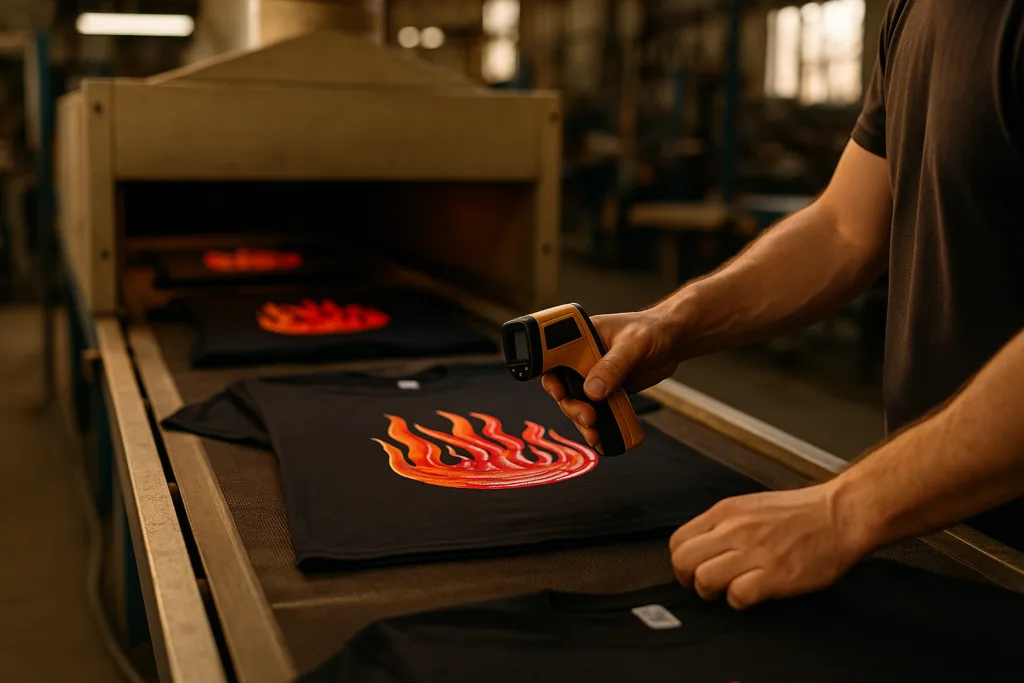
Curing is the process of heating printed garments to bond the ink to the fibers or create a stable ink film. Each ink type — plastisol, water-based, discharge, or hybrid — requires specific curing temperatures and dwell times. Failure to control these parameters leads to cracked or faded prints after minimal wear or washing.
Common Curing Issues
- Under-curing (most frequent): Ink remains soft, weakly attached, prone to early fading and cracking.
- Over-curing: Ink becomes brittle, losing flexibility; cracks easily with stretch or fold.
- Uneven curing: Hotspots or cold spots occur in older tunnel dryers, causing inconsistent print quality across a batch.
How to Optimize Curing
- Verify ink manufacturer’s recommended temperature (e.g., plastisol 160–170°C for 60–120s).
- Regularly calibrate dryers using digital IR thermometers.
- Test print film elasticity by gently stretching before and after curing.
- Run periodic wash tests after sample curing to confirm adhesion and colorfastness.
Rain’s tip: Ask your print supplier for a standard wash test protocol. This exposes weak curing before a costly bulk run.
Ink Quality: Formulation, Storage, and Mix Consistency
Types of Inks Used in Garment Printing
| Ink Type | Compatibility | Durability | Main Risks |
|---|---|---|---|
| Plastisol | Most cotton, blends | High if cured | Brittle if over-cured |
| Water-Based | Cotton, viscose | Medium; softer feel | Fades if under-cured, hard to use on synthetics |
| Discharge | Darker 100% cotton | Good on compatible fabrics | Patchy on blends, odor issues |
| Sublimation | Polyester | Excellent colorfastness | Ghosting, migration on mixed fabrics |
Ink Quality Checks
- Check batch expiry dates for each ink bucket.
- Maintain optimal storage: 20–25°C, low humidity.
- Mix thoroughly before use to prevent separation or settling.
- Choose reputable brands with known compliance to colorfastness standards.
Ink Application Thickness
Too thin a print washes away; too thick cracks. Use viscosity charts or mesh count guidelines to estimate proper application per ink type.
Factory insight: In high-volume runs, we spot-check print layers with micrometers. This catches over- or under-deposition before garments move to dryers.
Fabric Compatibility: The Foundation for Lasting Prints
Fiber Types and Their Print Performance
The structure and chemistry of the fabric directly influence print durability. Cotton offers a receptive surface for most inks, while polyester and technical blends require specialty formulations or pre-treatment to avoid migration and poor adhesion.
- Cotton: Readily absorbs water-based and discharge inks. Handles plastisol with proper mesh count. Watch for shrinkage after wash.
- Polyester: Prone to dye migration (ghosting). Best for sublimation; plastisol/poly ink must include migration blockers.
- Blends (CVC, TC): Mixed performance — water-based may be patchy, discharge unreliable, plastisol moderately durable.
- Technical fabrics (nylon, modal, bamboo): May require specialty inks, primer coats, or lower cure temps.
Fabric Surface Treatments
Enzyme washes, silicone softening, peaching, and coatings can affect ink anchoring and flexibility. Always confirm on actual bulk material before approving a large production run.
Pre-Production Checks
- Confirm fabric GSM, weave/knit structure, and fiber breakdown on technical sheets.
- Conduct test prints across different positions (body, sleeves, rib trims) to scout inconsistent adhesion.
- Evaluate stretch and recovery on printed areas, especially for sportswear and active garments.
Washing Advice: Extending Print Life for Consumers and Brands
Recommended Washing Methods
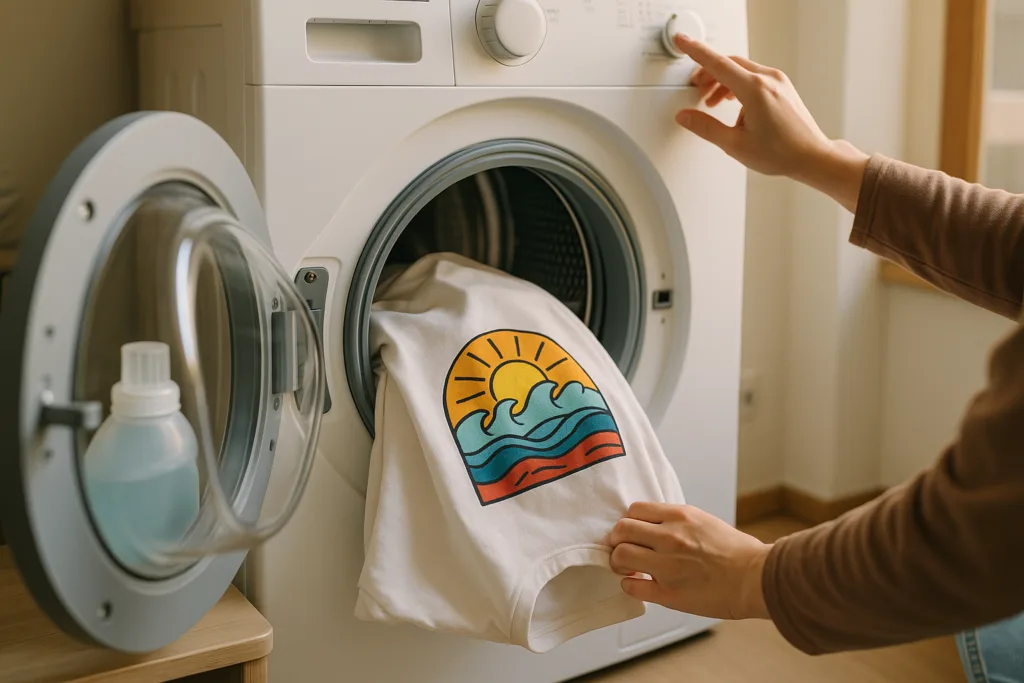
- Wash inside out to lower abrasion on print surface.
- Use cold water settings (<30°C/86°F) to minimize ink reactivation, especially for water-based prints.
- Avoid harsh detergents or bleach, which strip color and plasticizers from prints.
- Skip tumble drying when possible; high heat accelerates cracking.
- Do not iron directly over printed graphics.
Commercial Laundering and Industrial Laundry Risks
Uniforms and workwear face heavy-duty washing cycles. Specify print requirements suitable for repeated high-temp laundering if garments are destined for this use.
Common Print Defects: Diagnosing and Solving Problems
Symptoms to Watch For
- Cracking: Ink splits, especially on stretch zones (shoulders, side seams).
- Fading: Loss of color intensity; ghosting or dullness after a few washes.
- Peeling: Ink flaking off in sheets — usually due to zero adhesion.
- Migration: Print color bleeds due to incompatible ink or fabric, especially with polyester.
Root Cause Mapping Table
| Defect | Possible Causes | Checkpoints |
|---|---|---|
| Cracking | Over-curing, low elasticity ink, fabric stretch, thick ink deposit | Check curing temp, ink spec, test stretch recovery |
| Fading | Under-curing, poor ink quality, over-washing | Confirm test washes, ink expiry, pigment load |
| Peeling | No/low adhesion, incorrect fabric pre-treatment, contaminated fabric | Review pre-treatment, ink compatibility, QC controls |
| Migration | Polyester dye bleed, incompatible ink | Test on final fabric, include migration blockers |
Factory-Level Quality Controls for Print Longevity
Essential Print QC Protocols
- Standardize curing temperature and time (log each batch for traceability).
- Random sample print stretch tests before and after drying.
- Wash test every PP and TOP sample based on proposed care label instructions.
- Inspect for ghosting/migration on all light and dark base fabrics.
- Conduct colorfastness tests to washing and rubbing, as per ISO/EN standards.
Expert takeaway: Well-managed print QC starts before bulk production. If vendors skip pre-production samples and garment wash tests, print defects spike rapidly.
How Garment Construction Influences Print Wear
Critical Garment Features
The design of the garment itself can impact print cracking and fading. Stretch panels, seam placement, and pattern cut all play roles:

- Seams passing through prints increase stress and risk of splitting.
- Loose fits minimize tension, lowering crack risk; slim/active fits require more elastic prints.
- Rib trims and stretch zones should avoid large prints or use specialized inks.
- For kidswear, opt for softer, lower cure inks to protect skin and print quality.
Pattern and Size Set Approval
Print positioning must be approved on all sizes — prints near curved seams or edges behave differently on XS vs. 2XL garments. Always trial full size set.
Decorating Techniques: Choosing the Right Print for Each Garment
Screen Printing
Screen printing, the workhorse of garment decoration, excels with cotton and blends but requires tight process control for sportswear and high-stretch fabrics.
Direct-to-Garment (DTG)
Optimized for small batch, fine detail, but longevity hinges on pre-treatment and curing rigor.
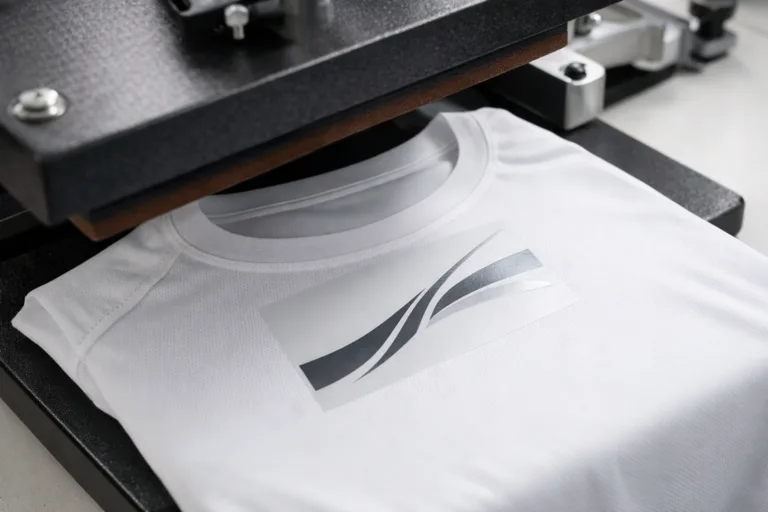
Heat Transfer/Foil/Flock
Vibrant but can peel if the temperature or pressure is not matched to garment base or if trimming is uneven.
Sublimation
Rich color and fade resistance for polyester sportswear. Not for natural fibers, where prints fade immediately or appear washed out.
Choosing and Specifying Prints for Your Apparel Needs
Factory-Buyer Communication Checklist
- Define garment base (fiber content, finish, color).
- Specify expected laundry cycles and print durability standards.
- Request print samples on actual bulk base fabric.
- Document curing and ink specs on PP/TOP samples.
- Insist on wash and rub tests to international norms.
In-House Print Durability Test Steps
- Stretch printed areas to 150% of original size; check for cracking.
- Wash at 30°C for 5 cycles; inspect fading.
- Rub print 20 times with white fabric; observe pigment transfer.
Rain’s tip: If your garments target sports or heavy use, always test prints under simulated real-world conditions — not just pristine, single-wash cycles.
Frequently Asked Questions
What causes print cracking on T-shirts and hoodies?
Print cracking is often caused by over-curing, poor ink elasticity, thick ink layers, or high garment stretch—all leading to the ink film splitting or breaking.
Does ink quality really affect print fading over time?
Yes, inferior or old inks tend to lose color rapidly. High-quality inks with proper pigment load and additives resist fading through multiple washes.
Are certain fabrics more likely to experience print fading?
Synthetics like polyester and blends are prone to dye migration and print fading, especially without correct ink or pre-treatment; cotton holds prints better when prepped appropriately.
How does garment washing impact print life?
Frequent washing, hot water, harsh detergents, and tumble drying all accelerate print fading and cracking. Gentle, cold washes and avoiding high heat extend print life.
What print methods are most resistant to cracking?
Sublimation on polyester and well-cured plastisol on cotton are most crack-resistant; water-based and discharge prints need careful curing to avoid early failure.
How can factories test print durability before bulk production?
Factories should perform stretch, wash, and rub tests on pre-production panels using actual bulk fabric and intended finishing processes to ensure print longevity and colorfastness.