
Introduction: RFID Tags in Apparel—Transforming Inventory and Anti-Theft
Efficiency and security are top concerns in the fast-paced apparel industry. RFID Tags in Apparel: Inventory and Anti-Theft solutions have dramatically improved how brands manage stock and combat retail theft. By equipping garments with RFID (Radio Frequency Identification) tags, companies are reimagining inventory tracking, loss prevention, and customer satisfaction. This guide explores how RFID is shaping the future of apparel retail, its operational benefits, implementation challenges, and practical steps to harness its power.
What are RFID Tags? Understanding the Technology

RFID tags are small devices that use radio waves to transmit data to a reader. Made of a microchip and antenna, they can be attached to clothing and accessories to identify and track items automatically. Unlike traditional barcodes, RFID tags do not require direct line-of-sight, allowing faster, bulk item scans and more reliable data collection throughout the supply chain.
How RFID Differs from Barcodes in Apparel
Barcodes have long been the standard for inventory management in apparel. However, RFID offers several key advantages:
- Speed: Scan hundreds of items in seconds without manual handling.
- Accuracy: Reduce human error and mismatches during counting.
- Automation: Enable real-time updates for stock movement and sales.
For more details, Apparel Wiki’s guide to barcodes and UPCs in retail inventory offers a thorough comparison for decision-makers.
Inventory Management Reinvented: RFID’s Role
RFID tags have revolutionized inventory tracking for apparel brands. With automatic item identification, clothing companies now achieve:
- Greater stock visibility from manufacturer to store shelf
- Nearly real-time inventory counts
- Reduced labor for cycle counts and audits
- Improved order accuracy and fulfillment
Anti-Theft Solutions: Shrinkage Prevention with RFID
Retail shrinkage from theft costs billions annually. RFID tags empower security systems to detect unauthorized item removal, alert staff instantly, and discourage shoplifting. Data records can pinpoint theft trends by location, time, or SKU, sharpening security response and asset protection strategies.
Advantages of RFID Tags for Apparel Retailers
The core benefits of RFID for apparel retailers include:
- Faster restock and replenishment decisions
- Fewer out-of-stock incidents
- Better product availability for shoppers
- Automatic replenishment cues
- Reduced physical count costs
These gains drive competitive advantage in both e-commerce and brick-and-mortar environments.
How RFID Enhances Customer Experience
Beyond operations, RFID tags improve shopping for consumers. Accurate stock data means fewer empty shelves and easier access to desired styles, sizes, and colors. Some retailers also use RFID for smart fitting rooms, RFID-enabled self-checkout, and personalized service triggered by product location data.
Real-World RFID Success Stories in Apparel
Major apparel brands such as Zara, Decathlon, and Uniqlo have pioneered RFID adoption. For example, Zara’s parent company, Inditex, implemented RFID to boost in-store inventory accuracy by up to 95%, enabling efficient stock searches and fulfillment from multiple channels. These cases show how RFID delivers measurable bottom-line impacts.
Integrating RFID: Key Steps for Apparel Brands
Implementing RFID requires strategic planning across these areas:
- Tag selection: Choose the right RFID tag for material, washability, and price point.
- System integration: Sync RFID data with existing ERP or inventory management tools.
- Staff training: Equip teams to tag, scan, and troubleshoot issues.
- Supplier collaboration: Ensure tags are applied accurately at manufacturing or distribution stages.
Choosing RFID Tags: Types and Features Explained
There are two primary types:
- Passive RFID: No internal battery; activated by reader signal—most common in apparel.
- Active RFID: Powered by battery; used for high-value item tracking or logistics.
Tag selection should consider fabric compatibility, read range, and environmental resilience to washing and handling.
Embedding RFID into Apparel Labels and Tags
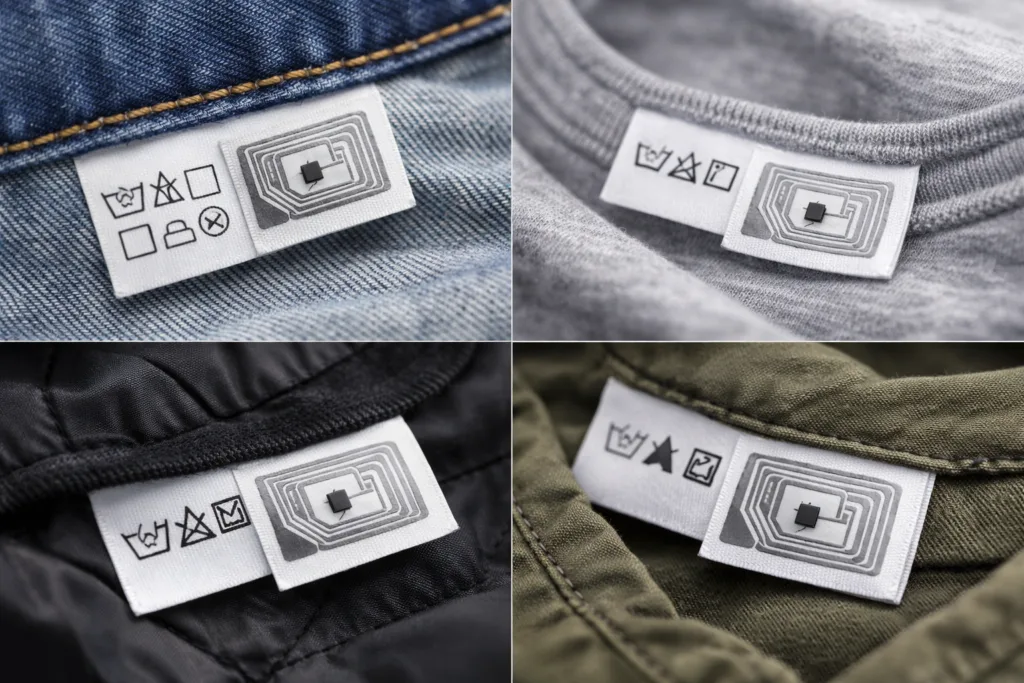
RFID in apparel can be inserted into care labels, woven tags, swing tickets, or even heat transfer labels, depending on design and material. Each option affects durability, scan success, and branding consistency. Learn about label innovations in woven vs. printed labels on Apparel Wiki.
RFID and Inventory Data Synchronization
Centralizing RFID data ensures accurate stock levels across distribution centers, retail floors, and online channels. Modern apparel inventory tools are designed to leverage RFID for seamless omnichannel fulfillment and flexible order management.
RFID Infrastructure: Readers, Antennas, and Software
RFID deployments rely on fixed readers (e.g., in loading docks, entryways), handheld scanners, and compatible middleware or cloud-based software. Choosing scalable infrastructure ensures reliable coverage in warehouses and stores.
RFID in Supply Chain Management for Apparel
Early application of RFID during garment production streamlines supply network visibility. Stakeholders can track finished goods, shipments, and store deliveries, enabling just-in-time production and responsive distribution adjustments.
The Role of Apparel Wiki in RFID Best Practices
As a resource hub, Apparel Wiki addresses common pitfalls in RFID apparel rollouts. For instance, placing RFID too close to care label text may confuse consumers or hinder scan accuracy. Referencing insights from their experience, brands can sidestep operational mistakes and adopt RFID methods that fit their size, product range, and budget.
Cost vs. Benefit: Is RFID Worth It for Apparel Brands?
RFID incurs upfront investment in tags, readers, and software. However, leading retailers report rapid payback through reduced labor, lower shrinkage, improved sales, and better customer experience. A cost-benefit analysis, considering total cost of ownership and process improvement, guides brand decisions on RFID deployment scale and timing.
Addressing Privacy Concerns in Apparel RFID
Some shoppers express privacy worries about tracking post-purchase. Responsible brands clearly communicate data practices, deactivate tags at checkout, or design tags to be removable by consumers, balancing efficiency with privacy protection.
Future Trends: RFID and Smart Apparel Retail
RFID continues to evolve with IoT (Internet of Things) integration. Future innovations include RFID-enabled interactive displays, AI-driven allocation tools, and even enhanced aftersales services using product lifecycle tracking.
The Relationship Between RFID and Other Apparel Identification Methods
While RFID dominates the future of dynamic tracking, static identifiers like RN numbers (Registered Identification Numbers) remain critical for legal compliance and brand transparency within global supply chains.
RFID and Green Apparel Initiatives
RFID can enable more sustainable sourcing and supply chain management by linking recycled or organic material credentials directly to garments. Combine this with insights from sustainable labeling initiatives like recycled polyester and organic cotton use to reinforce environmental claims.
Common Implementation Challenges and How to Overcome Them
Challenges include system compatibility, training gaps, tag detachment during washing, and high initial costs. Overcome these hurdles with phased rollouts, thorough supplier audits, and careful pilot testing before full-scale migration. Documentation from Apparel Wiki’s guides can offer industry-specific troubleshooting.
How RFID Supports Omnichannel Apparel Retail
As shoppers move seamlessly between online and offline, RFID reduces mis-picks, failed fulfillments, and delays. Accurate inventory data ensures consistent experiences—customers can reserve, click-and-collect, or access real-time in-store stock transparency.
Emerging Alternatives and Complementary Technologies
While RFID leads for now, evolving trackers (like NFC, BLE, and QR codes) are being tested for narrow apparel use cases such as VIP experiences or maintenance logging. RFID is expected to integrate with these for higher-value consumer journeys over time.
Decision Checklist: Is RFID Right for Your Apparel Operation?
- Are inventory counts slow, costly, or error-prone?
- Is shrinkage a top concern?
- Is omnichannel agility (BOPIS, endless aisle, etc.) critical?
- Can you justify the investment with improved margin or labor savings?
RFID Tags in Apparel: Inventory and Anti-Theft

RFID technology sets a new standard for visibility, efficiency, and security in the apparel industry. Its ability to connect physical garments with digital systems means every stakeholder—from designer to end customer—benefits from cleaner inventory data, safer products, and smarter service options. While implementation requires careful planning, the long-term advantages, including reduced theft and streamlined workflows, make RFID a proven asset for forward-thinking apparel brands.
Frequently Asked Questions
What is the main advantage of RFID tags over barcodes in apparel inventory management?
RFID tags allow for bulk, line-of-sight-free scanning, offering faster and more accurate inventory checks than barcodes which need individual, visible scanning.
How do RFID tags in apparel help prevent theft?
RFID tags trigger security systems if items leave stores without proper deactivation, and provide real-time alerts and data to identify theft trends and weak points.
Are RFID tags washable and safe for garments?
Yes, most passive RFID tags for apparel are designed to withstand typical washing, but choice of tag and application method are essential for durability and safety.
What privacy concerns exist with apparel RFID tags post-purchase?
Some worry about post-sale tracking, but most brands disable or design tags for easy removal to address privacy issues after purchase.
Can small or mid-sized apparel brands benefit from RFID technology?
Absolutely, since RFID solutions now scale for all company sizes, enabling improved accuracy and efficiency without prohibitive costs.
How is RFID integrated with other apparel identification systems like RN numbers or care labels?
RFID often complements RN numbers and care labels by embedding data into or alongside existing brand and compliance labels without replacing them.
Related Reading
- Unlock Efficiency: Your Actionable Barcode & UPC Playbook for Retail Inventory
- Woven or Printed Labels? Make Cost-Saving, Durable Branding Decisions
- RN Numbers Demystified: Essential Facts for Transparent Apparel Labeling
- Eco-Friendly Fashion: Uplift Your Branding with Sustainable Labels
- Global Care Label Laws Made Simple for Compliance Mastery