Choosing a suitable fabric starts with the actual material, artwork, print system, and product use—not a generic list of printable fibers. Rotary screen printing fabric compatibility means that this specific combination can deliver the required appearance, hand, placement, and durability under agreed conditions. Apparel Wiki treats this as an independent technical decision; a disclosed Sponsor relationship does not constitute material or process approval.
Begin with a detailed fabric specification and a representative cutting in the intended shade and finish. Then assess the design, proposed colorant or binder system, placement, and use conditions together. Treat the fabric as a candidate until a representative print trial provides evidence for the required result.
What Rotary Screen Printing Fabric Compatibility Means
Compatibility is project-specific. It is not a permanent property attached to cotton, polyester, blends, knits, or woven fabrics. A material may suit one design and print system but remain unsuitable or unconfirmed for another combination with different coverage, hand, color, placement, or durability requirements.
A complete material identity has several layers. Fiber composition describes the raw material. Yarn characteristics and fabric construction describe how that material becomes a textile. Dyeing, shade, and finishing describe additional conditions that can influence the proposed printing route. A trade name rarely captures all these layers.
Terms such as “cotton jersey,” “polyester satin,” or a supplier’s commercial fabric name can help identify an initial candidate. They are not complete printing specifications. Similarly named fabrics can differ in yarn, construction, weight, surface, shade, stretch, recovery, and finish. Those differences create separate questions for sampling.
Confirmation requires a representative sample of the intended combination. The sample should use fabric that reflects the proposed production condition, including relevant color and finishing. It should also use the intended artwork and proposed print approach. A trial on an untreated white swatch cannot automatically confirm a dark, finished production fabric.
Initial appearance is only one part of the decision. A print may look acceptable before the material experiences the wear, care, extension, rubbing, or heat exposure relevant to the product. These conditions are not interchangeable, so the evaluation should reflect expected use and agreed acceptance criteria.
The practical selection rule is simple: document the actual substrate and product use first. Then consider the fabric, design, colorant or binder system, and durability needs as one combination. This approach is more reliable than declaring broad categories to be compatible fabrics for rotary screen printing.
Read the Actual Fabric Before You Select a Print Route
A useful fabric brief separates four material layers: fiber, yarn, construction, and finish. It should also record color, weight, surface character, and any relevant stretch behavior. This prevents a term such as “knit,” “satin,” or a commercial name from standing in for the complete material identity.
- Fiber composition: Record the stated fibers and proportions rather than relying on appearance or product naming.
- Yarn and construction: Note the available yarn description and identify the fabric structure more precisely than “knit” or “woven.”
- Color and dyeing: Record the actual shade and available dyeing information. Consider light and dark versions separately when shade could affect the proposed result.
- Weight and surface: Capture the stated weight and describe whether the face appears smooth, open, ribbed, brushed, raised, coated, or otherwise textured.
- Stretch and recovery: Where relevant, document the directions in which the fabric extends and how it returns after extension.
- Finishes and treatments: List all disclosed finishing or coating information, while marking anything unknown.
These observations do not create automatic pass-or-fail rules. Instead, they identify what the trial must investigate. A smooth, dimensionally stable-looking surface may support a different sampling question than an open, brushed, coated, or highly extensible surface. Relevant concerns can include coverage, edge definition, penetration, distortion, and change in hand.
Construction provides useful clues but does not determine performance by itself. Not all knits behave alike, and woven fabrics are not inherently non-stretch. Composition, yarn, structure, weight, and finishing must be considered together before drawing conclusions about fabric construction for screen printing.
Dyed goods and finishes also belong in the sampling brief because they may interact with the proposed print system. Without system-specific technical guidance, treat color and finish as variables to investigate rather than predicting a particular defect. Use the actual finished shade when it materially represents the proposed product.
Request the available fabric specification and finish information. Retain a labeled swatch or lot-representative cutting, and record unresolved details as unknowns. An honest gap in the printed fabric specification is more useful than an assumption based on a familiar commercial name.
Match the Design and Print System to Fabric Behavior
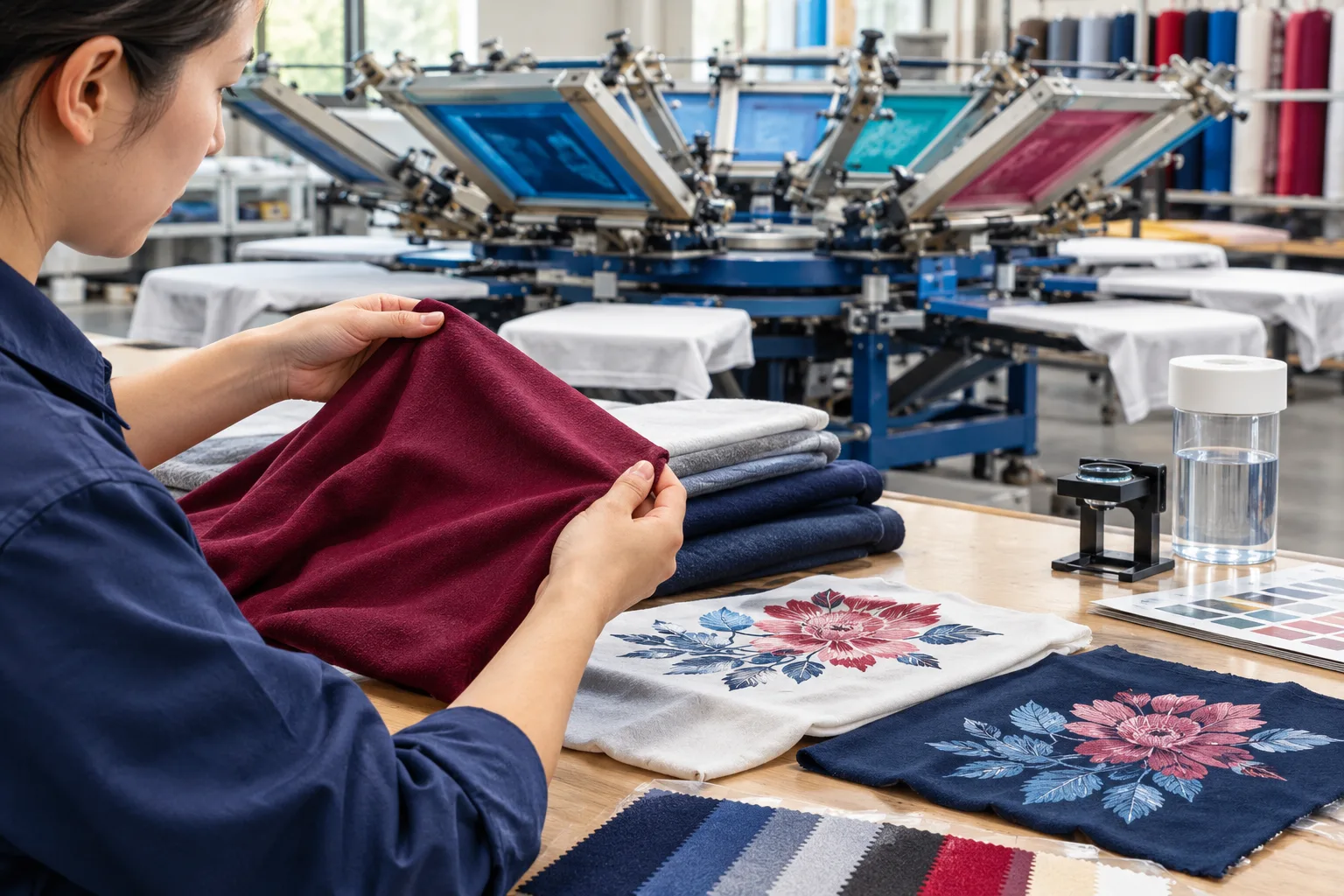
After describing the fabric, compare its observable behavior with the artwork. Fine lines, small gaps, layered colors, registration-sensitive motifs, large solid areas, and opacity requirements create different sampling priorities. Fabric weight alone cannot establish whether those details will reproduce as intended.
A design with fine elements calls for close evaluation of edge definition on the actual surface. Large printed areas raise questions about coverage, color appearance, and the resulting hand. Layered or closely aligned colors require a trial that shows how the complete motif behaves on the proposed material. These are evaluation needs, not universal process settings.
Several desired outcomes can pull the decision in different directions. A team may prioritize a soft hand, strong coverage, a particular physical color appearance, or stability during expected use. The best initial candidate depends on which outcomes matter most and how the proposed print system addresses them. Quantity can inform process planning, but it should not become the only selection rule.
Placement is another controlled input. Record the artwork version, finished dimensions, orientation, location, and reference points with the sample request. Note nearby seams, ribs, stretch zones, pile, texture, or changes in panel shape. These features may affect how placement and appearance should be evaluated, even when the base material remains unchanged.
Screen color is not physical color approval. Compare the printed sample with the agreed physical color reference under the project’s chosen viewing conditions. Label the sample with its fabric identity, shade, finish, artwork version, and proposed care or use conditions. Otherwise, later comparisons can confuse an artwork change with a material or process change.
For example, rotary screen printing on a lightweight knit with a placement design should include evaluation while the fabric is relaxed and under relevant extension. Inspect whether the motif remains acceptably positioned and appears as intended for the product. The initial choice could change if artwork coverage increases, recovery differs, a finish changes, or the end use demands other behavior.
The same decision logic applies to any rotary screen print design on fabric: connect artwork demands to observable substrate characteristics, then test the proposed combination. Specific colorants, screen configurations, curing conditions, or tolerances should come from applicable system documentation or a qualified process source, not from a universal fabric rule.
Compare Fabric Situations With a Sampling Decision Table
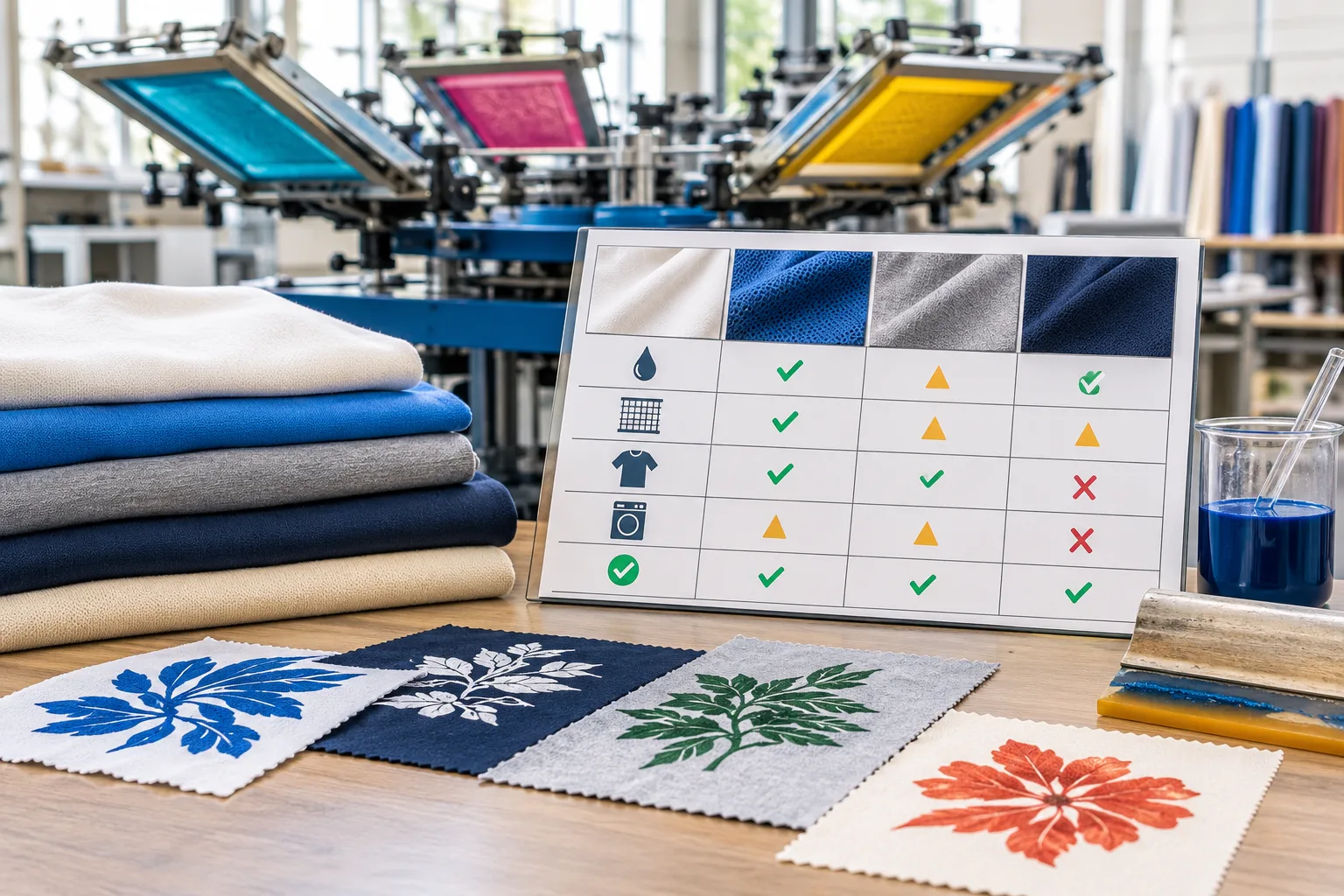
The following table converts visible fabric characteristics into questions for an initial trial. It is not a list of universally compatible fabrics. Two materials with similar names can have different constructions, shades, finishes, or behavior, so each row leads to sampling rather than automatic approval.
| Fabric situation | Observable inputs to record | Printing implication to investigate | Initial sampling choice | Variables that could change the choice |
|---|---|---|---|---|
| Light-colored, relatively stable fabric | Composition, construction, weight, surface, shade, finish, and dimensional behavior | Design definition, coverage, desired hand, and appearance after relevant care | Trial the intended artwork and print system on representative finished fabric | Finer details, larger coverage, another finish, or different care expectations |
| Dark or dye-rich fabric | Exact shade, dyeing information when available, finish, design colors, and coverage | Color appearance and any unwanted interaction or change under proposed conditions | Use the actual shade and compare the physical print with the agreed color reference | Shade, finish, required opacity, artwork area, or post-care appearance |
| Stretch knit | Construction, relaxed dimensions, relevant extension, recovery, finish, and placement | Motif appearance, coverage, hand, and placement while relaxed and extended | Inspect a representative print under the extension expected in use | Recovery, garment fit, artwork size, coverage, location, or intended use |
| Textured or raised surface | Texture scale, pile or brushing, openness, surface direction, and design detail | Edge definition, surface coverage, penetration, and resulting hand | Sample critical fine details and solid areas on the actual surface | Texture direction, artwork scale, coverage, placement, or surface variation |
| Coated or specially finished fabric | Finish description, supplier information, application side, shade, and intended care | Print appearance, attachment to the surface, hand, and stability after relevant evaluation | Trial the proposed system on fabric carrying the production-intended finish | Finish chemistry or level, fabric lot, print system, coverage, or care conditions |
For a large, light-colored design on a dark finished fabric, the actual shade and finish are essential sample inputs. The initial route may change if the finish changes, coverage expands, or the required post-care appearance becomes more demanding. Investigate these interactions through representative trials and applicable system documentation rather than assuming a particular defect will occur.
Sample, Evaluate, and Document the Chosen Combination
A useful rotary screen printing fabric test sample follows a defined sequence. This keeps initial visual approval separate from evidence about performance in the product’s expected use.
- Submit controlled inputs. Provide representative finished fabric, its identity and shade, available finish information, the artwork version and dimensions, a physical color reference, and the placement datum.
- Make the trial under proposed conditions. Record the proposed print system and identify the fabric face, design location, and any relevant seams, ribs, texture, or stretch zones.
- Inspect initial appearance and hand. Examine relevant features such as coverage, edge clarity, unwanted color change or transfer, placement, and any change in surface feel. Compare the physical sample with the agreed references.
- Apply use-relevant evaluations. Choose evaluations that reflect expected care, wear, extension, rubbing, or heat exposure. Inspect for relevant changes, which may include cracking, print loss, color change, transfer, placement instability, or altered hand.
- Compare results with agreed criteria. Decide acceptance criteria and evaluation conditions before the trial. Record whether the combination is accepted, rejected, or requires another sample.
Wash, stretch, rubbing, and heat-related evaluations answer different questions. One cannot substitute automatically for another. The relevant condition depends on the product, its care instructions, expected use, and any applicable brand requirement. Avoid selecting a condition or pass threshold only after an unexpected result appears.
The sample record should identify the fabric specification and shade, finish information, artwork version and size, placement reference, proposed print system, observations, evaluation conditions, and final decision. Photographs can support the record, but they should not replace a labeled physical reference when color, hand, or surface character matters.
Approval applies only to the sampled combination and recorded conditions. A later change in fabric construction, shade, finish, artwork, placement, coverage, or process can alter the relevant risks. Review the change against the approved record and arrange renewed assessment when it could affect appearance, hand, placement, or required durability.
Choose a Fabric With Evidence, Not a Generic Label
Rotary screen printing fabric compatibility is demonstrated by a documented combination of actual fabric, artwork, print system, and use conditions. A generic label such as cotton, polyester, blend, knit, or woven can identify a candidate, but it cannot confirm the finished result.
As an educational next step, create a one-page comparison of candidate specifications. Include composition, construction, shade, finish, surface and stretch details, artwork demands, placement, intended use, and evaluation conditions. Use that comparison to identify unknowns and select representative materials before requesting or reviewing a sample.
Frequently Asked Questions
Can cotton, polyester, and blends all be used for rotary screen printing?
Each can be an initial candidate, but fiber content alone does not establish compatibility. The decision also depends on yarn and fabric construction, shade, finish, artwork, proposed print system, and use requirements. Confirm the specific combination through representative sampling.
Why can the same fabric name produce different printing results?
A commercial name may cover fabrics with different fiber percentages, yarns, constructions, weights, shades, surfaces, or finishes. Those differences can change the questions that require evaluation. Record the complete specification and sample the production-intended material rather than relying on the name.
Should I sample the actual color and finish of the fabric before approving a print?
Yes, when shade or finish could influence the proposed combination. Use fabric representing the intended production condition. A trial on unfinished or differently colored material may be useful for development, but it does not confirm the final fabric-and-print combination.
What fabric details should I provide with rotary screen printing artwork?
Provide composition, yarn or fabric construction, weight, shade, surface character, stretch and recovery where relevant, and stated finishes. Also include the artwork version, actual dimensions, color reference, coverage, placement datum, intended use, care expectations, and known unknowns.
How should I evaluate a print on a stretch knit fabric?
Inspect the print while the fabric is relaxed and under extension relevant to the product. Evaluate motif appearance, coverage, hand, placement, and any cracking or print loss where applicable. Define the extension condition and acceptance criteria before reviewing the sample.
When does a fabric or artwork change require a new print sample?
Renew assessment when a change could affect appearance, hand, placement, or use-related stability. Relevant changes may include construction, shade, finish, artwork scale, detail, coverage, location, or print system. Compare each change with the documented approval rather than treating every revision identically.