Introduction to Seam Strength Testing in Apparel
In garment manufacturing, the strength and reliability of seams determine whether a product meets consumer expectations and withstands real-world use. “Seam strength testing” is a critical aspect of garment seam QC—quality control that ensures every stitched joint holds up in wear, washing, and stress. Whether you’re sourcing activewear, uniforms, or high-fashion pieces, robust seam construction and accurate strength verification are vital to preventing failure, returns, and brand damage.
Seam Strength Test: Why It Matters
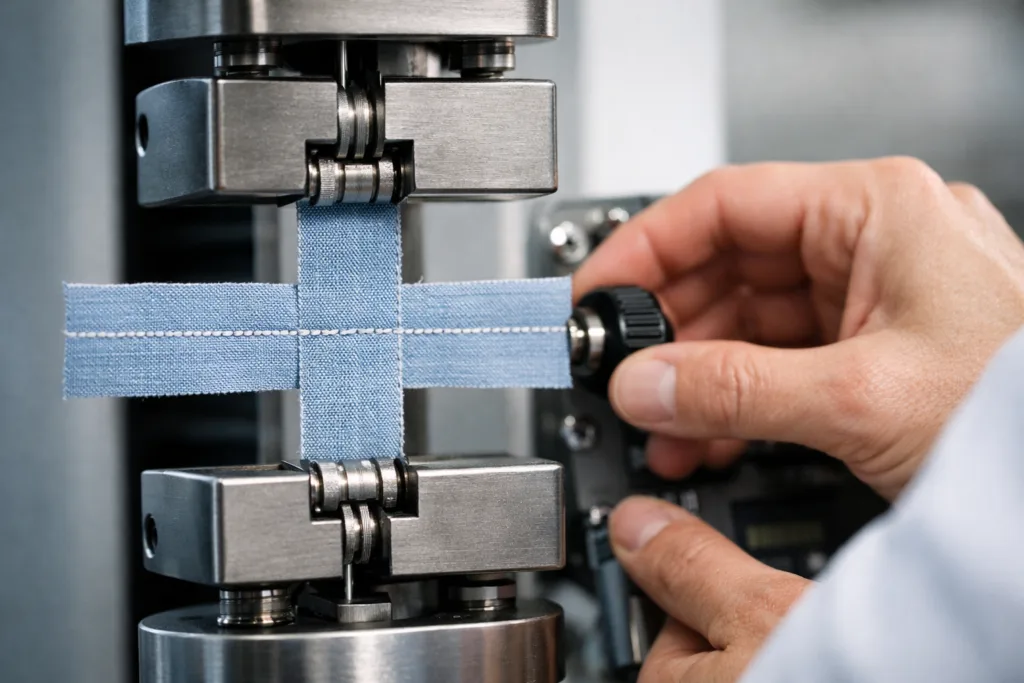
A seam strength test evaluates the ability of sewing threads and fabric edges to stay joined under force. Low seam strength leads to issues like seam slippage, burst seams, and tearing—frequent reasons for garment rejection in export and retail audits. This section explores:
- The core objectives of seam strength testing.
- Key parameters measured by testing methods.
- Common mistakes and how to avoid them in production.
Definition & Types of Tests
Seam strength is quantified by applying progressive force (tensile or dynamic) to a stitched sample until a defined failure occurs. Major test methods cover:
- Seam Slippage – the point where the fabric slides away from the stitch line.
- Seam Burst/Bursting Strength – most relevant for knits and sportswear.
- Tearing Strength – force required to propagate an initial seam tear.
Why Focus on Seam Strength?
Seams experience concentrated stress—at side seams, crotch, armholes, and pocket attachments. Weak points here translate to costly failures. In many factories, systematic seam testing helps refine not only thread and stitch choices but also operator training and machine settings.
Common Mistakes in Seam QC
- Using suboptimal thread tension, creating weak stitches.
- Choosing inappropriate stitch density (SPI – stitches per inch).
- Neglecting fabric shrinkage effects after washing, leading to puckering or seam distortion.
- Overlooking seam allowance—too narrow seams are prone to pulling out.
Practical Tips for Reliable Seam QC
- Specify test methods and minimum strength values in your techpack.
- Check factories’ sample test reports for actual tensile/burst values.
- Request both pre-wash and post-wash seam strength data for garments with heavy finishing.
Key ASTM Tests for Garment Seam QC
The American Society for Testing and Materials (ASTM) sets globally respected test standards for seam strength. Commonly used protocols include:
| ASTM Test Method | Key Purpose | Sample Size | Typical Garments |
|---|---|---|---|
| ASTM D1683 | Seam Slippage (Woven) | 100 × 25 mm strips | Dress shirts, trousers, workwear |
| ASTM D1683M | Seam Slippage (Metric) | For ISO/IEC alignment | International fabric pools |
| ASTM D4772 | Woven Seam Strength (Grab/Strip) | Fabric + seam strips | Uniforms, formalwear |
| ASTM D3787 | Bursting Strength (Knits) | 50 mm round sample | Sports T-shirts, fleece, athleisure |
Test Execution
Tests are conducted using calibrated tensile testers or bursting machines. Key steps:
- Cut seam samples according to standard sizes and direction (warp/weft or course/wale for knits).
- Mount the sample with uniform gripping to avoid pre-damage.
- Apply progressive load until first failure event (thread break, seam slip, fabric tear).
What Results Should You Expect?
For high-wear zones (trouser seat seam, sportswear underarms), buyers often specify ≥ 70N for woven seams and ≥ 100N for knits in burst tests. Values may vary based on garment use—consult ASTM charts for minimums.
Tearing Strength in Garment Seams
Tearing strength measures resistance to seam rip propagation, crucial for safety wear and children’s garments. While ASTM D2261 (tongue tear) is typically for fabrics, adapted seam versions are used for:
- Childrenswear armholes and crotch seams
- Workwear stress points (e.g., knee seams)
- Outerwear and technical apparel (ski jackets, hiking pants)
Measurement Process
- Pre-cut a slit at the seam to simulate a small tear.
- Mount in tensile tester—apply load perpendicular to seam.
- Record force where tear propagates across seam.
Optimizing Tearing Strength
Seam tearing strength depends on correct stitch type (lockstitch is strongest for woven, overlock better for knits), thread strength (polyester is preferred over cotton for durability), and proper seam allowance width. For high-stress garments, consider reinforced seams or bartack stitching at pressure points.
Manual Seam Strength Testing: Factory and In-House Methods
While lab machines give precise results, many factories and buyers supplement with manual seam strength tests for quick QC checks. Used to catch obvious faults before sample submission.
Common Manual Tests
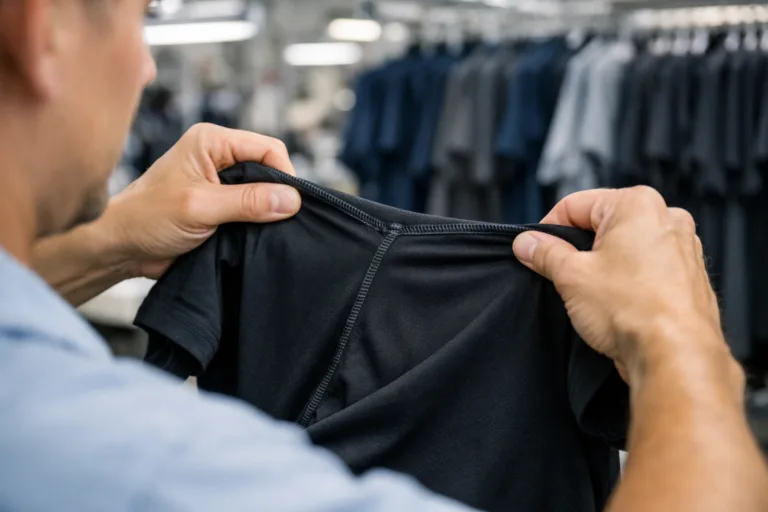
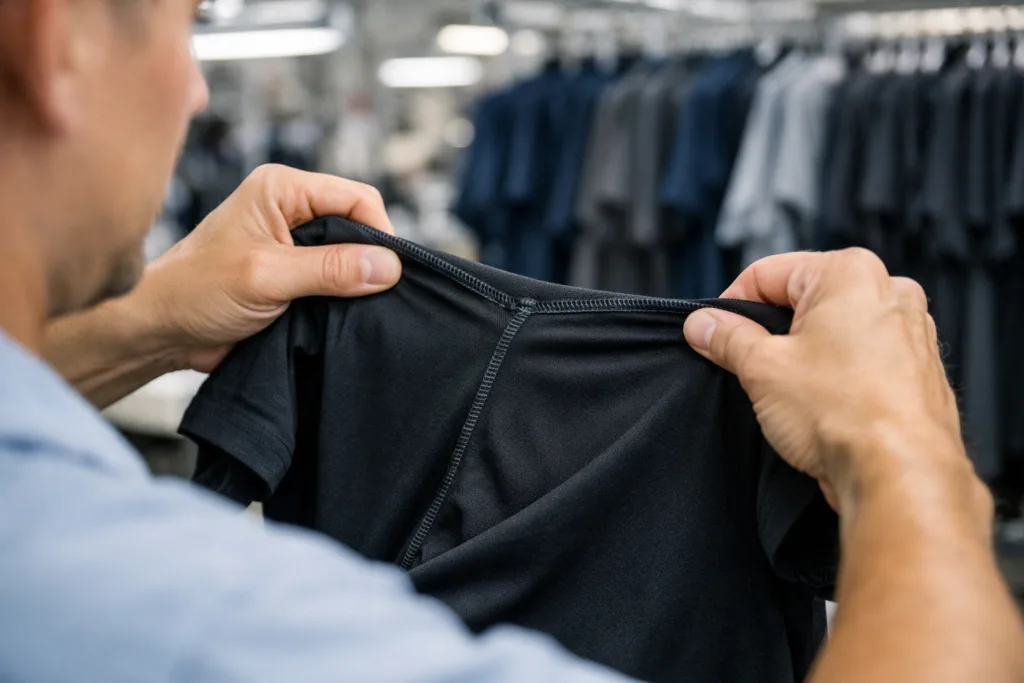
- Pull Test: Hold both sides of a seam and steadily pull to check for slippage or thread rupture.
- Twist/Stretch Test: Stretch a finished garment along high-stress seams (crotch, underarm, pocket) to check for opening or popping sound.
- Pinch Tear Test: Pinch a seam and try to initiate a tear—especially in lightweight fabrics where puckering can hide weakness.
Checklist for In-House Seam QC
- Visually inspect for skipped stitches, uneven tension, or obvious thread breaks.
- Perform basic pull/stretch tests at all major seams—record failures.
- Compare manual observations with lab test reports—flag discrepancies.
- Review wash test samples for seam puckering/shrinking.
Rain’s Tip from the Production Line
In many exporting factories, we encourage line QC to do hand-stretch tests at every operation checkpoint, especially for denim and sportswear. A simple pull can reveal missed stitches faster than any paperwork.
Typical Failure Modes in Seam Strength Testing
Understanding how seams fail helps both product developers and factory QC teams catch faults before garments reach consumers.
Main Failure Types
- Thread Breakage: The sewing thread snaps under tension; often a sign of weak thread type or low-density sewing.
- Seam Slippage: Fabric slides away from the stitch line; common in loose weave fabrics with low yarn density.
- Fabric Tear at Seam: The base fabric fails before the thread—indicates inadequate seam allowance or poor fabric strength.
- Puckering: Unattractive wrinkling along the seam—usually from shrinkage mismatch or incorrect tension.
Early Signs to Watch For
- Stitches visibly separating after the first wash.
- Threads popping when users try on samples.
- Excess puckering that indicates seam distortion at high stress points.
Prevention Measures
- Use high-quality threads with strength matching the fabric GSM.
- Specify correct SPI and seam allowances in techpacks.
- Request reinforced sewing (bartacks, twin-needle lockstitch) for key stress zones.
- Ensure skilled operator training and regular machine maintenance.
Seam Construction: Impact on Seam Strength
The type of seam, thread, and stitch formation dictate actual seam strength. The table below compares common construction options:
| Seam Type | Stitch Code | Strength Rating | Typical Garment Uses |
|---|---|---|---|
| Plain Seam | Lockstitch (301) | High | Shirts, trousers, formalwear |
| Overlock | 3/4 thread (504/514) | Medium | T-shirts, sweatshirts, casual knits |
| Flatlock | Flatlock (605) | Medium-High | Activewear, yoga, sports shorts |
| Bartack Reinforcement | Bartack (304/308) | Very High (at localized points) | Pockets, belt loops, high-stress areas |
Factors Increasing Seam QC Risk
- Low-density or single-needle seams in activewear or workwear.
- Poor thread choice for stretch or recovery (should match base fabric).
- Insufficient seam allowance (< 10 mm for woven/denim, < 8 mm for knits).
Fabric, Thread, and Machine Variables Affecting Seam Strength
Seam strength is not only about the sewing operation—it’s a result of fabric properties, thread selection, and machine settings.
Key Variables
- Fabric GSM & Construction: Heavier, denser fabrics (denim, canvas) need heavier threads and wider seam allowances; lightweight knits require fine thread and overlock for elasticity.
- Thread Type: Polyester core is standard for high tensile strength. Cotton blends suit casualwear but risk breakage in high stress areas.
- Stitch Density (SPI): Higher SPI (10–14 for shirts/trousers) increases seam strength but may cause rigidity in knits.
- Machine Needle Size & Condition: Correct needle (e.g., size 14–18 for denim) prevents skipped stitches and thread breaks.
- Sewing Machine Calibration: Balanced tension ensures even, secure seams with consistent appearance and strength.
Common Problems & Solutions
- Skipped stitches: Change needle or rethread machine.
- Excess puckering: Adjust tension or change thread/fabric combination.
- Frequent thread breaks: Check thread path, replace worn needles, and switch to higher strength thread type.
How to Specify and Interpret Seam Strength in Techpacks & QC Reports
Effective communication of seam strength expectations translates to fewer disputes and actionable QC outcomes.
Specifying Seam Strength Requirements
- Include ASTM test numbers and minimum required values (e.g., “ASTM D1683 ≥ 70N”).
- Define seam locations to be tested (e.g., side seams, crotch, underarms, pocket attachment).
- Request reporting for both pre-wash and post-wash conditions to account for finishing.
How to Read a Seam Strength QC Report
- Check sample sizes and locations match your requirements.
- Look for both maximum force and failure mode (thread break, fabric tear, slippage).
- Compare lab values to techpack minimums—flag areas underperforming.
- Review pictures of the failed sample for clear understanding.
- Follow up on any inconsistencies with factory and discuss corrective actions.
Seam Strength Testing in Apparel: Best Practices for Different Garment Categories
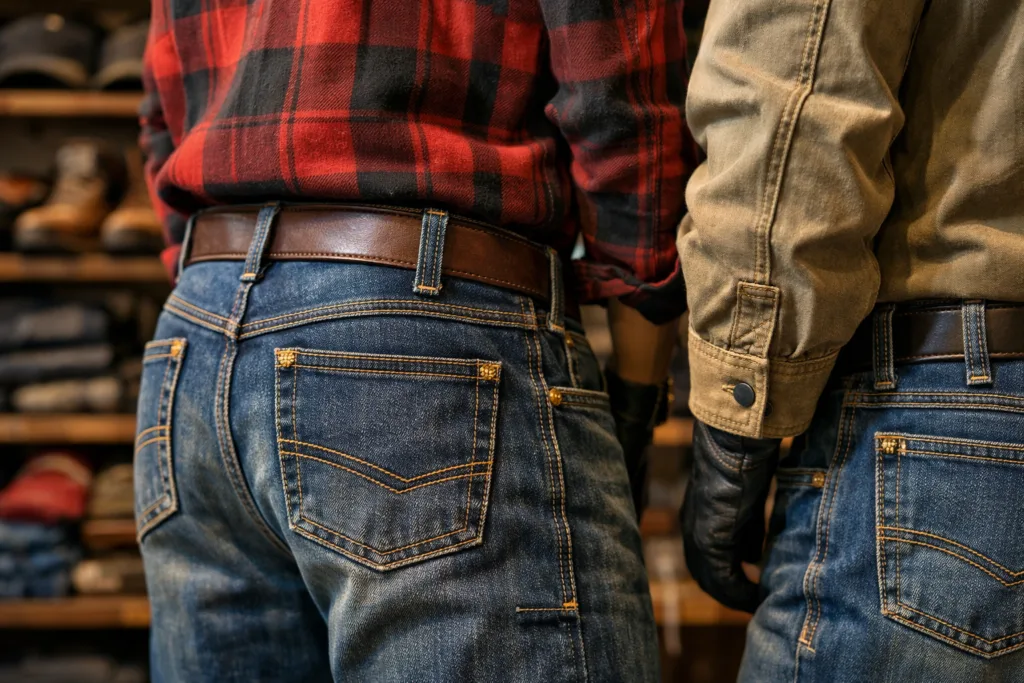
The application of seam strength testing differs widely by garment type. Practical best practices are outlined below for popular categories.
T-Shirts & Casual Knits
- Test underarm/sleeve seams and side seams with burst/extension methods.
- Use 4-thread overlock construction; specify minimum burst force ≥ 80N.
- Evaluate post-wash puckering and stretch recovery.
Denim/Workwear
- Test seat/crotch, pocket attachments, and belt loop seams with strip tensile.
- Use lockstitch with bartacks and heavy polycore thread; aim for ≥ 120N tensile at critical points.
- Insist on doubled seam allowances and frequent reinforcement.
Sportswear & Technical Apparel
- Focus on seam burst/bursting strength for area subject to dynamic stress.
- Use flatlock or coverstitched seams for stretchability—test after wash and wear simulation.
- Insist on thread/fabric compatibility for stretch and recovery.
Children’s Wear
- Test neckline, armhole, and crotch seams for tear/slippage using adapted ASTM protocols.
- Aim for conservative values with extra safety margin—document key stress zones.
Uniforms & Corporate Wear
- Test major seams for tensile and slippage, especially in trousers, blazers, and skirts.
- Specify high thread strength and regular post-wash durability checks.
Frequently Asked Questions
What is a seam strength test in apparel manufacturing?
A seam strength test in apparel manufacturing checks how much force a stitched seam can withstand before failing, helping ensure durable and reliable garments.
Which ASTM standards are most used for garment seam QC?
ASTM D1683 for seam slippage and ASTM D3787 for bursting strength are widely used standards to assess seam strength in garment quality control.
How can I manually test seam strength in a factory?
Manual seam strength testing involves methods like pull tests, stretch/twist tests, and pinch tear tests to quickly identify weak seams in garments during production.
What are typical failure modes detected in seam strength tests?
Common seam failure modes include thread breakage, seam slippage, fabric tear at seam, and puckering, each indicating different sewing or material faults.
Why do seams fail more often in knitwear than woven garments?
Seams in knitwear often fail due to the fabric’s stretchiness and lower density, requiring special threads and stitch types to maintain seam strength under tension.
How should seam strength requirements be specified in techpacks?
Seam strength requirements in techpacks should reference ASTM test methods, define seam locations to test, and state minimum force values for each garment area.