Introduction to Seam Types Used in High-Quality Garments
In the world of premium garment manufacturing, the choice of seam type profoundly impacts durability, appearance, and wearer comfort. Seam types like flat seams and French seams are favored in factories aiming for exceptional quality. Understanding seam structures, strength, and visual effect is essential when selecting methods for refined apparel production. This guide shares practical insights into crucial seam types, their construction processes, and expert guidance on choosing the right seam for each application.
Understanding Seam Types: Definitions and Fundamentals
Seams are the joints formed when two or more pieces of fabric are stitched together. In garment manufacturing, the seam type chosen affects everything from the longevity of a shirt or dress to the comfort and look of sportswear. Major seam types found in quality garments include flat seams, French seams, overlock seams, bound seams, lapped seams, mock flat-felled seams, and more.
What Sets Seam Types Apart?
- Construction technique: Each seam type employs distinct stitching codes and machine setups.
- Strength and durability: Some seams resist stress and repeated laundry better than others.
- Appearance: Seam visibility, bulk, and neatness affect the overall look.
- Application: Garment category, fit, and end-user needs dictate which seam to use.
Common Stitch Codes Used in Seam Construction
- Lockstitch (ISO 301)
- Chainstitch (401)
- Overlock (504/514)
- Coverstitch (602)
- Bartack for reinforcement
Flat Seam: Structure, Benefits, and Use Cases
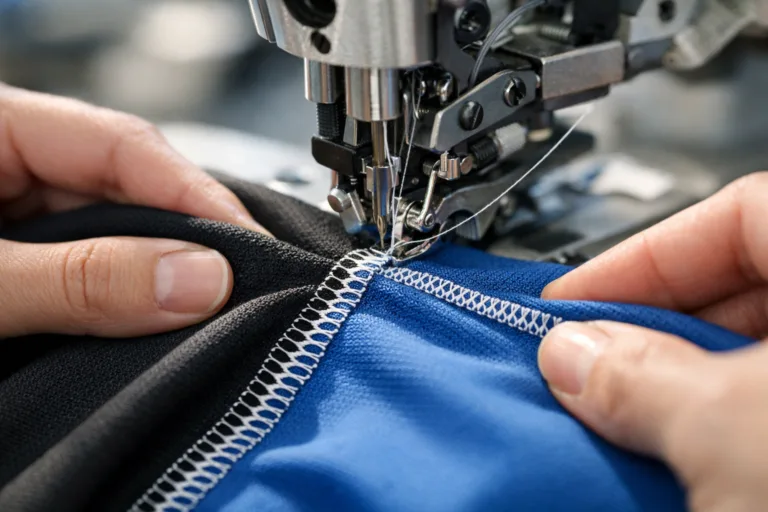
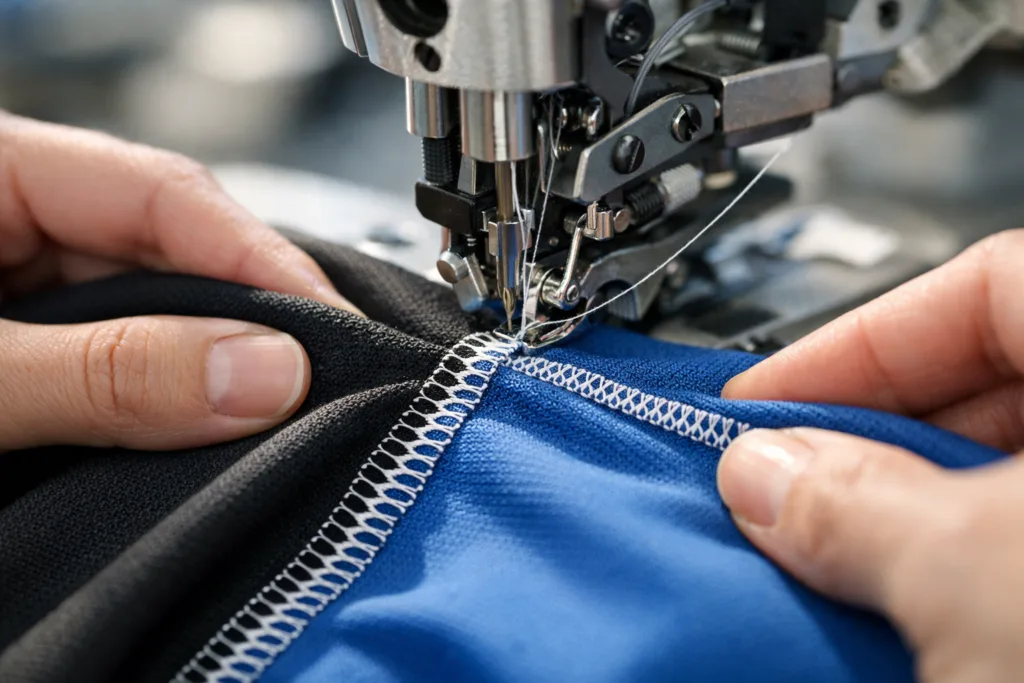
The flat seam is a specialized seam structure prized for its comfort and streamlined look, making it indispensable in technical sportswear and underwear manufacturing. It is created using flatlock machines that join fabric edges with minimal overlap, producing a nearly flush surface.
Flat Seam Construction
- Fabric edges are aligned or slightly overlapped.
- A flatlock machine simultaneously stitches and trims the edges, interlocking both sides.
- The result is a low-profile seam with thread exposed on both sides, often appearing decorative.
Key Benefits of Flat Seam
- Chafe-free comfort — no seam bulk against the skin, ideal for close-fit garments.
- Stretch and recovery — moves with body motion in performance wear.
- Modern, technical look — visible threads can add style contrast.
Typical Fabrics & Garments
- Knit fabrics: single jersey (cotton, polyester, nylon blends), interlock, rib
- Sports T-shirts, leggings, compression wear, swimwear, underwear
Rain’s Tip from the Production Line
“In export performance wear, SPI (stitches per inch) for flat seam is usually 10–14, and thread elasticity is critical to prevent seam popping. Always do a stretch test on finished pieces before bulk approval.”
French Seam: Structure, Appearance, and Advantages
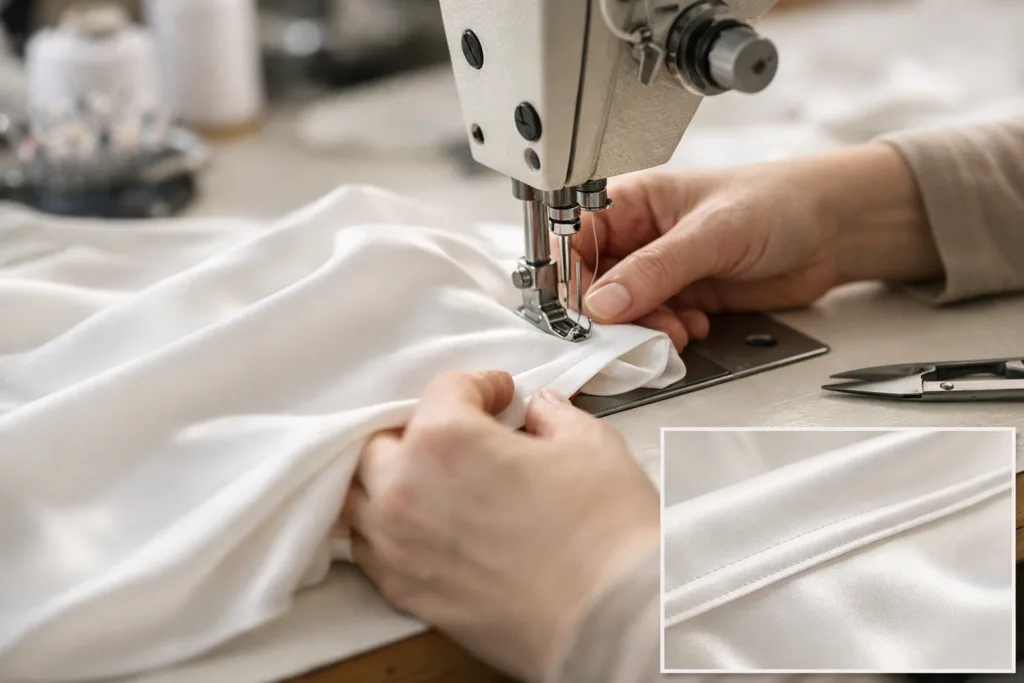
French seams offer an elegant, enclosed finish highly valued in luxury shirts, blouses, and delicate dresses. This technique involves sewing the seam twice to encase the raw edges, resulting in a neat look inside and out, with no visible threads.
French Seam Construction Steps
- Sew fabric wrong sides together with a narrow seam allowance.
- Trim the seam allowance for neatness.
- Fold the fabric right sides together, then stitch again to enclose raw edges completely.
Advantages of French Seam
- Immaculate finish — all raw edges hidden, ideal for sheer or lightweight fabrics.
- Enhanced durability — double seam increases seam strength for fine materials.
- Refined appearance — perfect for high-end women’s wear, bridal, and luxury menswear.
Common Application Areas
- Very light woven fabrics: voile, chiffon, organza, silk, lightweight cotton
- Dress shirts, blouses, lingerie, baby apparel
Rain’s Quality Assurance Note
“In fine shirt factories, a true French seam allowance is rarely more than 6–8 mm folded, ensuring minimal bulk for crisp tailoring.”
Comparing Major Seam Types: Durability, Appearance, Application
Different seam types offer trade-offs in strength, look, and ease of production. The table below gives an overview of common seams in high-quality garment manufacturing.
| Seam Type | Stitch Code | Strength | Ease of Production | Typical Use | Appearance |
|---|---|---|---|---|---|
| Flat Seam | Flatlock, 605 | Moderate (depends on stretch) | Requires specialized machines | Activewear, underwear | Low profile, visible thread |
| French Seam | Lockstitch | High (on fine fabrics) | Two-step process, slow | Dress shirts, blouses | Invisible, enclosed edges |
| Overlock Seam | 504/514 | High (on medium/heavy knits) | Fast, industrial | T-shirts, sweatshirts | Visible, thread on edge |
| Mock Flat-Felled | Lockstitch & Overlock | High | Medium, needs more handling | Denim jeans | Double topstitch, decorative |
| Bound Seam | Lockstitch/Chainstitch | High (on edges) | Requires bias binding | Jackets, outerwear, unlined | Binding visible |
Factors Influencing Seam Choice in Premium Garment Construction
Selecting the right seam for any garment involves balancing fabric type, garment design, usage scenario, and production capabilities. Here’s what skilled patternmakers, technical designers, and production managers weigh in real factories:
Fabric Properties
- Weight: Lighter fabrics (under 120 GSM) favor enclosed seams for strength without bulk; heavier knits can use overlapped seams.
- Stretch/recovery: Elastane blends need stretch-friendly seams like flatlock or stretch overlock.
- Transparency: Sheer and fine weaves call for neat enclosed seams such as French or bound seams.
Garment Function and Wear
- Movement and fit: Activewear needs seams that flex and recover—flat seam or active overlock are key.
- Appearance: Outerwear and fashion pieces may use decorative seam finishes to add branding value.
- Durability: Workwear and uniforms need maximum seam strength—often felled or reinforced overlock seams.
Construction Efficiency vs. Quality
- French seams take time but yield impeccable results; overlock seams are fast and cost-effective.
- Some seam types require specialized machinery (flatlock, binder), influencing setup cost and production lead times.
How to Specify Seam Types on Tech Packs and Samples
Clear communication with factories is essential. Here’s a checklist for specifying seam types on technical documentation:
- Use industry stitch codes (e.g., flatlock 605, lockstitch 301) for precision.
- Define seam locations (e.g., side seam, armhole, neck edge).
- Include seam allowance widths and folding instructions.
- Indicate seam finishes (topstitching, binding, concealed, etc.).
- Request sample swatches for critical seams before bulk.
For critical seams, always require an inline inspection and a bulk stretch and wash test to confirm performance meets requirements.
Visual Impact of Seam Choices: Branding, Decoration, and Garment Feel
Seams are more than structural elements—they create brand signatures and affect how clothing feels and performs. Seam finish and thread choice (cotton, polyester, nylon, aramid) modify both durability and visual detail. For example, contrast flat seams signal a sporty technical garment, while invisible French seams suggest luxury and refinement.
Key Appearance Considerations
- Visible thread color and thickness for branding
- Topstitch lines as design features on denim, jackets, outerwear
- Bulk or lack thereof impacting drape and comfort
Decoration and Seam Interaction
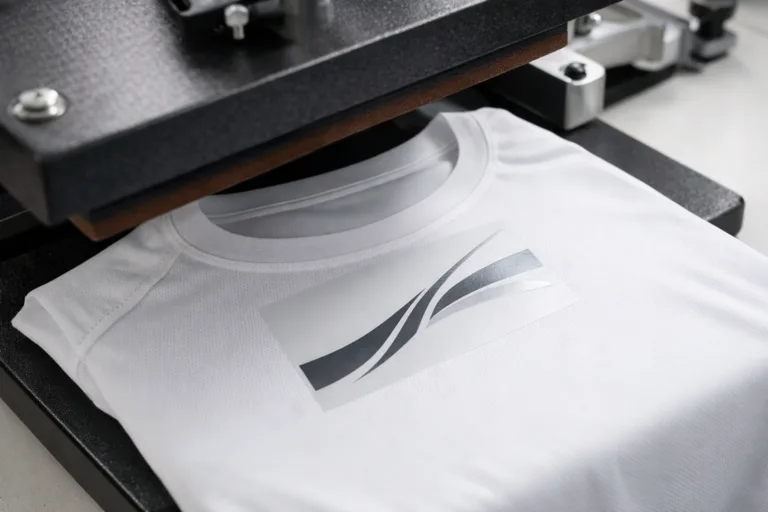
Seam choices influence placement and anchoring of embroidery, patches, screen prints, and heat transfers. For instance, seams must be flat and free of stretch-induced distortion in logo zones to avoid puckering and bleeding. Always coordinate with the factory’s sampling team when planning seam and branding placements.
Quality Control: Testing, Seam Slippage, and Common Fail Points
Quality assurance in premium garment manufacturing relies on strict seam testing. Here’s how manufacturers and buyers monitor seam integrity:
Testing Methods
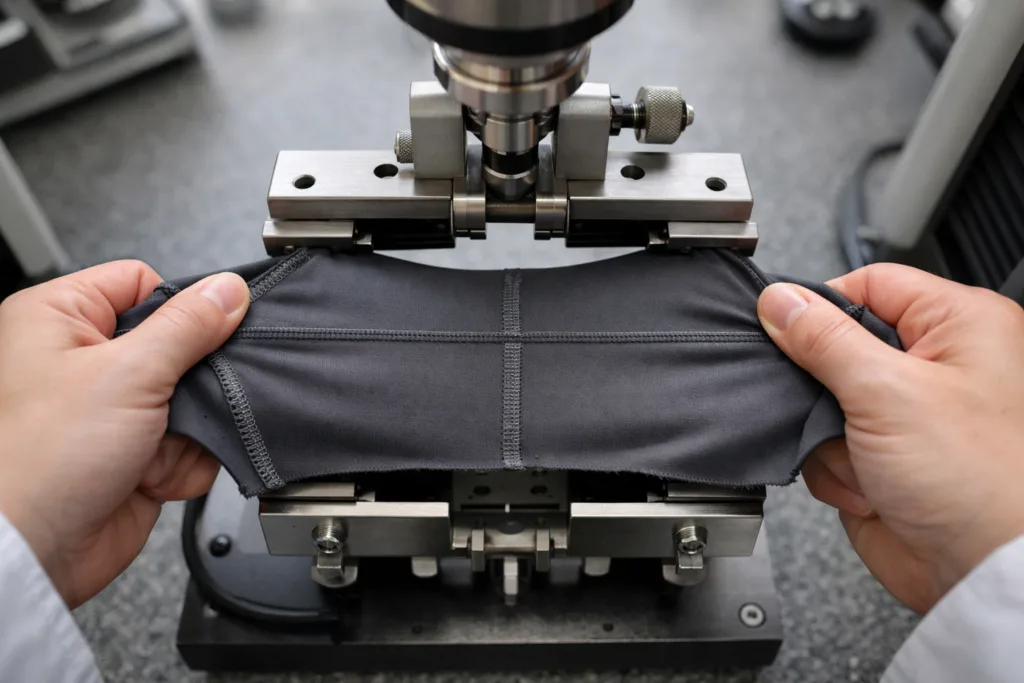
- Seam slippage test: Ensures fabric doesn’t separate under tension.
- Bursting strength (for knits): Check that flat seams and overlocks withstand stretching.
- Dimensional stability: Wash and dry finished garments, measure seam recovery and twisting.
- Pilling and abrasion resistance: Confirm thread and seam area maintain integrity after repeated use.
Practical Quality Checks
- Inspect seam lines for skipped stitches and holes.
- Check all seams for consistent SPI and even thread tension.
- Verify no raw edge exposure on enclosed seams.
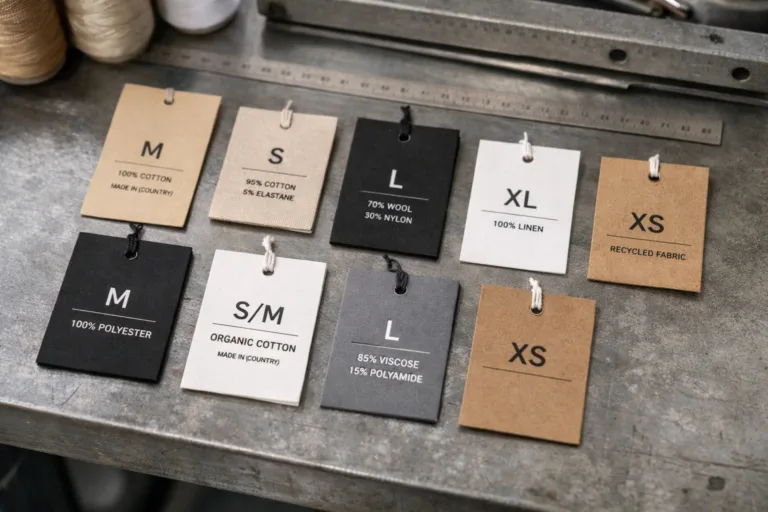
- Review labeled articles for seam type compliance.
- Use wearer trials for comfort and durability assessment where possible.
In Apparel Wiki’s experience, factories with strong seam-specific training always outperform in return rates and end-user satisfaction.
Seam Types Used in High-Quality Garments
When building a high-quality garment, understanding and specifying the correct seam type is as important as choosing fabric or fit. Seam types such as flat seams and French seams each play a distinct role, offering targeted durability, comfort, and aesthetics.
Why Are Seam Types Central to Garment Excellence?
- Structure: The seam type dictates overall garment strength and resistance to wear.
- Durability: Properly executed seams prevent splitting, unraveling, and distortion after multiple washes.
- Appearance: Seam choice impacts visual lines, bulk, and luxury feel.
- Selection guidance: Always link seam types to fabric properties, garment style, and wearer expectations.
Common Mistakes in Seam Specification
- Mismatching seam with fabric stretch/recovery, leading to seam failures.
- Neglecting seam width and SPI, causing weak construction or excess bulk.
- Failing to consider wash and use scenarios, resulting in early wear-out.
- Relying on visual inspection only; always require real-world tests.
Practical Tips
- Request detailed seam samples with spec sheets before bulk production.
- Verify all seam types and locations at pre-production and TOP inspection stages.
- Discuss with your factory about machine availability, especially for specialty seams like flatlock or binder attachment.
- Consider seam type as part of the total garment value proposition, not merely as construction detail.
Frequently Asked Questions
What is the difference between a flat seam and a French seam?
A flat seam is low-profile, often used in activewear for comfort, while a French seam encloses raw edges for a neat finish, ideal on fine wovens.
Which seam type offers the highest durability?
Flat-felled seams and reinforced overlocks provide the highest durability, suitable for heavy-duty workwear and denim.
When should I use a French seam in garment construction?
French seams are best for sheer, lightweight fabrics where both neatness and enclosed edges are required, such as dress shirts and blouses.
How do seam types affect garment appearance?
Seam choice influences garment lines, bulk, and inside-out finish; flat seams create technical looks, French seams offer luxury refinement.
Can flat seams be used on woven fabrics?
Flat seams are not recommended for wovens due to limited stretch; they perform best on knit fabrics or stretch blends.
What should I check during garment seam quality control?
Inspect for skipped stitches, consistent SPI, seam slippage, seam type accuracy, and overall finish after washing and wearing.