Introduction: Why Size Tabs and Country of Origin Labels Placement Matters
When it comes to apparel manufacturing, placing size tabs and country of origin labels correctly on garments isn’t just a matter of compliance—it’s a crucial step in building consumer trust and streamlining product usability. These labels hold valuable information for both customers and brands, affecting everything from the shopping experience to brand reputation. As regulations and consumer preferences evolve, understanding the best practices and legal requirements for size labels and country of origin labels becomes essential for every manufacturer and brand owner.
The Function and Significance of Size Tabs

Size tabs give shoppers instant access to garment sizing, help retailers organize inventory, and ensure quick identification when sorting or shelving products. Visibility and intuitive placement are critical—size tabs must be easy to locate, typically sewn inside the neck or waistband area for maximum convenience.
Key Principles Behind Country of Origin Labels Placement
Country of origin labels inform consumers about where their garments are manufactured, supporting transparency and sometimes influencing purchasing decisions. Correct placement ensures compliance with import/export laws and provides clarity for both buyers and sellers.
Visibility: Enhancing Consumer Experience with Label Placement
Labels should be placed where consumers naturally look. For tops, the neckline is standard; for pants, the waistband. Strategic placement reduces confusion and returns, boosting satisfaction and minimizing store handling times.
Accessibility: Impact on In-Store Retail and E-Commerce
Accessible labels mean less time searching for information in-store and fewer errors when buying online. Clear labeling helps retailers and consumers alike, supporting more efficient inventory management and easier product returns.
Branding and Trust: The Role of Clear Labels
Brands strengthen their image by providing clear, accurate size tabs and country of origin labels. Misplaced or unclear labels can erode confidence and trust, whereas consistency signals professionalism and transparency.
Compliance: Navigating Labeling Regulations by Country
Labeling laws differ between countries like the US, UK, and EU. Manufacturers must ensure their labels meet all legal requirements, including location, content, and language. For a comprehensive overview, check the Essential Guide to Care Label Laws on Apparel Wiki.
Comparison Table: Typical Label Placement by Apparel Type
| Garment Type | Size Tab Location | Country of Origin Label Location |
|---|---|---|
| T-Shirts | Back neck seam | Back neck or adjacent side seam |
| Pants/Jeans | Inside waistband | Inside waistband or care label area |
| Outerwear | Back neck seam | Care label or lower inner seam |
| Children’s Wear | Back neck seam | Back neck or care label area |
Pitfalls: Mistakes in Size Tabs and Country of Origin Labels Placement
Common errors include placing labels in hard-to-find spots, using unreadable fonts, or skipping labels altogether. Apparel Wiki highlights several issues that can affect consumer satisfaction and compliance.
Consumer Trust and Brand Perception
Consistently placed, easy-to-read labels improve trust and create a positive brand impression. Incorrect placement or missing information can quickly diminish perceived value and result in negative reviews.
Label Types: Woven, Printed, and Heat Transfer Options
Brands may choose from woven, printed, or heat transfer labels for size tabs and origin information. Each has benefits: woven labels are durable, printed labels offer flexibility, and heat transfer labels are soft and itch-free. Discover more in Woven vs. Printed Labels and Heat Transfer Labels on Apparel Wiki.
Best Practices: Consistency and Standardization
Brands should standardize label placement across all product lines. This practice makes products easier to shop and sort, reduces customer confusion, and helps maintain compliance.
How Manufacturers Decide Label Placement
Manufacturers factor in regulations, consumer preferences, and branding strategy. Their choices ultimately set the tone for product usability and brand reputation.
Design Considerations: Making Labels Readable and Durable
Labels should use clear fonts, proper sizing, durable materials, and strong stitching. Placement should avoid stress zones or skin contact to prevent discomfort.
Label Placement in Different Apparel Categories
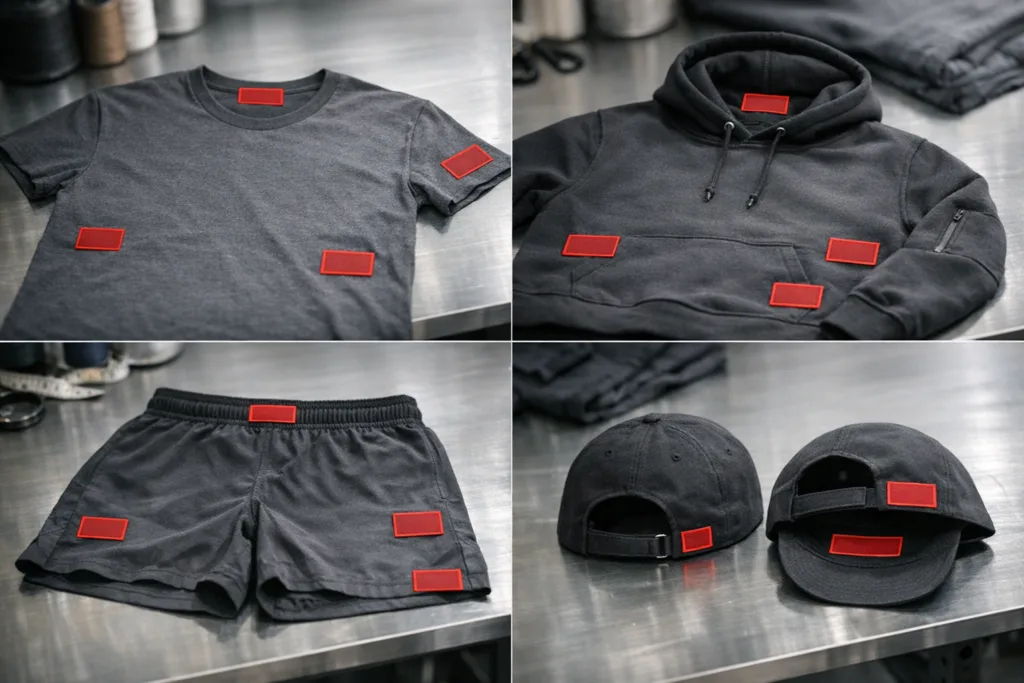
Label placement varies by product—sportswear often has size tabs in the waistband; outerwear features them at the neck; children’s wear must be highly visible.
Understanding Label Fold Types
Label folds (e.g., loop, flat, or center-fold) affect placement and ease of reading. Designers must choose the right fold based on garment type and branding needs. For deeper insights, see 3 Smart Label Fold Choices.
Packing and Production Implications
Well-placed labels make packing, QA, and distribution smoother. Misplaced labels can disrupt these processes, leading to delays and added costs for manufacturers.
Cost Implications of Label Placement
Choosing durable label materials and strategic placement can save brands money over time by reducing returns and customer complaints.
Label Placement for Garments Exported to Multiple Countries
Global exports demand careful label placement to meet each market’s regulations and consumer expectations.
Sample and Bulk Production: Ensuring Consistency
Manufacturers must ensure consistent label placement across samples and mass-produced items to avoid mistakes and quality issues.
Technology and Trends in Label Placement
New technology, such as automated sewing and digital labeling, is changing how labels are placed to maximize consistency and efficiency.
Label Placement in Sustainable and Ethical Manufacturing
Sustainable brands often use eco-friendly label materials and prioritize transparent and ethical country of origin information.
Label Placement in Small vs. Large Brands
Small brands may need flexible label placement strategies, while large brands standardize for speed and scale.
Size Tabs and Country of Origin Labels Placement: Full Guide
This section synthesizes all previous insights, helping manufacturers, brands, and consumers make informed decisions.
Practical Steps for Improving Label Placement
- Audit current label locations and usability
- Consult legal requirements for target regions
- Choose readable, durable materials
- Standardize placement across all products
- Test with real users for feedback
Industry Insights from Apparel Wiki
Apparel Wiki advises manufacturers to document label placement in tech packs and maintain version control to avoid costly mistakes and compliance issues. Systematic planning supports efficient sampling, production, and QC.
Conclusion: Getting Label Placement Right Is Crucial

Clear, accessible, and compliant size tabs and country of origin labels build consumer trust, support branding, and keep manufacturers on the right side of regulations. Careful planning, testing, and consistent standards are the best ways to ensure labels add value rather than confusion.
Frequently Asked Questions
Where should size tabs be placed for maximum visibility?
Size tabs are most visible when sewn into the back neckline of tops or inside the waistband for bottoms. This intuitive placement supports easy identification for consumers and in retail settings.
How are country of origin labels regulated?
Regulations vary by country, requiring labels to be clearly visible and accurately indicate where the product was made. Manufacturers should consult local guidelines to ensure compliance.
Can size and country of origin labels be combined?
Yes, combining size and country of origin labels is possible and sometimes efficient. However, each piece of information must still be clear and accessible, meeting legal requirements.
What material should be used for labels?
Common materials are woven, printed, or heat transfer. The choice depends on comfort, durability, and brand preference. Heat transfer is popular for itch-free, modern solutions.
How do labels affect brand perception?
Consistent, clear, and accurate labels boost brand credibility by demonstrating professionalism and attention to detail. Poor labeling can damage trust and lead to negative consumer response.
Do labeling laws differ for export markets?
Yes—each export market has specific rules for label content and placement, including language, visibility, and information type. Brands must tailor labels to meet regional compliance needs.