Introduction: Why Packaging Materials and BOM Specification Matter
Every product’s success isn’t just about what’s on the inside. Choosing the right packaging materials—and specifying them accurately in your Bill of Materials (BOM)—is vital to ensuring your items reach customers intact, safely, and cost-effectively. Today, brands face rising compliance requirements, shipping expectations, and sustainability goals. Missteps here can lead to damaged goods, unhappy customers, higher costs, or even lost market access. That’s why mastering Packaging Materials, BOM Specification is a smart, strategic move for every manufacturer.
What Is a BOM and Why Does Packaging Belong?
A Bill of Materials (BOM) isn’t just a materials list—it’s the central blueprint that keeps production, costing, and quality control in sync. That’s why packaging—whether it’s a shoebox, polybag, hang tag, or cardboard master carton—must be clearly identified in your BOM. Failing to specify packaging materials or leaving them vague often results in surprises, missed regulatory requirements, and added costs down the line. For a deep dive on aligning your BOM and costing for profit, see BOM Alignment Supercharges Metal Product Profitability.
Main Types of Packaging Materials Commonly Used in BOMs
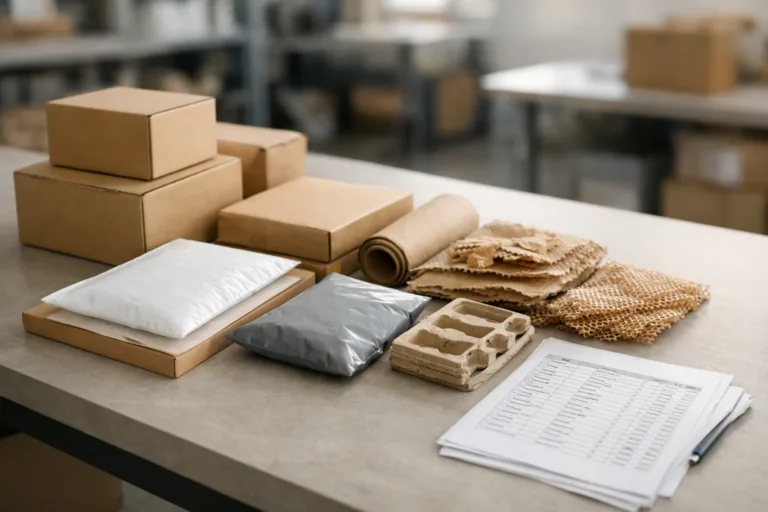
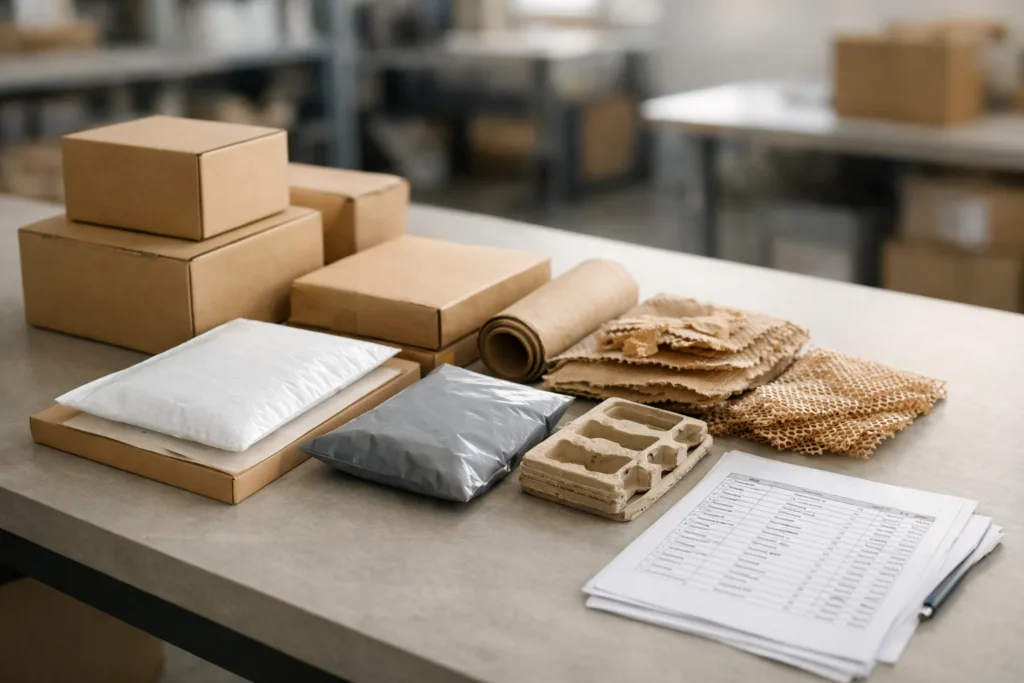
The main packaging material categories manufacturers work with include:
- Plastics (poly bags, shrink wrap, bubble wrap)
- Papers and Cardboards (corrugated cartons, hang tags, tissue)
- Textiles (dust bags, reusable pouches)
- Biodegradable/Compostable Options (PLA bags, recycled-grade cardboard)
- Metal or Hybrid Solutions (rarely used except for gifting or display)
Each has its pros, cons, and compliance implications. Selecting the right type depends on your product’s fragility, transit risks, branding needs, and market laws.
Key Considerations When Selecting Packaging Materials for Your BOM
When deciding which packaging materials to specify, consider:
- Protection Level: Will it keep the product safe from dust, moisture, impact, or crushing?
- Regulatory Requirements: RoHS, REACH, FDA, or country-specific rules on recyclability or chemicals.
- Shipping Weight/Volume: Lighter/slimmer helps reduce costs—but not at the expense of protection.
- Branding & Unboxing: Printed matte boxes or clever inserts may matter for brand experience.
- Sustainability: Is the material recycled, recyclable, or compostable?
- Cost: Price per unit and downstream impact on shipping and storage.
In many cases, striking the right balance between cost, protection, and sustainability is the challenge.
Common Packaging Materials and Their BOM Impact
| Material | Strengths | Weaknesses | Sustainability |
|---|---|---|---|
| Polyethylene Bag | Cheap, lightweight, waterproof | Low-end look, not eco-friendly | Often not recyclable curbside |
| Kraft Carton | Strong, printable, recyclable | Heavier, more expensive per unit | Recyclable, sometimes recycled content |
| PLA (Compostable Plastic) | Eco-friendly, similar use to polybag | Somewhat softer, higher cost | Commercially compostable |
| Bubble Wrap | Maximum impact protection | Bulky, plastic waste | Hard to recycle |
Why Material Specification Accuracy Matters
Imagine switching from a virgin PE polybag to an untested eco-plastic without updating your BOM. The packaging fails in humid warehouses, with items arriving damaged to customers. Small errors in specification spiral into huge returns, reputational damage, and unexpected costs. That’s why strict, accurate packaging material documentation is so important.
The Link Between Packaging in Your BOM and Product Protection
A well-defined BOM directly influences product safety. For instance, listing “380gsm B-flute corrugated carton, edge-crushed strength ≥32ECT” ensures production and procurement teams source exactly the right protection level—no more, no less.
Durability and Transit Testing in Packaging Material Specification
To avoid nasty surprises, specify test standards in the BOM: “Polybag to withstand 1m drop test with sample product inside, no rupture.” This practice drastically reduces breakage.
Costing and Optimization: Getting Packaging Right in the BOM
Packing more pieces per carton or opting for lighter materials can dramatically reduce your landed cost. BOM software tools help you model these savings—see 7 Must-Have BOM Software Tools.
Sustainability Trends Shaping Packaging BOMs
Today’s buyers demand less plastic and lower carbon footprints. States, countries, and retailers impose new rules for recyclability and transparency. Consider including certifications (like FSC for paper, or “post-consumer recycled content ≥50%”) right in the BOM notes to keep compliance and sustainability front and center.
Compliance Requirements for Packaging Material BOMs
Increasingly, global markets require declarations for packaging compliance—such as Europe’s Extended Producer Responsibility (EPR) or California’s Proposition 65. Specifying compliant materials in your BOM is now essential to avoid fines and supply chain delays.
Paper, Plastic, or Eco-Friendly? How to Decide for Your BOM
Ask yourself:
- Will the material meet the product’s risk profile?
- Does it meet client and market expectations for sustainability?
- Can your supplier reliably source it at quality and scale?
For practical tips, Apparel Wiki recommends breaking down material choices by region and end-customer demand before entering them in your BOM.
Examples: What Goes Wrong When Packaging Materials Are Poorly Specified?
- A firm selects a generic “paper box” and receives weak, unbranded cartons that collapse during shipping.
- An electronics brand skips anti-static bags in the BOM—resulting in factory packing errors and mass returns.
- A children’s apparel brand doesn’t specify “BPA-free polybag.” Customers discover an odor; sales plummet and recalls loom.
Costly mistakes like these highlight why detail and clarity are non-negotiable in your BOM.
How Packaging Material Choices Affect Supply Chain Efficiency
Correct packaging materials streamline packing lines, reduce space in warehouses, and minimize damages/returns. Poorly chosen materials mean more manual labor or even regulatory rework. This is especially critical in apparel and metal goods production, where supply chain timing is tight. To see how BOM version control prevents errors from creeping in, review Managing BOM Revisions and Version Control.
Best Practices for Listing Packaging Materials in Your BOM
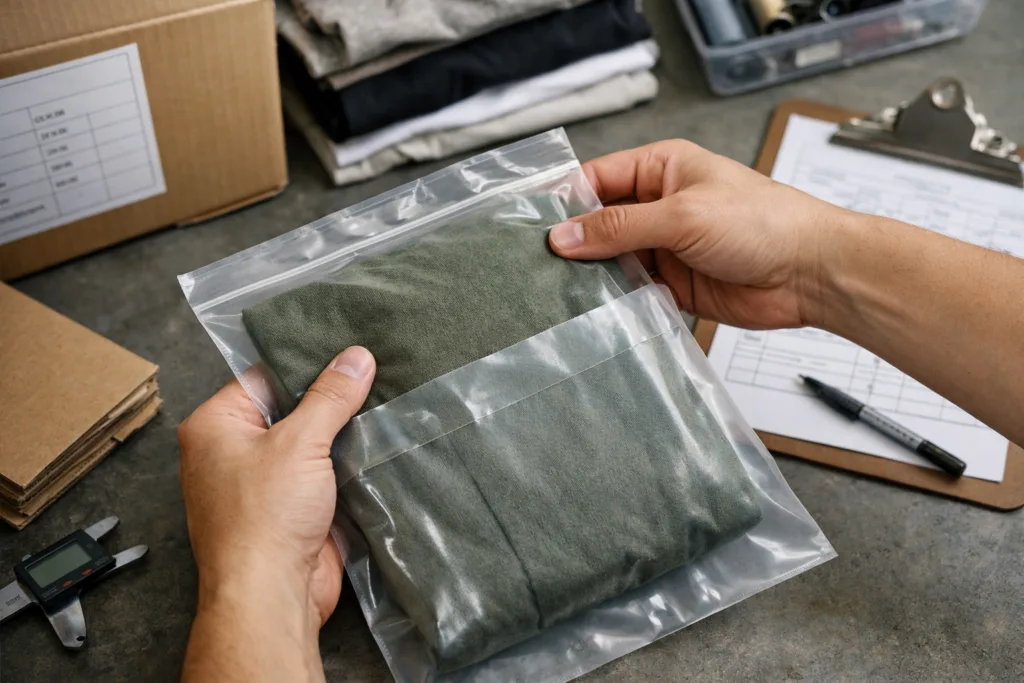
- Use specific terms and standards—not just “carton” or “bag” but “400gsm double-wall corrugated carton” or “LDPE polybag, 51μm, 25 x 40 cm”
- List product codes, technical datasheets, or supplier references when relevant
- Include compliance notes (e.g., RoHS, FSC, recycled content)
- Don’t forget secondary/tertiary packaging when required
- Align with your product’s Bill of Materials process strategy
Pitfalls and Common Errors When Specifying Packaging Materials
Error patterns include ambiguous descriptions (“box,” “bag”), failing to update after supplier changes, or disregarding transit testing altogether. Another overlooked issue: mixing imperial and metric units, leading to misfit packaging.
Integrating Packaging Changes and Version Control into Your BOM
Anytime you change packaging material, update your BOM and change log—especially for cost, compliance, or customer experience shifts. This ensures every team is working from the latest, error-free data.
Packaging Material Specifications: Templates and Sample BOM Entries
| Description | Spec Example |
|---|---|
| Primary Polybag | LDPE, 55μm, 250x350mm, transparent, slip-in closure, recycled content ≥30%, RoHS certified |
| Master Carton | Double-wall corrugated, 400gsm, printed logo 2C, FSC certified, 32ECT |
| Swing Tag | Recycled paper, 250gsm, 50x80mm, soy ink, string: organic cotton |
Cost Optimization: How Better Packaging Specification Reduces Total Landed Cost
Specifying the optimal material—not just the cheapest—reduces damage rates, returns, and logistical hassle. Lightweight, efficient packaging is a proven lever for cost-saving (and higher sustainability scores).
Supplier Communication Tips: Ensuring Correct Packaging Every Time
Share visual mockups, technical datasheets, and clear tolerance guidelines with your vendors. Keep these aligned with your BOM to reduce misunderstandings. Use Apparel Manufacturing Tools to streamline the process and automate updates.
Innovative and Sustainable Packaging Trends to Watch
Recent advances include mushroom-based packaging (biodegradable and cushioning), water-based inks, invisible RFID for tracking, and widespread adoption of post-consumer recycled PE. Even so, always test for durability before switching in your BOM.
Documenting Eco-Claims and Certifications in Your Packaging BOM
If labeling packaging as “compostable” or “recycled,” always document supporting certificates, content %, or standards in your BOM. Double-check with your compliance or QA teams before production rolls out.
Aligning Packaging Material Choices with Your Brand
Use packaging material selection as an opportunity to reinforce your brand’s values—such as specifying only recycled cardboard for eco-focused apparel or premium rigid boxes for gifting lines.
Training Teams and Avoiding Human Error in Packaging BOMs
Regular team training on BOM accuracy, regulatory updates, and the cost of errors will pay for itself many times over. Encourage checklists, peer reviews, and routine audits.
Packing for International Shipping: Key Considerations for Your BOM
Packaging destined for air freight, sea shipments, or specific regions (like EU, Japan, USA) may require anti-mold inserts, pest certifications, or unique transit-testing standards. Always annotate these in your BOM.
How to Audit and Update Packaging Materials in Existing BOMs
Schedule seasonal or quarterly reviews of packaging materials in your BOM. Look for new regulations, supplier shifts, or ways to reduce waste or cost. Document all changes and updates clearly.
Packing It All Together: Future Outlook
The drive for cost-efficient, regulatory-compliant, and eco-friendly packaging keeps evolving. Brands that specify packaging materials thoroughly in their BOM set themselves up for supply chain wins and fewer costly mistakes. For even more strategies on calculating your consumption of other materials, see the Ultimate Guide to Fabric Consumption (Yield) Calculation.
Specifying Packaging Materials in Your BOM

Creating a comprehensive, detailed BOM for packaging materials is an absolute must for today’s competitive and regulated marketplace. Specify each aspect—protection, cost, sustainability, and compliance—with precision. Remember, in apparel and beyond, a well-crafted BOM is your single source of truth for quality and efficiency.
Frequently Asked Questions
What information should I include when specifying packaging materials in my BOM?
List exact material, thickness, size, finish, compliance standards, and any brand or regulatory requirements. The more detail, the more reliable the result.
How can poor packaging material choices impact my product quality?
Poor packaging leads to damage in transit, higher returns, unhappy customers, and loss of brand reputation—often with costly recalls or logistics headaches.
Which packaging materials are most sustainable for my BOM?
Look at recycled paper, compostable plastics, and materials certified by standards like FSC. Region and product-specific rules may also dictate your choices.
How does packaging specification affect shipping costs?
Optimized packaging can reduce size and weight, lowering shipping and storage costs. Overly bulky or heavy packaging drives per-unit shipping costs up fast.
How often should I review or update packaging materials in my BOM?
Update after regulatory changes, supplier changes, or annually as part of a routine cost and compliance review. Regular checks prevent costly mistakes.
How do I ensure suppliers follow my packaging specifications in the BOM?
Provide clear specs, visual references, and require samples before mass production. Communicate directly and confirm understanding with your vendors.