Understanding Stretch Fabrics: Elastane, Spandex & Mechanical Stretch
Stretch fabrics have reshaped modern apparel, unlocking new comfort, performance, and fit possibilities in everyday clothing and specialized wear. This guide takes a factory-floor approach, explaining how stretch works, the differences between elastane (also known as spandex), and mechanical stretch, plus practical manufacturing insight on choosing the best stretch fabrics for leggings, compression wear, and activewear. Whether you’re a designer, buyer, or production manager, a clear understanding of stretch fabrics helps drive better sourcing, patternmaking, and quality control—raising the bar for both comfort and durability.
How Does Stretch Work in Fabrics?
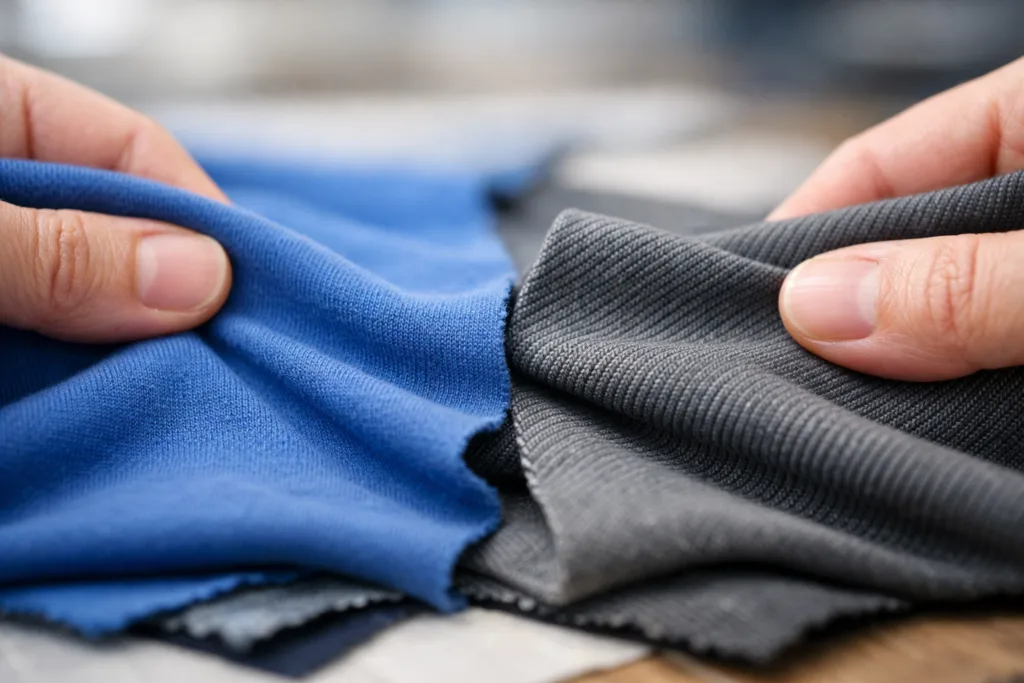
Stretch in textiles is achieved through two main paths: by blending synthetic elastic fibers like elastane into the fabric, or through mechanical construction that allows natural stretch. Both methods have strengths and trade-offs in terms of hand feel, recovery, cost, and garment application.
Fiber Stretch: Elastane/Spandex/Lycra
Elastane (spandex in the US, Lycra™ as a brand) is a synthetic fiber known for its high elasticity—able to stretch up to 500-700% of its relaxed length and return to shape with minimal loss. In fabric, only a small percentage (typically 3-20%) of elastane is enough to dramatically change mechanical properties. You’ll commonly see spandex blend fabrics paired with cotton, polyester, or nylon for leggings, cycling shorts, or fitted tops.
Mechanical Stretch
Mechanical stretch is created through the structure of the weave or knit itself, without relying on elastic fibers. For example, a weft-knit single jersey or a twill-woven fabric with high yarn twist can naturally stretch and recover—though less than a true elastane blend. This is often used for everyday stretch denim or relaxed trousers, where comfort stretch is needed but recovery is less critical.
Comparison Table: Stretch Methods & Applications
| Type | Typical Fiber | Common Construction | Stretch % | Best Uses |
|---|---|---|---|---|
| Elastane/Spandex Blend | Polyester/Elastane, Cotton/Elastane | Knits, Woven w/ Core-spun | 20-70% | Leggings, Compression, Sportswear |
| Mechanical Stretch | Cotton, Polyester, Rayon | Twill, Weft Knit | 5-20% | Denim, Casual Pants, Blouses |
2-Way vs. 4-Way Stretch: What’s the Difference?
The direction and behavior of stretch define a fabric’s suitability for different garments. Understanding this early in the sourcing and patternmaking stages prevents fit and comfort problems in final production.
2-Way Stretch
2-way stretch fabrics expand in only one direction—usually the width or crosswise. Most basic knits and some woven fabrics with a little elastane are 2-way. These fabrics are suited to T-shirts, simple stretch trousers, and fitted blouses, where multi-directional movement isn’t strictly required.
4-Way Stretch
4-way stretch expands in both lengthwise and crosswise directions. This is achieved either by using more elastane in the blend and specific knitting/weaving techniques, or by advanced core-spun yarn technology. 4-way stretch is essential for leggings, yoga pants, compression wear, and competitive sports gear, ensuring that the fabric moves easily with the body in all directions—and recovers back after intense stretching.
Practical Testing on the Production Floor
- Cut a 10 cm square from the bulk fabric.
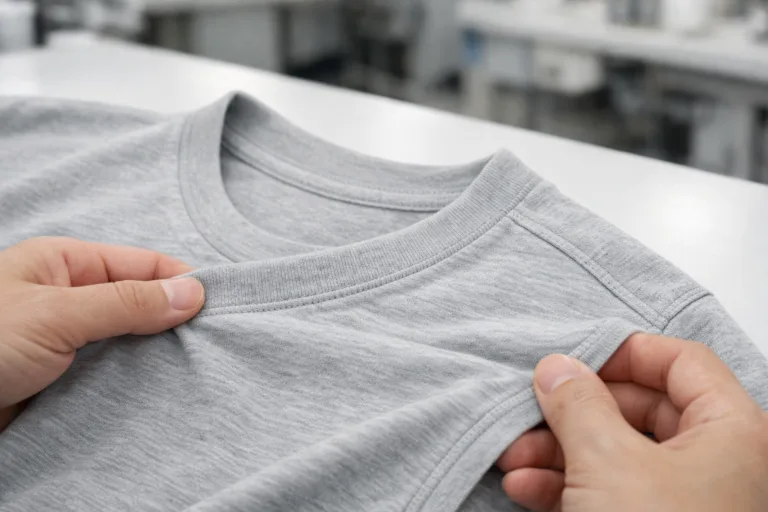
- Manually stretch widthwise and lengthwise; record the change in dimension in each direction.
- 4-way stretch should show significant expansion and recovery both ways; 2-way will be limited to one axis.
“On the sewing line, using 4-way stretch fabric for leggings and compression gear prevents seam breakdown and improves wearer comfort—even after repeated use.” — Rain Chen, Apparel Wiki
Choosing the Best Stretch Fabric for Leggings & Compression Wear
Leggings, yoga pants, and compression wear require a fabric that offers high stretch with excellent recovery, soft hand feel, and body support. There are several options, each with their own trade-offs in cost, hand, appearance, and manufacturing difficulty.
Key Criteria
- Composition: Commonly 80-90% polyester or nylon, 10-20% elastane/spandex
- Construction: Circular knit (single jersey, interlock), warp knit tricot for high-end wear
- GSM (weight): 180-350 GSM—thicker for compression, lighter for everyday leggings
- Stretch & Recovery: Minimum 60% in both directions, recovery ≥95% after 10 cycles
- Opacity: Important for non-see-through coverage in leggings
- Hand Feel: Soft, smooth, with or without special finish (e.g., peaching, brushing)
Popular Fabric Choices
- Polyester/Elastane Single Jersey: Cost-effective, easy dyeing, quick-dry—good for entry-level activewear and fashion leggings.
- Nylon/Elastane (Supplex/Lycra): Premium feel, excellent recovery, high durability—used in professional sports/compression wear.
- Cotton/Elastane Jersey: Soft, natural feel, moderate recovery—best for casual/fashion leggings, not for sports compression.
Spec Sheet Example for Legging Fabric
| Fabric Type | Composition | GSM | Stretch % | Finish |
|---|---|---|---|---|
| Sports Legging | 87% Polyester, 13% Spandex | 220 | 65×70 (W x L) | Brushed Back |
| Compression Wear | 78% Nylon, 22% Elastane | 260 | 85×90 (W x L) | Sanded, Antibacterial |
Points to Confirm with Factory or Mill
- Actual fiber percentage (Elastane/Spandex must be declared correctly; test in a lab, don’t trust label alone)
- GSM after washing (to avoid shrinkage/weight drop in final garment)
- Colorfastness (sweat, light, rubbing)
- Pilling resistance, especially for brushed or peached finishes
- Oeko-Tex® or REACH compliance for skin-contact garments
Stretch Fabric Production: Key Manufacturing Insights
Working with stretch fabrics requires discipline from yarn selection through to final packing. Below are key areas where experience can prevent costly errors in bulk production.
Fabric Relaxation & Spreading
Let stretch fabric relax for at least 24 hours before cutting to avoid torque and twisting in garments. On the cutting floor, layered spreading and careful tension control is vital—automatic relaxers are used in advanced factories.
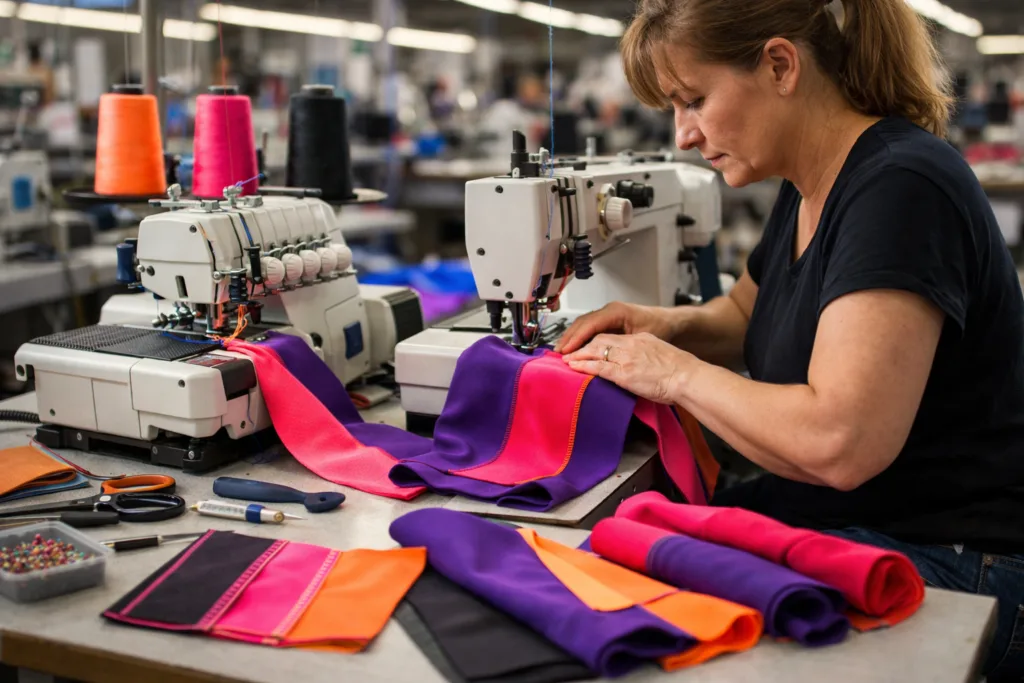
Sewing Machine Setup
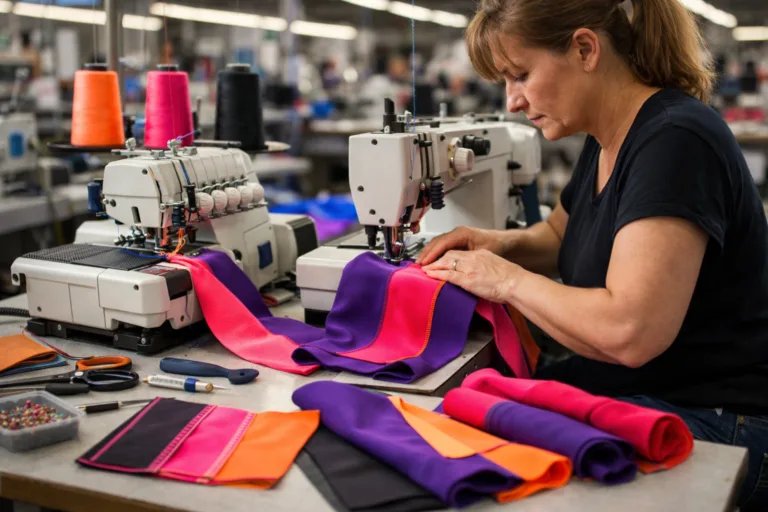
- Use ballpoint (jersey) needles to avoid cutting elastane filaments.
- Thread: High-strength, low lint polyester core thread.
- Stitch Type: Overlock (504/514) for main seams, coverstitch (602) for hems/waistbands.
- SPI (stitch per inch): 10-12 for main seams, adjusted by fabric thickness and recovery demand.
- Seam stretch: Always check by manually stretching the seam—if threads break, stitch or tension must be adjusted.
Finishing & Quality Control
Stretch garments often require curing to set shape, plus washing to remove oils and relax the fabric. Special attention is paid to bar tacking high-stress points (e.g., crotch of leggings) and inspecting seams for skipped stitches or popped threads.
Common Mistakes with Stretch Fabrics in Apparel Manufacturing
Even experienced teams can run into production and QC problems when handling stretch fabrics. Key issues include:
- Poor Pattern Adaptation: Not allowing negative ease or following a woven block can lead to poor fit or overstretching seams.
- Wrong Needle/Thread: Sharp needles cut elastane, causing runs; cotton thread has insufficient stretch for seams.
- Improper Fusing: Heat/pressure can melt elastane—use low-temp adhesive interlining and test beforehand.
- Uncontrolled Shrinkage: Failing to pre-shrink or pre-wash can lead to off-spec sizing after first customer wash.
- Inadequate Seam Stretch: Straight lockstitch on high-stretch areas causes seam pop.
- Ignoring Stretch Direction: Cutting off-grain means reduced stretch or bagging in wear areas.
Finishes and Functional Treatments for Stretch Fabrics
Many stretch fabrics undergo special finishes that affect quality, performance, and cost:
- Peaching/Brushing: Adds softness, decreases pilling resistance. Use for fashion leggings, not for high-wear sports bottoms.
- Moisture Wicking / Quick Dry: Treated with hydrophilic finishes—important for activewear, enhances comfort under sweat.
- Anti-bacterial/Anti-odor: Common for yoga, gym, and compression applications.
- UV Protection: Certain fibers and finishes boost UPF ratings for outdoor sports applications.
Typical Quality Tests
- Stretch & Recovery (ASTM D3107): Measure after repeated stretching cycles.
- Pilling Resistance (Martindale or ICI): Especially for brushed/peached leggings.
- Colorfastness (ISO 105): Especially important for dark and vivid sportswear.
Applications: Stretch Fabrics Across Garment Categories
Beyond leggings and compression gear, stretch fabrics power performance and comfort in:
- Sportswear: Running tights, cycling shorts, base layers—weave in 4-way stretch polyester/elastane blends for nonstop movement and sweat management.
- Activewear Tops & Dresses: CVC or TC with mechanical stretch for comfort and easy care.
- Denim & Casual Pants: Mechanical or 2-3% elastane blends provide ‘comfort stretch’ without losing the classic denim look.
- Swimwear & Intimates: High elastane content (up to 22%) with nylon or polyester base for superior support, shape retention, and chlorine resistance.
- Workwear/Uniforms: TC stretch twills with 2-5% elastane ease movement in demanding environments.
- Kidswear: Cotton/elastane knits balance comfort and rugged durability for high-activity use.
Stretch Fabrics: Elastane, Spandex & Mechanical Stretch
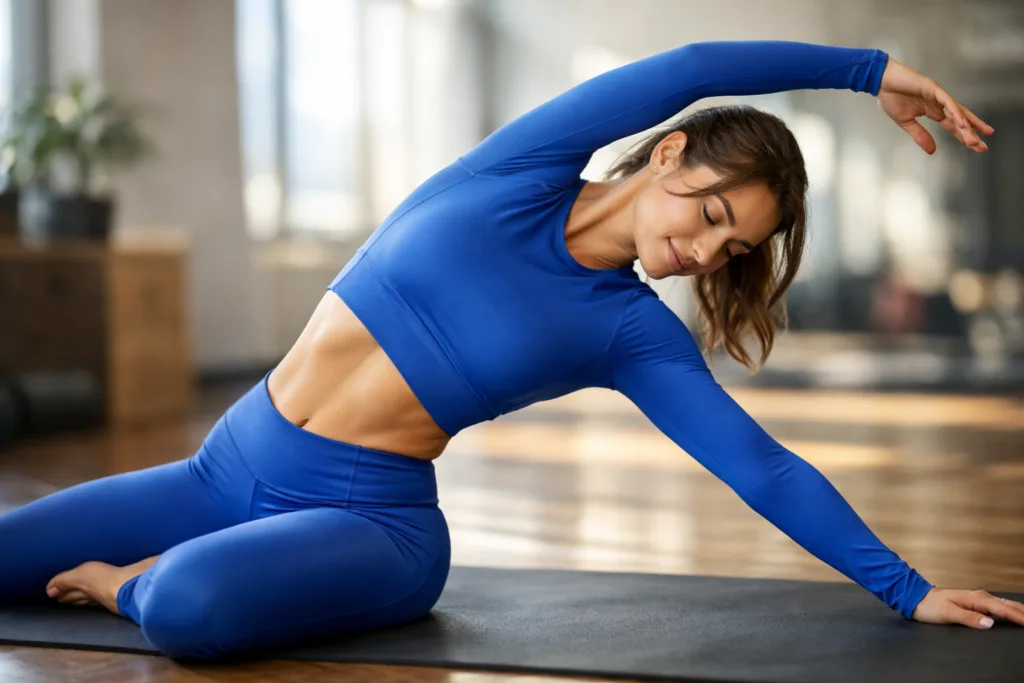
The term ‘stretch fabric’ broadly covers any textile that can extend and recover, but in practice, manufacturers, buyers, and QC teams differentiate them based on technical features and application. Elastane (spandex or Lycra) fabrics dominate high-performance sportswear and shape-enhancing garments, where fit and recovery are unavoidable requirements. Mechanical stretch offers a comfortable solution for casual clothing, denim, uniforms, and anywhere limited stretch suffices. When specifying a spandex blend or elastane fabric, always insist on fiber content certificates, lab stretch/recovery reports, and hands-on sample evaluation. Investing time upfront prevents line inefficiency and customer dissatisfaction down the line.
Quick Checklist for Buyers/Fashion Teams
- Describe final garment stretch/fit needs with reference photos and target measurements
- Request certified fiber content and full lab test results—don’t rely on mill claims alone
- Trial wash and stretch samples to test for shrinkage, torque, recovery, and hand feel
- Discuss color consistency, shrinkage tolerance, and pilling risk at sealing stage
- Instruct sewing room teams to confirm actual stretch during pilot run—adjust needle, stitch, or tension as required
Frequently Asked Questions
What is the main difference between elastane and spandex?
Elastane and spandex are two names for the same fiber; “spandex” is used mainly in the US while “elastane” is common internationally.
Why do some stretch fabrics lose their shape?
Poor quality elastane, over-drying, or incorrect washing can cause stretch fabrics to lose recovery and bag out over time.
How can I check if a fabric is 2-way or 4-way stretch?
Manually stretch a swatch in width and length; 2-way stretches only across, while 4-way expands both ways and recovers after release.
What GSM should I choose for leggings?
For opaque, supportive leggings, look for stretch fabrics in the 200-300 GSM range; lighter weights may be see-through or less durable.
How do I prevent seam popping in stretch garments?
Use elastic stitch types (like overlock or coverstitch), a polyester thread, and ballpoint needles to allow seams to stretch with the fabric.
Are elastane fabrics safe for sensitive skin?
Most modern elastane blends are safe if Oeko-Tex® or REACH certified, but always wash new garments before first use to remove finishing agents.