
Introduction: Why Sustainable Labeling Matters
Sustainable Labeling: Recycled Polyester and Organic Cotton is increasingly vital in the modern textile industry. Driven by consumer demand and regulatory needs, brands must highlight eco-friendly practices and materials. Recycled polyester and organic cotton stand out as top choices, recognized for their reduced environmental impact and role in lowering fashion’s carbon footprint. This article explores the advantages, sourcing processes, and actionable ways to identify genuinely sustainable labeling strategies, helping readers support brands that prioritize these materials.
Understanding Sustainable Labeling: Recycled Polyester and Organic Cotton

Labels and tags are more than just branding—they signal the environmental commitments brands make. Sustainable labeling features materials like recycled polyester and organic cotton, offering transparency that helps consumers align their purchasing decisions with eco-friendly values.
Recycled Polyester vs. Organic Cotton: Material Fundamentals
| Aspect | Recycled Polyester | Organic Cotton |
|---|---|---|
| Source | Recycled PET bottles, industrial waste | Cotton grown without harmful chemicals |
| Environmental Impact | Reduces landfill, saves energy and water | Protects soil, supports biodiversity |
| Branding Potential | Strong sustainability messaging | Trusted by wellness-conscious buyers |
| Labeling Strategy | Often paired with clear eco-label icons | Includes organic certifications on tags |
The Process of Sourcing Recycled Polyester
Collection and Sorting
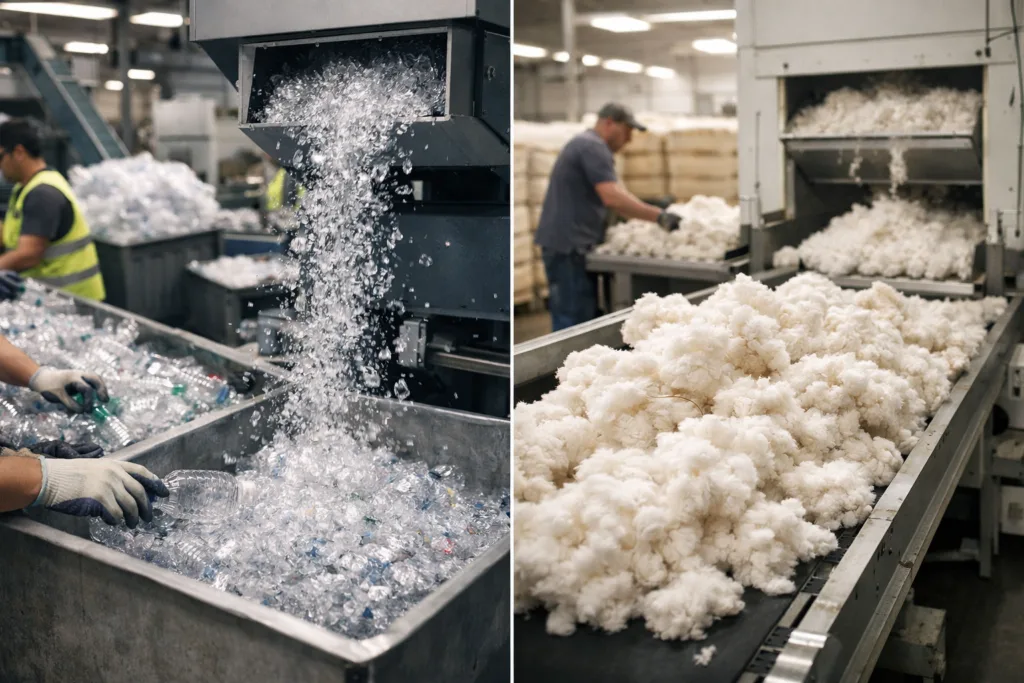
Recycled polyester starts with collecting post-consumer plastic bottles and pre-consumer industrial waste. These materials are sorted and cleaned, breaking down contaminants before being processed.
Flake Production
Plastic is shredded into flakes, which are then melted and extruded to create new fibers. The process uses less energy compared to making virgin polyester, helping reduce greenhouse gas emissions.
Spinning and Weaving
The recycled fibers are spun and woven into fabric. Proper labeling ensures the recycled content is traceable, meeting sustainable certification standards.
Organic Cotton Sourcing: Supporting Soil and Farmer Health
Seed Selection and Cultivation
Organic cotton is grown from non-GMO seeds using natural farming techniques. No synthetic fertilizers or pesticides are permitted, which safeguards farmers and their communities.
Harvesting and Processing
Cotton is picked by hand or machine, then processed according to organic guidelines. Throughout, traceability is maintained—an essential element highlighted by Apparel Wiki for regulatory labeling compliance.
Environmental Advantages of Recycled Polyester and Organic Cotton
- Recycled polyester diverts billions of plastic bottles from landfills each year.
- Organic cotton uses up to 91% less water than conventional cotton production (Textile Exchange).
- Both materials lower energy consumption and carbon emissions, supporting broader climate goals.
How Sustainable Labeling Reduces Fashion’s Carbon Footprint
When brands choose recycled polyester or organic cotton, they cut emissions throughout the product’s lifecycle—from raw material extraction to finished garment. This is further amplified if sustainable labeling also ensures proper labeling placement, as outlined in Visibility Matters: 7 Essential Steps for Placing Size Tabs and Country of Origin Labels Consistently.
The Impact on Branding and Consumer Trust
Consumers increasingly seek brands with clear labeling of recycled and organic materials. Certified labels build trust and help shoppers make informed choices, often influencing broader support for sustainable production methods.
Certifications and Labeling Standards for Eco-Friendly Materials
- Global Recycled Standard (GRS) for recycled polyester
- Global Organic Textile Standard (GOTS) for organic cotton
- OEKO-TEX and other third-party verification labels
Certified labels are not just marketing—they’re mandatory for compliance in many markets. Apparel Wiki’s guide to care label laws helps brands avoid costly mistakes and confusion.
Strategic Labeling Designs That Amplify Sustainability
Clear Icons and Color Coding
Modern label designs use icons and eco-friendly colors to quickly communicate recycled or organic content, allowing consumers to identify sustainable options instantly.
Material Choices for Tags and Labels
Hang tags may incorporate recycled paper, while woven or heat-transfer labels can feature information about recycled polyester or organic cotton content, as explored in Hang Tag Design – Information to Include for Consumer Impact.
Integrating Sustainable Labeling into Apparel Manufacturing
Sustainable labeling isn’t just about branding—it affects production workflows. Labels and tags must be compatible with eco-fabric types and meet durability needs, explored in Woven vs. Printed Labels.
Statistics: The Rise of Recycled and Organic Materials
- 60% of global brands now report increased use of recycled polyester (Common Objective, 2023)
- Organic cotton demand grew 37% year-on-year in 2022 (Textile Exchange)
- Eco-labels boost conversion rates by up to 18% (Nielsen survey)
Identifying Genuine Sustainable Labels as a Consumer
Look for Certification Logos
Always check for GOTS, GRS, or similar certifications before purchase.
Review Ingredient Information on Labels
Sustainable tags should list recycled or organic percentages clearly, reflecting transparent sourcing.
Understand Placement and Material Choices
Accurate label placement and eco-friendly materials reflect commitment, backed by guides like Apparel Wiki’s resources on label visibility and care labeling.
Benefits for Brands: Eco-Friendly Labeling as a Differentiator
- Improves market positioning with conscious consumers
- Supports compliance and risk reduction
- Enhances storytelling and authenticity
Consumer Action: Supporting Sustainable Fashion
- Choose brands with transparent, certified eco-labels
- Educate yourself on sustainable fibers and materials
- Use available tools to verify claims—Apparel Wiki offers practical apparel manufacturing tools for this
Challenges and Misconceptions in Sustainable Labeling
Some brands may use eco-labels without true certification (“greenwashing”). It’s vital to scrutinize labels for genuine certification, traceable sourcing, and transparent material info—the hallmark of authentic sustainable fashion labeling.
Sustainable Labeling: Recycled Polyester and Organic Cotton

Sustainable Labeling: Recycled Polyester and Organic Cotton forms the foundation for truly eco-friendly apparel manufacturing. Both materials reduce environmental harm, support global sustainability goals, and give brands a reliable platform to highlight their ethical values. Leveraging certified labeling and transparent messaging, brands and consumers together can advance a more responsible industry.
Frequently Asked Questions
How can I tell if a garment is made from recycled polyester or organic cotton?
Check the garment’s label for Global Recycled Standard (GRS) or Global Organic Textile Standard (GOTS) certification logos and clear ingredient statements.
Do recycled polyester and organic cotton always reduce environmental impact?
When sourced and certified properly, these materials minimize waste, water, and energy usage, but it’s essential to verify genuine claims with third-party certifications.
Are there legal requirements for labeling eco-friendly materials?
Many regions require accurate care and origin labeling for garments with recycled or organic content. Apparel Wiki’s guide offers compliance insights.
Is organic cotton softer or better than conventional cotton?
Organic cotton is often softer due to gentler processing; it’s also better for skin and the environment, as it avoids chemicals and supports biodiversity.
What brands consistently offer sustainable labeling?
Reputable sustainable brands include detailed certification and material information on their tags, ensuring transparency and consumer confidence.
How does sustainable labeling contribute to lower carbon footprints?
Using recycled polyester and organic cotton reduces emissions at every stage, from production to disposal, especially when paired with accurate labeling and placement strategies.