
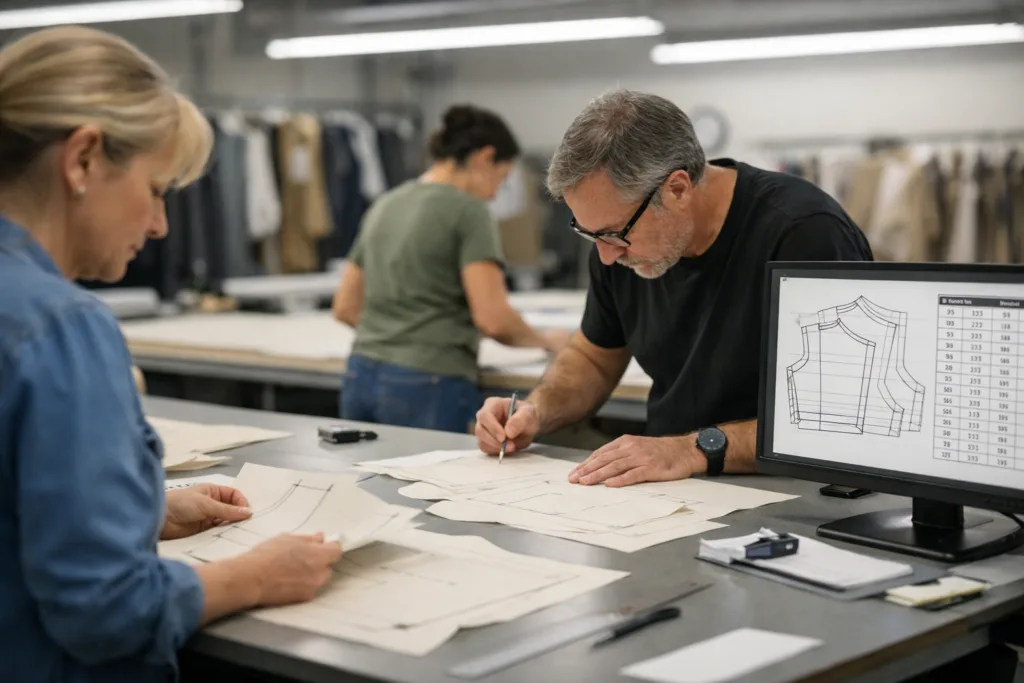
fashion manufacturing

pattern graders illustrating grading rules: how sizes expand from a base pattern

Grading Rules: How Sizes Expand from a Base Pattern

Understanding Grading Rules: How Sizes Expand from a Base Pattern Pattern grading is the unsung hero of modern garment manufacturing: it allows a base pattern to be methodically scaled into a full suite of sizes while maintaining the designer’s original intent. Without proper grading rules, you’d end up with inconsistent fits, distorted silhouettes, and dissatisfied […]
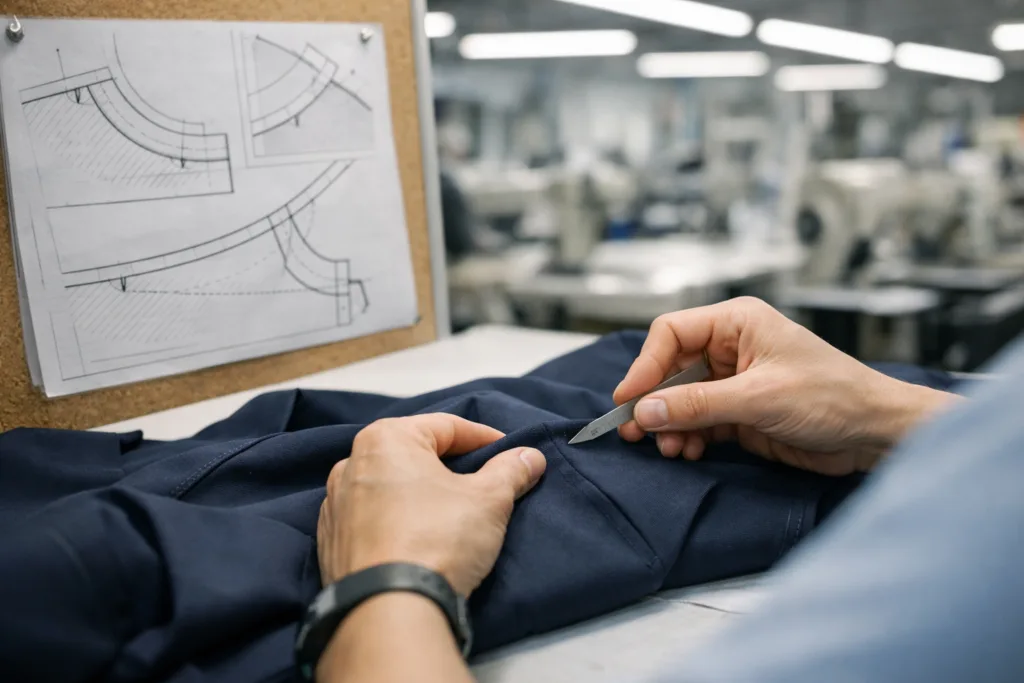
quality control inspection for ease in pattern making garment fit

What Is “Ease” in Pattern Making?

Understanding Ease: The Foundation of Pattern Making If you’ve ever wondered what gives a garment its comfort, shape, and wearability, the answer often comes down to a single word: ease. In the world of apparel and textile design, understanding ease meaning, wearing ease, design ease, and the differences between them is vital for achieving the

Why does the zipper warp or wave? - Zipper waviness visual QC assessment

Why does the zipper warp or wave?

Understanding Zipper Waviness and Zipper QC Zipper waviness—sometimes called zipper rippling—occurs when the fabric around a zipper looks wavy, bumpy, or uneven after being sewn in. For apparel brands and garment factories, controlling zipper waviness is a crucial aspect of zipper QC (Quality Control), as it directly impacts the finished product’s appearance and perceived quality.

measurement chart apparel, garment size chart in factory

How to Create a Measurement Chart for Development

Understanding Measurement Chart Apparel, Garment Size Chart Basics Developing a well-structured measurement chart apparel, garment size chart is essential for fashion businesses, designers, and manufacturers. These charts ensure garment consistency, accurate sizing, and optimal fit for end users. Whether you’re creating clothes for children or adults, tops or bottoms, following key measurement guidelines and applying

Scroll to Top