pattern making

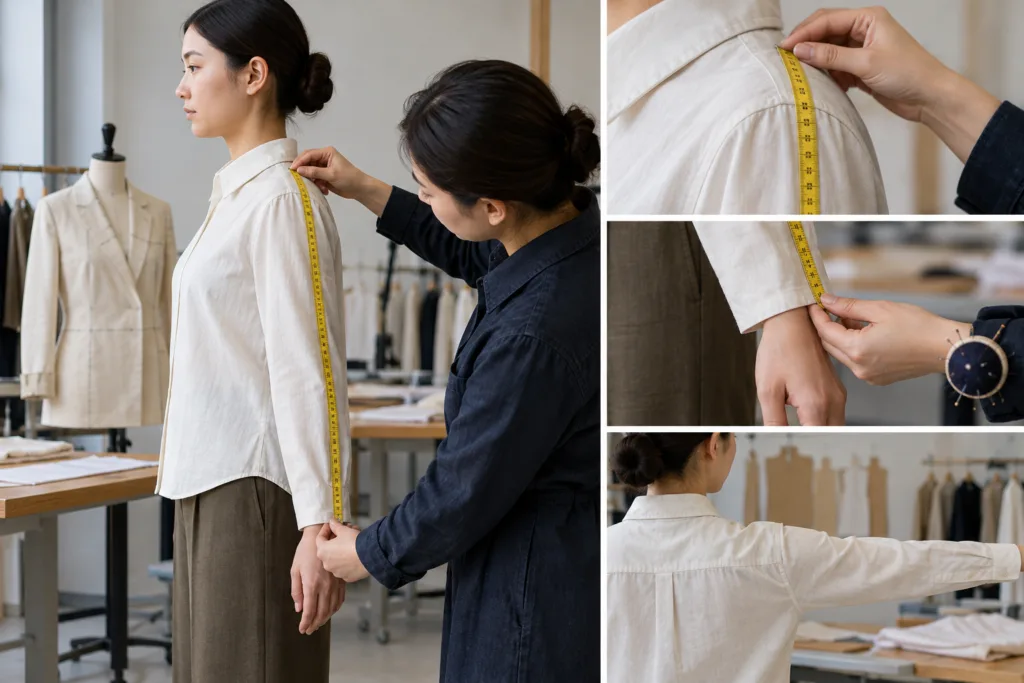
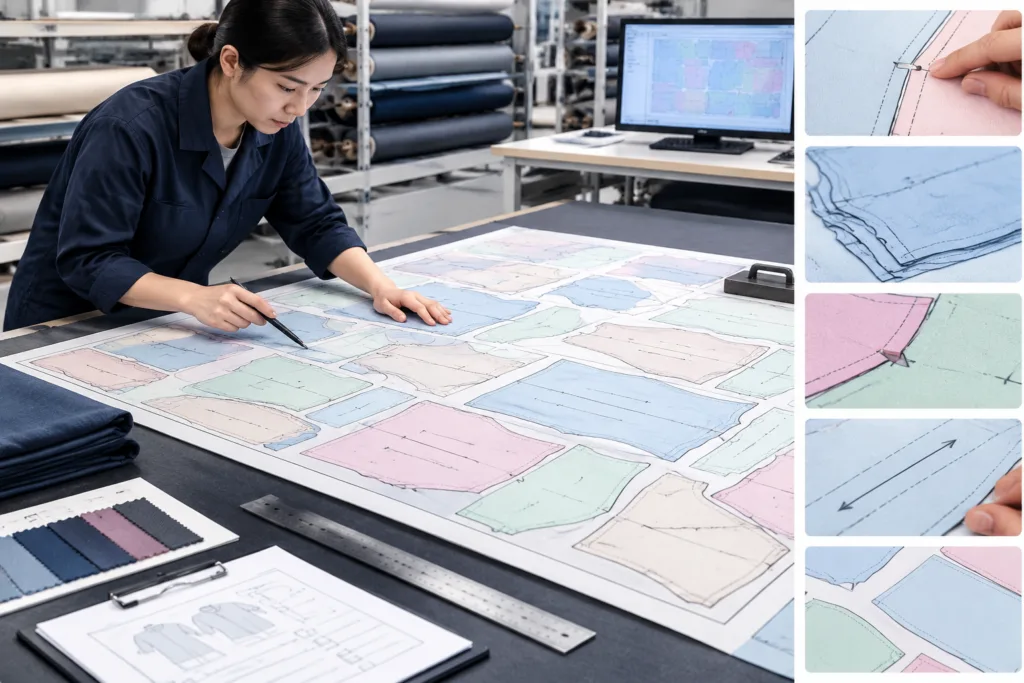
cutting room showing sleeve asymmetry, garment symmetry issue

Why are the left and right sleeves different lengths?

Introduction to Sleeve Asymmetry and Garment Symmetry Issue Sleeve asymmetry is a common garment symmetry issue that disrupts both the appearance and function of clothing. If you’ve ever noticed your left and right sleeves are different lengths, you’re not alone. For manufacturers, designers, and quality controllers, understanding why sleeve asymmetry occurs—and how to fix it—is […]

quality control inspection for ease in pattern making garment fit

What Is “Ease” in Pattern Making?

Understanding Ease: The Foundation of Pattern Making If you’ve ever wondered what gives a garment its comfort, shape, and wearability, the answer often comes down to a single word: ease. In the world of apparel and textile design, understanding ease meaning, wearing ease, design ease, and the differences between them is vital for achieving the

Sewing operator constructs bias-cut skirt panel focusing on seam technique

What Is “Bias Cut”?

Introduction to Bias Cut in Garment Manufacturing The “bias cut” is a foundational concept in apparel design and production, renowned for adding elegance, fluidity, and a distinct silhouette to garments—especially skirts and dresses. Factory professionals, designers, and buyers alike must understand the true meaning of bias cut, how bias fabric behaves, and why industry experts

Macro photo of denim flat-felled seam with visible seam allowance application

Understanding Seam Allowance and Its Importance

Introduction: The Foundation of Quality – Seam Allowance Essentials Seam allowance forms the invisible backbone of garment construction. Whether you’re hand-tailoring bespoke suits or producing thousands of t-shirts in a modern factory, understanding seam allowance (SA) is vital. It is the extra fabric provided beyond the stitch line on pattern pieces, and its correct measurement

Pattern maker adding ease to shirt pattern with measuring tape

Understanding Wearing Ease & Design Ease in Development

Understanding Wearing Ease & Design Ease in Development Wearing ease, design ease, and pattern ease are foundational concepts that determine how a garment fits and performs in real-world use. In apparel development, understanding the differences and interplay between these terms is vital not only for pattern makers but also for designers, technical developers, and buyers

The photo depicts digital pattern block development and grading, capturing how modern factories use CAD systems for accuracy and efficiency. The visual supports information about the digital transition and scalable style adaptation.

Building a Base Pattern (Block Pattern)

Building a Base Pattern (Block Pattern) A base pattern—or block pattern—is the backbone of apparel development. Used by pattern makers in factories and studios, this template underpins every fitted garment, whether for fashion, mass market, or uniforms. A well-constructed base pattern ensures that style variations, sizing, and fit are consistent from start to finish. Understanding

This photo highlights various notch styles—single, double, and triple—cut along a garment pattern piece’s edge, helping readers distinguish pattern notch meanings and marking tools. Its tactile clarity aids in understanding types of notches in production.

What Is “Notch” in Patterns?

Introduction: Why Notches Matter in Garment Patterns In garment manufacturing, no detail escapes scrutiny. Among the most subtle yet crucial guides for constructing clothing are notches—small marks or cuts on pattern pieces. These simple markings act as the traffic signs of production, telling sewists exactly where to align, join, or fold each piece. Understanding the

This macro shot captures various pattern blocks—bodice, sleeve, skirt—laid out for comparison, highlighting differences in shape and size. It underlines how each block acts as a foundation for its garment category.

What Is a “Pattern Block”?

Introduction to Pattern Block Meaning in Garment Manufacturing Every successful garment starts with a solid foundation. In apparel production, that foundation is built on precision patterns—especially the essential tool known as the pattern block. Understanding pattern block meaning not only sharpens your technical edge as a designer or production specialist but also underpins consistent sizing,

Demonstrates how shrinkage varies between fabric types, underlining why calculation and allowance must be tailored for each material.

How do I calculate fabric shrinkage correctly?

Understanding fabric shrinkage is vital in garment production. Misjudged shrinkage leads to ill-fitting clothes, wasted material, and expensive remakes. Whether you’re a buyer, designer, factory team member, or merchandiser, learning to calculate fabric shrinkage with accuracy minimizes costly surprises and ensures finished garments match intended specs. This detailed guide walks through the proven process—wash, dry,

Scroll to Top