Introduction: The Critical Role of Accurate Thread Consumption and Yardage Estimation
Understanding thread consumption and yardage estimation is a cornerstone of efficient and cost-effective garment manufacturing. Whether you’re managing a small apparel brand or overseeing a production line, accurately calculating how much thread is required per garment directly impacts production planning, cost control, and even sustainability goals. Estimating thread usage isn’t just about crunching numbers—it’s about understanding a web of factors from seam types to stitch density that could make or break your bottom line.
What is Thread Consumption in Garment Manufacturing?
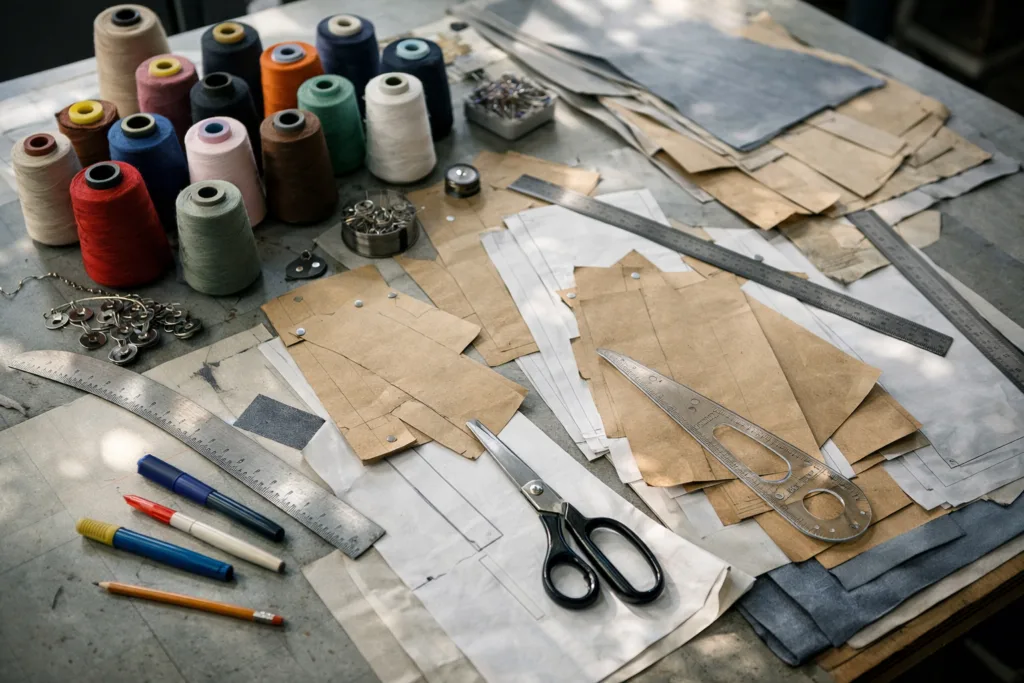
Thread consumption refers to the total length of sewing thread required to construct a garment or a batch of garments. It’s more than just a metric; it shapes purchase orders, budgets, and production timelines. Understanding thread consumption helps avoid common pitfalls, such as running out of thread mid-production or over-purchasing, which ties up unnecessary capital.
Why Accurate Yardage Estimation Matters for Apparel Brands
Yardage estimation isn’t a “nice-to-have”—it’s a critical cost driver. Overestimating thread needs results in wasted resources and higher costs. Underestimating can cause mid-line stoppages, delays, or inconsistent product quality. Apparel Wiki emphasizes that accurate yardage estimates fuel not only cost savings but also operational reliability and sustainability by reducing excess inventory and waste.
Key Factors Affecting Thread Consumption
Fabric Type and Structure
Different fabrics consume thread differently. Woven textiles such as denim require stronger, often heavier thread and may involve denser stitching patterns. Contrast that with lightweight knits, where finer thread and shorter stitches often suffice.
Garment Design and Construction Complexity
Gowns with decorative elements, trims, or additional pockets will naturally use more thread than a basic tee. Features like cuffs, collars, pleats, or yokes all contribute to higher thread usage.
Seam Types and Stitching Methods
Certain seams use more thread, especially when double-needle or coverstitch machines are involved. For instance, a flat-felled seam—a staple in jeans—demands more thread compared to a simple lockstitch seam.
Stitch Density (SPI)
Stitch Per Inch (SPI) directly impacts thread usage. The higher the SPI, the more thread per seam length. Brands choosing high-density seams for strength or style consistency should expect greater thread consumption. For more insights into stitching standards, Apparel Wiki’s guide to stitch density (SPI) can be helpful.
Size and Fit Variations
Larger garments naturally require more seam length and therefore consume more thread. This means plus-size grading or extended-fit collections will significantly impact overall thread needs (see our take on plus size grading for a related view on fit and resources).
Methods for Estimating Thread Yardage per Garment
Empirical Method: Actual Sample Count
One practical approach is producing a sample garment and precisely measuring all the thread used during sewing. This “actual consumption” method provides direct, hands-on data that factors in the unique design and construction techniques employed by your brand.
Mathematical Formulae and Calculation Standards
Several standard calculations exist in the industry. The basic approach involves calculating seam length and multiplying it by a “thread consumption multiplier” based on seam and stitch type. A common rule of thumb:
- Thread Consumption = Seam Length × Consumption Factor
The consumption factor (typically between 2.5–3.5 for lockstitch, higher for chainstitch) adjusts for thread path, seam type, and waste.
Software Solutions and Digital Estimation Tools
Modern CAD and pattern-making software allow for digital estimation of thread needs, automating calculations based on pattern layouts, stitch allowances, and seam types. This reduces human error and speeds up BOM creation. For more on leveraging digital tools, visit Apparel Wiki’s manufacturing tools page.
Using Industry Averages and Published Tables
Industry standards provide reference charts indicating typical thread consumption for common garment types. For example, a men’s short-sleeve shirt may average 90–110 yards per garment, while jeans with flat-felled seams may reach 220–250 yards. However, these numbers are best used for early costing and refined with brand-specific tests.
Step-By-Step Guide: How to Estimate Thread Consumption and Yardage
Step 1: List All Seam Types and Garment Sections
First, break down your garment according to construction sections—side seams, shoulder seams, collar attachment, hems, etc. Record the type of seam and expected SPI for each.
Step 2: Calculate Seam Lengths from Patterns
Use your garment pattern to measure seam lengths for each section. If no digital measurement is available, manually add up each seam’s length using a flexible tape or digital ruler.
Step 3: Assign a Thread Consumption Multiplier
For every seam, assign a suitable thread consumption multiplier (consult published tables or empirical data, e.g., lockstitch: 3x seam length, overlock: 4.5x seam length).
Step 4: Make Individual Estimates and Combine
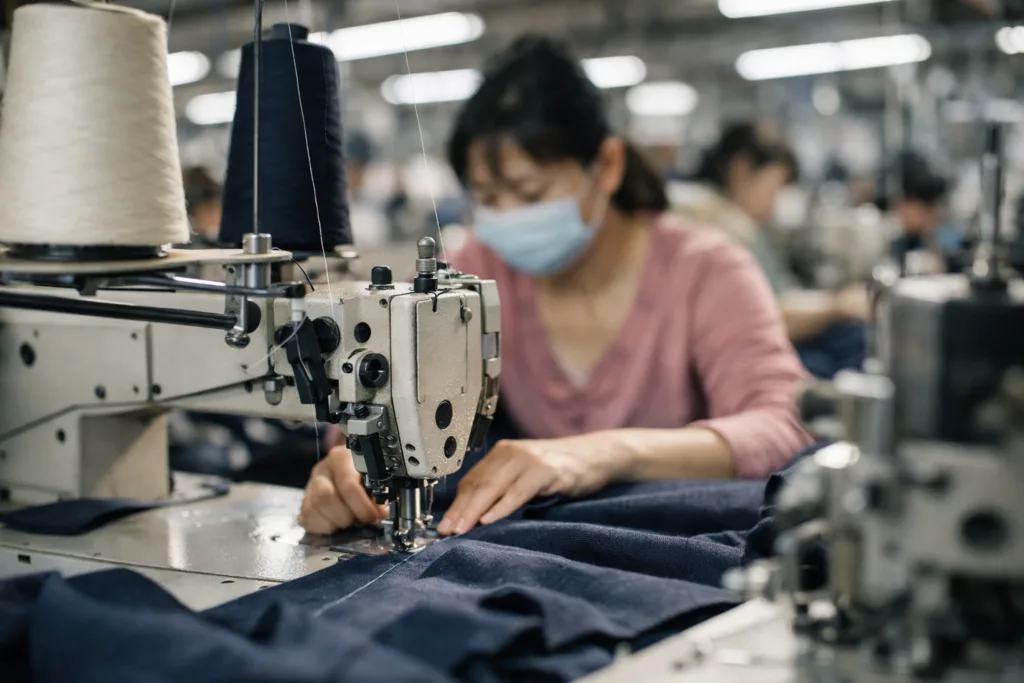
Multiply each seam’s length by its consumption multiplier, then sum the totals for each garment. Add a 5–10% buffer for thread loss due to trimming, machine settings, and operator changeover.
Step 5: Validate with an Actual Production Run, Adjust as Needed
Pilot runs or sample collections can validate your estimates and highlight any deviation due to variable operator handling or machine adjustments. Use this insight to refine future calculations.
Thread Consumption Table: Typical Yardage by Garment Type
| Garment Type | Seam Type | Average Thread Yardage |
|---|---|---|
| Basic T-Shirt | Lockstitch/Overlock | 75-100 yards |
| Demin Jeans | Flat-Felled/Chainstitch | 220-250 yards |
| Dress Shirt | Lockstitch | 90-110 yards |
| Polo Shirt | Overlock/Coverstitch | 100-130 yards |
| Jacket | Multiple | 200-350 yards |
Use this table as a reference point for initial BOM planning. For more on building robust BOMs, our guide to creating a Bill of Materials provides stepwise clarity.
Example Calculation: Thread Consumption for a Men’s Polo
- Side Seams (2): 20″ each, lockstitch, SPI 10, multiplier 3.0 = 120″
- Hem (bottom): 40″, coverstitch, SPI 12, multiplier 4.8 = 192″
- Sleeve Attach (2): 14″ each, overlock, SPI 8, multiplier 4.5 = 126″
- Collar Join: 17″, lockstitch, SPI 10, multiplier 3.0 = 51″
- Others (placket, trims, etc.): Estimated total 150″
Total: ~639″ / 36 = 17.75 yards (adjust for buffer and convert as needed).
Factors Impacting Variation in Actual Thread Usage
- Different operators may handle seams or backtack differently, trimming more or less excess thread.
- Machine settings, especially on older or less-maintained equipment, can affect consumption.
- Changes to garment specifications after initial estimate.
How Thread Consumption and Yardage Affect BOM and Costing
Thread usage is a direct input into your Bill of Materials (BOM). Underestimating skews costings and threatens production flow. For deeper strategies on optimizing all aspects of BOM calculations, see our in-depth guide to fabric consumption.
Sustainability Implications of Precise Thread Estimation
Sustainability is top of mind for modern apparel professionals. Overconsumption of thread translates to increased resource use, higher waste, and inefficiency. By right-sizing thread estimates, you not only save money but also contribute to greener manufacturing practices.
Common Pitfalls in Thread Consumption Estimation (And How to Avoid Them)
- Assuming all seam types use the same multiplier: Each seam has its own characteristics.
- Ignoring thread waste: Always allow a practical buffer for cut-off and setup losses.
- Not accounting for design changes: Even minor updates to a pattern may require recalculation.
Thread Specifications and Their Impact on Yardage
Heavier threads (low tex count) will yield fewer yards per cone. Selecting the right thread for the garment’s function and fabric will also adjust how much total yardage you’ll require for each lot.
Optimizing Thread Procurement and Inventory Control
Knowing your true thread consumption enables smarter ordering—reducing storage needs and capital outlay. Utilizing digital tracking through manufacturing tools (like those featured on Apparel Wiki manufacturing tools) can further streamline operations.
Integrating Thread Estimation into the Apparel Sampling Process
When conducting sample lead time trials, be sure to include thread tracking in your sampling critical path. Guidance on sample management can be found in Apparel Wiki’s resource about managing sample lead times.
How to Validate Estimates with Production Feedback Loops
Set up a process for continuous improvement by auditing actual thread use post-production—then feed this data back into your estimation models to improve accuracy over time.
Thread Consumption: How to Estimate Yardage per Garment
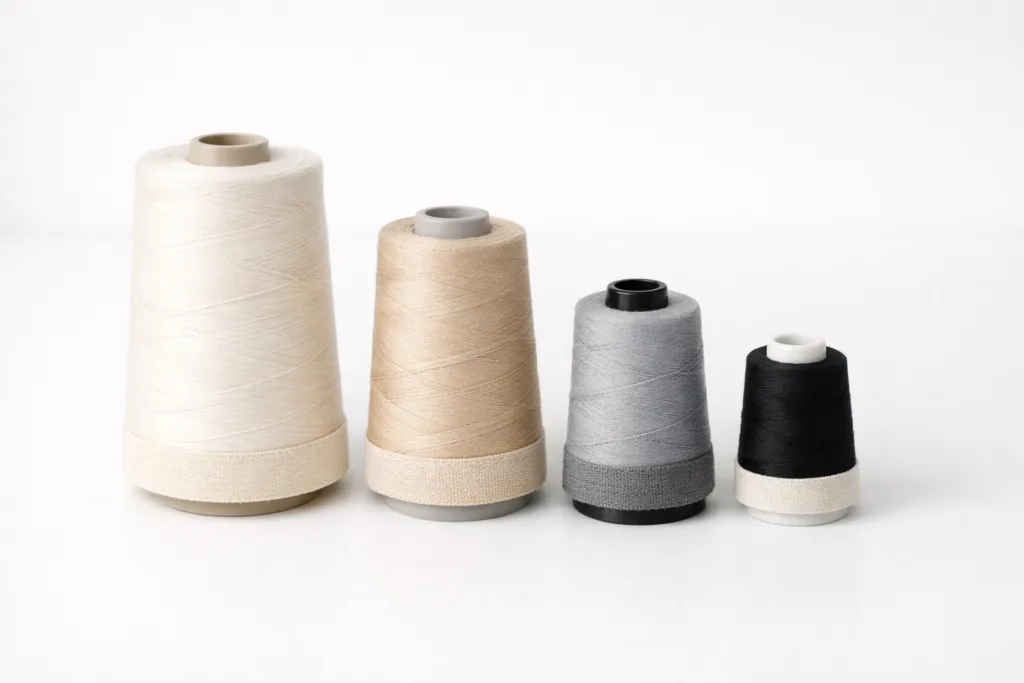
Estimating thread consumption and yardage per garment is neither complex nor mysterious when broken down into clear steps. Follow the systematic process—identify seam types, measure accurately, assign appropriate multipliers, and validate with real samples. Not only will you balance costs, but you’ll support on-time deliveries and sustainable manufacturing. Small investments in accuracy at this stage have ripple effects throughout your business, from BOM planning to final product quality.
Frequently Asked Questions
How do I calculate seam length for a garment?
Seam lengths can be determined by carefully measuring each pattern piece edge to be stitched using a flexible tape or by digital pattern software. Sum these individual measurements for an accurate total.
What thread multiplier should I use for lockstitch seams?
A commonly used thread multiplier for lockstitch seams is between 2.5 and 3.5, depending on stitch density (SPI), seam allowances, and thread thickness.
Why does thread consumption vary between operators?
Operators differ in their backtacking, trimming habits, and machine usage. These small differences add up across many garments, impacting overall thread consumption.
Is it necessary to leave a buffer when estimating thread?
Yes, adding a 5–10% buffer accounts for waste from trimming, machine changeover, and minor production variances, ensuring you don’t run short during a production run.
How does thread selection affect consumption?
Thicker threads cover more seam length per yard but require fewer stitches, potentially lowering total yardage, while finer threads may increase overall yardage requirements. Always match thread type to garment and stitching method.
Can I use industry averages for estimating thread needs?
Industry averages are a good starting point, but always tailor your estimates with actual garment samples and regular production feedback to ensure precision and cost-effectiveness.