Understanding Bulk Production Color Challenges
In every garment manufacturing cycle, matching colors precisely from approved color cards to bulk production fabrics is a cornerstone of quality control. Yet, color mismatch in bulk runs remains one of the most frequent—and costly—issues facing factories and buyers. These variations disrupt branding, retail consistency, and can trigger rejections, chargebacks, or even lost trust with key clients. This article walks through the real reasons bulk color sometimes misses the mark, focusing on dye lot variations, lab dip approvals, shade band control, and preventive measures honed by decades of garment production experience.
Why does bulk production color not match the color card?
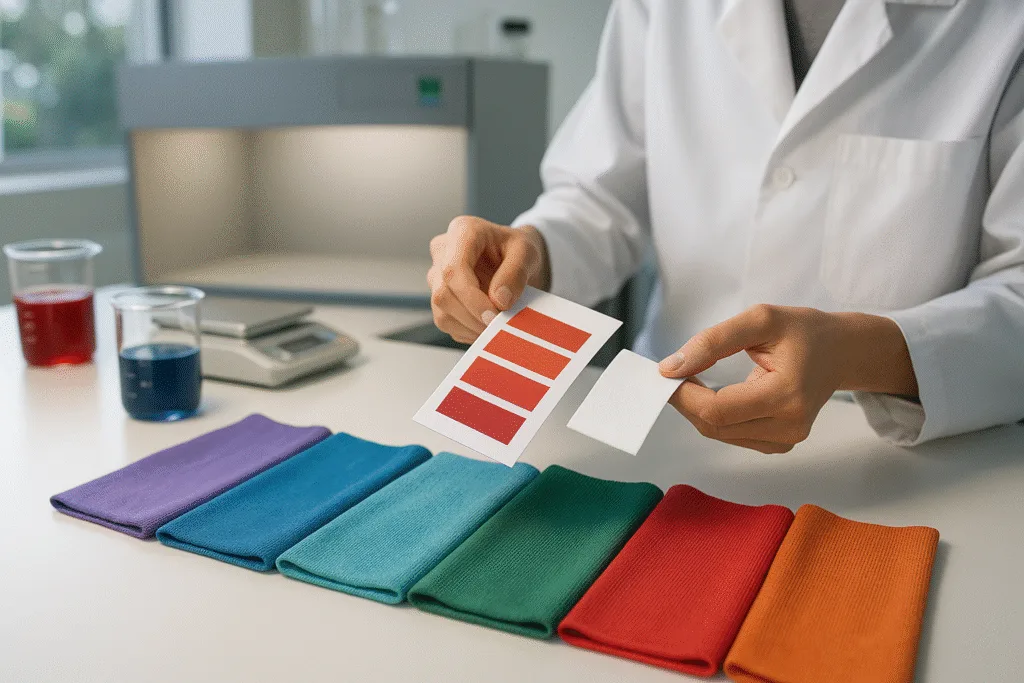
Bulk production color not matching the color card typically stems from unavoidable differences in the dyeing process, material characteristics, and lapses in process control. The color card represents an idealized, approved shade, usually derived from lab dips or small pilot batches. Scaling this up for hundreds or thousands of kilograms often introduces shade issues due to changes in machine size, chemical concentrations, water quality, fabric absorption rates, and even ambient temperature in the dye house. Without strict controls and clear communication between buyers and factories, these color mismatches can be substantial.
Main Factors Contributing to Bulk Color Mismatch
- Dye Lot Variations: Each batch can react differently even with the same formulation.
- Lab Dip Approval vs. Bulk Reality: Pilot samples don’t always replicate exactly at large scale.
- Shade Band Control: Ensuring color consistency across lots and fabric rolls is a specialized task.
- Preventive Steps: Vigilant process management from lab dip to final QC can minimize issues.
Impact of Color Shade Issues in Apparel Production
Color shade issues affect consumer perception, brand reputation, and product value. Inconsistent coloring is glaring in multi-panel garments, side-by-side displays, and especially in uniforms or coordinated product lines where even a slight mismatch is immediately visible.
Color Mismatch Bulk: Exploring Dye Lot Variations
Every dye bath in bulk production is its own miniature chemistry experiment. Even with precise recipes, minute shifts in temperature, dye concentrations, and agitation affect the final outcome. Dye lot variations are particularly pronounced when the same color is dyed across different days, machines, or facilities. In practice, a navy shade run on a Monday may not exactly match the same navy run on Friday—even if all inputs are theoretically identical.
Typical Causes of Dye Lot Variation
- Water source or mineral content changes
- Poor dye dispersion, especially on large machines
- Batch-to-batch chemical compatibility
- Fabric composition changes (cotton % in blends, yarn twist, absorbency)
- Human error in weighing, timing, or process monitoring
- Machine maintenance and cleaning frequency
Example Table: Dye Lot Variation Impact by Fabric Type
| Fabric Type | Dyeing Method | Typical Variation Risk | Key Control Points |
|---|---|---|---|
| Cotton Jersey | Reactive Dye | Medium | Water softness, dye concentration, pH |
| Polyester Pique | Disperse Dye | High | Temperature, dwell time, carrier chemicals |
| Viscose/Modal | Reactive Dye | High | Water absorption, tension control |
| Nylon Tricot | Acid Dye | Medium/High | pH stability, wash-off efficiency |
Lab Dip Approval and Its Limitations
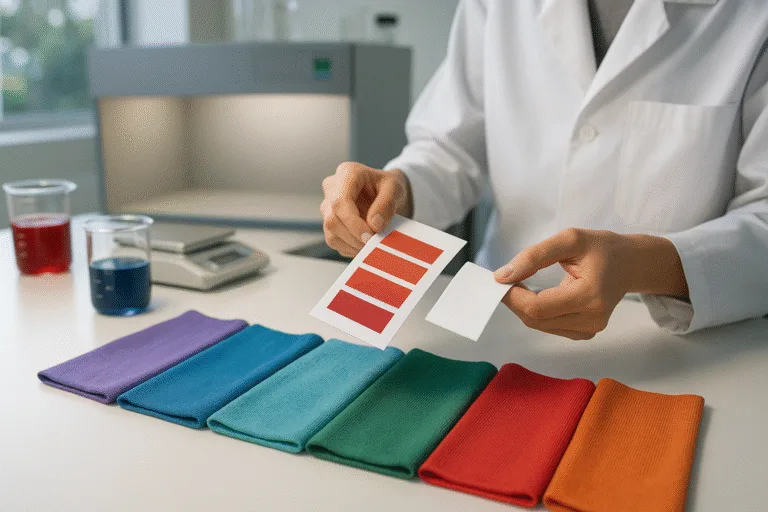
Lab dips are small swatches dyed to match a color card before full-scale production. Buyers and merchandisers rely on these for color decision-making and supplier confirmation. But lab dips are usually processed in controlled, small-lot environments—often in beakers or small dye machines. Scaling up from a 100g lab dip to a 500kg bulk dye bath is a world of difference, and even the best dye master must adapt formulas.
Lab Dip Approval Steps
- Buyer submits color standard or swatch
- Supplier prepares 2–4 lab dips with slight chemical or time variation
- Buyer reviews dips under multiple light sources (D65, TL84, UV)
- Final approval sent to factory before bulk dyeing
Limitations in Practice
- The physical lab dip environment (smaller, tightly controlled) does not replicate bulk process variability.
- Color matches can shift due to scaling chemical ratios or changing machine types.
- Bulk reactive dye uptake differs from lab stage, especially on fabrics with finish treatments.
- Some apparel buyers request shade bands during approval, but this is not always standardized.
Rain’s tip: “After approving a lab dip, always request the factory to run a small pilot dye lot (10–20kg) using the exact bulk equipment before proceeding—this extra step saves headaches later.”
Shade Band Control in Bulk Dyeing
Shade bands are reference strips showing acceptable color shade tolerance for bulk production. They are critical for communication between all parties: buyers, dye houses, cutters, and sewing lines. Shade bands let all production staff know which color variance range is tolerable.
Shade Band Preparation
- After lab dip approval, factory dyes 5–10 small strips at varying times/temperatures.
- Buyer picks the strongest and weakest acceptable shades to define a ‘band’.
- All bulk rolls must fall within this visual range; outliers are flagged in QC.
Monitoring Shade Bands During Production
- Regular swatch checks from each dye lot against master shade band
- Documenting shade results in production logbooks
- Using color spectrophotometers for objective Delta-E measurement
- Rejecting or re-dyeing rolls outside tolerance
It’s essential for every factory to train staff in recognizing shade bands and applying them during marker making and cutting to prevent color block mismatches within a single garment.
Preventive Steps to Avoid Bulk Color Shade Issues
Preventing color mismatch in bulk production is not solely a matter of chemistry—it requires cross-department discipline and expert coordination. Think of each step below as part of an integrated color management system, not just isolated actions.
Practical Preventive Steps
- Use a single approved dye recipe and keep batch records
- Standardize water source and test for minerals or contaminants
- Run pilot batches at bulk scale before main production
- Train QC staff to check shade across rolls, not just at start or end
- Create clear shade bands and distribute them to cutting/sewing teams
- Cut garment components from the same roll whenever possible to prevent panel mismatch
- Keep strong sample retention for shade reference in future repeats
- Communicate shade tolerance clearly in purchase orders/specs
- Choose reliable dye houses with proven track records, especially for polyester, viscose/modal blends
Bear in Mind:
Seasonal temperature shifts, local water changes, and fabric availability can change results. Empowering teams to monitor and react quickly is crucial.
Detecting and Managing Color Mismatch During Bulk Runs
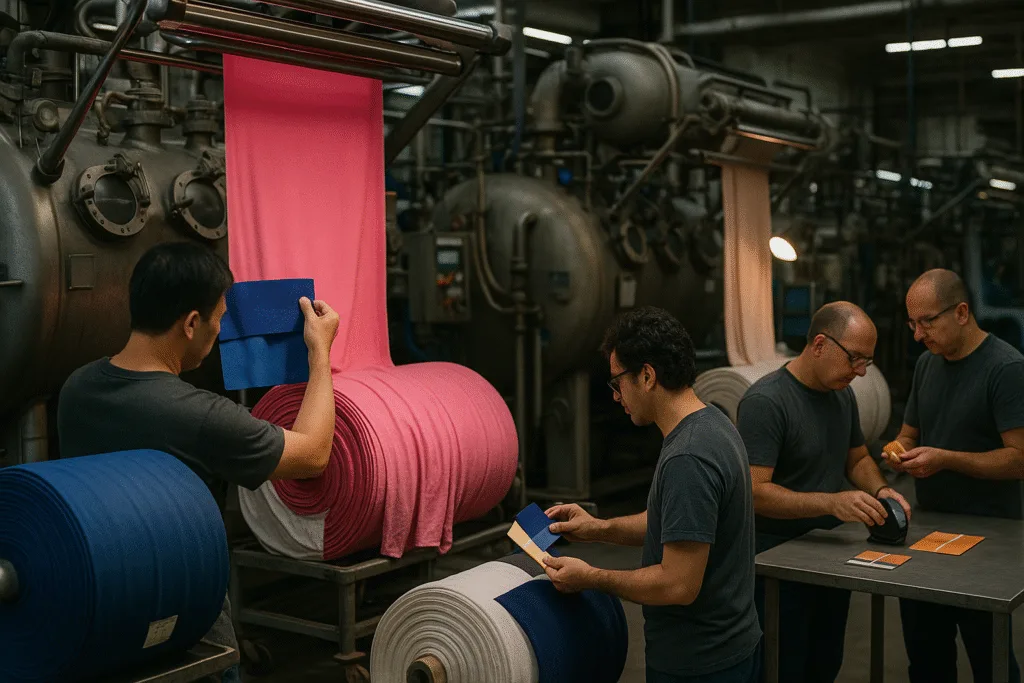
Detecting shade issues begins even before dyeing—during incoming fabric inspection for consistency in base color and construction. Once dyeing starts, regular checks for shade and colorfastness are essential. Typical checkpoints include:
- Pulling 30cm swatches from the start, middle, and end of each dyed roll.
- Comparing each swatch visually and with spectrophotometer readings to master shade band.
- Documenting discrepancies and segregating off-shade lots.
- Marking rolls with color lot stickers for later traceability.
For knitting and weaving mills, tracking yarn dye batches is just as crucial—small differences can show up dramatically at cut and sew.
Remedial Options
- Re-dye off-shade fabric rolls within tolerance (only if possible)
- Use off-shade rolls for inner components or trims where less visible
- Negotiate with the buyer for spot approval on minor shade variations
- Segregate off-shade lots to avoid mixing on the same garment
Colorfastness and Shade Stability Testing
Colorfastness ensures the dyed shade stays consistent after washing, exposure to light, rubbing, and perspiration. Factories use industry standard protocols (like AATCC, ISO) to measure shrinkage, pilling, and color retention. Key tests include:
- Wash fastness (machine or hand wash, 5–10 cycles)
- Light fastness (UV exposure for 24–48 hours)
- Rubbing (dry/wet crocking tests)
- Sweat fastness
- Dimensional stability checks (for shrinkage or twisting)
Relevant Tolerance Ranges
| Test | Acceptable Range | Common Failure Reason |
|---|---|---|
| Wash Fastness | Grade 4–5/5 | Improper dye fixation |
| Light Fastness | Grade 4/8 | Cheap dye selection |
| Rubbing Fastness | Grade 3–4/5 | Surface dyes not properly anchored |
Expert Practice:
Always run final shade checks after garment washing—even the best dye can shift during enzyme washes, softening, or silicone finishing.
Communicating Color Expectations and Approvals
Clear communication and documentation are non-negotiable. When placing orders, include detailed specifications about color standard, shade band, acceptable tolerances (Delta-E value, if used), and fastness requirements. Specify under which light source approval should happen—D65, Ultra Violet, yellow light—and send retained samples for every repeat bulk order.
Sample Communication Checklist for Bulk Color Approval
- Define color standard and shade band visually and digitally (if possible)
- Document approved lab dip and pilot sample details
- Specify expected colorfastness grade (e.g., wash 4–5/5, light 4/8)
- Confirm color check process (visual plus spectrophotometer readings)
- Decide on handling for off-shade rolls upfront
Real-World Case Studies: Apparel Wiki Insights
In export-oriented factories supplying global sportswear and institutional uniforms, Apparel Wiki has documented frequent color shade disputes—especially on deep navy and red polyester, as well as pastel viscose blends. In one notable case, a 20,000-piece run of polo shirts failed final QC due to unnoticed dye lot slip mid-batch. The solution involved using those rolls only for inside trims and re-dyeing the visible panels, salvaging much of the value. In another instance, proactive pilot batch runs and robust shade band training reduced off-shade rejection rate by over 40% in subsequent seasons.
Case Takeaways
- Deep colors (navy, red, black) and pastel shades are most prone to bulk shift.
- Critical buyer-factory alignment on tolerances prevents costly disputes.
- Continuous improvement via pilot batches, staff training, and equipment maintenance are key.
Rain’s tip: “Never mix dye lots in cutting or sewing—mark every fabric roll and map marker plans carefully for consistent garment panels.”
Handling Shade Issues in Different Garment Categories
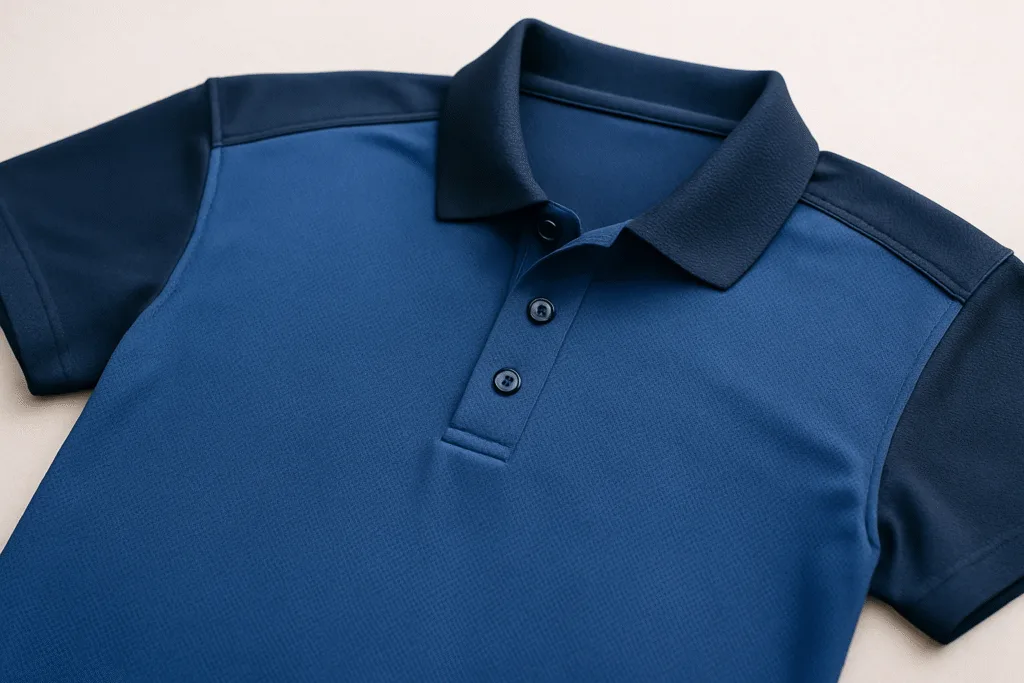
Shade tolerance depends on garment type and end use:
- Uniforms: Demand strict color matching for professional appearance; slight mismatches unacceptable.
- Fashion Casuals: Often tolerate minor shade variation, especially for stone-washed or pigment-dyed looks.
- Kidswear: Bright colors must remain consistent for retail display; extra testing for colorfast safety.
- Sportswear: Polyester and blended knits require extra care due to dye sensitivity and batch consistency.
- Denim: Variation is sometimes embraced as a design element, but must be intentional and controlled.
Shade Control Tactics by Category
- Uniform program: target ±0.5 Delta-E, ultra-strict banding, traceable dye lot codes.
- Sportswear: pilot dye runs, high reliability dyestuff, advanced color QC tech.
- Fashionwear: document intent—whether variation is acceptable or not before ordering.
- Kidswear: frequent batch checks, extra wash/rub testing for color fastness.
Frequently Asked Questions
Why is matching bulk fabric color to a color card so difficult?
Bulk dyeing involves larger machines and fluctuating conditions, so exact shade replication is challenging, even with a precise lab dip match.
What is a dye lot and why does it matter?
A dye lot is a specific batch of fabric dyed together. Different dye lots, even with the same formula, can result in visible shade differences.
How can buyers ensure better bulk color consistency?
Buyers should approve pilot batches on bulk machines, provide clear shade bands, and specify tolerances right from the order stage.
What is the role of shade bands in production?
Shade bands define the acceptable color range for bulk rolls and help QC teams segregate fabric rolls that meet the approved standard.
Which fabrics are most prone to bulk color shade problems?
Polyester, viscose/modal blends, and deep colors like navy, black, and red tend to show the most bulk shade variation.
Can color mismatch in bulk production ever be fully eliminated?
Complete elimination is unrealistic, but rigorous process control, pilot batches, and smart communication dramatically reduce mismatch risk.