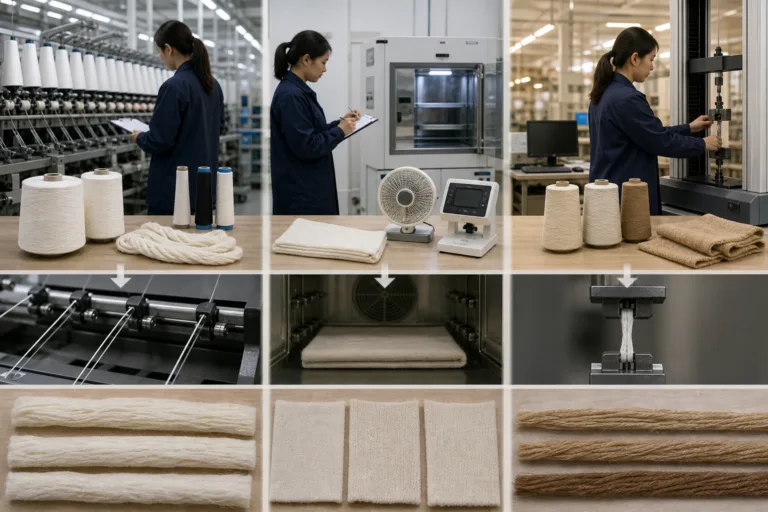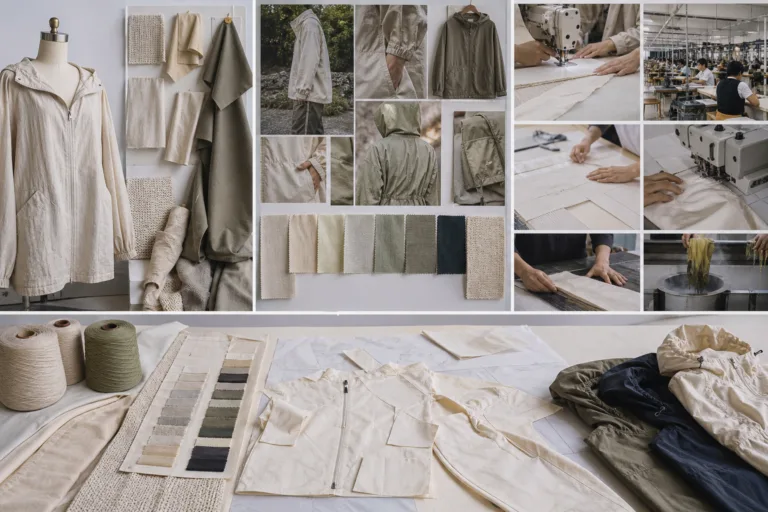
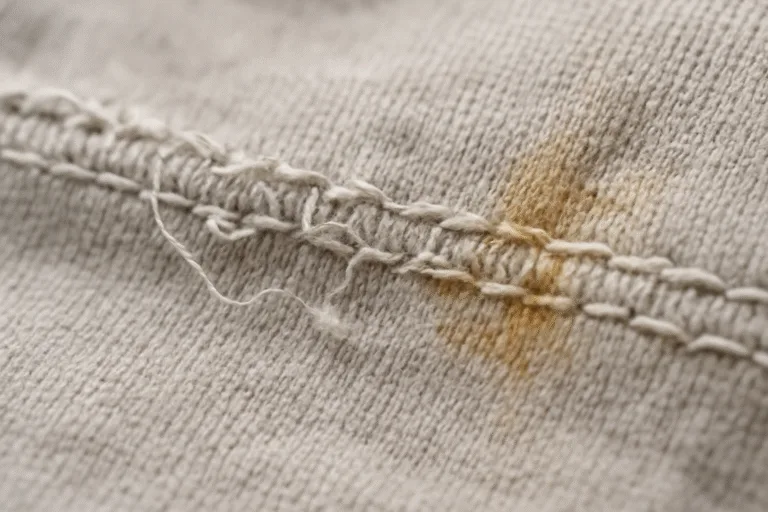
What are Garment Defects?
A garment defect is any deviation from the specified quality standard that affects appearance, function, or durability. Defects can occur at any stage—from fabric knitting or weaving, through cutting and sewing, to finishing and packing. Recognizing these issues early reduces the risk of costly returns or damaged reputation. The three key types of defects—major, minor, and critical—form the basis of factory inspection protocols and buyer acceptance criteria.
Common Garment Defect Types
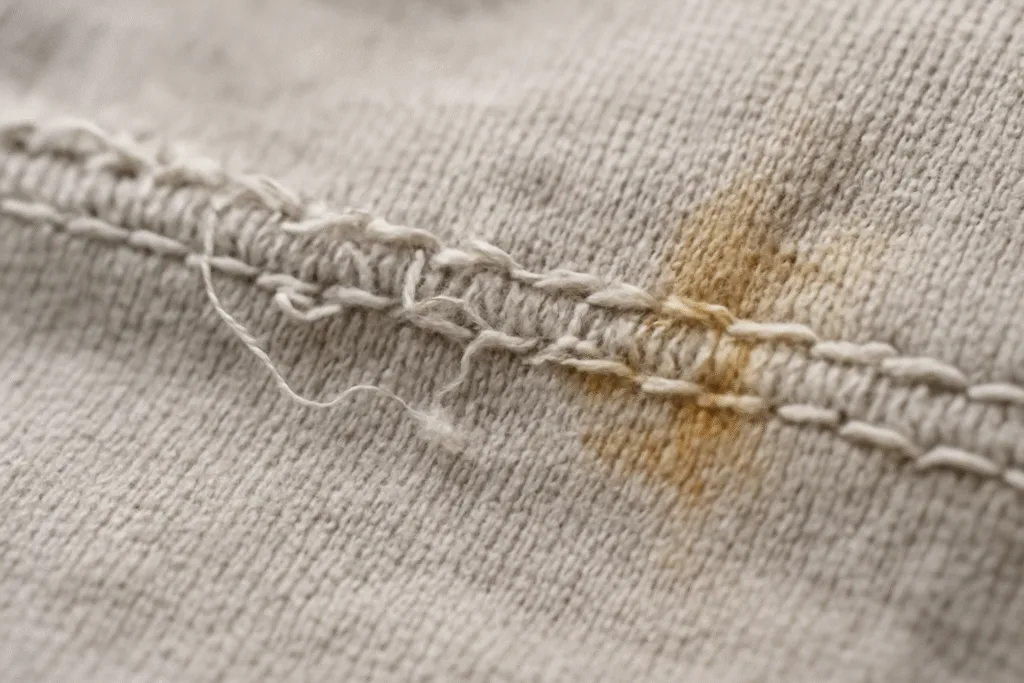
- Broken or skipped stitches
- Stains and discoloration
- Fabric holes or runs
- Open seams or loose threads
- Incorrect measurements or fit
- Poor print or embroidery placement
- Missing trims or faulty accessories
- Puckering or twisting of seams
- Color shading issues
Why Accurate Classification Matters
Properly classifying defects not only streamlines QC inspection but prevents misunderstandings between factories and buyers. It also ensures that serious safety or functional issues are not overlooked, while minor flaws are addressed proportionately. From Rain Chen’s decades of factory experience, clear QC standards, reinforced by training and examples, are key to minimizing disputes and aligning production with global market expectations.
QC Defect Classification Systems
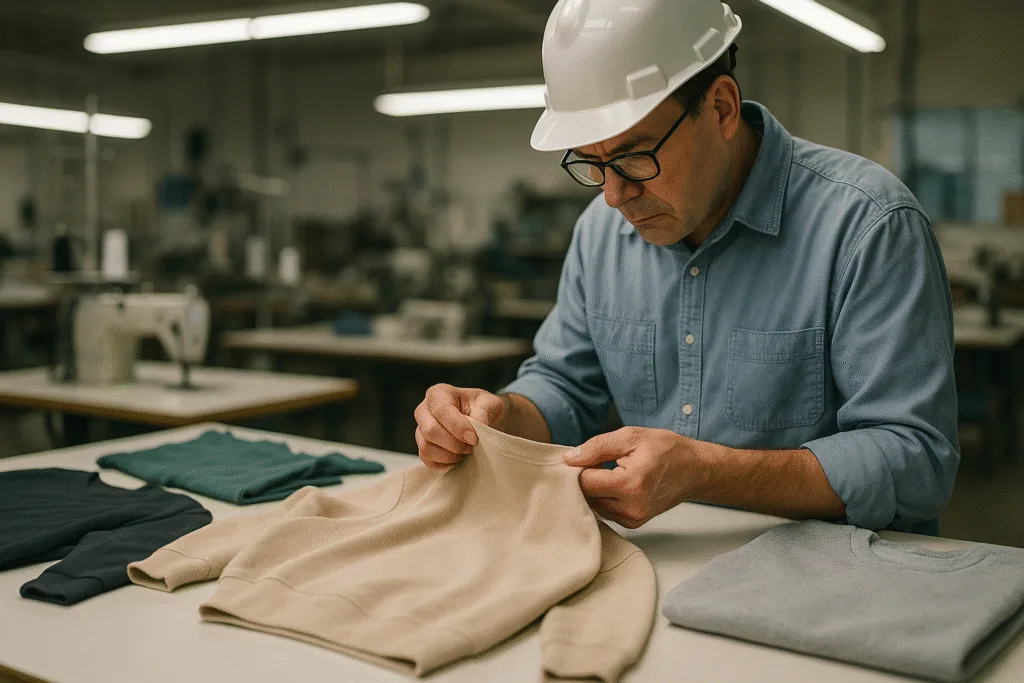
Most factories adopt a three-tier system: Major, Minor, and Critical defects. Some buyers or sectors (e.g., children’s wear, PPE) may add extra rules, but the basic framework follows these principles.
Major Defects
Major defects are easily noticeable and affect the garment’s saleability or intended function, prompting buyers to reject or heavily discount affected pieces. Examples include:
- Broken/ skipped stitches in visible or critical seam areas
- Noticeable stains or marks that can’t be easily removed
- Missed operations (e.g., missing button, incomplete hemming)
- Measurement out of tolerance (e.g., chest width ±2cm off spec for knits)
- Poorly attached trims likely to detach during wear/wash
Minor Defects
Minor defects are less noticeable, do not impact performance, and generally do not prevent sale at full price—though they do reflect reduced attention to detail. Factories track these in audits for continuous improvement. Examples include:
- Slightly uneven stitching not obvious from normal wear distance
- Tiny spots present in inconspicuous areas
- Minor shade variation in inner facing or pocket bags
- Loose threads that are easily trimmed
Critical Defects
Critical defects pose safety hazards or violate major legal or brand compliance requirements. Even one critical defect is enough for a shipment rejection—especially in children’s wear, uniforms, or PPE. Examples:
- Sharp objects (broken needles or glass) found sewn or packed with a garment
- Unauthorized decorations with restricted chemicals (lead, azo dyes)
- Incorrect labeling leading to potential misuse (e.g., wrong size, flammability label missing)
- Foreign matter embedded in seams threatening wearer safety
QC Inspection Methods for Defect Identification
Systematic inspection is central to quality control. Inspectors follow predetermined sampling plans (such as AQL standards) to check a statistically significant percentage of pieces from each production batch. Key steps:
- Visual check across all panels, seams, and critical zones
- Functional tests: e.g., zip performance, attachment security, stretch & recovery
- Measurement checks vs. spec sheets (body width, length, sleeve, etc.)
- Tactile checks for surface defects (pilling, roughness, holes)
- If applicable, compliance verification for labelling, trims, and packaging
Rain’s tip from the production line: “Always illustrate key defect types with photo samples during QC training. Real life examples embed standards better than any written SOP.”
Commonly Found Garment Defects & Examples
Apparel Wiki has compiled thousands of real-world defect cases, but these are among the most typical across factories:
| Defect Type | Description | Impacted Zone | Usual Classification |
|---|---|---|---|
| Broken Stitch | A complete thread break, commonly at join seams, hems, or pockets | Shoulder, side seams, armhole, pocket opening | Major (or critical if safety-related) |
| Skipped Stitches | Gaps in stitch pattern, the needle misses loop formation | Topstitching, hems, any load-bearing seam | Major |
| Stains | Spots due to oil, ink, dye, rust, or handling | Body panels, sleeves, collar/cuffs | Major/Minor (size & location dependent) |
| Holes or Runs | Small holes/laddering, often from fabric snag or cutting | Visible front/back panels | Major |
| Open Seams | Unclosed seam, visible gap left unstitched | Side seam, armhole, crotch, etc. | Major |
| Measurement Deviation | Body or sleeve measures out of spec tolerance | Any measured point | Major |
| Poor Print/Embroidery | Smudging, misplacement, wrong color, incomplete coverage | Front chest, sleeve, back yoke | Major (based on visibility) |
| Loose Threads | Dangling thread, not affecting seam security | Any seam | Minor |
Typical Fabric, Stitch, and Accessory Risks
Some defects recur based on specific garment constructions or materials. For example, single jersey knits are prone to holes from mishandling during cutting, while high gauge lockstitch (ISO 301) on light poplin can cause puckering. Heavyweight fleece often sees skipped stitches if the needle is blunt. Always match needle size and stitch type to the fabric and operation.
Understanding Major, Minor & Critical Defects
This section dives deep into the heart of garment defect classification—defining major, minor, and critical defects within real-world production environments. By understanding the nuances, quality controllers, merchandisers, and buyers can align expectations and reduce costly disputes.
Defining Major Defects
Major defects are flaws that are obvious to customers or affect function. Examples include:
- Seam opening wider than 5mm on visible panels
- Oil stains larger than 10mm in diameter on outer surfaces
- Zip that jams or detaches under moderate force
- Missing or badly attached major trims or brand elements
Defining Minor Defects
Minor defects do not reduce usability, performance, or acceptability for normal sale. They include:
- Visible but small loose threads
- Shade variation only on inside lining
- Tiny stitch irregularity in non-visible facing or hem
Defining Critical Defects
Critical defects violate regulatory or brand safety standards. Any such defect is cause for full or partial shipment rejection. Examples:
- Sharp metal fragment found inside garment
- Toxic chemical residue exceeding country limits
- Choking hazard in babywear not flagged or safely designed
How Defects are Assigned Classifications
Defect assignment is typically codified in a QC manual or mutual buyer-factory agreement. Most follow trade body guidelines and customize by brand risk tolerance or legal requirements. Each defect is logged by type, zone, and frequency, then graded. For example, a small grease spot on an inside label may be minor, but a large stain on the chest of a white T-shirt is almost always major.
Rejection Criteria and Acceptable Quality Levels (AQL)
Defect quantity thresholds—such as maximum X majors or Y minors per lot—are agreed upon using Acceptable Quality Level (AQL) standards. A common buyer AQL is 2.5 for major defects, 4.0 for minors, and 0 for criticals. Surpassing these during a pre-shipment inspection means the batch fails and may require rework, re-inspection, or, for critical cases, full rejection.
Best Practices for Setting Defect Criteria
- Define defect categories with both written standards and example photos.
- Discuss and agree criteria during PP (pre-production) meetings and sampling.
- Review incoming bulk with inline audits before endline inspection.
- Update defect databases with root cause analysis for preventive action.
Root Causes of Common Garment Defects
Many defects stem from preventable causes. Knowing them helps minimize production loss and customer claims.
Fabric Sourcing Issues
Poor quality or inconsistent lots—such as varying GSM, yarn count or color—lead to defects like shade variation, unexpected holes, or excessive shrinkage. Quality control begins at the mill—conduct a 4-point fabric inspection and confirm lab dips for shade accuracy.
Cutting & Sewing Problems
- Cutting too many plies at once causes irregular shapes or fiber fusing
- Dull blades refuse to cut cleanly, leading to jagged edges or runs
- Unbalanced sewing machines cause skipped stitches
- Mismatched thread/fabric leads to seam breakage or puckering
Finishing & Packing Oversights
Oil stains routinely come from neglected sewing machines; contamination from packing materials can appear as spots or yellowing if stored in humid warehouses. Using OEKO-TEX® or equivalent certified trims and caring for iron shoes, worktops, and pressing equipment helps prevent final-stage defects.
Reducing Defects: Practical Tips
Minimizing garment defect types requires systemic attention from design through delivery. Here’s what professionals do at each stage:
- Conduct pre-production risk assessments for new styles and materials
- Invest in operator and inspector training with actual defect samples
- Use auto-spreaders and auto-cutters to reduce manual error in bulk
- Calibrate sewing machines and select correct needles for fabric type
- Implement inline quality checks, not just end-of-line
- Set up final visual audits under both white and UV light for stains
- Keep a root cause log of rejected lots; update work instructions accordingly
Tip: For children’s wear—double-check all trims, secure snap/zip attachment, and test for choking/entanglement risk. Safety standards here are non-negotiable.
Garment Defect Management in Different Product Categories
Inspection criteria may shift between product types:
- T-shirts & Polo Shirts: Focus on collar alignment, body skewing, print quality, and rib/collar joining. Knits must be checked for torque and seam stretch.
- Hoodies & Sweatshirts: Inspect for seam slippage, fabric pilling, zipper strength, and consistent fleece brushing. Oversized fits require precise measurement of drop shoulder points.
- Workwear & Uniforms: Prioritize seam strength, sharp object detection, and label accuracy for size and care instructions. Reflective tape placement and PPE features are always critical defects if incorrect.
- Kidswear: All fastenings and decorations must meet safety and restricted substance criteria; test for needle remnants and securely attach all trims.
Real-world production requires cross-checking buyer requirements with internal QC to avoid costly recalls or returned goods.
Collaboration Between Factory and Buyer on QC Standards

Setting clear expectations about garment defect types and rejection criteria is a collaborative process. At Apparel Wiki, the best partnerships start with early sharing of sample garments, agreed tolerance charts, and defect libraries with visual references. Pre-shipment inspections, size set approvals, and open communication on root causes foster trust and reduce costly misunderstanding or disputes.
Documentation & Traceability
- Each garment should pass through tracked production and QC checkpoints
- Rejection criteria and AQL should be attached to every purchase order
- Digital QC records (photos, comments, timestamps) can curb finger-pointing and speed up corrections
This disciplined approach leads to more reliable supply chains and protects brand reputation long term.
Frequently Asked Questions
What is the difference between a major and a minor defect?
A major defect impacts the garment’s appearance or function and may lead to rejection or discounting, while a minor defect is less noticeable and doesn’t affect performance or saleability.
What is considered a critical defect in garment manufacturing?
A critical defect poses a safety risk or violates regulatory/brand compliance, such as sharp objects, toxic chemicals, or incorrect labeling, and typically results in shipment rejection.
How do inspectors classify defects during a QC audit?
Inspectors check garments against pre-defined standards, using sample photos and criteria lists, and assign each defect as major, minor, or critical before tallying lot results against AQL thresholds.
Can small stains or loose threads cause a garment to be rejected?
Small stains or loose threads located in inconspicuous areas are usually classified as minor; garments with only minor defects are typically not rejected but may need rework or trimming.
How are defect rejection rates determined in garment QC?
Rejection rates are set using Acceptable Quality Level (AQL) standards, specifying how many major or minor defects are permissible in a batch before it fails inspection.
Why is defect classification important for factories and buyers?
Proper classification helps factories control production quality, avoid costly disputes, meet buyer expectations, and maintain consumer trust by ensuring defect-free garments reach customers.