Understanding Wearing Ease & Design Ease in Development
Wearing ease, design ease, and pattern ease are foundational concepts that determine how a garment fits and performs in real-world use. In apparel development, understanding the differences and interplay between these terms is vital not only for pattern makers but also for designers, technical developers, and buyers seeking reliable, comfortable, and well-styled garments. This guide will unpack these concepts, show you how to calculate them, compare typical ease allowances across categories, and explain how they influence comfort, movement, and the final silhouette.
Core Concepts: Wearing Ease, Design Ease, and Pattern Ease Explained
Ease is the additional measurement incorporated into garment patterns beyond the wearer’s actual body dimensions. This extra space enables movement and shapes the overall silhouette. Let’s clarify each term:
- Wearing Ease: The minimum space added to allow basic movements like breathing, sitting, and walking. It’s essential for function and comfort, regardless of garment style.
- Design Ease: Additional space added for fashion or design intention—creating a looser, oversized, or drapey silhouette. Design ease defines the garment’s look beyond basic comfort.
- Pattern Ease: The total ease built into a pattern, equal to wearing ease plus design ease. It’s what you measure between finished garment dimensions and body size.
In factories and sample rooms, mixing up these terms can cause costly fit errors. That’s why seasoned pattern makers track all ease values on spec sheets and technical packs.
Key Differences Between Wearing Ease and Design Ease
While both types of ease contribute to fit, their roles differ significantly in garment development:
| Type | Purpose | Typical Amount | Example Garments |
|---|---|---|---|
| Wearing Ease | Functional movement & comfort | 1–7 cm (varies by area/fabric) | Shirts, trousers, blouses |
| Design Ease | Style/silhouette effect | 0–30+ cm (depends on fashion) | Oversized jackets, A-line dresses |
| Pattern Ease | Sum of wearing & design ease | Varies (see chart below) | All garment categories |
The main distinction: wearing ease is non-negotiable for movement; design ease is a creative choice for styling. In technical development, clarity on these amounts is critical for factory fit, spec sheet accuracy, and bulk quality.
How to Calculate Ease Values in Patterns
Ease calculation is straightforward but must be precise. It begins with accurate body measurements and clear style intent. Here’s the core method:
- Take body measurements: Use industry-standard methods for chest/bust, waist, hip, shoulder, sleeve, and inseam.
- Add wearing ease: Review garment category and fabric type—consult the chart below for typical values.
- Add design ease: Decide on style effect (regular/slim/loose/oversized) and add the required extra cm.
- Calculate pattern measurement: Pattern measurement = body measurement + wearing ease + design ease.
- Check against sample or standard: Compare with reference garments or approved block patterns.
For example, if a woman’s finished bust measurement for a blouse should be 98 cm (body bust 90 cm, 4 cm wearing ease, 4 cm design ease):
98 cm (garment bust) = 90 cm (body bust) + 4 cm (wearing) + 4 cm (design)
Factories must account for fabric elasticity—knits may allow less ease, while rigid wovens may require more for comfort.
Garment Categories: Typical Ease Allowances Chart
Ease values vary by garment type, intended fit, and fabric construction. Below is a practical comparison chart for key categories.
| Garment Type | Fit Profile | Wearing Ease (cm) | Design Ease (cm) |
|---|---|---|---|
| T-shirt (knit) | Fitted | 0–2 | 0–4 |
| Button-down Shirt (woven) | Regular | 4–8 | 0–6 |
| Polo Shirt (pique knit) | Slim/regular | 2–5 | 0–4 |
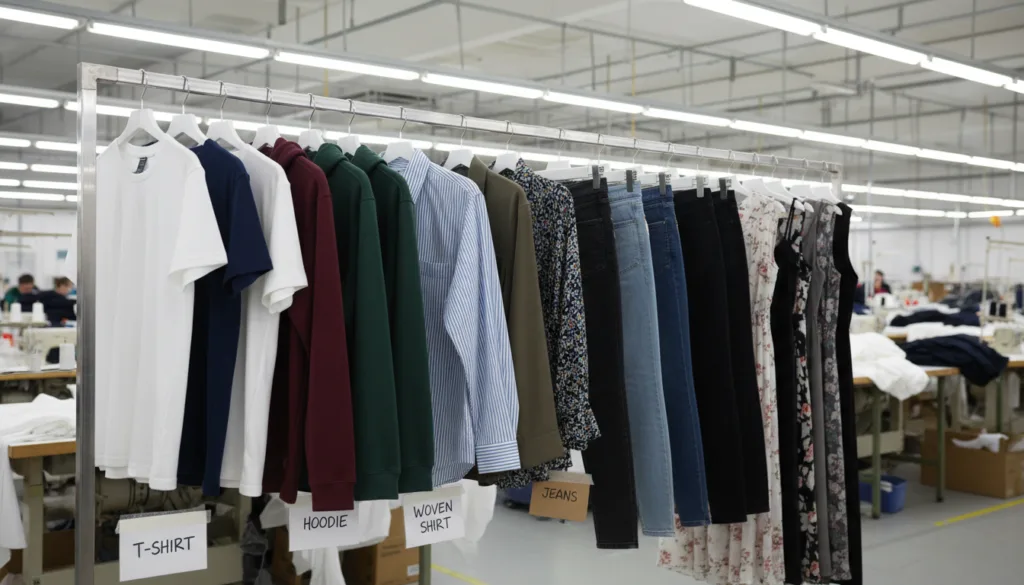
| Hoodie (fleece knit) | Relaxed | 5–10 | 5–15 |
| Jeans/Pants (woven) | Standard | 2–6 | 0–4 |
| Dress (woven) | Fitted/loose/oversized | 3–8 | 3–20+ |
| Sportswear Tights (knit) | Close fit | 0–1 | 0–2 |
| Workwear Overalls (woven) | Loose | 6–12 | 8–20 |
Note: For stretchy materials (elastane/spandex blends), wearing ease can be minimized, but overall comfort should still be tested in wearer trials.
Influence of Ease on Comfort and Garment Silhouette
Ease selection shapes a garment’s character and functionality in several ways:
- Comfort: Proper wearing ease means no straining at seams and unrestricted movement; too little and garments feel tight, too much and the fit becomes baggy.
- Silhouette: Design ease transforms appearance—extra ease gives a relaxed or oversized look; minimal ease results in a tailored, sharp profile.
- Fabric Performance: Bulky fabrics require more ease to avoid stiffness. Lightweight knits may need less, but check for overstretch and distortion.
- Shrinkage & QC: Factories add allowance for shrinkage, especially for cotton knits and wovens. Always review fabric shrinkage test results before finalizing ease values.
Rain’s tip from the production line: “Always verify real-life movement—bend, twist, stretch—when approving samples. On paper, 3–5 cm may look enough, but poorly measured ease can ruin comfort or style in bulk production.”
Practical Steps for Managing Ease in Garment Development
Precise ease management is key for quality and fit consistency. Here’s a checklist for practitioners in factories or buying offices:
- Start with accurate body charts—avoid guesswork.
- Document ease values by garment area in the spec sheet.
- Detail design intent: regular, slim, oversized? Record design ease clearly.
- Match pattern ease to end-use scenario (e.g., sportswear vs. workwear).
- Check shrinkage rates—fabric tests may shift ease allowance needs.
- Run fit trials: movement, sitting, reaching, and stretching.
- For bulk, brief sewing lines and QC teams on critical points to monitor (especially armholes, crotch, side seams).
Good practice means controlling ease at pattern, sample, and bulk stages—avoid relying only on fixed templates, especially with new fabrics or fashion trends.
Fabric Structure, Stretch, and Their Impact on Ease Calculations
Fabric type (woven, knit, blended, with or without stretch) hugely influences ease requirements.
Woven Fabrics
Non-stretch wovens (cotton, denim, canvas) need higher wearing ease for movement; seam allowance and shrinkage also add complexity. For tailored shirts and trousers, ease at key points (chest, waist, hips) is vital to avoid restriction.
Knit Fabrics
Knits (single jersey, pique, fleece, rib) naturally stretch, allowing for tighter fits and less wearing ease. However, stitching and construction must prevent distortion—especially after washing or prolonged use.
Elastane/Spandex Blends
Very close-fitting sportswear, tights, or stretch polos may use minimal ease, relying on fabric recovery. Factories test stretch and return rates to avoid bagging at knees/seat.
Blended Fabrics
Mixed fibers (e.g., CVC, TC) require balance—some stretch, some rigidity. Always sample and test in final use context.
Technical tip: Always check for mechanical stretch and recovery as part of fabric QC, particularly using ASTM or ISO tests for dimensional stability.
Pattern Making Techniques to Incorporate Correct Ease
Pattern engineers integrate ease by adjusting key measurement points:
- Bust/chest, waist, hip: Distribute ease proportionally—avoid excessive allowance in one area.
- Armhole: Wearing ease critical to avoid binding; design ease can exaggerate sleeve volume.
- Sleeve head: Add ease to sleeve cap for tailored styles, minimize for slim fits.
- Shoulder and back: Review range of motion—test for comfort in fit prototypes.
Common factory methods include block pattern adjustment, CAD system grading, and iterative sample feedback. Rain Chen recommends clearly marking ease segments in technical packs and providing graded tables per size to aid QC teams in bulk production.
Quality Control and Fit Approval: Ensuring Correct Ease in Bulk Production
Bulk fit relies on consistent application of pattern ease across sewing lines and garment sizes. QC teams typically check:
- Finished garment measurements against tolerance chart (commonly ±1 cm for body width, ±0.5 cm for sleeve width).
- Try-on and wearer trials for movement—raising arms, crouching, and sitting.
- Comparisons across size sets to confirm graded ease applications.
- Shrinkage and dimensional stability tests after washing—critical for cotton-rich fabrics.
For buyer audits, ensure spec sheets show both base measurements and added ease values by garment area. Any production changes (e.g., substituting fabric lots) must be rechecked for fit and ease impact.
Advanced: Custom Ease Strategy for Fashion and Function
Modern markets call for flexible ease strategies, whether for performance sportswear or fashion statements:
Active/Sportswear
Prioritize movement, body mapping, and stretch testing. Use targeted wearing ease at joint points (elbow, knee) and dynamic pattern pieces.
Oversized/Fashion-led Styles
Employ exaggerated design ease on body and sleeve areas. Layering and drape must be sampled fully—fabric weight/handfeel drives final adjustment.
Uniform/Workwear
Balance comfort (high wearing ease) with durability—seams, pocket areas, and stress points need extra allowance for long-term wear.
Brands and factories often blend both wearing and design ease, adjusting per season or trend. Always test with real wear scenarios, and adjust bulk accordingly.
Understanding Wearing Ease & Design Ease in Development

To master fit and comfort, always start by defining wearing ease and design ease separately for each style. Then combine these values in the pattern, test them in sample trials, and verify actual movement and aesthetic in final fitting. Keep ease documentation clear, especially as fashion trends evolve and material technology advances. In summary, the thoughtful application of ease is the silent foundation of every garment that feels and looks right—whether a crisp shirt, a sports tee, or a relaxed hoodie.
Frequently Asked Questions
What is the difference between wearing ease and design ease?
Wearing ease provides functional comfort for movement, while design ease shapes the garment’s style and silhouette beyond basic comfort.
How do I calculate pattern ease for a garment?
Pattern ease equals wearing ease plus design ease, both added to the body measurement to get the final pattern dimension for each garment part.
Does fabric type affect ease requirements?
Yes, non-stretch wovens need more ease; stretch knits and elastane blends allow for tighter fits with less wearing ease, but testing is critical.
Can shrinkage impact ease calculations?
Absolutely; shrinkage must be considered in both pattern and ease values during development, especially for cotton-rich or unfinished fabrics.
What are typical ease values for common garment categories?
Ease varies: shirts need 4–8 cm wearing ease, T-shirts 0–2 cm, hoodies 5–10 cm, jeans 2–6 cm, and dresses or oversized items even more.
How do factories check for correct ease in bulk production?
Factories use measurement checks, wearer trials, and tolerance charts to confirm ease and fit consistency before bulk shipment.