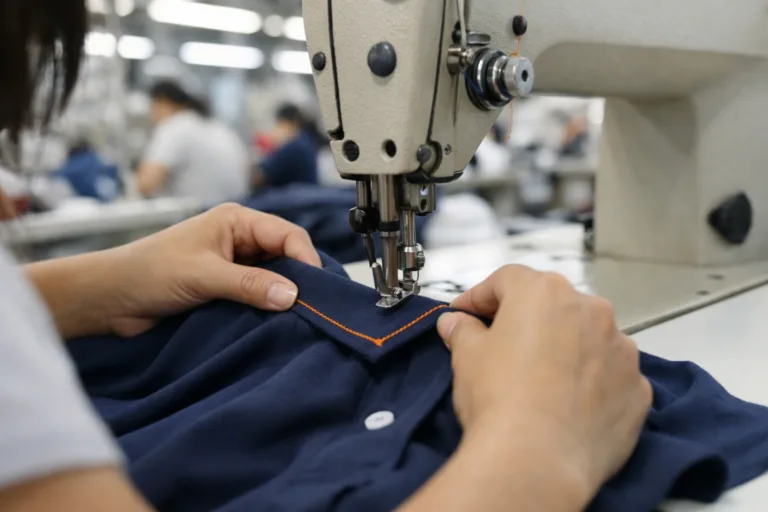
Introduction to Topstitching: Elevating Garment Design and Durability
Topstitching is one of those essential sewing techniques you’ll encounter everywhere in the apparel industry, from detailed fashion pieces to rugged workwear. Its role extends far beyond decoration—topstitching combines functionality, durability, and visual appeal. Both newcomers and seasoned hands in garment production need to understand the topstitch meaning, as decisions about where, when, and how to topstitch directly impact the performance and aesthetics of finished garments.
This comprehensive guide draws on decades of factory expertise to demystify topstitching. We’ll explore its technical definition, the crucial difference between topstitching and other stitches, thread choices, common applications, top stitching pitfalls, and real-world production checks. Whether you’re developing a new garment line or improving QC practices, mastering these details is key for success in modern apparel manufacturing.
Topstitch Meaning: The Definition and Its Importance
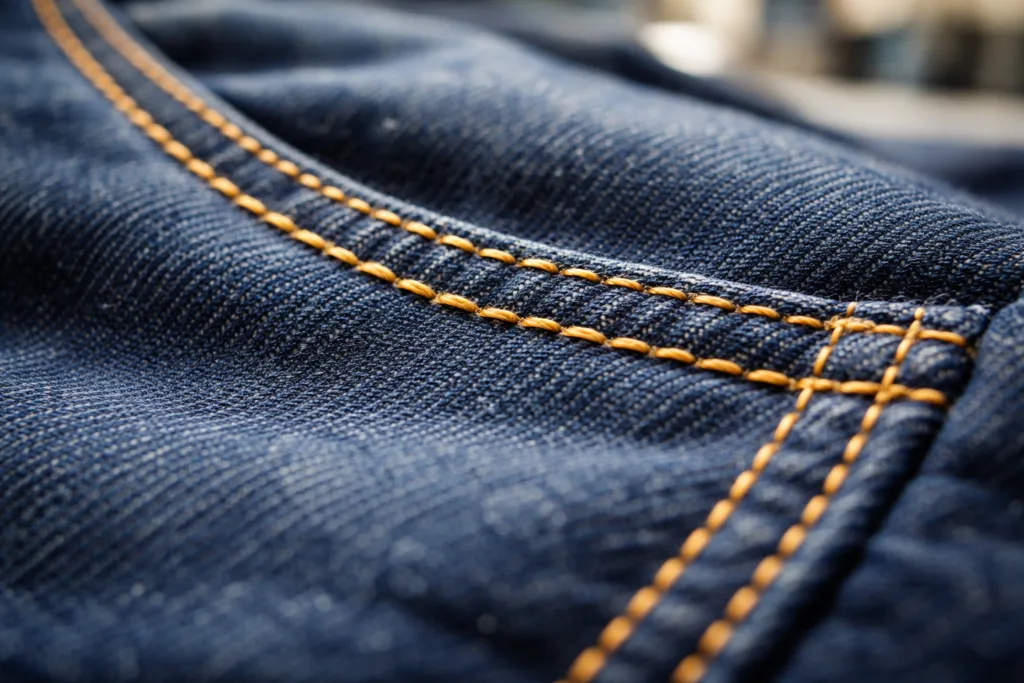
Topstitching, in garment terminology, is a visible line of stitching sewn on the external or “right” side of fabric, typically parallel to seams or garment edges. Unlike construction stitches that join internal fabric layers, top stitching is usually done for reinforcement, preventing seam allowance shifting, adding structure, or for decorative purposes. The chosen thread is often thicker or more vibrant to enhance visibility and design impact.
Contrast: Topstitching vs. Regular Machine Stitching
- Topstitching: Done on the garment exterior; both functional and decorative; generally uses longer stitch length and sometimes special thread.
- Regular stitching: For construction; usually hidden inside the garment; focused on seam strength and integrity.
Why Topstitching Matters
Whether adding character to jeans or reinforcing a shoulder seam, topstitching helps manage fabric layers, corrects drape, and communicates quality to the customer. In export factories, a well-executed topstitch is often a clear sign of premium craftsmanship.
How Topstitching Works: The Process and Key Parameters
Topstitching is usually performed with a lockstitch or chainstitch machine, sometimes using specialized feet to maintain uniform distance from garment edges. Most factory operators follow set guidelines for stitch length, thread thickness, and placement, all specified in the garment tech pack.
Stitch Length and Thread Type
| Fabric Type | Recommended Stitch Length (mm) | Best Thread Choice | Usual End Use |
|---|---|---|---|
| Denim (Midweight/Heavy) | 3.0–4.0 | Polyester/Poly core spun, strong; Tex 40–60 | Jeans, overalls, jackets |
| Cotton Jersey/Rib | 2.5–3.0 | Cotton-covered poly, spun poly; Tex 27–40 | T-shirts, polos, casualwear |
| Shirting Wovens | 2.5–3.0 | Fine spun poly, CVC poly-cotton; Tex 24–30 | Dress shirts, uniforms |
| Activewear Knits | 2.0–2.8 | Fine continuous filament poly; Tex 18–27 | Sportswear, leggings |
Common Topstitching Setups
- Single line: Along seam edge, e.g., pocket openings, collars.
- Double line (parallel): Classic on denim, jackets, cargo pockets.
- Decorative patterns: For fashion pieces, can follow curves/ornate designs.
Decorative and Functional Roles of Topstitching
One of topstitching’s greatest strengths is its dual function. Decorative topstitching elevates garment look—think contrast-color thread on a blue denim jacket, or crisp lines outlining patch pockets. Functionally, top stitching reinforces stress points, keeps seam allowances flat, and controls garment stretch or distortion at openings.
Key Decorative Applications
- Decorative lines on outerwear (jackets, coats, biker leathers)
- Contrast stitching for branding or style accents
- Ornamental motifs on kidswear and uniforms
- Shaping and sculpting collars, lapels, and plackets
Functional Topstitching Scenarios
- Reinforcement for pocket openings, fly seams, shoulder and armhole joins
- Preventing seam allowance rolling at necklines, waistbands, cuffs
- Maintaining flatness at zipper placements and facings
- Supporting heavy trims, appliqués, or layered decorations
Rain’s tip from the production line: “A crisp double-topstitch on denim can double garment life at high-tension stress points. Poorly executed topstitching, on the other hand, will signal low quality to any buyer.”
Thread Choices for Top Stitching: Performance and Aesthetics
The thread selected for topstitching must suit the garment’s fabric, intended use, and desired look. Thread diameter, fiber content, twist, and finish all play a role in durability and stitch appearance. Factories typically rely on a combination of technical test data and visual samples to approve thread before bulk production.
Thread Types and Their Uses
- Polyester core spun: Combines strength, minimal shrinkage, and good colorfastness. Ideal for denim, jackets, workwear.
- Cotton-covered poly: Natural handfeel with inner strength. Suits premium shirts and classic polos.
- Mercerized cotton: Luster and smooth finish—great for visible lines on light wovens.
- Heavy contrast thread: For statement seams (e.g., Tex 60 in gold on indigo jeans).
- Fine filament poly: Used where subtlety is directed—shirts, sportswear, performance knits.
Color and Finish Considerations
- Contrast thread: For visual pop (e.g., white on black, orange on green)
- Matching thread: Discreet strength, nearly invisible on tone-on-tone garments.
- Matte/Gloss finish: Impacts how the topstitch blends into or stands out from the fabric surface.
- UV/Colorfastness: Critical for sports, uniforms, and children’s wear—thread must resist fading or bleeding after repeated laundering and sunlight exposure.
Topstitching on Different Fabrics: Adapting Practice by Material
Every fabric presents distinct topstitching challenges. Heavy twills and denims require strong needles, thicker thread, and sturdy machines, while fine shirts need finer thread, smaller needles, and careful tension adjustments. Shrinkage allowance, puckering risk, and fabric stretch must be considered before running bulk.
Managing Puckering and Stretch
- Stabilize stretch fabrics (use interfacing, apply gentle tension only)
- Pre-wash/shrink fabric before topstitching to avoid seam distortion later
- Choose correct presser foot and adjust pressure to suit bulk of seam allowances
Examples by Fabric Type
- Denim and Canvas: Strong topstitch thread, wide seam margins, reinforced stress points.
- Soft Knits: Small needles, stretch-compatible thread, reduced tension.
- Silk and Delicates: Fine, smooth thread; short stitch length, minimal backstitching.
Common Topstitching Uses Across Garment Types
Inspecting garment racks from any global factory, you will notice topstitching accents nearly every apparel category. Each has its own top stitching signature—here are some pillar uses:
Jeans and Pants
- Double topstitch along outseams and pockets for strength, longevity, and style
- Heavy decorative thread for brand identity
T-Shirts and Polos
- Single topstitch around neck rib, armholes, and bottom hem prevents curling and improves finish
- Decorative contrast lines on chest panels or sleeve inserts
Outerwear
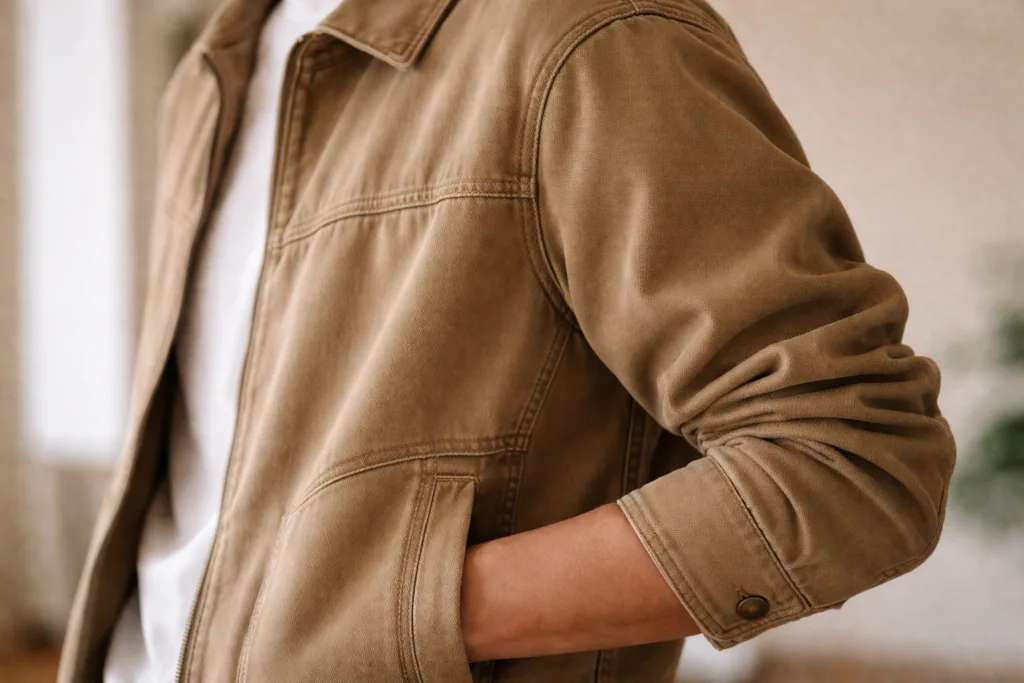
- Emphasized topstitching around seams, pockets, flaps for shaping and prominence
- Functional lines along cuffs, hoods, and zipper plackets
Sportswear and Performance Apparel
- Flatlock or coverstitched topstitching on seamlines for minimal bulk and high stretch at joints
- Reinforced lines at pocket entries and wearable tech integration points
Technical Challenges and Quality Control in Topstitching
Even experienced factories face critical QC issues with top stitching. Common faults include skipped stitches, tension imbalance, needle holes, misalignment, visible thread tails, and puckered seams. Print these on spec sheets and buyer checklists to minimize rejects.
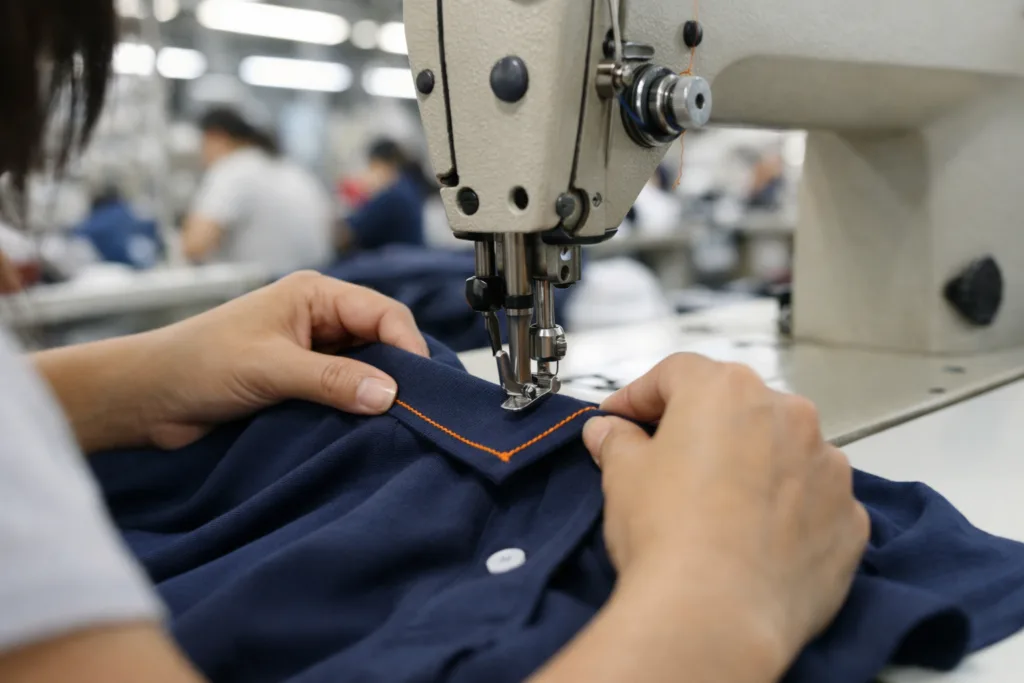
Inspection Criteria for Topstitching
- Stitch line must be straight and uniformly spaced from edge/seam (±2 mm industrial tolerance)
- No skipped or loose stitches over ≥10 cm of seam
- Thread tension balanced—no looping or breakage on face or reverse
- Consistent thread color and luster across garment batch
- Puckering controlled—especially at curves, corners, and join points
Factory Remedies
- Regular machine calibration and needle replacements
- Operator skill training for handling complex seam paths
- Bulk fabric walk-in/relaxation and preshrink checks
- Final inspection before pressing and packing
What Is “Topstitching”?
Summarizing the topstitch meaning: Topstitching is a specialized line of visible stitching, placed strategically on the garment’s exterior for both visual effect and enhanced function. It distinguishes itself from construction stitches by offering structure, edge control, and unique style elements. Key decision points include stitch type, thread selection, seam positioning, and finishing quality—all clearly specified in a product’s technical documentation.
Common Topstitching Mistakes
- Wrong thread type or size (leads to breakage or poor appearance)
- Poor seam alignment (undermines both strength and aesthetics)
- Incorrect stitch length (too short = puckering; too long = weak hold)
- Unbalanced tension or skipped stitches
Production and Buyer Tips
- Align thread and stitch parameters with garment use and spec—don’t just follow automation defaults
- Preapprove topstitching samples on actual bulk fabric to avoid surprises
- Include topstitch QC on all inspection points for stress zones (shoulders, pockets, waists)
- Evaluate not just function, but how the topstitch design supports garment branding and end-user expectations
Topstitching, when executed with care and precision, is an enduring mark of factory-level craftsmanship—giving garments lasting strength, premium look, and distinctiveness customers notice.
Innovations and Trends in Top Stitching
As garment manufacturing evolves, new machinery and thread formulations continue to shape the way topstitching is used. Automated programmable sewing heads can now execute ornate decorative patterns in mass production. Eco-friendly threads derived from recycled polyester or certified organic cotton are rising in popularity with sustainable brands. Meanwhile, reflective and glow-in-the-dark threads add technical style and safety to contemporary sportswear and children’s lines.
Emerging Decorative Techniques
- Multi-color topstitching through twin-needle or programmable machines
- Use of metallic, luminous, or textured threads for visual intrigue
- Laser-guided alignment for perfect stitch placement on challenging seams
Performance and Sustainability Demands
- Threads with OEKO-TEX® or GRS certification in eco garment programs
- Improved abrasion, colorfastness, and UV resistance
- Demand for higher topstitch density in heavy-duty and athletic apparel
Factories that embrace these trends not only improve production efficiency but also deliver garments squarely targeted at modern market needs.
Practical Steps: Specifying & Testing Topstitching in Production
Integrating flawless topstitching into a garment is a cross-functional effort. Patternmakers, sample room managers, and sewing line supervisors must communicate clear standards, while buyers and brands need robust testing protocols. Here’s a step-by-step reference from the Apparel Wiki process playbook:
- Patterning: Mark topstitch locations on all relevant pattern pieces and technical drawings.
- Tech pack: Specify stitch type (code), thread material/size/color, spacing from seam edge, start/stop points, and intended function/decor effect.
- Sampling: Request pre-production samples using bulk fabric and thread; evaluate for puckering, coverage, color pop, and thread performance post-wash.
- QC checks: Inspect bulk according to stitch tolerance and defect checklists outlined above. Use both visual and tensile testing methods where required.
- Final review: Ensure topstitching aligns with garment brand vision, intended market segment, and real-world durability expectations.
Summary Table: Topstitching in Garments at a Glance
| Garment | Placement | Function | Thread Choice |
|---|---|---|---|
| Denim Jeans | Pocket edges, outseams | Strength & decoration | Heavy core-spun, contrast |
| Polo Shirt | Collar, placket, hem | Prevent rolling, style | Fine poly-cotton, match/contrast |
| Jacket/Outerwear | Seams, cuffs, hoods | Shape, strength, accent | Strong polyester or nylon |
| Sportswear | Flat seams, panels | Flexibility, performance | Fine stretch/filament poly |
With detailed planning and discipline, topstitching transforms both utility items and high-fashion garments into products that perform, last, and stand apart in the market.
Frequently Asked Questions
What is the main purpose of topstitching?
Topstitching is mainly used for both decorative and functional reasons—adding visual style, reinforcing seams, and keeping fabric layers flat in finished garments.
What thread is best for top stitching jeans?
Heavy-duty polyester or polyester core-spun thread in Tex 40–60 is preferred for denim jeans, often in a strong contrast color for added style and durability.
How do you prevent puckering when topstitching?
Choose quality thread and appropriate needle size, adjust tension settings, stabilize fabric, and always pre-wash or preshrink materials before sewing to avoid puckering.
What mistakes should I avoid with topstitching?
Common mistakes include using the wrong thread type, poor seam alignment, incorrect stitch length, uneven tension, and not accounting for fabric stretch or shrinkage.
Is topstitching only for decoration?
No, topstitching also plays important structural roles—such as reinforcing pockets and seams, controlling stretch, and preventing fabric edges or allowances from shifting.
Can I topstitch all types of fabric?
You can topstitch most fabrics, but thread, needle, and stitch settings must be adjusted to suit each material’s weight, stretch, and texture for optimal results.