Introduction to Bias Cut in Garment Manufacturing
The “bias cut” is a foundational concept in apparel design and production, renowned for adding elegance, fluidity, and a distinct silhouette to garments—especially skirts and dresses. Factory professionals, designers, and buyers alike must understand the true meaning of bias cut, how bias fabric behaves, and why industry experts choose this method for certain styles. This article delivers an in-depth, practical overview of the bias grain definition, the special stretch and drape bias cutting enables, and real-world use cases you’ll find in quality garments. Every section is tailored to both newcomers and those working in garment factories, with hands-on advice drawn from decades of production experience.
Bias Grain Definition: The Foundation of Bias Cut Meaning
To truly grasp the bias cut meaning, begin with fabric grains. Every woven fabric has three main directional grains:
- Lengthwise grain (warp): Runs parallel to the selvedge; least stretch, highest stability.
- Crosswise grain (weft): Perpendicular to selvedge; moderate flexibility, slight mechanical give.
- Bias grain: Set at a 45-degree angle to the lengthwise and crosswise grains—the bias—where the fabric exhibits the most stretch and drape without elastane or spandex fibers.
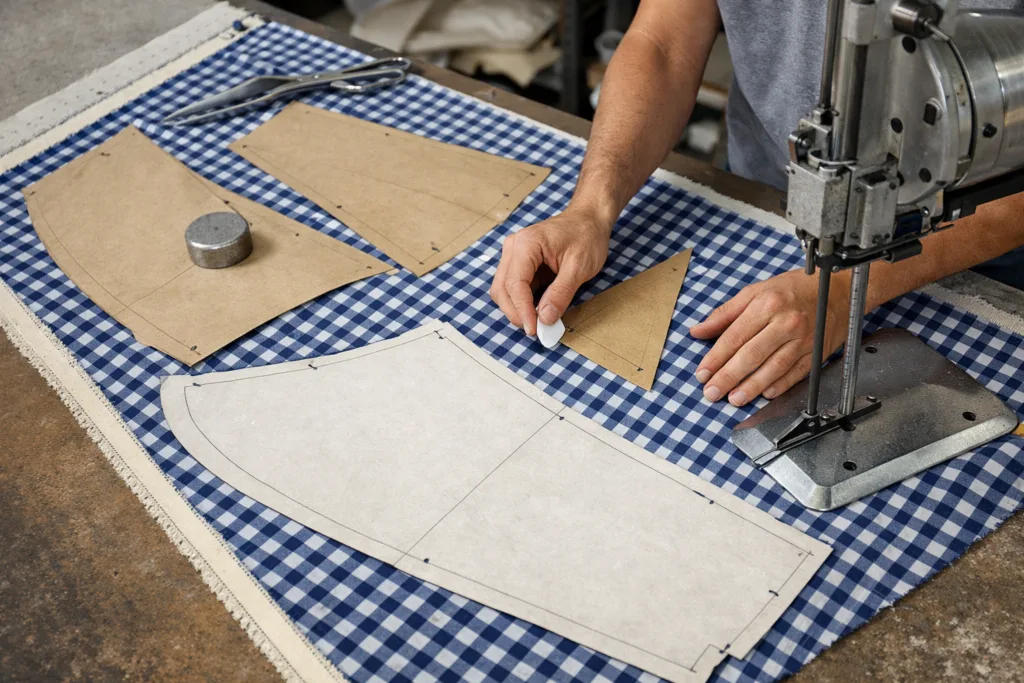
In apparel factories, technicians use specialized marking tools to locate the 45° true bias before cutting. On a standard woven plain weave, the bias grain line is the imaginary diagonal that yields optimal mechanical give. This is the essence of bias fabric: when an apparel piece is cut on the bias, its pattern is laid so that critical seams and edges follow the bias direction, not the typical vertical or horizontal grain.
The Properties of Bias Fabric: Stretch and Drape Unlocked
What sets bias fabric apart is its mechanical stretch and drapability, even in fibers with no built-in elasticity like cotton, silk, or viscose. This is particularly important for manufacturers striving for graceful garments that skim the body, flow, and move naturally. On the production line, you’ll literally feel a bias-cut panel stretch 10–20% more across its width compared to a straight-cut one. That property is harnessed to create perfectly fitting, curve-hugging silhouettes without resorting to elastic fibers.
Key Properties of Bias Fabric
- Increased Horizontal Stretch: Woven fabrics cut on bias offer natural give, useful for fitting body curves.
- Superior Drape: Bias cut allows garments to fall and move with a smooth, liquid-like appearance.
- Shape Retention Risks: Poor handling can cause panels to distort, so accurate cutting and handling are critical.
- Seam Stability Concerns: Special seam techniques may be needed to control unwanted stretch or warping at hems and seams.
Bias Cut Meaning in Modern Apparel
The bias cut meaning in today’s garment production is straightforward: to maximize the inherent stretch and drape of non-stretch woven fabric by aligning key pattern pieces along the true bias (45° angle). Unlike standard upright cuts, bias cut construction fundamentally changes how a garment moves and fits.
Why does this matter in a factory setting? Because bias-cut garments require different planning, fabric utilization, and careful line control—yet bring unique value to designers and end users. For skirts, dresses, and eveningwear, bias cut unlocks property profiles impossible with straight-grain layouts.
Misconceptions and Factory Checks
- Don’t assume bias cut is only for luxury: mid-range fashions use it for movement and comfort too.
- Avoid underestimating fabric waste—bias layouts increase consumption up to 30% over straight layouts, impacting cost.
- Carefully check cutting room markers and alignments; mistakes here ruin both fit and drape in final garments.
| Direction | Alias | Stretch (%) | Typical Stability | Best Use in Garments |
|---|---|---|---|---|
| Lengthwise | Warp | 3–5% | Maximum | Seams, body of shirts, pants, trousers |
| Crosswise | Weft | 5–8% | Medium | Waistbands, cuffs, facings |
| Bias (45°) | Bias grain | 15–25% | Lowest | Skirts, dresses, bias-cut trims, necklines |
Pattern Making on the Bias: Key Considerations
Technicians must adapt both pattern and marker making when cutting on the bias. In many experienced factories, pattern makers add extra allowance for seams and hems—since bias-cut pieces will both shrink and stretch after sewing. At Apparel Wiki, we encourage a strict approach to pattern balance and symmetry, especially for full-circle or wrap silhouettes.
Marker Planning for Bias Cut
- Identify entire layplan requirements for bias-cut panels and map 45° grainlines on paper patterns.
- Add extra length (usually 2–4cm) for anticipated panel stretch, especially in long skirts or dresses.
- Position major pattern pieces first to optimize fabric yield—anticipate up to 25–30% higher fabric consumption.
Cutting and Handling
- Let fabric relax for several hours before spreading/cutting to reduce distortion risk.
- Use sharp, fine blades (often band knife) for crisp edges on bias panels.
- Bundle and transport bias cut pieces with care; avoid stretching or hanging unsupported.
Bias Cut Fabric in Skirts and Dresses: Classic & Modern Uses
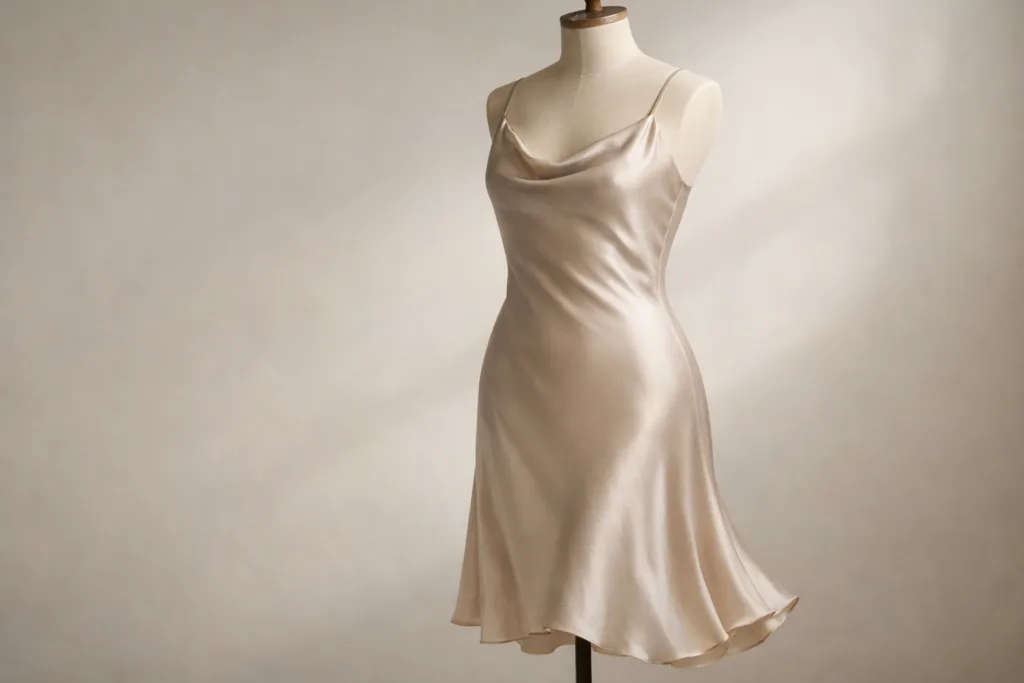
From early 20th-century gowns to today’s fluid slip dresses, bias cut fabric delivers iconic looks in both luxury and contemporary apparel. Its unique stretch enables designers to create fitted, body-skimming–yet comfortable–silhouettes with natural movement. In factories, the bias cut is standard for styles like flared skirts, trumpet hem dresses, and bias-bound trims.
Iconic Examples
- Silk slip dresses that softly contour the body without darts.
- A-line and flared skirts that move gracefully with every step.
- Grecian-style gowns with dramatic, flowing drape along the hem.
- Bias-bound neckline treatments for both knits and wovens.
Rain’s tip from the production line:
Always check the garment balance on dress forms after assembly—a bias-cut skirt hem may need trimming after hanging overnight, to adjust for the natural stretch that occurs.
Garment Construction Techniques for Bias Cut Pieces
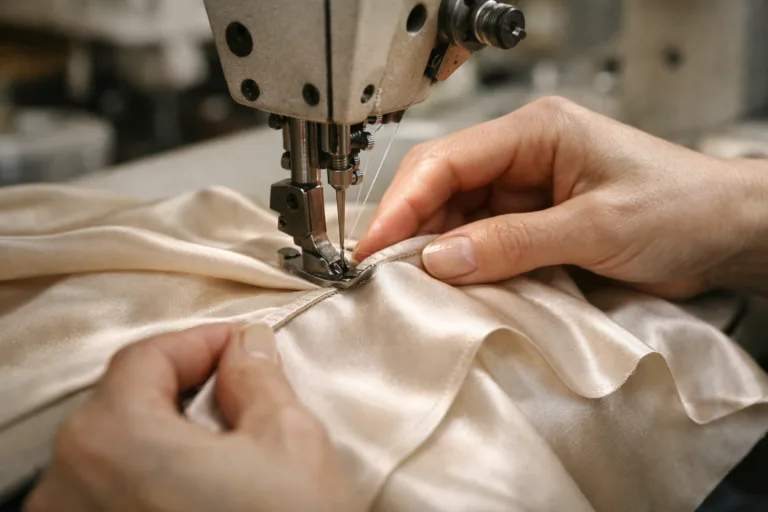
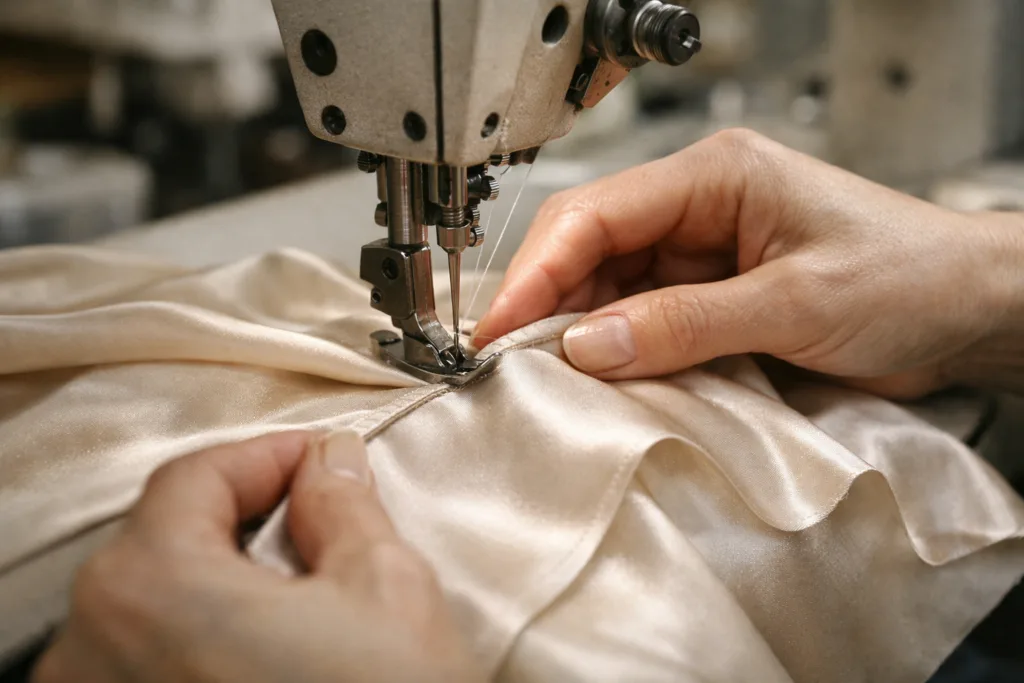
Sewing bias fabric brings specific technical challenges for both operators and quality control. The fabric’s increased drape and stretch can easily distort seams or cause uneven hems if not handled correctly. Garment construction on the bias requires slower sewing speeds, specialized stitches, and often temporary fusing at tricky points.
Stitching Considerations
- Stitch Type: Use lockstitch (ISO 301) with moderate tension for side seams; fine zigzag for delicate silks.
- Seam Type: French seams, bias binding, or double fold narrow hems are preferred for clean edges.
- SPI (Stitch Per Inch): Typically 10–14 for lightweight bias panels; avoid excessive density to reduce puckering.
- Seam Stabilization: Lightweight tape or fusible interfacing may be added to avoid stretching at strategic points.
Hemming and Finishing
Because bias hems often stretch unevenly, skilled factories hang completed garments for 12–24 hours before final hemming. Steam pressing and flat pressing are employed to settle the fabric. Skilled hand trimming may be used for precise, level hems on premium pieces.
Quality Control and Performance Testing for Bias Cut Garments
Bias cut manufacturing demands extra vigilance in both inline and end-line quality control. Factories usually conduct dimensional stability and distortion checks before approving packing. Unlike straight grain garments, bias cut styles can continue stretching or shifting in transit if mishandled.
Critical QC Points
- Drop Measurement: Confirm that skirt/dress hems are balanced front to back after hanging.
- Seam Slippage: Test for seam security, especially on lightweight or slippery fabrics.
- After-Wash Stability: Wash test samples for distortion before mainline production.
- Puckering and Wrinkles: Inspect for unwanted seam puckering along curves.
Performance Testing Methods
- Run stretch and recovery checks (pull bias fabric 20% and observe rebound).
- Conduct at least one before/after wash measurement of garment length/width.
- Assess handfeel and drape after iron/steam cycle to ensure lasting appearance.
Practical Tips for Designers, Buyers, and Factories
When specifying bias cut garments, clear documentation and pre-production sampling are vital. Experience on the production floor reveals five keys to success for all stakeholders.
- Specify True Bias in Patterns: Mark arrows and placement for all panels requiring 45° alignment.
- Communicate Fabric Needs: Approve bulk yardage estimates early; factor in extra for marker inefficiency.
- Pre-approve Shrinkage Allowances: Test with lab dips and production samples to confirm accurate fit post-wash.
- Inspect Sample Hems and Seams: Build sample review into the process for visual checks and wear trials.
- Train Sewing Line Operators: Coach on lower tension, smooth feeding, and use of stabilizers where needed.
What Is “Bias Cut”?
So, what is bias cut? In precise manufacturing terms, a bias cut means cutting fabric panels at a 45° angle to the grain, exploiting the inherent diagonal stretch of woven textiles. This technique transforms the look and feel of a garment—enhancing both visual appeal and wearability. Typical uses revolve around skirts and dresses where drape, flow, and a body-skimming fit are in demand, but bias cut also appears in trims, sleeves, and even men’s shirts for certain design effects.
Why It Matters
Understanding the bias cut meaning isn’t just academic—it’s essential for all parties aiming for high-quality apparel. The right implementation of bias cutting yields garments with superior drape, improved fit, and unique style, even when using standard woven fabrics. The production nuances of bias cut may increase fabric cost and time in the cutting room, but the payoff is clear in consumer satisfaction and garment performance.
Manufacturer’s Checklist for Bias Cut Garments
- Pattern specifies and marks all bias aligments
- Advanced marker planning for optimal fabric usage
- Extra fabric allowed for stretch and marker waste
- Panel stability managed with careful handling and sewing
- Critical pre-shipment checks for distortion, drop, and seam strength
By embracing these best practices, factories and brands alike deliver bias cut garments that stand the test of time—in both style and durability.
Frequently Asked Questions
What does bias cut mean in garment production?
Bias cut means cutting fabric panels at a 45-degree angle to the grain, maximizing mechanical stretch and drape, commonly used in skirts and dresses for a fluid fit.
How does bias cutting affect fabric consumption?
Bias cutting increases fabric usage by around 20–30% compared to straight grain cutting due to less efficient marker layouts and extra panel allowances.
What fabrics are best for bias cut garments?
Light-to-medium weight wovens with soft handfeel, such as silk, viscose, crepe, and lightweight cotton, are ideal because they drape well and show bias stretch more elegantly.
How can manufacturers control distortion in bias cut garments?
By allowing fabric relaxation before cutting, handling panels gently, stabilizing seams, hanging garments before hemming, and using moderate SPI, factories can manage distortion risk.
What types of stitches are suitable for bias cut seams?
Lockstitch with moderate tension and narrow zigzag are preferred, as well as French seams or bias-bound seams to handle drape and minimize puckering on curves.
Are bias cut techniques only for luxury apparel?
No, bias cut is found in both luxury and mid-range garments wherever enhanced drape, movement, or comfortable fit is required, especially for skirts or fluid dresses.