Introduction: Why Do Knit Necklines Become Loose?
Knit garments are prized for their comfort and stretch, but one of the most common quality frustrations is a loose neckline. Whether it’s a crewneck T-shirt, sweatshirt, or a delicate baby bodysuit, a stretched-out rib neck spoils both the fit and silhouette—and signals potential flaws in materials or construction. Understanding why knit necklines become loose is essential for designers, buyers, garment technologists, and factory quality teams alike. In this article, we’ll explore the root causes of loose necklines, focusing on rib quality, rib stretch issues during sewing, and the role of stay tape methods—all grounded in decades of real factory experience.
Understanding Knit Necklines: Anatomy and Function
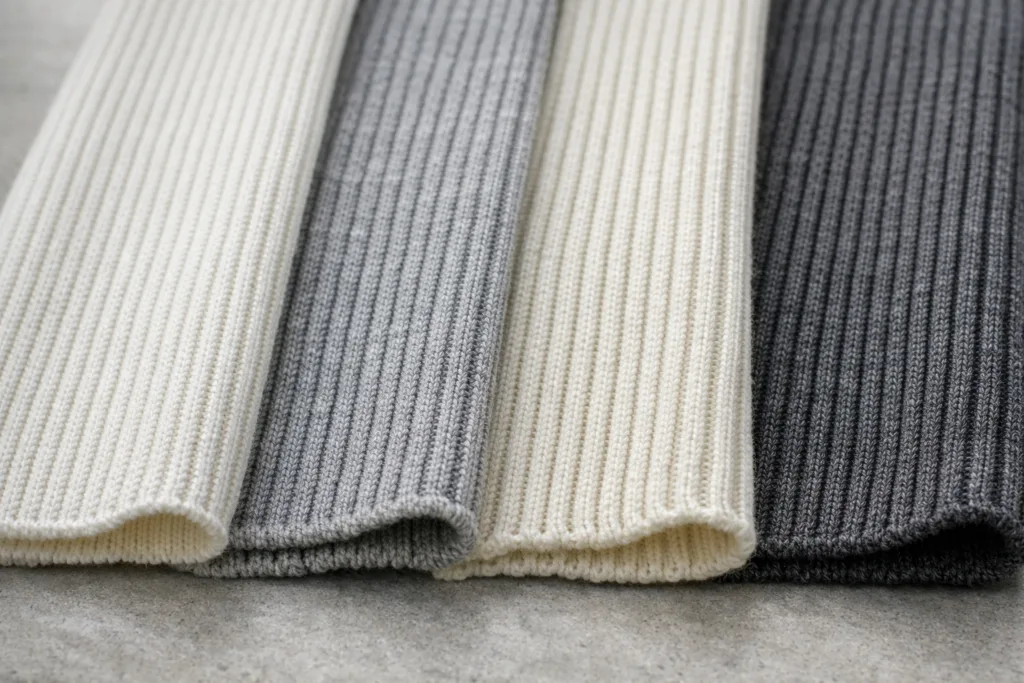
Knit necklines, especially on casual tops like T-shirts and sweatshirts, typically use rib fabric for binding or collars. The rib provides elasticity, recovery, and structure, helping the neckline return to its original shape after stretching. However, not all rib knits are created equal, and poor choices or handling can quickly lead to that dreaded loose neckline.
Key Components of a Knit Neckline
- Rib fabric: Most often 1×1 or 2×2 rib; may be 100% cotton or blended with spandex (elastane) for better recovery.
- Sewing construction: Typically attached with an overlock, then topstitched with coverstitch for flatness and durability.
- Stay tape (optional): Inserted for added structure, especially in lighter weight or highly stretched necklines.
Importance of Stretch and Recovery
The success of a knit neckline lies not just in its ability to stretch over the head, but in how well it recovers to maintain fit. Both fabric and construction details play a role.
Rib Quality: Foundation of Neckline Stability
Rib quality is arguably the most critical factor affecting whether a neckline stays snug or becomes slack. Superior rib fabric doesn’t just stretch more; it bounces back repeatedly, even after washing or wearing.
Material Composition
- 100% cotton rib: Soft and traditional, but limited recovery—can become baggy over time.
- Cotton/spandex blend: 3% to 8% spandex dramatically improves resilience and shape retention.
- Polyester blends: Adds durability and colorfastness but may feel less natural; blends especially common in sportswear.
Rain’s tip from the production line:
Always ask the mill or supplier for the stretch and recovery test results (typically measured as a % in both directions after defined cycles). Insist on seeing post-wash values, not just dry state.
Knitting Structure and Stability
The tightness and regularity of the rib knit determines both feel and strength. Loose ribs or uneven tension can collapse with minimal use. Finer gauge ribs, if too loose, are especially vulnerable.
| Rib Type | Gauge | Typical Composition | Best Used For | Risk of Looseness |
|---|---|---|---|---|
| 1×1 rib | 18-24 | CO/CO+EA | T-shirts, babywear | Medium |
| 2×2 rib | 14-18 | CO/CO+EA | Sweaters, sweatshirts | Low |
| Flat rib (no spandex) | 20-28 | CO | Lightweight tees | High |
| Rib with 5% spandex | 18-24 | CO/EA | Sports/casual | Very Low |
Defects and Quality Pitfalls
- Poor yarn quality: inconsistent thickness or weak fibers lead to premature sagging.
- Improper shrinkage finishing: rib not pre-shrunk, causing puckering or slack post-washing.
- Wrong rib-to-body ratio: overly long ribbing stretches excessively during wear.
Overstretching During Sewing: A Hidden Culprit
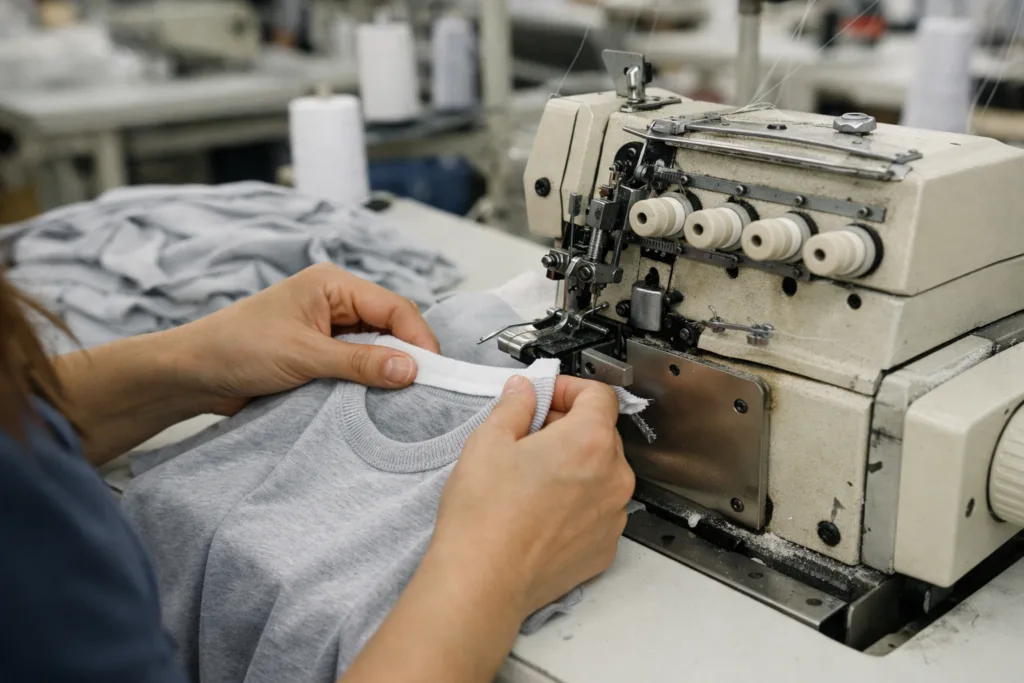
Even with the best rib fabric, the sewing process can undermine neckline durability. Overstretching the rib as it’s attached to the body or uneven handling on the sewing line leads to permanent deformation—a classic rib stretch issue.
Where Things Go Wrong
- Operator pulls rib too hard to make it “fit” the body neckline—exceeds the recommended stretch ratio (usually 70–85% of body neckline length).
- Poorly adjusted differential feed on overlock or flatlock machines stretches the rib unnaturally during stitch formation.
- Tension imbalances or uneven seam allowance cause visible waves or scallops (lettuce edge).
Sewing Line Controls and Best Practices
- Template or guide use: Pre-cutting both body and rib components to controlled specs and using a template for attachment minimizes error.
- Differential feed calibration: Test and set machine feed precisely for each batch/material.
- Training: Conduct operator training in stretch ratios, seam allowance, and tension for the specific garment style.
Measuring and Checking Rib Stretch
Industry best practice is to check the attached rib’s stretch and recovery before bulk. Attach a sample, gently stretch to the maximum expected (as per wearer’s head), and assess return to original length. If it fails, adjust before mass production.
Stay Tape Methods: Reinforcing Against Looseness
Stay tape is a vital tool—especially in high-stress necklines like lightweight tees, kid’s garments, or wide necks where the risk of loose neckline is high. Proper use of stay tape stabilizes the seam, adds structure, and maintains shape wash after wash.
Common Stay Tape Options
- Clear elastic tape (soft, nearly invisible, stretchable with recovery).
- Cotton or polyester twill tape (firmer, best for heavier weights or wovens).
- Fusible stay tape (bonded to one side, excellent for fine knits and clean finish needs).
Where and How to Apply Stay Tape
- Cut tape to match neckline, minus 3–5% for gentle hold without puckering.
- Sew directly inside the seam allowance along the shoulder or back neckline.
- Use clear elastic for curved sections, and twill for straight lines.
- Press carefully if using fusible tape; avoid overheating synthetics.
Benefits and Potential Issues
- Prevents distortion: Holds the rib in position, particularly during high-stress movements (taking off/on).
- Longevity: Significantly decreases risk of loose neckline after repeated washing and wearing.
- Pitfalls: Using the wrong tape (too stiff or poor bonding) can cause puckering or discomfort.
Other Contributors to Loose Neckline
While rib quality, sewing tension, and stay tape are central, other factors can quietly sabotage your neckline.
Poor Pattern or Spec Control
- Incorrect neckline opening on the pattern—too large, rib can’t recover adequately.
- Mismatch in spec between size groups, leading to tolerance issues in production.
Washing and Aftercare Practices
- Excessive or high-temperature washing can damage rib fibers or shrink the body unevenly.
- Skipping preshrink or enzyme finishing at the mill stage—leaves rib unstable for end use.
- Incorrect drying, such as hanging heavy wet knits: necklines stretch under load.
Care Label and QC Instructions
All apparel should include a care label clearly outlining recommended washing and drying procedures to protect rib structure. Quality control must check post-wash neck stretch in size set and TOP samples.
Checking and Testing for Loose Neckline Risks
Preventing a loose neckline starts before production and finishes after. Here’s what experienced garment technicians and QC teams do to keep necklines snug and sharp:
Key Testing Protocols
- Pre-production sample: Confirm correct rib type, ratio, and stay tape application with buyer approval.
- Stretch & recovery test: Check for specified stretch (e.g., 40–60%) and recovery to within 95% of original length after three stretches.
- Wash test: Wash at recommended highest temperature; check neckline for excessive growth or distortion.
- On-body trial: Have a wearer repeatedly don and doff the garment, then check the fit.
On-Line Sewing Checks
- Randomly measure attached rib stretch versus pattern spec at start, mid, and end of line runs.
- Look for scalloped or wavy edges; reject any pieces outside tolerance.
- Ensure all stay tape is evenly applied and not visible on the outer side.
Why do knit necklines become loose?
A loose neckline, or rib stretch issue, typically results from a combination of material, process, and design missteps. The main causes include:
- Poor rib quality: Ribs lacking elasticity or recovery, especially without spandex or with inconsistent yarns, lose shape quickly.
- Overstretching during sewing: Rib attached with too much tension or poorly set machines permanently stretches the neckline.
- Lack of stabilizing stay tape: Without reinforcement, even good rib will eventually deform under mechanical stress.
- Poor pattern/spec alignment: Overly wide neck openings or wrong rib-to-body stretch ratios let rib slide instead of holding firm.
- Inadequate care/finishing: Lax washing, drying, or finishing practices open the door for shrinkage mismatch and permanent deformation.
Practical Steps to Prevent and Fix Loose Necklines
- Specify premium rib with at least 4% elastane for high-wear or youth/active styles.
- Use templates and set-in guides for precise rib-to-body attachment—do not guess the stretch ratio.
- Incorporate clear elastic or fusible stay tape for extra hold, especially on lighter or open neck designs.
- Test all necklines for stretch, recovery, and wash durability before and during production, not just on the first samples.
If a loose neckline is discovered after production, re-cutting and re-binding may be required; in borderline cases, an additional coverstitch or reinforcing tape may rescue the product.
Best Practices for Designing and Specifying Knit Necklines
Knowing what causes loose necklines allows you to prevent them at the design and tech pack stage. Here’s a structured approach for buyers, designers, and factories:
Checklist for Design and Technical Pack
- Include clear specs for rib type, composition, and required stretch/recovery %.
- Define precise neck opening measurement and tolerance (e.g., ±0.5 cm).
- Indicate preferred stay tape type and exact placement (with diagram if possible).
- Request stretch and recovery, plus wash test data in every size set approval.
- Set up inline QC checkpoints for rib attachment and garment measurements during production.
Key Considerations by Garment Type
| Garment | Rib Type/Comp. | Stay Tape? | Neck Opening Spec |
|---|---|---|---|
| Classic T-shirt | 1×1 rib 96/4 CO/EA | Optional | 11.5–14.5cm (M) |
| Sweatshirt | 2×2 rib 95/5 CO/EA | Recommended | 12.5–15.0cm (M) |
| Polo | Flat knit, no spandex | Rare | 15.0–16.0cm (M) |
| Baby bodysuit | 1×1 rib 95/5 CO/EA | Required | Wider for head passage |
Final Thoughts
Control your rib quality, mind your sewing process, and always check for risks of loose necklines at every stage. Emphasize training and communication between buyer, merchandiser, and production line—this is the recipe for durable, retail-worthy knitwear.
Real-World Examples: Factory Insights Into Rib Stretch Issues
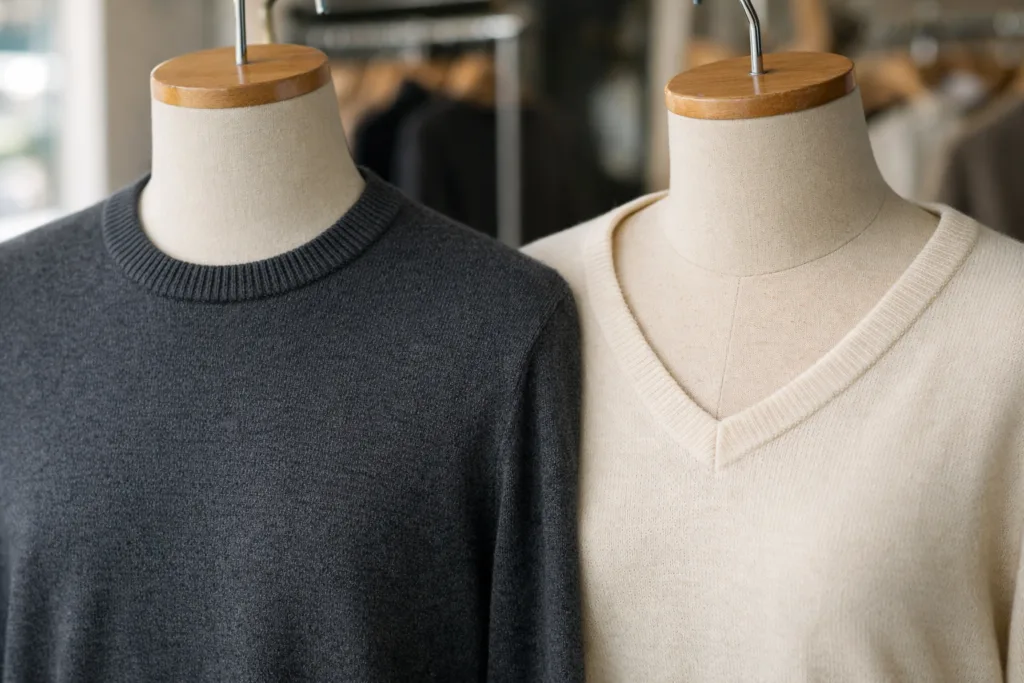
Drawing from work in export apparel factories, let’s look at two scenarios where loose necklines either threatened or derailed a shipment—and how they were solved.
Case 1: Lightweight Summer Tee Fails Wash Test
Problem: Neckline expanded by 2 cm after only three home washes. Investigation showed the rib was 100% cotton, loosely knit, and attached with high tension on a poorly adjusted machine.
Solution: Mill replaced rib with 96/4 cotton/spandex, and sewers were re-trained on correct stretch ratio—final test showed less than 0.5 cm growth post-wash.
Case 2: Kids’ Sweatshirt with Wavy, Loose Neckline
Problem: Owner complaints about waves and loose fit after washing. Analysis found no stay tape applied, and coverstitch tension imbalanced.
Solution: Production switched to clear elastic tape inside the seam, operators corrected stitch balance, and failure rate dropped to zero.
Frequently Asked Questions
How can I prevent the rib neckline from becoming loose after washing?
Select rib with elastane content, specify pre-shrunk materials, and use stay tape for extra security. Test samples in laundry simulations before bulk production.
What’s the ideal rib stretch ratio for attaching to knit necks?
A good rule is 70–85% of the body neckline circumference, but always test stretch and recovery with your specific rib and body fabric combination.
Is stay tape always required for knit necklines?
Stay tape is recommended for lightweight, wide, or high-wear necklines, but may be optional on small or heavily structured collars. Follow your garment’s technical and performance needs.
What sewing machine settings help prevent rib stretch issues?
Properly calibrate differential feed and stitch tension for the rib-to-body join. Provide operator training and routinely check stretch during production for consistency.
Can loose necklines be repaired after garment production?
Minor looseness may be fixed with reinforcing stitches or stay tape. Severe cases typically require re-cutting and re-binding the neckline to restore fit.
Why do 100% cotton ribs lose shape faster than spandex blends?
Pure cotton lacks the elastic recovery of spandex. Cotton fibers stretch but do not snap back well, so blended ribs are much more durable against neckline deformation.