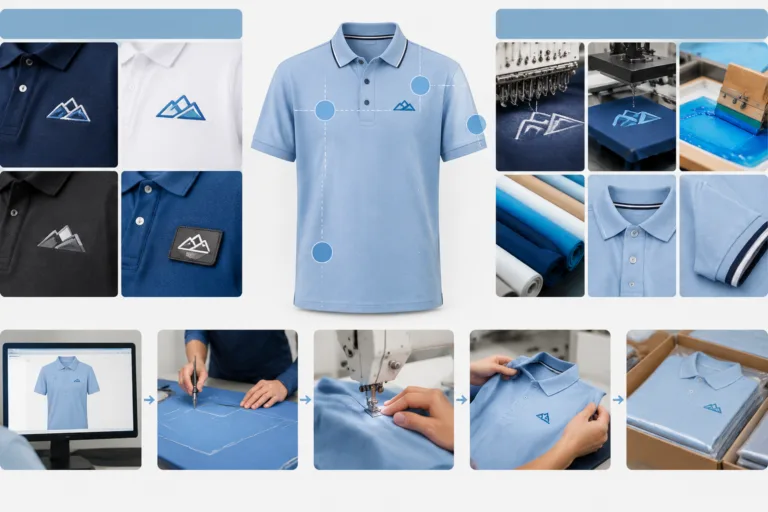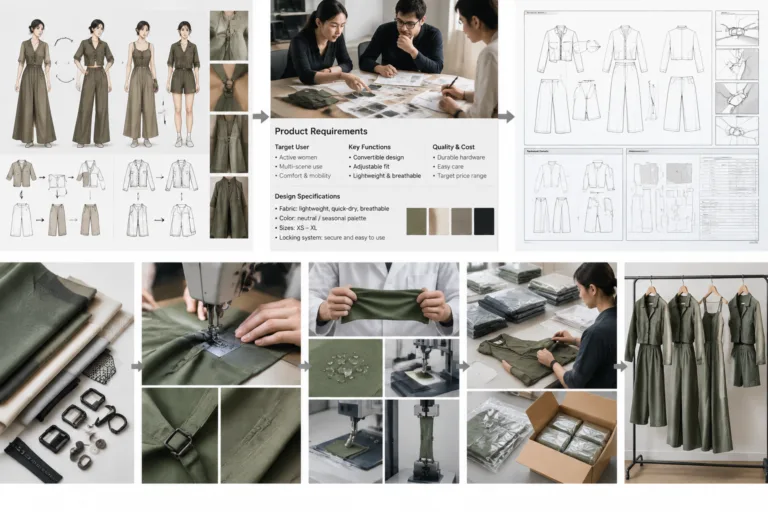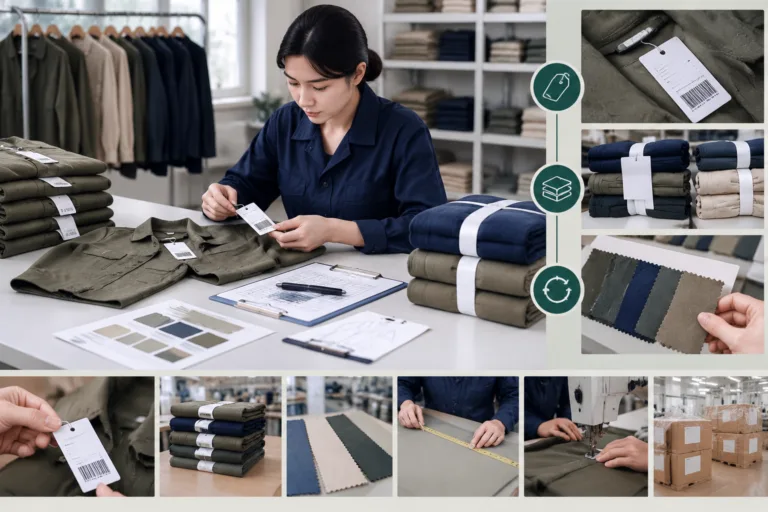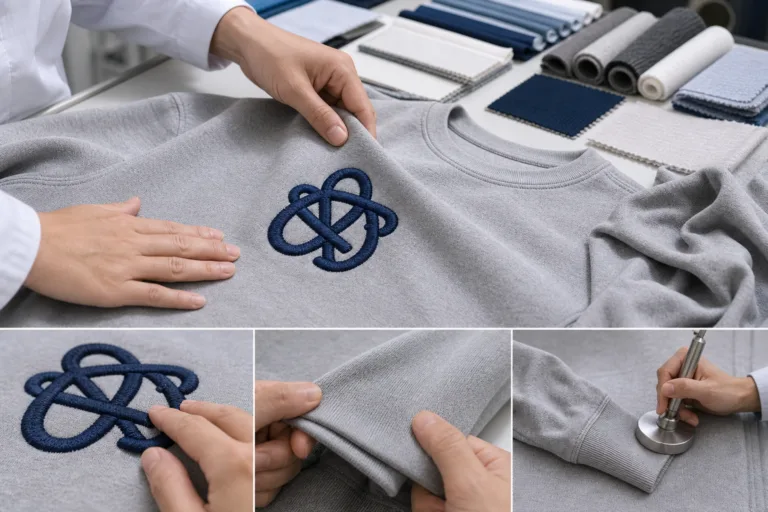

Replenishment merchandising for a small clothing collection means planning repeat orders for selected products when sales and inventory evidence support another order. It is not automatic restocking, and it does not guarantee demand or profitability. A small brand can use this approach selectively while keeping enough room for seasonal, image-led, and experimental products. As an independent educational publication, Apparel Wiki may use editorial support such as Sponsor information, but it is not a manufacturer, factory, testing laboratory, certification body, or sourcing service provider.
The practical question is not whether the entire collection should be replenished. It is which styles deserve another investment, under what conditions, and for how long. That decision connects assortment roles, SKU-level quantities, observed demand, available cash, supplier capability, and the remaining selling window.
What Is Replenishment Merchandising for a Small Clothing Collection?
Replenishment merchandising is a planning method for repeating selected products after their initial release. The repeat order may concern the same style, color, and size combination, or a deliberately limited adjustment based on observed sales. The decision should be grounded in the brand’s own inventory records and operating conditions rather than in the assumption that a product will continue selling at the same rate.
This differs from a one-time seasonal collection. A seasonal product may be developed for a particular launch, story, climate, or promotional window and then allowed to sell through without another production order. A replenishment candidate is treated as a product worth monitoring for possible continuation. The two roles can exist in the same small collection.
It also differs from continuously restocking every SKU. Automatic replenishment implies a standing rule that restores inventory whenever units fall below a trigger. Small brands often need a more deliberate review because cash is limited, demand evidence may be thin, and a repeat order may arrive after the most useful selling period has passed.
For planning purposes, a collection can include three editorial roles:
- Core products: styles intended to provide a repeatable commercial foundation and therefore possible replenishment candidates.
- Image products: visually distinctive styles that support the collection’s identity, even if their purpose is not repeated volume.
- Experimental products: styles used to test a material, silhouette, price position, or customer response before a longer-term decision.
These are planning categories, not fixed industry classifications. A product can change roles after the brand reviews sales, customer response, production feasibility, or the collection’s changing needs. Replenishment should therefore be understood as a conditional operating choice, not a promise that a style is evergreen.
Which Products Should a Small Collection Replenish?
Start with a short candidate list. Assess each style by its role, evidence of customer demand, contribution to the business, repeatability of the materials and construction, and the amount of selling time still available. A strong visual product may be important to the collection while remaining unsuitable for repeat production if its fabric, trim, finish, or construction is difficult to reproduce consistently.
Separate breadth from depth when reviewing the assortment. Breadth describes how many styles or options the collection offers. Depth describes how many units are planned for each SKU, including the combinations created by style, color, and size. More breadth can improve customer choice, but it also creates more inventory records, presentation work, and decisions. More depth can support availability for a selected product, but it increases the amount of cash held in that SKU.
For each possible replenishment product, document four points:
- Objective: what the product is expected to do, such as support repeat sales, test demand, or anchor a range.
- Observation period: the time or selling activity that will be reviewed before a decision.
- Reorder condition: the evidence that would justify considering another order.
- Exit condition: the evidence that would lead to a hold, markdown, or discontinuation review.
Use project-specific information for margin contribution, customer demand, material continuity, and construction feasibility. Do not treat a prior season, a similar-looking product, or a general category assumption as proof that a current style will perform in the same way. Adding styles does not automatically increase total sales; it can instead spread limited inventory and attention across more options.
How Do You Build a Replenishment Plan at SKU Level?
A usable apparel replenishment plan begins with a record for each SKU. At minimum, separate the style, color, size, initial quantity, planned selling period, target channel, current stock, inbound stock, and known supplier or material constraints. Keep forecast quantities, confirmed supplier commitments, and actual sales in distinct fields so that an estimate cannot be mistaken for an order.
1. Set the initial test
Choose the initial quantity as a testable planning decision. Record the assumptions behind it, including the intended channel, selling window, and product role. The quantity is a forecast, not evidence that the product will sell through. A small team can manage this in a spreadsheet, provided the unit definitions and update responsibilities remain clear.
2. Connect the operating calendar
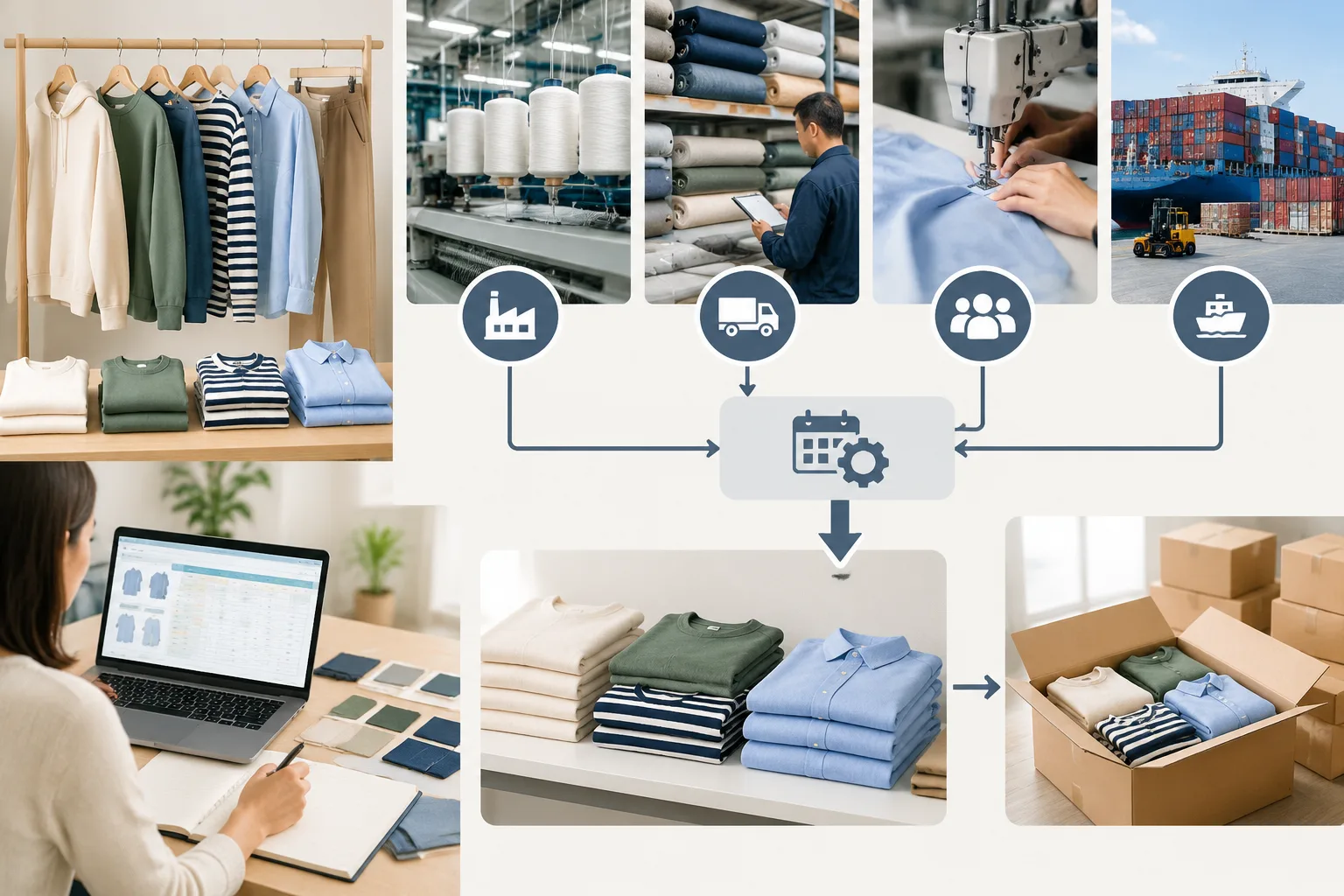
Map the steps between a reorder decision and units becoming available for sale: purchasing, material confirmation, production, inspection, transport, receiving, and channel preparation. The exact duration depends on the product and supplier, so do not insert a universal lead time or reorder point. The relevant question is whether a repeat order could arrive while enough selling opportunity remains.
3. Prepare demand scenarios
Write short notes for faster-than-expected, expected, and slower-than-expected demand. These scenarios do not need to claim precise forecast accuracy. They help the team consider what it would do if inventory falls quickly, remains stable, or sells too slowly to support another commitment. Include possible responses such as a reorder review, hold, markdown review, or exit review.
4. Assign review ownership
Identify who updates the record, who reviews it, and how often the review occurs. The appropriate cadence depends on sales volume, channel activity, product seasonality, and the team’s ability to act on new information. A review is useful only when it can connect current sales and stock with supplier feasibility and the remaining selling window.
Which Inventory Signals Should Guide a Reorder Decision?
Review sales by SKU, size, color, channel, and period rather than relying only on total collection sales. This can reveal whether a style is broadly moving or whether the result depends on one color, one size range, one channel, or a temporary promotion. Also note possible stock-outs: weak recorded sales may reflect unavailable inventory rather than weak customer interest.
If you use a sell-through or sell-out rate, define it beside the result. State the measurement period, whether the numerator uses units sold or net units sold, and what the available-to-sell denominator includes. One hypothetical convention is:
Period sell-through rate = net units sold ÷ (opening available units + units received during the period) × 100%
For example, if a record shows 300 opening units, 200 units received, and 200 net units sold, the result under this convention is 40%. This is only a hypothetical illustration. The brand must document how it treats returns, transfers, cancellations, promotions, and stock-outs. Two percentages are not directly comparable when their periods, channels, denominators, or return treatments differ.
A strong sales signal is not automatically a reorder recommendation. Check available stock, inbound units, contribution, remaining selling time, material continuity, supplier feasibility, and cash before committing. Internal comparison points are more useful when they are built from the brand’s own product and channel history rather than presented as a universal target.
How Do Production and Supplier Constraints Change Replenishment?
A promising reorder still has to be physically and commercially feasible. Before treating a style as a replenishment product, check whether its fabric, trims, dye or print process, pattern, construction, and quality requirements can be repeated consistently. A product may sell well but become difficult to repeat if a material is unavailable, a process changes, or the original production arrangement cannot be used again.
Review material availability, supplier capacity, production sequence, inspection requirements, and the responsibilities attached to the order. The relevant question is not simply whether a supplier can make clothing, but whether the available evidence matches this product, material combination, construction, quantity, and timing. Photos, an equipment list, a location, or a quoted price may provide useful leads, but none alone proves stable capability for a particular repeat order.
Small brands should also identify who is quoting, who is contracting, who receives payment, who produces the goods, and whether another party may be used for permitted subcontracting. These parties may be the same or different. The commercial documents should make the relationship clear, including who is responsible for communication, approved specifications, quality issues, changes, and escalation.
Keep an operational record of the approved sample, relevant tolerances, material references, construction details, change controls, inspection arrangements, and any agreed subcontracting permissions. This evidence-matching approach can be supported by practical Apparel Manufacturing Tools, but Apparel Wiki is an independent educational publication, not a factory, manufacturer, or sourcing provider.
How Should a Small Brand Balance Cash, Timing, and Collection Risk?
Replenishment is a timing and cash-flow decision as well as a sales decision. Map the interval from the reorder review through purchasing, material preparation, production, transport, receiving, and the remaining selling window. A product can show encouraging demand and still arrive too late to support the intended collection period.
Ordering too late may leave demand unserved, while ordering too early can tie up cash in inventory before the next sales signal is clear. The appropriate balance depends on the brand’s own costs, available cash, supplier arrangements, channel calendar, storage capacity, and product lifecycle. Do not turn a previous season’s performance into a guaranteed forecast for the current season.
Review risk by style and SKU rather than relying only on total collection sales. A collection can appear healthy while one color or size is overstocked and another is unavailable. Record scenarios for faster-than-expected sales, slower sales, delayed materials, transport disruption, and a shortened selling window. These scenarios are planning prompts, not precise forecasts.
Set a decision boundary before placing the order. Depending on the evidence, the next action may be to continue, reduce the quantity, pause the style, markdown remaining stock, or exit the product. Keeping these conditions visible helps separate a conditional replenishment plan from an assumption that every positive sales signal deserves another purchase.

A Practical Replenishment Review Checklist
Use the following checklist as an adaptable review tool before approving a repeat order. It is not a certification, a guarantee of profitability, or a substitute for product-specific commercial and quality judgment.
- Confirm the product’s role and document why it remains eligible for replenishment.
- Review sales or net-sales data by defined period, channel, size, and color. Note stock-outs, returns, transfers, cancellations, and promotions where they affect interpretation.
- Confirm available stock, inbound units, committed orders, and the remaining selling window.
- Recheck material availability, supplier capability, approved specifications, quality controls, commercial responsibilities, and permitted subcontracting.
- Compare the proposed quantity with cash limits, storage capacity, expected contribution, and slower-sales or delay scenarios.
- Record the decision, evidence used, responsible owner, next review date, and condition for reducing, pausing, or exiting the style.
The useful next step is to place this review beside the brand’s existing merchandising, inventory, sourcing, and quality records. That comparison can show which assumptions are supported by current evidence and which require a new sample, supplier confirmation, or more selling history.
What does replenishment merchandising mean for a small clothing collection?
It means planning repeat orders for selected products when sales, inventory, timing, cash, and production evidence support another order. It is not automatic restocking and does not guarantee demand or profitability.
Should every style in a small collection be treated as a replenishment product?
No. A collection may include repeatable core products, image-led styles, and experimental or seasonal products. Assign each style a role, observation period, and reorder or exit condition.
How can a small clothing brand decide when to reorder a style?
Review defined sales data alongside available and inbound stock, size and color patterns, remaining selling time, contribution, cash availability, material continuity, and supplier feasibility. A strong sales signal is only one part of the decision.
Which sell-through information should be checked before replenishing apparel?
State the measurement period, sales or net-sales basis, and available-to-sell denominator. Also note returns, transfers, cancellations, promotions, and stock-outs. Percentages with different definitions should not be compared directly.
How do material availability and supplier capability affect clothing replenishment?
They determine whether the product can be repeated with the intended materials, construction, quality controls, and commercial responsibilities. Supplier evidence should match the specific product and order conditions.
What is the difference between replenishment merchandising and producing a seasonal collection?
A seasonal collection is generally planned around a defined selling period and assortment launch. Replenishment is a conditional repeat-order method applied to selected products after reviewing demand, inventory, timing, cash, and production feasibility.