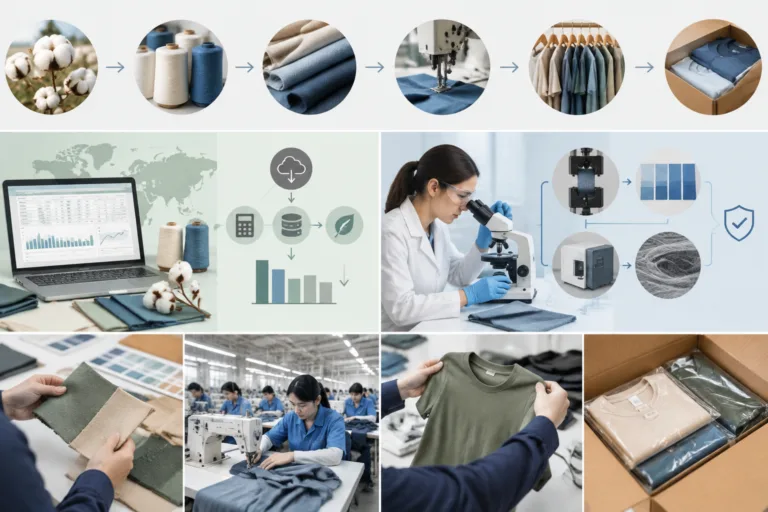
Implementing avoided emissions claims in apparel starts with a defined comparison, not with a sustainability label. An avoided-emissions claim is an estimate of greenhouse gas emissions that may be avoided when a specified intervention is compared with a plausible alternative scenario. The result depends on the functions being compared, the system boundary, the evidence, and the assumptions. Apparel Wiki is an independent educational publication; its Sponsor information does not change the editorial basis of this guidance.
For example, a team might compare a defined garment development or supply-chain intervention with what it reasonably believes would have happened without that intervention. That example does not, by itself, prove that emissions were avoided. The comparison must be documented and assessed using an appropriate accounting approach. The WBCSD guidance on avoided emissions and the GHG Protocol guidance for estimating and reporting avoided emissions provide useful reference points for keeping comparative estimates separate from a company’s own inventory accounting.
What Are Avoided Emissions Claims in Apparel?
Avoided emissions are comparative estimates. They describe the difference between emissions associated with an intervention or solution and emissions associated with a specified alternative that is expected to occur without it. The alternative is sometimes called a baseline or counterfactual scenario. It is not automatically the current market average, the worst available option, or a convenient assumption selected after the result is known.
This distinction matters because avoided emissions are not the same as emissions reductions recorded within an organization’s greenhouse gas inventory. An inventory reduction concerns a change in emissions within the defined reporting boundary, such as a company’s operations or energy use. A product life-cycle assessment may instead assess emissions across defined stages of a product’s life. An avoided-emissions estimate asks a different question: compared with a stated alternative that provides the relevant function, what difference is estimated?
In apparel, an intervention could involve a changed material, manufacturing process, product system, or use model. A team might examine a garment designed for a different use pattern and compare it with a defined alternative garment system. It might also compare two specified production routes. These are illustrative questions, not evidence that one route necessarily avoids emissions. The comparison needs a clear function, compatible boundaries, and evidence for both scenarios.
Using recycled material, designing for longer use, or describing a garment as lower impact does not establish an avoided-emissions claim on its own. Each statement raises additional questions: compared with what material or product, for which function, over what period, and based on which data? A claim about recycled content may require evidence about content and its denominator. A climate comparison requires evidence and assumptions relevant to the defined emissions boundary. Other topics, such as water, chemicals, biodiversity, or labor conditions, should not be silently folded into the same climate statement.
How Should You Define the Intervention and Comparison Scenario?
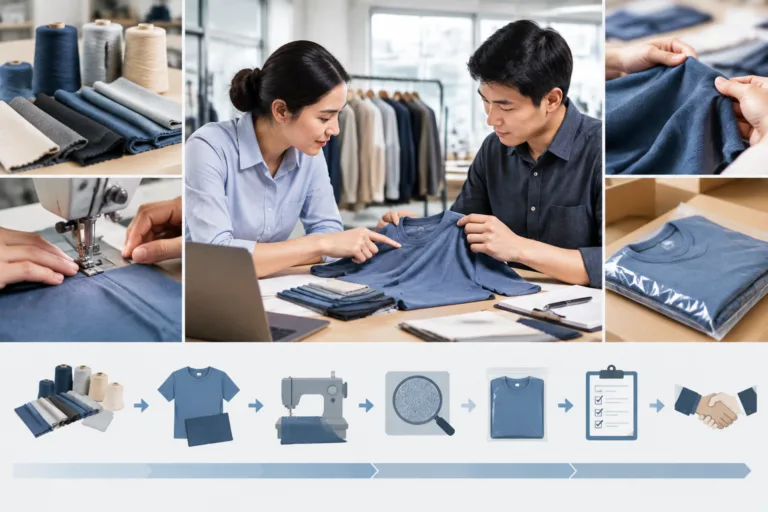
Begin by writing the intervention as an operational description rather than a slogan. State what changes, which product or process is affected, where the change takes place, and the period covered. Identify whether the change concerns fiber production, yarn, fabric formation, dyeing and finishing, cut-and-sew production, transport, use, repair, reuse, or disposal. If the intervention is still proposed, label it as a proposed intervention rather than describing an expected result as an achieved one.
Next, describe the alternative scenario that would plausibly occur without the intervention. Explain why the team considers that scenario defensible and identify the evidence supporting it. A baseline should be a reasoned scenario, not an observed fact, unless direct records support that description. Evidence might include documented purchasing decisions, an established product specification, a confirmed production route, or another traceable basis. An unsupported assumption that a particular alternative would certainly have been used weakens the comparison.
Keep the two scenarios aligned around the same function. Comparing a quantity of fiber with a complete garment answers a different question from comparing two garments intended to provide the same use. Define the functional unit and make the relevant boundary visible. Depending on the intervention, that may include material production, manufacturing, transport, use, care, replacement, and end-of-life. State the expected use-life and care assumptions where they affect whether the products provide comparable service.
The comparison also needs a supply-chain map. List the participating stages, facilities, locations, and known subcontractors, then distinguish confirmed nodes from unknown ones. A finished-goods supplier’s address does not establish where the fabric, yarn, fiber, or raw materials originated, nor does it prove which processes occurred there. Unknown stages should remain visible in the working record instead of being silently filled with assumptions.
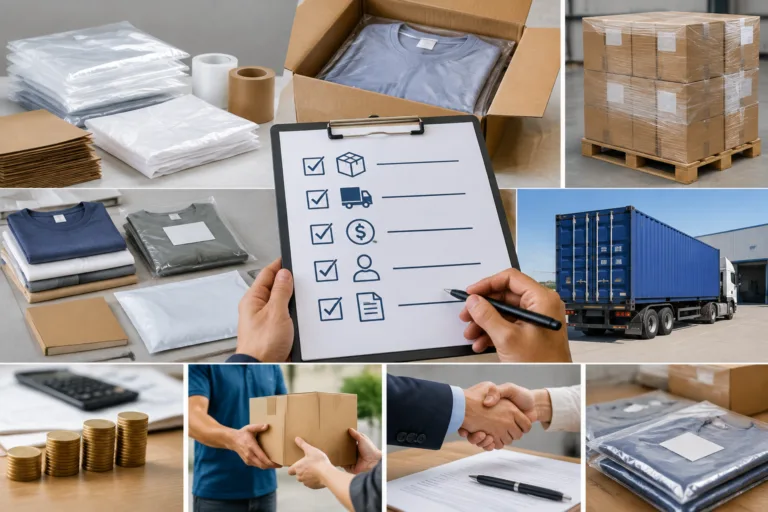
A practical boundary record can include the following fields:
- Intervention: the specific product or process change, its status, location, and period.
- Alternative scenario: the plausible route or product system expected without the intervention, with its supporting rationale.
- Function and denominator: what service is being compared and the unit used to describe it.
- Included stages: the production, transport, use, care, replacement, and end-of-life stages covered by the comparison.
- Known and unknown nodes: confirmed facilities or activities, unresolved locations, and subcontracting relationships.
Comparisons with different functions, periods, or system boundaries cannot support a straightforward ranking. A result may still be useful for an internal decision, but its interpretation must match what was actually compared. The boundary and baseline should be fixed before the team focuses on the size of any estimated difference.
What Evidence and Data Should the Workflow Collect?
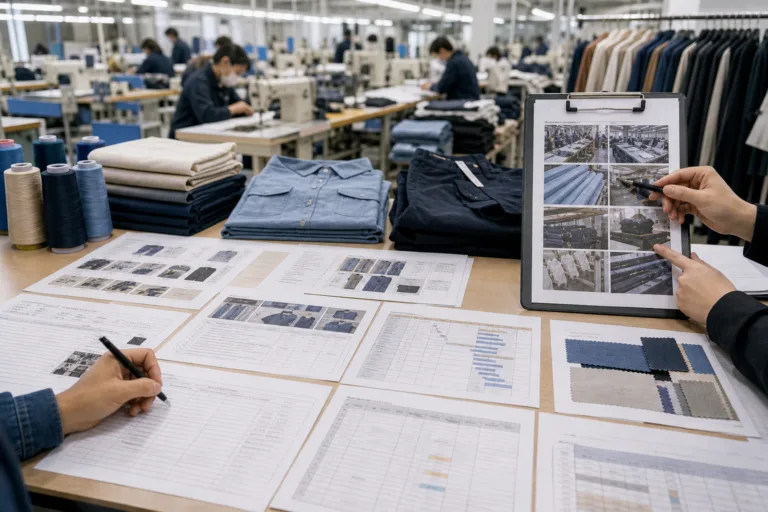
Turn the boundary record into an evidence register. For every material input to the claim, record the source, responsible owner, geographic coverage, time period, applicable product or process, and known limitations. Include evidence for the intervention and the alternative scenario. This prevents a common failure mode in avoided emissions work: documenting the preferred route in detail while treating the comparison as an unexamined assumption.
Keep direct records separate from database averages and model estimates. A facility record, production document, bill of materials, energy record, or traceable supplier statement may describe a particular operation. An industry average or model output may be useful when direct data are unavailable, but it should not be presented as a product-specific measurement. Record the data’s geography, period, allocation approach, missing stages, and important material assumptions.
Data collection should follow the selected boundary. If transport, consumer care, replacement, or disposal is included, collect or estimate evidence for those stages in both scenarios where relevant. If a stage is excluded, record that exclusion and consider whether it could affect the comparison. Unknowns are part of the result’s limitations; they are not permission to imply complete traceability.
Use an evidence register that distinguishes at least these categories:
- Confirmed records: documents or traceable information tied to the specified product, facility, process, or period.
- Estimated inputs: modeled or calculated values based on stated assumptions and a documented method.
- Secondary data: database values, sector averages, or other external information used within the defined boundary.
- Unknowns and exclusions: missing stages, uncertain locations, unresolved allocation choices, or conditions outside the evidence.
Do not use evidence from one environmental or social dimension as automatic proof of another. Recycled-content documentation does not by itself establish a climate comparison. Water, chemicals, labor conditions, and greenhouse gas impacts each require evidence appropriate to the specific statement. For product-facing wording, identify the object, denominator, source, and conditions precisely enough that a reader can understand what the evidence does and does not support.
How Do You Estimate and Test the Emissions Difference?
Once the intervention, comparison scenario, boundary, and evidence categories are defined, the estimate can be treated as a comparison between the emissions associated with the alternative scenario and those associated with the intervention scenario. The direction and size of any difference depend on the selected method, system boundary, data quality, and assumptions. This is an analytical result, not a direct physical measurement of emissions avoided.
Begin by checking whether both scenarios provide the same function. Comparing one kilogram of a fiber with one garment used repeatedly answers different questions. For an apparel comparison, review the product quantity, intended use, expected service life, care requirements, replacement needs, and end-of-life treatment where those factors fall within the boundary. A difference in durability or use pattern may change the comparison rather than simply improve one scenario.
The most influential assumptions should be identified before the estimate is interpreted. Depending on the intervention, these may include the likely production location, electricity inputs, material allocation, substitution behavior, product lifetime, consumer care, or the proportion of demand that the intervention actually serves. An assumption register should state what is known, what is estimated, why the assumption was selected, and whether a plausible alternative would change the conclusion.
A useful internal sensitivity check asks what happens when consequential assumptions are varied within a defensible range or replaced with another documented scenario. The purpose is not to manufacture a preferred result. It is to see whether the estimated direction remains stable, whether the scale changes materially, and whether the evidence is too weak for a public claim. Keep this check separate from any specific requirement imposed by the accounting method selected for the work.
Also consider attribution, rebound effects, and overlap with other claims. An intervention may involve several companies, products, or supply-chain partners, and the same comparative benefit should not be presented as though each party independently created the full result. Increased demand or changed consumer behavior may affect the comparison as well. How these issues are treated depends on the applicable method and the facts of the case, so unresolved issues should remain visible in the review record.
How Should Teams Review and Communicate the Claim?
Assign responsibility before drafting public language. One person or team can describe the intervention, while sourcing or operations owners confirm participating facilities and processes. A sustainability or technical reviewer can assess the comparison and evidence, and a communications or legal review can examine the final wording for the markets and channels involved. Apparel Wiki provides educational information, not certification, assurance, or legal advice.
The proposed claim should identify its subject, comparison, boundary, period, and material conditions. “This product avoids emissions” is too broad to explain what was compared. A more accountable formulation would describe the defined intervention and state that an estimate was made against a specified alternative under stated conditions. The final wording should not imply that an estimate covers stages, products, locations, or outcomes that the evidence does not address.
Maintain a review record alongside the claim. It should connect the wording to the intervention description, source records, data periods, estimates, exclusions, allocation choices, uncertainty notes, approvals, and the version of the supporting analysis. Keep internal estimates distinct from public claims: an exploratory scenario may help a team decide what data to collect, but it does not automatically support consumer-facing language.
Review each communication channel separately. Product pages, labels, wholesale documents, investor materials, advertising, and sustainability reports may present different levels of context and may reach different audiences. A short claim still needs enough qualification to avoid a misleading impression. Check current official advertising and regulatory guidance in every relevant market before publication. Rules and expectations can change, and one market’s approach should not be assumed to apply globally.
Use specific language when the evidence is specific. Avoid broad descriptions such as “green,” “carbon saving,” or “better for the planet” when the work supports only a bounded emissions comparison. Evidence about recycled content, water, chemicals, or labor conditions should be communicated as separate statements unless there is additional evidence supporting a connection. External guidance can inform the review, but it is not blanket endorsement of every claim or conclusion.

What Are the Limits, and How Should the Workflow Continue?
An avoided-emissions estimate inherits uncertainty from its comparison scenario, data coverage, model choices, allocation decisions, and assumptions about how the intervention performs. A carefully documented estimate can still be conditional. If important supply-chain stages are unknown or the baseline is especially sensitive to consumer behavior, the appropriate conclusion may be that more evidence is needed before making a public claim.
The result also does not establish that a product or company is environmentally preferable overall. Climate comparisons are only one analytical dimension. Material composition, water, chemicals, waste, biodiversity, worker conditions, and other social or environmental topics require their own boundaries and evidence. A positive result in one comparison should not be expanded into an unqualified sustainability statement.
Set review triggers rather than relying on an arbitrary universal interval. Revisit the claim when suppliers, subcontractors, production processes, product design, material inputs, expected use, data sources, allocation choices, or comparison assumptions change. Relevant market guidance may also change. A claim that was once representative can become incomplete when the intervention or its alternative scenario no longer reflects actual operations.
Retain versioned evidence so the team can identify which data and wording supported each published claim. Record unresolved gaps instead of silently filling them with favorable assumptions. When a trigger occurs, determine whether the change affects the intervention, comparison, boundary, estimate, or wording. The outcome may be a revised claim, a narrower claim, additional evidence collection, or withdrawal of the claim.
For an educational next step, use the Apparel Manufacturing Tools area to organize the operational information behind the workflow, then document the boundary, resolve the most consequential data gaps, and have the proposed wording reviewed before use. This keeps implementation focused on traceable decisions rather than on producing a generic emissions number.
Frequently Asked Questions
How are avoided emissions different from a company’s emissions reductions?
A reduction is generally tracked within an organization’s own inventory or a defined product footprint. Avoided emissions are an estimate based on comparing an intervention with a specified alternative scenario. The two concepts use different comparison logic and should not be presented as interchangeable.
Can a brand make an avoided-emissions claim using industry-average data?
Industry-average data may support an estimate when it is appropriate to the defined boundary and clearly identified as secondary data. It should not be described as a measurement of the specific garment or facility. The claim should disclose important geographic, temporal, allocation, and coverage limitations.
What should an apparel avoided-emissions baseline include?
It should describe the plausible alternative that would occur without the intervention, using the same function and a consistent boundary. Depending on the comparison, this may include material production, manufacturing, transport, use, replacement, care, and end-of-life assumptions. The rationale and uncertainties should be recorded.
Does recycled content prove that a garment avoids emissions?
No. Recycled-content evidence establishes a material characteristic, not automatically an avoided-emissions result. A climate comparison requires a defined alternative, compatible function, relevant boundary, suitable data, and an appropriate method. Other environmental and social claims require separate evidence.
How often should an apparel business review an avoided-emissions claim?
Review it when the intervention, suppliers, processes, product design, data, assumptions, or relevant market guidance changes. There is no universal interval that suits every claim. Versioned records and defined review triggers help determine when the wording or supporting analysis needs to change.