
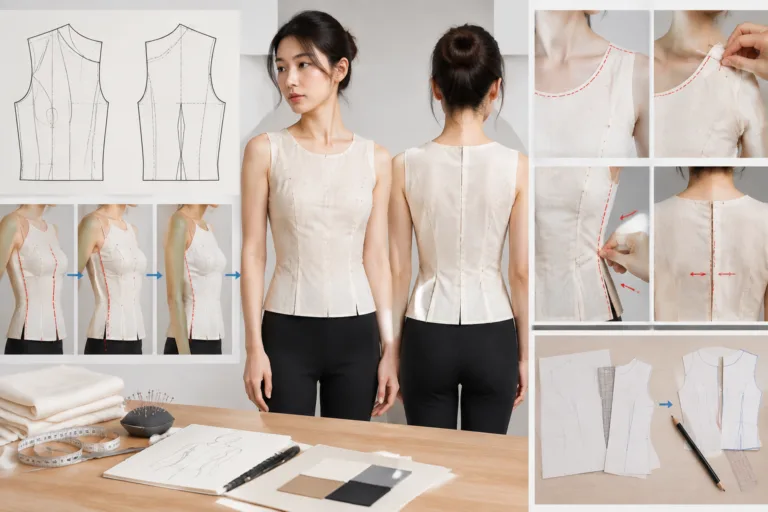
In bodice blocks pattern drafting, a bodice block is the foundational pattern used to develop a fitted bodice before style-specific details are added. It represents a defined body or fit model, a selected size basis, and an intended amount of ease. The block helps a designer or pattern maker control shape, balance, and proportion while developing later styles; it is not a finished design pattern or a universal formula.
Terminology varies between drafting systems and markets. Some practitioners use “bodice sloper” for a close-fitting base, while others use “block” for a broader foundational pattern. Apparel Wiki is an independent educational publication, and its editorial independence is described on the Sponsor page. The principles below are method-aware guidance, not a manufacturing service or a substitute for validating a pattern on its intended wearer and material.
What Is a Bodice Block in Pattern Drafting?
A bodice block is a basic pattern that captures the main shape and proportions of the upper body for a particular fit purpose. Depending on the system, it may represent the front and back bodice, and may be drafted with or without related pieces such as a sleeve. Its defining feature is that it establishes a controlled starting point before design features such as collars, style lines, gathers, pleats, or unusual openings are introduced.
The block is built around a chosen measurement set and fit intention. A close-fitting block, for example, has a different purpose from a block intended to support a relaxed woven top. Blocks can also differ according to the drafting method, garment category, size range, body shape assumptions, and the amount and distribution of wearing ease. For that reason, there is no single bodice block that is correct for every wearer, garment, fabric, or market.
A finished style pattern is derived from a block but includes the design’s final geometry and construction requirements. It may move or divide darts, change the neckline, alter the hem, add a yoke, or incorporate a different closure and seam arrangement. A garment measurement chart is different again: it lists dimensions for a garment or size but does not by itself show the pattern geometry, shaping distribution, seam relationships, or construction lines needed to make the garment.
In practical terms, the block is a controlled pattern reference. It allows changes to be made deliberately and compared with an established fit basis. The word “sloper” is often used as a near-synonym, although individual drafting systems may assign the terms slightly different meanings. Before using either term in a technical project, document what the pattern represents and what it does not include.
Which Measurements and Pattern Lines Define a Bodice Block?
Bodice block measurements provide the dimensional basis for the draft, but the exact set depends on the drafting method and the garment’s scope. Common inputs may include a body circumference or width at the bust and waist, vertical lengths between key body levels, shoulder dimensions, neck dimensions, and measurements associated with the armhole or upper torso. A method may use direct body measurements, a standard size chart, or a combination of both. The source and measurement conditions should be recorded rather than assumed.
Pattern lines translate those measurements into a two-dimensional structure. Important reference areas commonly include the center front, center back, shoulder line, bust level, waistline, armhole, and side seam. Their exact placement and shape vary with the drafting system. These lines help the pattern maker locate shaping, compare the front and back, and evaluate whether the pieces can be joined while preserving the intended fit.
Keep three kinds of dimensions separate:
- Body measurements: dimensions taken from the selected wearer or supplied by the chosen size basis.
- Stitching-line or finished dimensions: the dimensions that describe the assembled garment after the relevant pieces are sewn together.
- Cutting dimensions: the outer pattern edges used to cut material, which may include seam allowance and other construction additions.
Seam allowance supports assembly; it is not wearing ease. A wider cutting edge does not automatically create more room in the garment because the allowance is consumed by the seam or used for another construction purpose. Fit checks should therefore be made from the stitching lines and finished geometry, not by measuring only the outside edge of a paper pattern.
Before drafting, write down the measurement baseline, the size or fit model, the intended garment scope, and the fit objective. Also note whether the draft includes seam allowance, where the stitching line is located, and which reference convention is being used. This documentation prevents later confusion when a block is altered, graded, transferred into a style pattern, or compared with another drafting system.
How Do Ease and Balance Shape the Draft?
Wearing ease is the difference between a relevant body measurement and the corresponding garment measurement. It is the room built into the garment for the intended silhouette, movement, layering, and material behavior. Wearing ease is separate from seam allowance, which belongs to construction. A block with little ease may support a close fit, while a block with more ease may be appropriate for a relaxed design, but the correct amount depends on the application rather than a universal number.
Ease is affected by the fabric’s structure and recovery, the garment’s construction, the wearer’s movement, and the design’s intended appearance. A stable woven material, a stretch material, and a soft draping material may require different development decisions even when they begin from the same body measurements. The block should therefore be treated as a fit basis, not as proof that every later fabric or silhouette will work without review.
Balance describes how the front and back portions relate while the garment is worn. Shoulder positions, side seams, body lengths, and the relationship between the upper torso and waist all influence how the bodice hangs. A draft can match selected circumferences and still appear to pull, tilt, or shift if the front-to-back relationships do not suit the fit model or posture.
Drafting systems distribute shaping in different ways. Darts are one method of controlling excess volume between body levels, but they are not universal fixed features with one required position or size. Shaping may be divided, rotated, transferred into seams, or handled through other design structures. The important principle is that the total shape and its placement must suit the body, fit intention, and design while maintaining coherent pattern relationships.
How Can You Draft and Check a Basic Bodice Block?
A method-neutral bodice block workflow begins with decisions that can be checked later:
- Define the basis. Select the body measurements or size chart, fit model, intended ease, garment scope, and drafting method. Record the date, source, and relevant assumptions.
- Establish reference lines. Mark the center front and back, principal horizontal levels, shoulder areas, armholes, waist, and side seams required by the method. Set major dimensions before refining the edges.
- Add controlled shaping. Place darts or other shaping according to the selected system and fit objective. Connect the pattern edges only after the underlying reference relationships are clear.
- Check the stitching lines. Compare paired seam lengths, confirm that notches correspond, and inspect side-seam and shoulder relationships. Check the grain direction and any required balance marks.
- Make a fit sample. Use an appropriate test garment or other fit sample for the intended wearer, posture, movement, and material conditions. Observe the result and record each revision rather than relying on memory.
The paper draft is only a starting point. A useful check follows the stitching line through each connected seam and considers how the front and back work together when worn. When the block changes, update the related pattern pieces and documentation. Controlled revision turns an initial bodice block pattern into a more reliable development reference without pretending that one drafting recipe applies to every project.
How Should You Evaluate Fit and Make Pattern Adjustments?
Bodice block fit evaluation should begin with the purpose of the garment, the intended wearer, and the conditions in which it will be worn. Assess the sample in a relevant posture and include reasonable movement for the garment type. A close-fitting woven bodice, a relaxed top, and a stretch garment do not provide the same fit information, even when they use related pattern pieces.
Observe the overall balance before focusing on one local problem. Check whether the front and back hang as intended, whether the shoulder area sits in a useful position, and whether the side seams remain reasonably aligned. Drag lines, folds, or gaping can indicate a fit issue, but they are clues for investigation rather than automatic diagnoses. The same visible symptom may result from body shape, posture, fabric behavior, construction, or an interaction between several pattern areas.
Make one controlled change at a time when possible, and identify the area and purpose of the adjustment. After altering a shoulder, side seam, dart, neckline, or armhole, review the connected pattern relationships. Compare matching stitching-line lengths, confirm that notches still correspond, and check the armhole and sleeve relationship where a sleeve is included. Recheck side-seam alignment and front-to-back balance instead of judging the cutting outline alone.
The stitching line is the useful reference for assessing whether adjoining pieces can be assembled as intended. Cutting edges include seam allowance and may not have the same dimensions as the finished seam. A local adjustment can also change shaping, edge position, or seam length elsewhere, so the revised piece should be checked as part of the complete pattern rather than treated as an isolated drawing.
Keep a revision record for each fit sample. Note the sample basis, the observed issue, the change made, and the result after fitting. Photographs, annotated pattern copies, or dated notes can help distinguish a successful correction from a change that merely moved the problem. This record makes later bodice block alterations more traceable and reduces reliance on memory.
What Are the Limits of a Bodice Block Across Fabrics and Sizes?
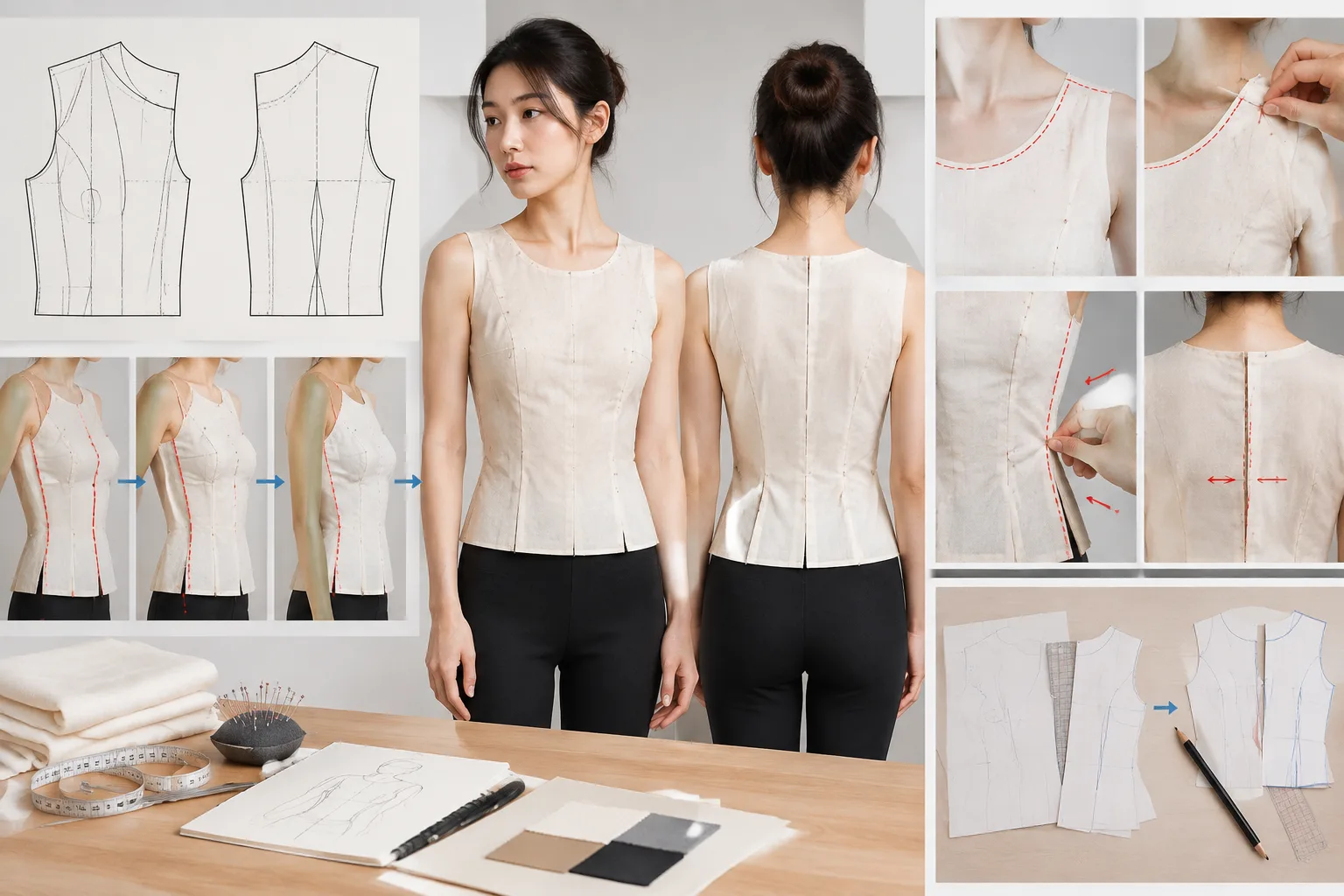
A bodice block represents the measurement basis, fit intention, and construction assumptions used when it was developed. It is therefore a development reference, not a guarantee that every new style will fit without review. Changing the silhouette, neckline, armhole, closure, fabric, lining, or construction method can alter how the garment sits and moves.
Fabric behavior is especially important. Woven and knitted materials may respond differently to the same pattern shape, while differences in stretch, recovery, weight, drape, surface friction, and finishing can affect the result. A block created for one material category may still inform a new draft, but the new application should be assessed through pattern checks and an appropriate sample. Do not treat a familiar block as a substitute for material-specific evaluation.
Size grading also has limits. Grading rules describe how selected measurement points change between sizes; they do not prove that body proportions, posture, or shape change uniformly. A base size that fits well is not evidence that the smallest, largest, or intermediate sizes will have the same balance and movement characteristics. Review key intermediate and end sizes, especially where the product will be offered across a broad range.
Shrinkage compensation belongs to the production-development stage only when the material and care process make it relevant. Any adjustment should use verified directional data and distinguish garment dimensions from seam allowance. Length and width may behave differently, and individual components may not respond identically. Shrinkage compensation is not a reason to enlarge an entire paper pattern uniformly or to replace post-process sample verification.
These limits do not make a bodice block less useful. They clarify what it can do: provide a consistent starting point, preserve an established fit intention, and support controlled style development. Each new fabric, size range, and construction choice still requires a decision about what must be rechecked and what project evidence is available.
What Should You Record Before Reusing a Bodice Block?
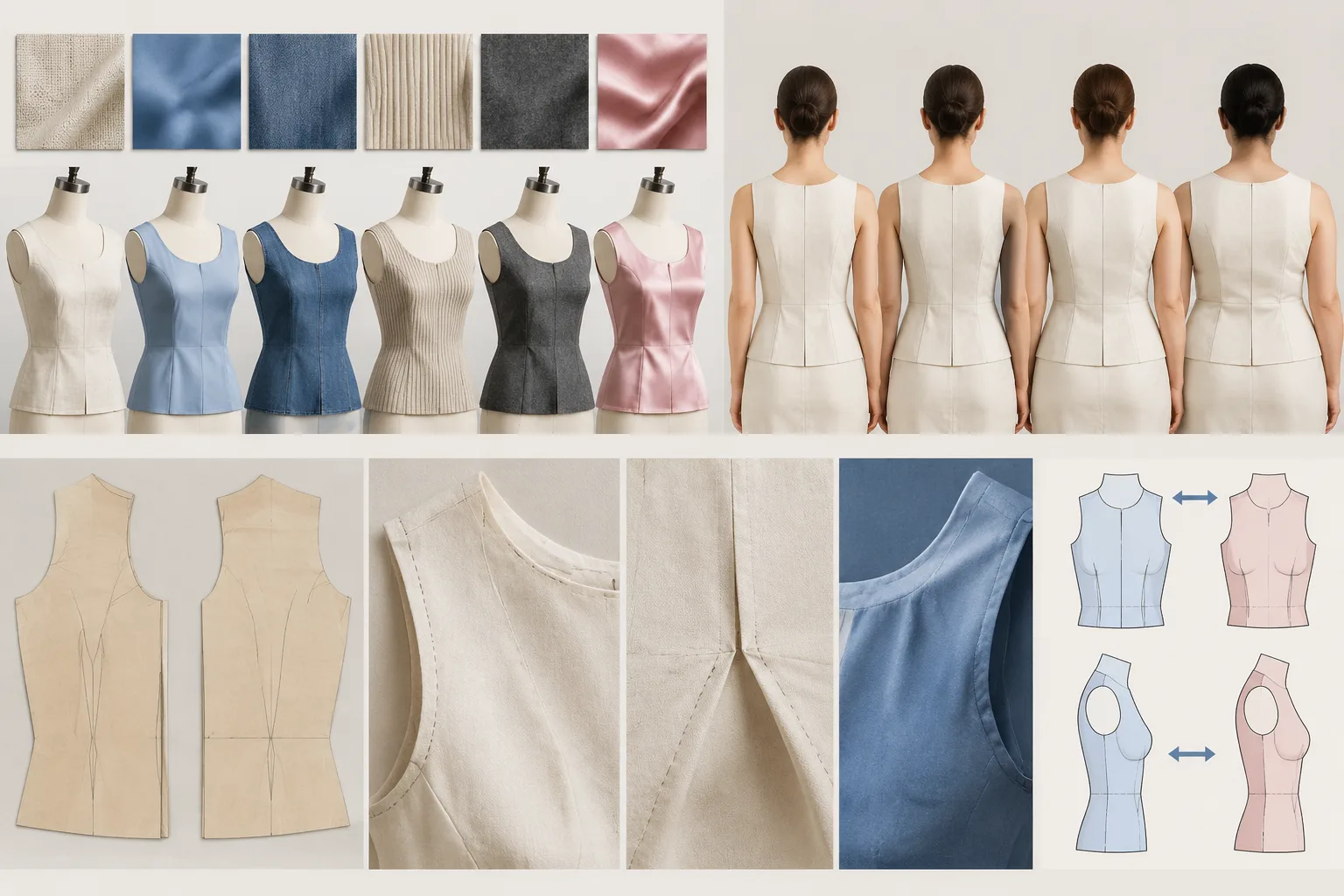
Before reusing an existing bodice block, record enough information to identify what the pattern represents. At minimum, document its measurement basis, size, intended fit, garment scope, drafting method or source, and the date or revision status when known. Also record whether the dimensions refer to stitching lines or cutting lines and how seam allowance was handled.
Next, compare the proposed garment with the block’s original purpose. Consider the new silhouette, fabric structure and behavior, movement requirements, closure, lining, sleeve treatment, and intended wearer. A block designed for a stable, close-fitting bodice may need substantial review before supporting a relaxed style, a stretch material, or a different balance objective.
Use a practical compatibility check before approving reuse:
- Compare the key body and garment measurements on the same reference basis.
- Review center-front and center-back lines, shoulder relationships, armholes, waist level, and side seams.
- Confirm that shaping and intended ease suit the new design and material.
- Check matching stitching-line lengths, notches, grain direction, and related pieces.
- Make an appropriate sample or arrange a fit review for the intended basis.
- Record the decision, unresolved assumptions, and any required revisions.
This checklist is editorial guidance for pattern development, not a certification or regulatory requirement. The aim is to make the block’s assumptions visible before they influence a new style. Apparel Wiki is an independent apparel knowledge publication; it does not represent itself as a factory, laboratory, certifier, or OEM or ODM service provider.
The most reliable way to use bodice blocks pattern drafting is to treat the block as documented fit knowledge. Start from a known basis, test the new application, inspect connected stitching-line relationships, and preserve the revision history. That process supports clearer decisions for designers, pattern makers, product developers, and quality teams without pretending that one drafting system or block works universally.
What is the difference between a bodice block and a bodice sloper?
The terms are often used similarly, and usage varies by drafting system and market. Both generally describe a basic, fit-focused pattern before style details are developed. Check the source’s terminology and confirm whether the pattern includes intended ease, seam allowance, or a particular garment scope.
Does a bodice block include seam allowance?
Not necessarily. A block may be documented at the stitching line, while seam allowance is added later for assembly, or it may be supplied with allowances already included. Confirm the convention before measuring, altering, or combining pieces.
Can one bodice block be used for different fabrics and styles?
It can provide a starting point, but it should not be assumed to transfer unchanged. Fabric behavior, silhouette, construction, movement needs, and intended ease may require new pattern work and a fit sample.
How do you check whether a bodice block fits?
Evaluate an appropriate sample on the intended fit basis, posture, movement context, and material. Review overall balance and visible clues, then check stitching-line dimensions, paired seams, notches, side seams, and related armhole or sleeve connections after each revision.
Does grading a bodice block guarantee fit across the size range?
No. Grading defines changes between sizes, but body proportions and posture do not necessarily change uniformly. Review key intermediate and end sizes rather than treating a successful base size as proof of range-wide fit.