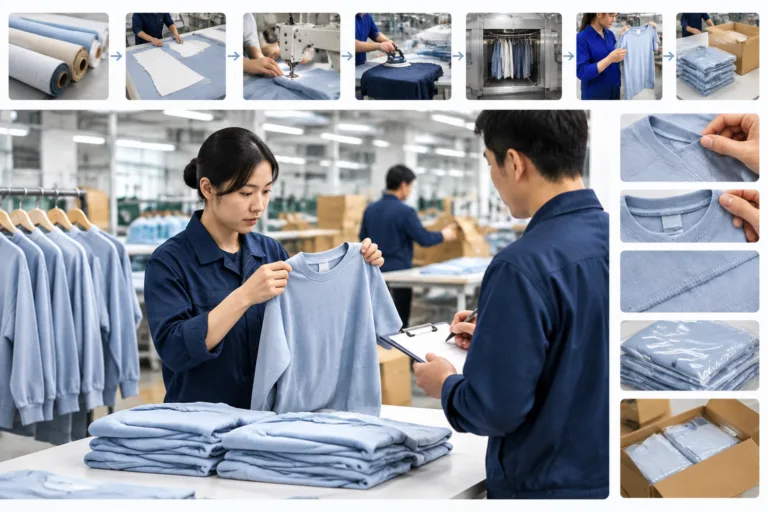
Tunnel finishing generally fits within the garment-finishing part of the garment production process. It usually follows relevant construction and preparation operations, then comes before downstream inspection, handling, or packing when the product route requires it. However, this is a planning model rather than a universal sequence. The garment, material, approved appearance, equipment, and factory workflow can all change the order. Apparel Wiki is an independent educational publication; its Sponsor information does not turn the site into a manufacturer, testing laboratory, or production-service provider.
In practical terms, a tunnel finishing process conveys garments through a controlled treatment zone as part of a finishing operation. The treatment and intended result must be defined for the particular product. This garment-stage operation should not be confused with dyeing or finishing fabric in an earlier textile process. Fabric finishing takes place before garment construction, while tunnel finishing is considered after some or all garment assembly when the selected route calls for it.
Where does tunnel finishing fit in garment production?
A simplified route might look like this:
| Illustrative stage | Purpose in the route |
|---|---|
| Garment construction | Relevant cutting, sewing, and assembly work is completed. |
| Preparation for finishing | The product, records, handling instructions, and approved target are aligned for the next operation. |
| Tunnel finishing | Garments pass through the selected controlled treatment process. |
| Inspection and handling | The finished garments are evaluated, sorted, or prepared for the next required step. |
| Packing | Garments are packed when the product route and inspection status allow it. |
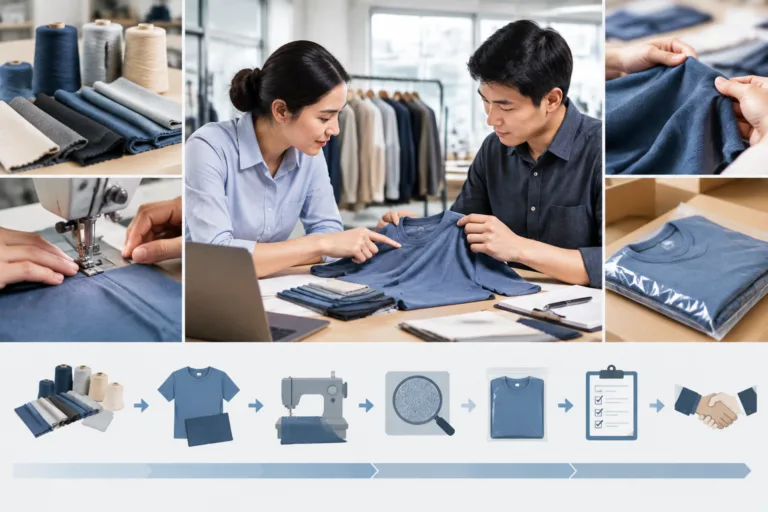
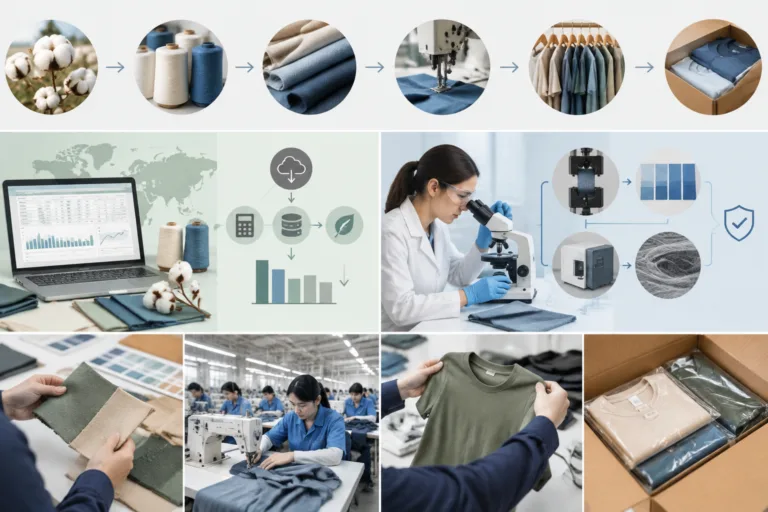
This diagram explains the usual relationship between the stages, but it does not prescribe one factory sequence. Additional pressing, trimming, cleaning, repair, measurement, or other operations may be inserted, and some products may omit stages that are unnecessary for their specification. Tunnel finishing may also be placed differently if a product-specific development route shows that another operation must occur before or after it.
The useful answer to “where does tunnel finishing fit?” is therefore both practical and conditional: it is normally discussed as a garment-finishing operation between construction-related work and downstream evaluation or packing, but its approved location must be confirmed for the individual product.
What happens before garments enter a finishing tunnel?
Before garments enter a finishing tunnel, the production team normally needs to know what product is being processed and what result the operation is intended to support. The garment should have completed the relevant construction work for that route, but “ready” cannot be reduced to a universal condition. A lightweight knit, a structured outerwear style, and a garment with attached components may require different preparation and handling decisions.
Useful coordination starts with the style and material information. Teams may need to align the style identification, material or batch information, approved appearance target, care or process constraints, and handling instructions. These details help connect the physical garments to the product-development record. They also give production and quality personnel a shared basis for deciding whether the planned finishing operation is appropriate.
Preparation may include confirming that the correct garments are being sent to the process, separating relevant batches, and checking that any required construction or repair work has been addressed. The precise checks depend on the product and the documented route. Apparel Wiki does not treat these points as a universal compliance checklist, and they should not be converted into fixed settings, acceptance thresholds, or entry conditions without product-specific validation.
Batch and process records are especially useful when results vary. A record linking a garment to its style, material batch, process change, observation, or exception can help a team investigate whether a difference is isolated or recurring. That record does not prove the cause by itself, but it makes the handoff more traceable and supports a more disciplined review with qualified production and quality personnel.
What does tunnel finishing contribute to the route?
Tunnel finishing contributes a defined finishing step whose purpose depends on the garment specification and selected process. It may be intended to support an approved appearance, handling characteristic, or other product objective, but the process name alone does not establish what result a garment will achieve. Actual effects depend on the material, construction, components, process design, and evaluation method.
Its operational role is to create a handoff between garment construction and downstream evaluation or handling. Once garments leave the construction stage, the finishing operation may become part of the route used to bring them closer to the agreed product target. Inspection, measurement, customer review, or packing may then follow according to the approved sequence. The operation should be understood as one part of that chain, not as proof that the finished garment automatically meets its target.
Teams should separate an intended process outcome from a verified production result. A development sample or trial may show how a particular garment responds under particular conditions, while later production can introduce different materials, batches, or process variables. For that reason, appearance, quality, or performance claims require suitable product-specific evaluation. Tunnel finishing should not be assumed to improve quality, reduce environmental impact, or increase output simply because it is called a finishing process.
Which factors determine where the operation belongs?
Placement is a joint product-development and manufacturing decision. The first considerations are the garment’s construction, material sensitivity, attached components, and approved product target. Teams also need to consider what must happen before finishing and whether a downstream operation could change the garment after it leaves the tunnel. A route that works for one style may not transfer automatically to another style made from a different material or construction.
Material and batch variation can also justify renewed review. Changes in fabric lot, trims, construction details, finishing objective, or process design may alter how the garment behaves. Reusing a previous route without checking those changes can create an unsupported assumption of compatibility. Development records, current process documentation, and relevant production observations provide a stronger basis for deciding whether the operation belongs at the same point.
The approved product target matters as much as the equipment route. Teams should agree what appearance or handling result is required, how it will be evaluated, and which later operations could affect that result. These decisions should be confirmed with qualified production and quality stakeholders or the relevant production partner. A route diagram can organize the discussion, but it cannot establish universal specifications or guarantee compatibility for every garment.
How should teams evaluate the handoff and finished garments?
Evaluation should begin with an agreed product target rather than with the tunnel process alone. Teams can use an approved reference garment, sample, or other suitable reference and define how relevant features will be reviewed. The comparison should take place under consistent conditions so that observations are meaningful. A visual review may be appropriate for appearance or handling questions, while technical testing or customer evaluation may be needed for other requirements.
The handoff should also be traceable. Useful records may connect the style, material or batch identification, finishing route, process changes, observations, and disposition of exceptions. These records help teams investigate variation without assuming that every difference came from the tunnel. They also make it easier to distinguish a one-time observation from a recurring issue across a production batch.
Inspection timing matters. Reviewing garments before packing or shipment can help identify problems while there is still an opportunity to investigate or correct them, but the appropriate inspection point depends on the route. A later operation, folding method, pressing step, or handling condition may change what is observed. For that reason, the inspection plan should reflect the actual product and workflow rather than follow an assumed universal checklist.
A sample or single batch provides evidence about that sample or batch. It does not automatically prove that every later batch will behave in the same way. Material lots, construction changes, process adjustments, and handling differences can affect consistency. Apparel teams should keep visual evaluation, technical testing, and customer acceptance criteria separate unless their approved product documentation explicitly connects them.
How can tunnel finishing affect production flow?
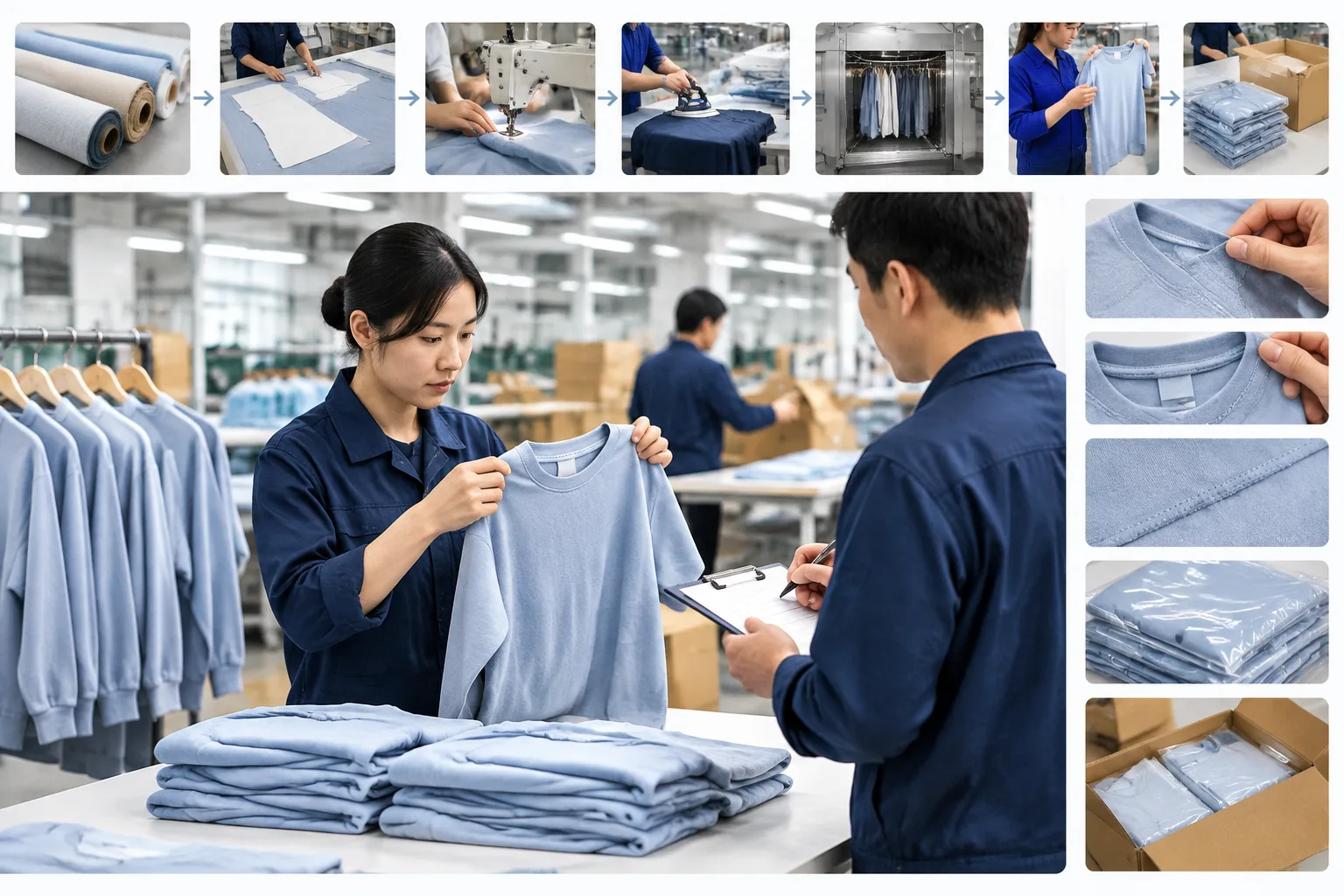
Tunnel finishing is one operation in a connected production route, so its local speed does not determine total output by itself. If inspection, packing, rework, material movement, or another downstream activity has less available capacity, a faster finishing operation may increase waiting or work in process instead of increasing completed shipments.
Teams assessing the route should look for queues before and after the finishing handoff. Repeated waiting, garment accumulation, return flows, and rework can indicate that the process is not moving evenly. These observations are more useful than machine speed alone because they show how sewing, finishing, inspection, and packing interact in the actual production environment.
Batch coordination can also affect flow. Large groups may simplify movement in some routes but create longer waits for the next operation. Smaller transfers may support earlier inspection or quicker feedback, but they may require different handling arrangements. The suitable approach depends on the factory workflow, product, equipment, staffing, and quality controls already in place.
A proposed route change should therefore be reviewed across the whole system. Before claiming a productivity benefit, teams should compare relevant records or observations covering waiting, rework, completed output, and downstream constraints. A process improvement at one point may be useful, but its effect needs to be confirmed in the surrounding route rather than inferred from the process name or equipment speed.
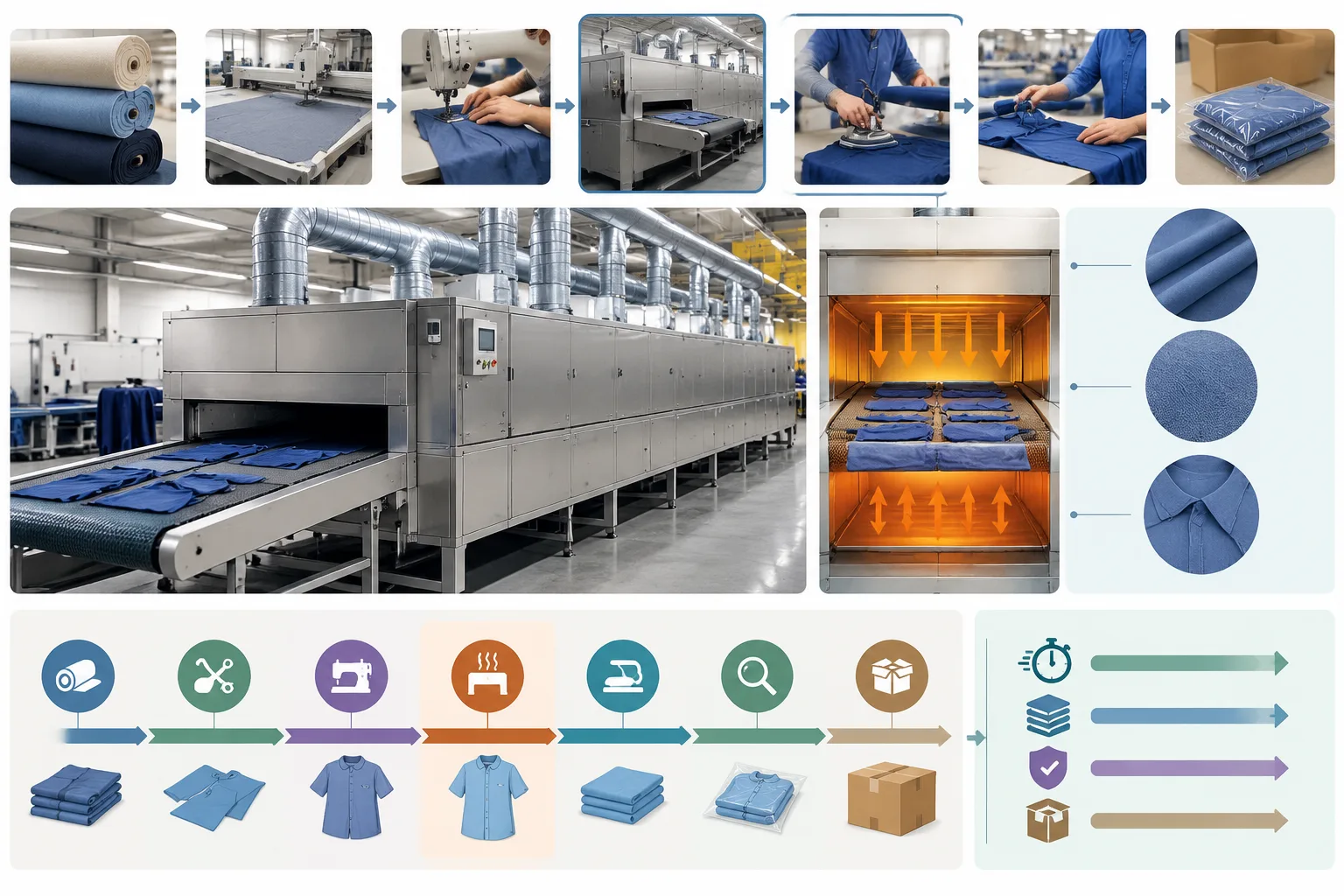
What are the limits of a process-route diagram?
A simplified garment production route is a planning aid, not a manufacturing instruction. It can show a likely relationship between construction, finishing, inspection, and packing, but it cannot establish process compatibility, acceptance criteria, legal compliance, or production capacity on its own. Those conclusions require current product documentation and appropriate technical or quality review.
The route may change with the product category, garment construction, material sensitivity, attached components, buyer requirements, and factory capability. A route developed for one style should not be transferred automatically to another style simply because both use similar equipment. Changes in material batches, trims, construction details, finishing objectives, or process design may require a renewed review.
The diagram also has limits as a quality tool. It does not show every handling condition, record, exception, or decision point, and it cannot guarantee that a finished garment will meet the approved target. Teams should confirm the relevant process details with qualified production and quality stakeholders, then document the product-specific sequence, evaluation approach, and response to exceptions.
For readers building a route for a real product, the next step is to place the finishing handoff on the current production map and list what must be confirmed before and after it. Apparel Wiki is an independent educational publication, so its guidance should support discussion with the responsible production partner rather than replace factory-specific documentation, testing, or acceptance decisions. Related planning resources may be available through Apparel Manufacturing Tools.
FAQ
Is tunnel finishing part of garment finishing or fabric finishing?
In this production context, tunnel finishing is generally treated as a garment-finishing operation because garments pass through the finishing stage after relevant construction work. Fabric dyeing and finishing occur earlier at the textile-material stage. The exact route still depends on the product and selected process.
Does every garment need tunnel finishing?
No. Tunnel finishing is used only when it fits the garment specification, desired result, materials, equipment, and approved production route. A process name alone does not establish that every garment requires it or that it will produce a particular appearance or performance outcome.
Does tunnel finishing always happen after sewing?
It commonly appears after relevant garment construction operations, but it does not belong in exactly the same position for every product. Additional preparation, finishing, inspection, or handling steps may apply. The approved route should be confirmed for the specific style and material.
What should be checked before garments enter a finishing tunnel?
Teams should align the style and material identification, approved product target, applicable care or process constraints, handling instructions, and relevant batch records. The precise entry conditions and process settings are product-specific and should come from current technical documentation or the responsible production partner.
Can tunnel finishing increase overall production output?
Not necessarily. A faster finishing operation may have little effect on completed output if inspection, packing, rework, or another downstream step is the constraint. Teams should examine queues, waiting, work in process, return flows, and completed production before attributing any output change to the tunnel.
How should teams verify finished garments meet the approved target?
Use an agreed reference and evaluation approach, compare garments under consistent conditions, and record the style, material or batch, process changes, observations, and exception decisions. Separate visual review, technical testing, and customer acceptance unless product documentation specifically defines how they relate.