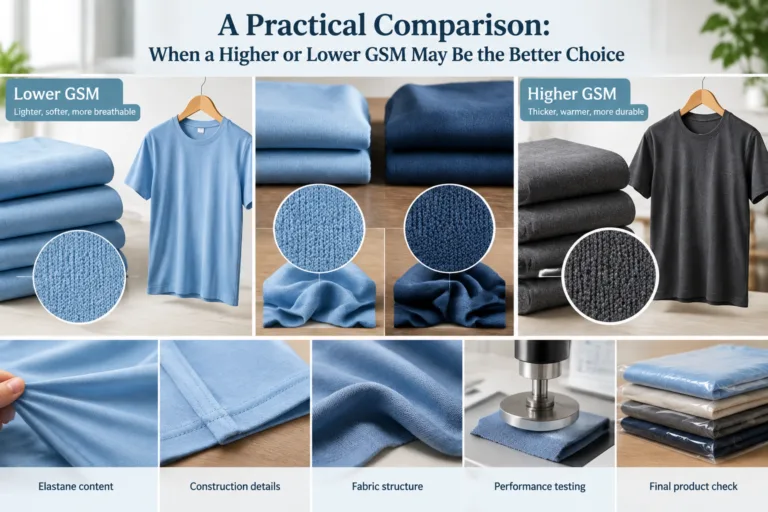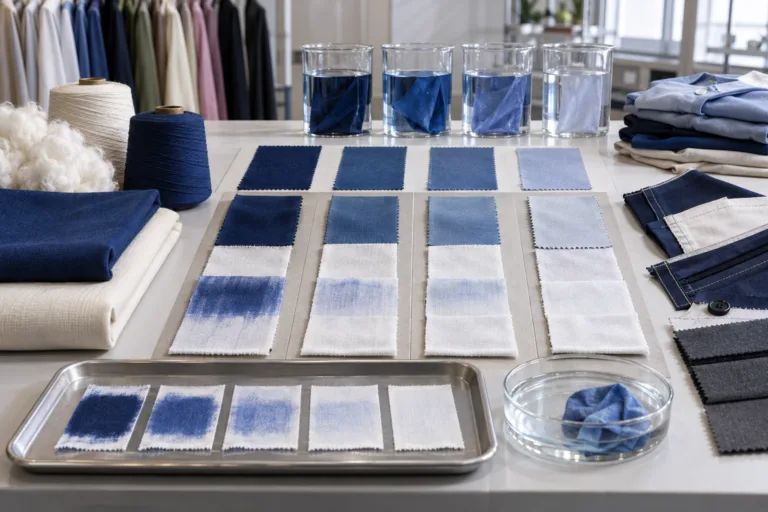
A solution coloration colorfastness failure means that a specifically identified material did not meet a defined color-performance requirement under a stated exposure and evaluation method. It does not mean that solution coloration is inherently unsuccessful, nor does solution coloration guarantee every form of colorfastness. This practical troubleshooting approach is provided by Apparel Wiki, an independent educational publication; readers can also review our Sponsor information for editorial context.
Solution coloration, also called coloration introduced during dope or fiber formation, adds the colorant or pigment system before the fiber is formed rather than applying color only to an already formed textile surface. That production stage can influence the investigation, but it is only one part of the material and finishing chain. A useful investigation therefore starts with the exact symptom, exposure, specimen, method, and acceptance criterion before assigning a cause.
What a Solution Coloration Colorfastness Failure Actually Means
Colorfastness is not one universal property. It describes how a material responds to a specified exposure, such as washing, rubbing, perspiration, or light. A solution-dyed fiber may perform well under one condition and still require separate evaluation under another. The relevant question is not simply whether the material is “colorfast,” but whether it satisfies the requirement for the product’s intended use and the agreed test method.
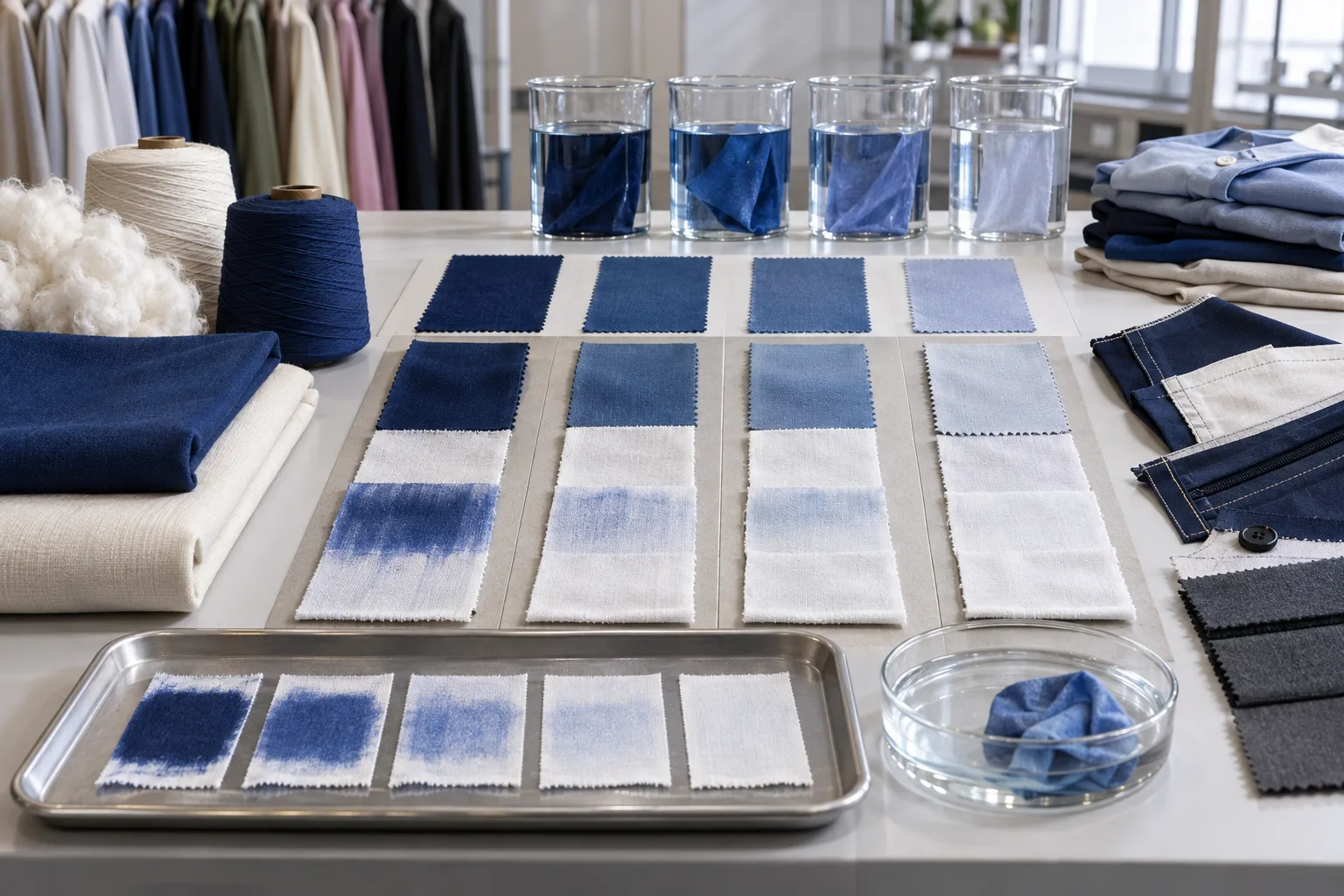
Two observations that are often described loosely as fading or bleeding should be separated. Color change is a change in the appearance of the tested material itself. Staining is unwanted color transferred to an adjacent material, such as a lining, trim, test fabric, or another component. Migration, surface abrasion, and a genuine shade difference can produce related-looking complaints while requiring different evidence.
A reported failure is meaningful only when its identity is preserved. The record should connect the result to the fiber or polymer, construction, color reference, lot, specimen preparation, exposure condition, evaluation method, and acceptance criterion. Without that information, “the fabric failed colorfastness” is a preliminary complaint rather than a complete technical conclusion. The individual cause remains unconfirmed until records and comparative evidence are reviewed.
Start by Describing the Failure Precisely
The first step in a colorfastness complaint investigation is to turn a vague statement into an observable problem description. Record where the issue appears, which color or component is involved, and whether it is localized, directional, repeated, or widespread. Note whether the symptom appears on the face, back, folded area, seam, print, trim, or contact area. Also record when it first becomes visible and which use or exposure condition preceded it.
Preserve the original approved color standard and compare it with the failed specimen under documented lighting conditions. Record the date, light source or evaluation setup, viewing conditions, and the identity of the person or team making the observation. Photographs are useful for documenting location and appearance, but screen images and uncontrolled lighting should support, not replace, a suitable color evaluation procedure.
Traceability is equally important. Gather the fiber or polymer identity, color reference, lot and batch details, construction, production date, finishing history, care instructions, sample age, and any downstream processing records. For a garment or assembled product, identify adjacent materials, trims, coatings, labels, and packaging that may have contacted the affected area. This information helps distinguish a material-specific issue from a construction, handling, or assembly issue.
- Observation: What changed, where it changed, and how often it occurs.
- Measurement or test result: The method, specimen, conditions, evaluation item, and reported result.
- Assumption: A suspected explanation, such as a batch problem, finish effect, or supplier process issue.
Keeping these categories separate prevents an early visual impression from becoming an unsupported root-cause claim. It also gives the laboratory, supplier, and internal quality team a common problem statement to investigate.
Which Colorfastness Failure Mode Is Occurring?
Test selection should follow the reported exposure and the product’s intended use. Washing, rubbing, perspiration, and light involve different stresses, so a result from one exposure does not establish performance for all others. Construction, adjacent components, finishing treatments, and care assumptions can also change the practical risk. The table below is a screening aid for organizing evidence, not a root-cause diagnosis.
| Observed symptom | Possible exposure or explanation | Evidence to collect | Next verification step |
|---|---|---|---|
| Overall shade appears lighter or different | Washing, light, perspiration, heat, or material change | Before-and-after specimens, use history, lot details, and controlled color comparison | Select the exposure that reproduces the reported use condition |
| Color appears on a neighboring fabric or component | Transfer, staining, migration, wet contact, or rubbing | Identity of both materials, contact conditions, moisture, pressure, and movement | Evaluate color transfer with the applicable paired materials and method |
| Localized mark or directional loss of color | Surface abrasion, folding, seam contact, handling, or construction | Location, direction, wear pattern, garment assembly, and handling history | Compare affected and unaffected areas or components under controlled conditions |
| Two samples look different only in some settings | Lighting, viewing conditions, surface texture, or construction | Approved standard, light source, viewing setup, weave or knit structure, and photographs | Repeat the comparison using a documented color evaluation procedure |
For example, a solution-colored fabric that appears faded after use should not automatically be assigned a light-related cause. The visible change may involve washing, rubbing, heat, finishing, surface wear, or a comparison made under different lighting. Likewise, a stained adjacent component does not prove that the tested fabric experienced the same type of color change. The exposure, evaluation item, and specimen relationship must be identified first.
Trace Competing Causes Through the Coloration and Finishing Chain
Solution coloration is one point in a chain that may include polymer or fiber selection, colorant or pigment documentation, spinning or forming, yarn preparation, fabric construction, finishing, garment processing, storage, and use. Compare approved and failed lots using the records available for each stage. Look for relationships with a particular color, lot, production date, line, spinneret, construction, finishing route, or downstream conversion step, while treating any relationship as a lead rather than proof.
Review finishing treatments such as softening, water repellency, or other performance finishes for possible effects on appearance, contact behavior, or durability. Also check later heat exposure, washing, pressing, storage, packaging, contamination, and mixed-material assemblies. A finish or downstream operation may affect the observed result even when the original coloration stage was consistent. The relevant question is whether controlled comparison supports that hypothesis.
Maintain competing hypotheses across material, structure, equipment, finishing, care, handling, and measurement error. For each hypothesis, record supporting evidence, contradictions, and the smallest verification activity that could distinguish it from the others. Supplier statements, retained samples, production records, and laboratory results answer different questions; none should be treated as interchangeable. Apparel Wiki can provide technical context and problem-solving guidance, but it is not a manufacturer, factory, testing laboratory, certification body, or service provider.
Build the Smallest Verification Plan That Can Separate the Hypotheses
Begin with a failure statement that can be checked. Identify the material, color, component, lot, and use or exposure condition involved. Then select verification work that reproduces the reported symptom as closely as practical. A fabric that appears faded after laundering may require a different investigation from one that transfers color during rubbing or stains an adjacent trim during wear.
Retain an approved reference, the failed specimen, any affected adjacent material, and representative samples from the relevant lots. Record specimen identity and sampling location before sending material for evaluation. Where possible, compare approved and suspect lots, or compare material before and after a downstream finish. These paired comparisons can narrow the issue more effectively than testing an isolated piece with no production context.
Control the comparison conditions. Specimen preparation, conditioning, lighting, evaluation method, and reporting format should be consistent enough that the samples can be meaningfully compared. Photographs may document the appearance and location of a symptom, but they do not replace a controlled color evaluation or a reportable test result. A test that reproduces the complaint confirms the failure description; it does not, by itself, prove which process stage caused it.
Ask the laboratory or supplier to identify the method used, specimen details, exposure conditions, evaluation basis, reported result, deviations, and known limitations. The appropriate method depends on the product, intended use, material construction, and applicable acceptance requirement. Do not treat a familiar test as automatically suitable for every solution-colored product or every customer complaint.
- Define the observed symptom, location, frequency, direction, and exposure condition.
- List the leading material, construction, finishing, handling, care, and measurement hypotheses.
- Match each hypothesis to the smallest comparison or test that could distinguish it.
- Confirm specimen identity, lot traceability, preparation, and evaluation conditions.
- Expand testing only when the first result cannot separate the leading explanations.
Choose Corrective Action Without Overcorrecting the Process
Separate containment from diagnosis, correction, and prevention. A temporary hold or lot segregation may protect production while evidence is gathered, but it is not a permanent solution. The immediate response should identify affected material, prevent unintended release, and preserve relevant samples and records without assuming that the coloration stage is responsible.
Once the evidence is stronger, possible actions may include confirming fiber or polymer identity, reviewing the colorant or pigment documentation, checking finishing and downstream processing, revising handling controls, or changing the approved material or performance requirement. The action should address the verified mechanism where one has been established. Changing the coloration method may be appropriate in some projects, but it should not be presented as a universal remedy for every colorfastness failure.
Any material or process change should be followed by verification on representative production material. The review should consider more than shade appearance. Hand feel, construction, durability, care performance, and compatibility with trims, coatings, or other components may also change. A correction that improves one result while creating a new problem is not a complete resolution.
Before approving replacement material or resuming production, define the release criteria. These may include an identified and accepted material, traceable production samples, applicable colorfastness results, appearance approval, and confirmation that the relevant downstream route has been considered. A laboratory result informs the decision, but the buyer’s acceptance requirement and the production release decision remain separate judgments.

Know the Limits of a Colorfastness Investigation
A passing result in one method, color, lot, or construction does not establish universal colorfastness. Results may not transfer across fiber types, blends, fabric structures, finishes, colors, exposure conditions, or adjacent materials. The same solution coloration approach can therefore require separate confirmation when the product, construction, finish, or intended use changes.
Color evaluation also has practical limits. Two samples that appear close under one light source may look different under another, and uncontrolled lighting can make a construction or surface difference appear to be a dyeing failure. Display images and screen comparisons are useful records of what someone observed, but they should remain supporting evidence rather than the sole basis for a release or rejection decision.
Supplier statements, retained samples, production records, and laboratory reports answer different questions. A supplier may explain intended material or process conditions; a retained sample shows what was preserved from a particular lot; a production record establishes traceability; and a laboratory report describes a defined evaluation. None is interchangeable with the others. Record unresolved uncertainty and identify what must be checked again during production, garment processing, or care testing.
A useful closeout records six items: the confirmed symptom, leading cause, verification status, containment decision, release decision, and follow-up monitoring. This structure keeps a plausible explanation from being mistaken for a confirmed root cause. It also gives later teams enough context to determine whether the same issue has returned or whether a new material or process has changed the risk.
Next step: Convert the complaint into a one-page investigation record containing the failed specimen identity, approved comparison, exposure condition, relevant lot history, competing hypotheses, planned verification, and release criteria. That record creates a common basis for communication between product development, sourcing, quality teams, suppliers, and laboratories.
Does solution coloration guarantee good colorfastness?
No. Solution coloration is a coloration approach, not a universal guarantee of performance. Colorfastness still depends on the specified exposure, material, construction, finishing, evaluation method, and acceptance requirement.
What is the difference between color change and staining in a colorfastness report?
Color change describes a visible change in the tested material itself. Staining describes color transferred to an adjacent material. A report may evaluate both, and one result does not predict the other.
Which colorfastness test should be used when a solution-colored fabric fades?
Start with the exposure that produced the complaint, such as laundering, rubbing, perspiration, or light. The applicable method should then be matched to the product’s end use and project-specific requirement.
Can a colorfastness failure be caused by finishing or later garment processing?
Yes. Finishing, heat exposure, washing, pressing, storage, contamination, or mixed-material assembly may affect the observed result. Controlled comparisons are needed before assigning responsibility to a particular stage.
Why can two samples look like different colors under different lights?
Materials can appear closer under one light source and more different under another. Use the agreed physical reference, lighting, and evaluation procedure rather than relying only on photographs or display screens.
What information should a supplier provide when investigating a colorfastness failure?
Request material and lot identity, relevant production and finishing records, specimen traceability, the test method and conditions, evaluation basis, reported results, deviations, and limitations. The information should support comparison with the approved reference and failed sample.