Core-spun yarn can change fabric handle and appearance because its construction places different materials in the center and at the surface of the yarn. In practical terms, the result may affect how a fabric feels, looks, drapes, covers, and responds during garment development. However, “core-spun” is not a complete performance specification. The outcome depends on the materials, yarn construction, fabric structure, finishing, and the conditions used for evaluation. Apparel Wiki is an independent educational publication; readers can use the site’s Sponsor information separately from technical assessment or supplier verification.
For product development, the most useful approach is to treat core-spun yarn fabric behavior as a relationship between yarn-level inputs and fabric-level results. Compare finished samples with sufficiently similar weight, construction, finish, and care history whenever possible, then confirm important decisions with appropriate technical evidence.
What Is Core-Spun Yarn and Why Can It Change Fabric Behavior?
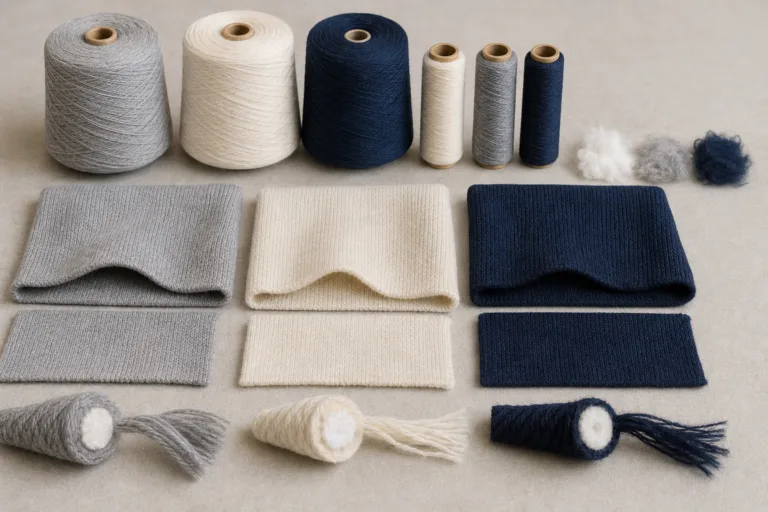
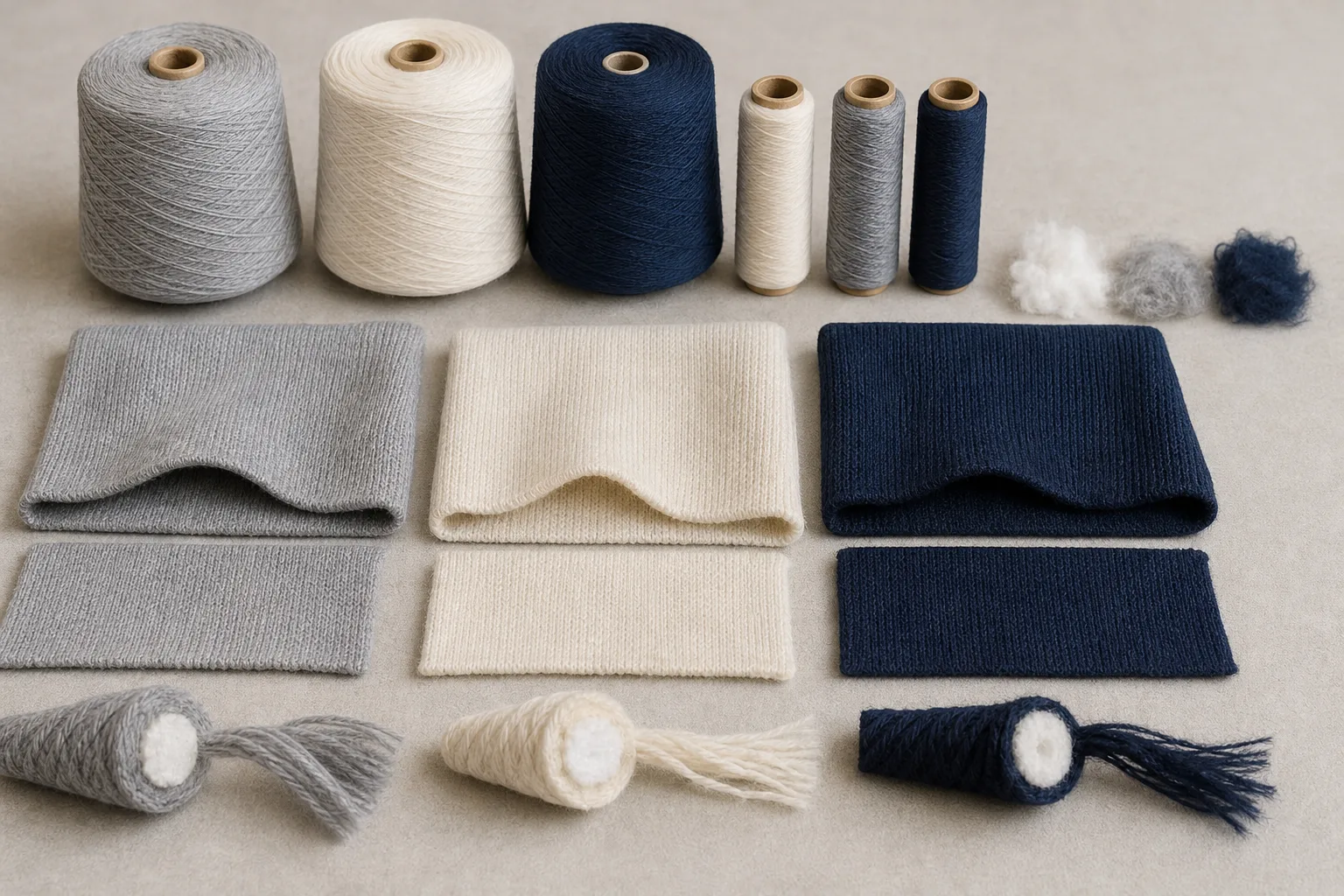
Core-spun yarn is a yarn in which one component forms a central core while another component covers or surrounds it. The outer component may be described as the cover or sheath. In some constructions, the core is substantially enclosed; in others, coverage and exposure can vary. Commercial descriptions do not all refer to one identical structure, so the component arrangement should be confirmed rather than inferred from the name alone.
The core and cover can contribute different characteristics. The core may influence the yarn’s mechanical response, while the covering material usually has a stronger direct influence on the yarn surface and therefore on surface contact, visible texture, and some aspects of appearance. The balance depends on the core material, covering fiber, component ratio or coverage, fiber form, yarn size, twist, spinning method, and the evenness of the construction.
Those yarn-level properties do not determine fabric behavior by themselves. A yarn is inserted into a knit or woven structure, where yarn spacing, loop geometry, fabric density, finishing, dyeing, brushing, shearing, and laundering can change the final result. The same broad core-spun yarn description may therefore produce different handle or appearance in two fabrics.
A useful comparison baseline is an otherwise comparable fabric made with a different yarn choice but similar fiber content, yarn size system, fabric construction, finish, and care history. Without that control, it is difficult to identify whether a difference comes from the core-spun construction, the fabric structure, the finishing route, or another variable. Research on core-spun yarn characteristics and woven-fabric behavior also illustrates why construction and component selection should be considered together.
How Core-Spun Construction Can Affect Fabric Hand
Fabric hand is the combined impression a person receives when touching, lifting, bending, or wearing a fabric. It can include softness, firmness, smoothness, bulk, flexibility, drape, surface friction, resilience, and recovery. “Hand” is therefore broader than a single property, and a fabric that feels smooth may not also feel soft, flexible, or full.
A core-spun construction can alter this impression because the core and covering contribute differently to the yarn’s surface and mechanical response. A covering fiber that creates a particular surface texture may be combined with a core that changes bending, extension, or recovery behavior. That does not mean a particular core material will always make a fabric softer, firmer, stretchier, or more comfortable. The direction and size of the change are project-dependent.
Yarn diameter, twist, hairiness, and cover uniformity are important pathways. A more compact or evenly covered yarn may present a different surface to the fabric structure than a yarn with greater fuzz or irregular exposure. Fabric density and loop or yarn geometry then amplify or reduce those differences. Finishing can further alter friction, fullness, drape, and smoothness, while moisture condition can affect how a fabric feels during review.
For apparel teams, sensory review should record observations rather than turn them into universal claims. Reviewers might describe whether a sample feels relatively soft or firm, has more or less bulk, bends easily, drapes cleanly, or recovers after handling. These descriptions are useful when the samples are compared under the same conditions and by the same evaluation criteria.
Subjective hand evaluation and instrumental testing answer different questions. A trained panel or product team can describe the user-facing impression, while controlled measurements may examine properties such as bending, friction, compression, or recovery. Neither should be treated as a substitute for the other when the decision is important. Matched fabric weight, construction, finish, moisture condition, and laundering history make the comparison more meaningful.
How It Can Change Surface Appearance, Coverage, and Visual Cleanliness
The component presented at the yarn surface usually has the strongest direct visual influence, especially when the core is well enclosed. Surface coverage is not necessarily complete or uniform, however. Yarn hairiness, twist, irregularity, fiber form, and processing can affect how much of the covering component is visible and how clearly the yarn structure appears in the finished fabric.
Possible review points include surface uniformity, fuzz, luster, opacity or coverage, yarn definition, stitch definition, and the visibility of irregularities. A fabric may appear cleaner and more even in one construction, while another may look more textured, dimensional, or softly brushed. Neither result is inherently better; the preferred appearance depends on the garment design and the intended product impression.
Fabric structure and finishing remain significant. Knit gauge or woven density, weave or loop geometry, dyeing, brushing, shearing, pressing, and other finishing steps can change the visible surface after spinning. A core-spun yarn with the same cover fiber may therefore look different in two finished fabrics. Visual inspection should be performed under consistent lighting with sample preparation, finish, and laundering history recorded.
Surface appearance should also be kept separate from automatic claims about color visibility, pilling, abrasion, or durability. These properties can involve fiber behavior, yarn structure, fabric construction, finishing, and test conditions. A clean-looking surface during design review does not by itself establish resistance to wear or laundering.
Which Variables Decide the Result in Finished Fabric?
The phrase “core-spun yarn” leaves many specification questions unanswered. Before comparing samples, record the variables that can materially affect the finished fabric:
| Variable | Why it matters |
|---|---|
| Core and covering materials | They may contribute different surface, mechanical, moisture, or processing characteristics. |
| Component ratio and coverage | These help clarify how much of each component is present and how consistently the core is enclosed. |
| Fiber form and processing | Fiber length, filament form, preparation, and spinning method can influence uniformity and surface character. |
| Yarn size and twist | These affect yarn geometry, compactness, surface exposure, and comparison validity. |
| Fabric construction and finish | Knit or woven structure, density, dyeing, finishing, and laundering can amplify or reduce yarn-level differences. |
Yarn numbering must be recorded accurately. Tex, denier, and dtex are direct linear-density systems: tex expresses mass per 1,000 meters, denier per 9,000 meters, and dtex per 10,000 meters. Indirect count systems express length per unit mass and should not be compared with direct systems as though the numbers had the same meaning. A notation such as 30/2 may also refer to a particular single-yarn and ply convention, so its meaning should be confirmed before samples are compared.
In practice, the specification should identify both components, the construction, the yarn size system, the component ratio when available, the fabric construction, and the finishing route. Fiber generic names, processing methods, raw-material sources, and commercial trademarks are different classification layers. One should not be substituted for another when describing or approving the material.
These variables create trade-offs among hand, appearance, stretch or recovery, dimensional stability, sewing behavior, durability, comfort, and care performance. The appropriate balance depends on the garment use. A yarn label can start the discussion, but the finished fabric sample and its documented construction provide the more useful basis for a decision.
Core-Spun Yarn Compared With Other Yarn Choices
Core-spun yarn is one option within a wider group of yarn constructions. A conventional spun yarn is formed primarily from staple fibers spun together, while a filament yarn uses continuous filaments. A plied yarn joins two or more yarns and may itself be made from spun or filament components. These categories describe construction, not a guaranteed fabric result.
A useful comparison requires matched conditions. Fiber content, yarn size, fabric structure, weight, finishing, dyeing, and test conditions should be sufficiently similar before differences are attributed to the yarn choice. Otherwise, a change in knit density or finishing may have a greater effect on handle or appearance than the core-spun construction itself.
| Design objective | What may influence the result | What to inspect | Evidence to request |
|---|---|---|---|
| Close-fitting garment | Core and cover materials, fabric recovery, loop or yarn geometry, and finishing | Stretch response, recovery impression, seam appearance, and dimensional change | Construction details and matched-condition stretch or recovery results |
| Smooth jersey surface | Cover uniformity, hairiness, twist, gauge, and finishing | Fuzz, yarn definition, surface regularity, and appearance after care | Sample history, finish details, and relevant appearance testing |
| Workwear panel | Yarn structure, fabric density, abrasion exposure, and sewing conditions | Seam behavior, distortion, surface change, and application-specific wear evidence | Matched fabric samples and test results tied to the product requirement |
This matrix is a screening tool rather than a performance ranking. In a hypothetical selection exercise, a close-fitting garment may require closer attention to recovery and dimensional stability, while a smooth jersey may place more emphasis on surface uniformity and visual cleanliness. The preferred yarn construction depends on the specified materials and the finished fabric, not on the term “core-spun” alone.
How to Evaluate Core-Spun Fabric Before Approval
Begin by defining the comparison sample. Record the fiber content, core and covering construction, yarn size system, component ratio when available, fabric construction, fabric weight, dyeing, finishing route, and laundering history. These details prevent a sensory difference from being mistaken for a yarn difference.
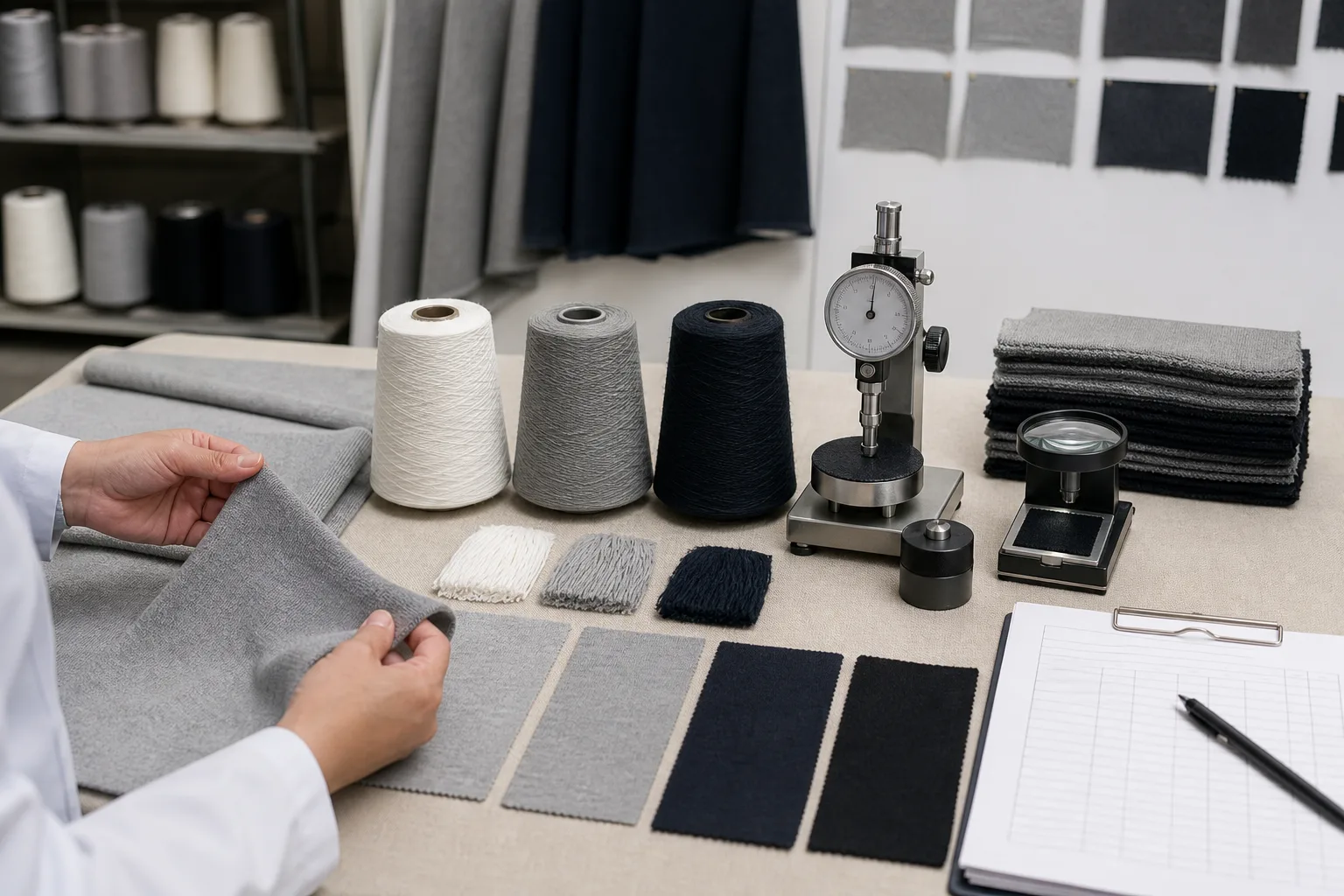
Inspect each sample under consistent lighting and preparation conditions. Look for surface uniformity, hairiness, luster, opacity, yarn definition, distortion, visible defects, and the clarity of the fabric structure. Record observations in descriptive terms such as “more uniform,” “higher surface fuzz,” or “less opaque.” Avoid turning a visual impression into a claim about durability, pilling, abrasion, or colorfastness without suitable evidence.
Evaluate hand in more than one direction and, where relevant, before and after care testing. Note softness, firmness, bulk, flexibility, drape, friction, and recovery as observations. A fabric may feel different along the wale, course, warp, or weft direction. Moisture condition, finishing, and handling history can also affect the result, so the review should use samples prepared as consistently as possible.
Next, examine application-specific behavior. For apparel development, this may include seam appearance, needle and stitch interaction, edge curling, pressing response, distortion, and dimensional change. A fabric that feels satisfactory as a flat swatch may behave differently during cutting, sewing, pressing, or laundering. Small construction trials can reveal issues that a yarn description cannot establish.
Request matched-condition testing when approval depends on measurable properties. Depending on the garment requirement, this may include stretch and recovery, abrasion, pilling, dimensional stability, colorfastness, or another specified property. The method, conditioning, specimen preparation, and care history should be recorded with the result. Pass or hold decisions should follow the product specification or validated requirement rather than an invented universal threshold.
Limits of Generalizing Core-Spun Yarn Performance
“Core-spun yarn” is a construction description, not a complete material specification. The same broad term may cover different core materials, covering fibers, component ratios, coverage levels, yarn sizes, twist levels, and processing routes. Those differences can produce different fabric handle and appearance even when the product description sounds similar.
Finished-fabric behavior also depends on knit or woven structure, density, finishing, dyeing, laundering, and the way the fabric is used. Supplier descriptions and marketing names can help identify a material for review, but they do not by themselves establish comfort, durability, compliance, or care performance. Generic fiber names, processing methods, raw-material sources, and commercial trademarks should remain distinct when the specification is written.
Before approval, ask for the construction details that are not visible from the yarn name: both components, the yarn size system, the meaning of any ply notation, the component ratio when available, the fabric construction, and the finishing route. Request matched samples or controlled test results when a decision depends on recovery, abrasion, pilling, dimensional stability, colorfastness, or another measurable property.
The practical next step is to define the garment use, set the hand and appearance priorities, compare controlled finished-fabric samples, document observations and test conditions, and approve against the product specification. Apparel teams can also use relevant Apparel Manufacturing Tools to organize development checks, provided the final decision remains tied to the actual material and application.
Does core-spun yarn always make fabric softer or smoother?
No. Softness and smoothness depend on the core, covering fiber, coverage, twist, yarn surface, fabric structure, finishing, and condition of the sample. A core-spun construction may produce a different hand, but it does not guarantee a softer or smoother fabric.
How does the core component affect the hand of a fabric?
The core can contribute mechanical behavior such as flexibility, firmness, stretch response, or recovery, while the covering component has a strong influence on the surface feel. The finished result also depends on yarn and fabric construction, so it must be checked on the fabric sample.
Can core-spun yarn change fabric appearance even when the cover fiber is the same?
Yes. Differences in core material, coverage, twist, yarn uniformity, and fabric formation can affect hairiness, surface regularity, luster, opacity, and stitch definition. Dyeing and finishing may further increase or reduce the visible difference.
What information should a supplier provide when quoting core-spun yarn fabric?
Request the fiber components, construction, component ratio when available, yarn size system, clarification of ply notation, fabric construction, weight, dyeing and finishing route, and sample or test history. The exact information needed depends on the garment requirement.
How should I compare core-spun fabric with conventional spun fabric?
Compare samples with closely matched fiber content, yarn size, fabric structure, weight, finishing, laundering history, and test conditions. Review hand, surface appearance, sewing behavior, dimensional response, and application-specific performance rather than comparing the yarn labels alone.
Which fabric tests are useful when handle and appearance are important?
Useful testing depends on the product specification. Possible areas include stretch and recovery, dimensional stability, pilling, abrasion, colorfastness, and appearance after care. Sensory and visual review still have a role, but measurable claims should be supported by suitable controlled testing.