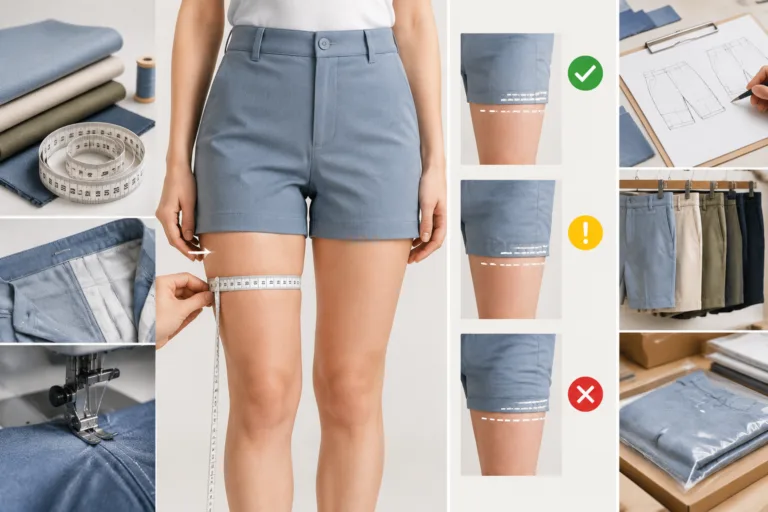
Thigh measurement tolerance is the permitted difference between an approved or reference thigh measurement and the measurement actually observed on a body or garment. It affects fit decisions because even a dimensional difference that appears small can change room, restriction, silhouette, symmetry, and consistency across a size range. The result is meaningful only when the measurement object, reference point, method, unit, and garment condition are clearly identified. Apparel Wiki is an independent educational publication; its editorial work is separate from manufacturing or supplier services, as described on the Sponsor page.
What Is Thigh Measurement Tolerance in Garment Fit?
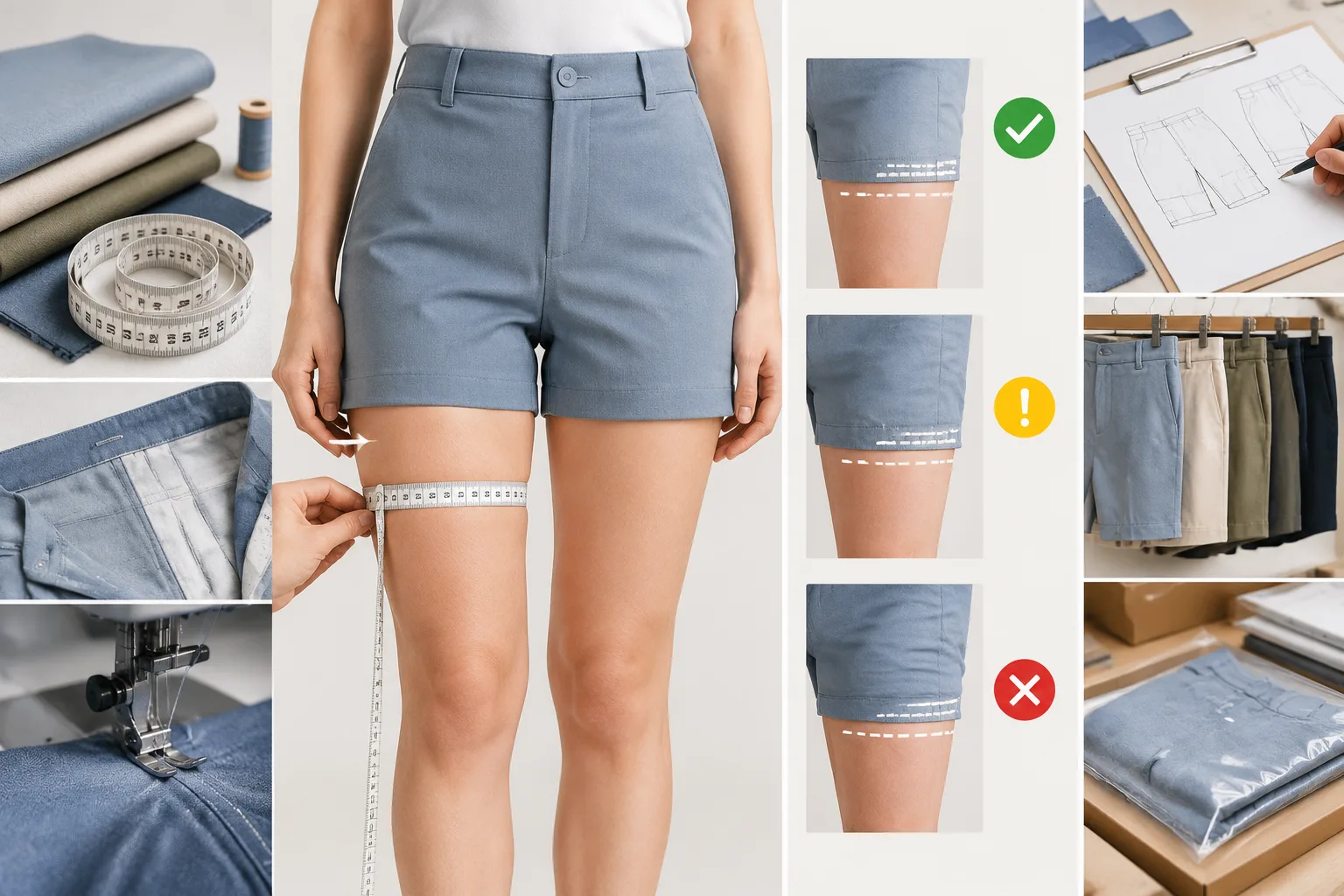
In apparel, “thigh measurement” can describe different things. A body thigh circumference is taken around a person at a defined body location. A garment thigh measurement describes the corresponding area of pants, shorts, leggings, or another lower-body garment. A flat garment measurement is taken across one side of the leg while the item is laid out. It may be used as a production measurement, but it should not automatically be treated as a body circumference or doubled without confirming the construction and measurement instructions.
A tolerance describes an allowed measurement variation around a specified or reference result. It is not the same as wearing ease. Ease is the designed difference between a body measurement and a garment measurement for a particular fit intention. Tolerance concerns variation from an approved measurement or target. Neither tolerance nor ease, by itself, proves comfort, mobility, appearance, or overall fit quality.
Before comparing a garment thigh measurement, confirm the approved point and direction, whether the result is measured flat or around the garment, the unit used, and the condition of the item. Fabric may be relaxed, stretched, pressed, folded, washed, or affected by finishing. The seam, waistband, rise, and other reference alignments can also affect where the measurement is taken. A result without these details is difficult to interpret or reproduce.
There is no universal acceptable thigh tolerance that applies to every product. A project specification, approved measurement chart, fit sample, design brief, or quality instruction establishes the relevant reference. Typical industry practice may inform how teams work, but it should not replace a validated product-specific requirement. For designers, pattern makers, developers, and quality teams, the practical question is whether the observed difference changes the intended fit and whether the measurement process itself was consistent.
Why Small Thigh Differences Can Change Fit
A smaller garment thigh measurement may reduce available room through the upper leg. Depending on the cut, fabric, and wearer, that can contribute to restriction, drag lines, seam pressure, difficulty sitting or bending, or a visibly altered leg shape. These are possible evaluation outcomes, not automatic conclusions. A close-fitting stretch garment and a structured woven trouser may respond very differently to the same dimensional difference.
A larger measurement may provide additional room, but it can also create a looser silhouette or excess fabric. The effect depends on how the thigh relates to the hip, rise, knee, inseam, and leg opening. Increasing room at the thigh alone may change the proportion of the leg or create a transition that does not match the intended design. A result that appears generous in a standing view may behave differently while walking or sitting.
Fabric stretch and recovery, lining, thickness, seam placement, and cut all influence how a measurement is experienced. A rigid fabric may make limited room more noticeable during movement, while a stretch fabric may accommodate some dimensional difference but still show altered recovery or appearance. The intended silhouette also matters: a fitted trouser, relaxed short, compression garment, and wide-leg style do not share the same fit expectation.
For that reason, pants thigh fit should be reviewed with both static and dynamic observations. Standing appearance can reveal asymmetry, pulling, or excess fabric, while walking, sitting, and bending can reveal restriction, shifting, or changes in coverage. A thigh result should be considered alongside related garment fit measurements rather than treated as an isolated pass-or-fail explanation.
How to Measure and Compare Thigh Tolerance Consistently
A repeatable comparison begins with the approved measurement instruction. Identify the thigh point, the measurement direction, and whether the product is evaluated on the body, flat on a surface, or through another defined method. The project’s measurement diagram should control the procedure. Apparel Wiki presents the following as a practical workflow, not as a universal method for every garment category.
- Identify the sample: Record the style, size, color or material version when relevant, sample stage, and side being measured.
- Prepare the garment: Note whether it is relaxed, stretched, pressed, folded, washed, or affected by a temporary finish. Use the condition required by the approved instructions.
- Align the references: Establish the waistband, rise, seam, panel, or other alignment points specified for the product. Keep the measurement direction consistent.
- Record the result: Use the approved unit and preserve the measured value rather than silently converting or rounding it. Record left and right results separately when asymmetry matters.
- Compare like with like: Compare the observed result with the approved specification using the same point, method, condition, and unit. A signed difference can show whether the result is above or below the reference.
- Check repeatability: When the project requires it, measure additional samples or repeat the reading. This helps separate a recurring size-set pattern from a single reading or sample issue.
The comparison should distinguish measurement-process variation from a genuine product deviation. Possible explanations include an incorrect reference point, handling that stretched the fabric, pattern variation, grading differences, seam allowance, sewing distortion, or fabric behavior. A documented measurement diagram and method in the tech pack or quality instructions make later reviews more reliable. A single reading should not be treated as proof of a pattern, production, or fit problem without considering the evidence around it.
What Controls Thigh Measurement Variation?
Pattern geometry is one major control. The shape of the leg panels, the position of seams, the amount and distribution of seam allowance, and the relationship between thigh, hip, knee, and leg opening can all influence the measured result. Grading may also change how the measurement develops across sizes. If sewing pulls a seam, shifts a panel, or introduces distortion, the finished garment may differ from the intended pattern measurement.
Material behavior adds another layer. Stretch, recovery, thickness, fabric construction, grain direction, relaxation, and finishing can affect both the measured dimension and the way the garment behaves on a wearer. These effects are product-dependent. A measurement taken before the material has relaxed may not represent the same condition as one taken after finishing or washing.
Washing and other finishing processes can introduce dimensional change or twisting, and use may alter how the garment hangs or recovers. When these stages matter to the product, the team should compare the agreed measurements and appearance under the relevant conditions. A result can be correct against the written specification and still produce poor fit if the specification, pattern, fabric, or movement expectation is mismatched.
Corrective action should therefore begin as a hypothesis. A thigh issue may point to a local pattern adjustment, a grading review, a construction problem, a material investigation, or a broader relationship involving the hip, rise, knee, inseam, or leg opening. The next sample or fit review should test the suspected cause. This separates a dimensional nonconformance from a design decision that needs revision.
How to Decide Whether a Thigh Result Requires Action
A thigh result should not be accepted or rejected from a number alone. First confirm the approved measurement point, measurement direction, unit, garment size, sample identity, and garment condition. Check whether the item was measured flat, on a body form, or by another approved method, and make sure the observed result is being compared with a specification created for the same method.
Next, compare the measurement with the product evidence. A result may fall within the project tolerance while the garment shows restriction, excess fabric, twisting, or an unintended change in silhouette. The reverse is also possible: a dimensional difference may be recorded, yet the approved fit review may show that the garment performs as intended. The product brief, fit comments, sample history, and movement observations should therefore be read together.
Classify the pattern before choosing a correction. An isolated difference may call for remeasurement or sample investigation. A repeated difference across a size set may indicate grading or specification issues. A change after finishing may point toward fabric behavior or dimensional change, while one-sided distortion may suggest construction or handling problems. If the thigh looks acceptable but movement is restricted, the issue may be a mismatch between the specification and the intended use rather than a simple production error.
- Accept: the measurement and fit evidence agree with the approved product decision.
- Remeasure: the method, condition, reference point, or sample identity is uncertain.
- Investigate: the result is repeated, asymmetric, or inconsistent with the sample history.
- Revise or adjust: pattern geometry, grading, construction, material, or finishing is supported as a likely cause.
- Conduct another fit review: the evidence does not yet distinguish a measurement issue from a design decision.
This framework supports a reasoned apparel fit evaluation without creating a universal pass or fail threshold. Final acceptance should be documented by the relevant product, technical, and quality owners. Apparel Wiki provides independent educational information; it does not replace a brand’s approved specification, technical review, or production sign-off.
Static Fit, Movement, and Post-Wash Checks
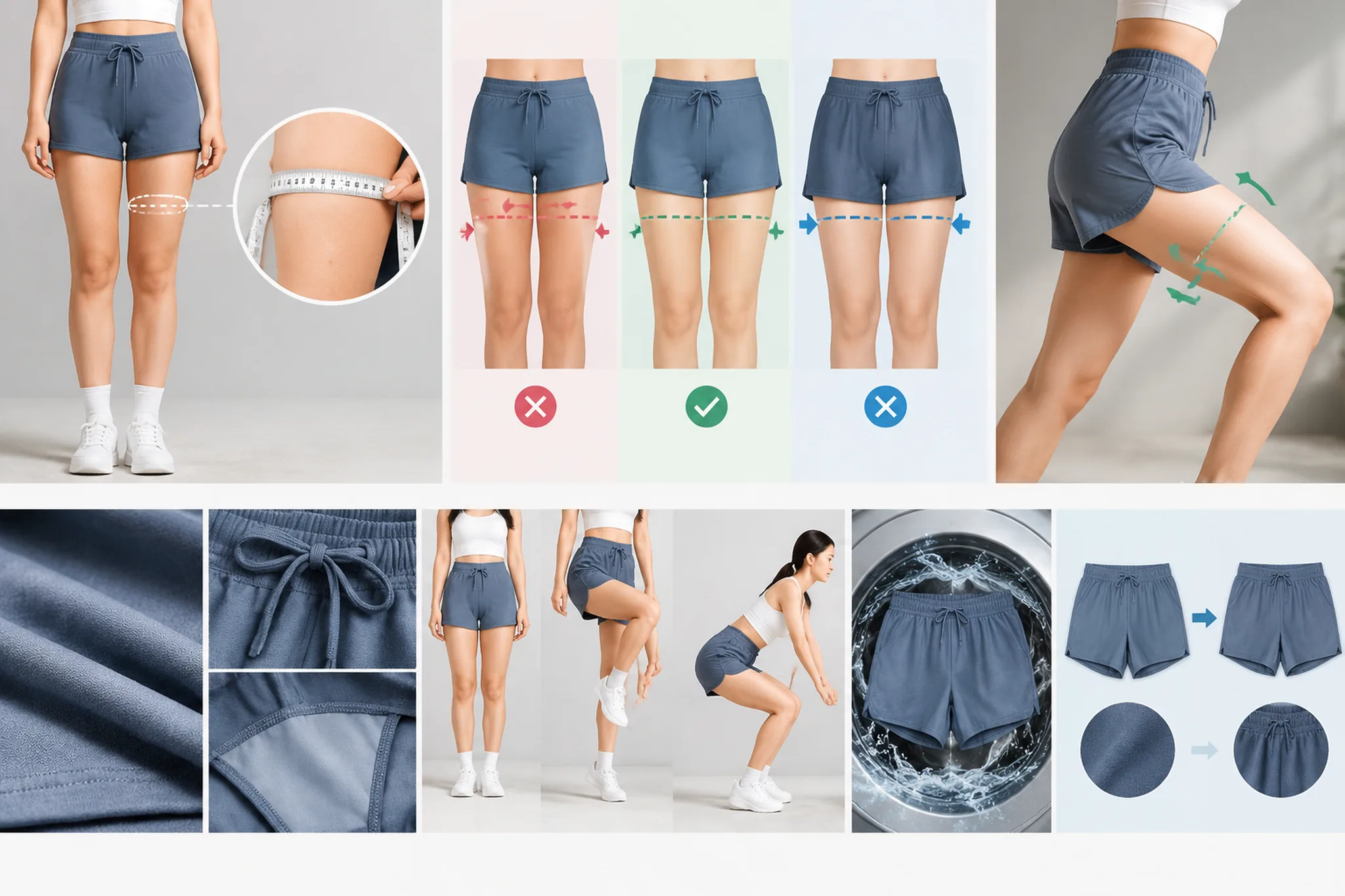
A flat thigh measurement is useful, but it describes only one condition. Review the garment while standing and, where relevant to the product, while walking, sitting, bending, or performing another intended movement. Observe restriction, drag lines, seam pressure, shifting, exposed areas, excess fabric, and changes in coverage. None of these signs proves a particular cause by itself, so they should be recorded alongside the measurement and wearer feedback.
Static and dynamic observations can point in different directions. A trouser may appear balanced while standing but pull across the thigh when the wearer sits. Another garment may show extra room in a relaxed pose but distribute that fabric acceptably during movement. The intended silhouette, rise, hip shape, knee, leg opening, lining, and construction all influence how a thigh difference is perceived.
Stretch and recovery also need to match the evaluation condition. A fabric may provide temporary additional room during wear and then return toward its previous shape, or it may respond differently after finishing. The review should identify whether the garment was relaxed, stretched, pressed, washed, or otherwise treated before assessment. Keep visual observations, wearer comments, measurement results, and formal test findings as separate records rather than combining them into one unsupported conclusion.
When post-wash fit matters, compare the agreed key measurements and appearance before and after the specified care process. Include the thigh and any related points that could change the interpretation, such as the hip, rise, knee, or leg opening. A single fitting or one wash cycle cannot establish complete product-life performance, but a controlled comparison can reveal whether finishing or care changes the original fit decision.
Limits of Thigh Tolerance as a Fit Metric
Thigh measurement tolerance is a useful control for dimensional consistency, but it cannot prove comfort, mobility, visual approval, durability, or suitability for every body shape on its own. A tolerance comparison describes a relationship between a reference and an observed measurement. It does not automatically describe how a person will experience the garment in every posture or activity.
A garment thigh measurement also cannot be converted directly into an applicable body measurement. Design ease, fabric behavior, seam placement, construction, and the relationship between adjacent measurements all affect the result. Similarly, one approved sample may not represent the full size range, production variation, post-wash behavior, or changes that occur during use.
The practical next step is to confirm the measurement specification and diagram, review the pattern and grading, inspect fabric and finishing behavior, and conduct an agreed fit or movement review. Record the evidence and the final decision in the product documentation. Apparel Wiki’s Apparel Manufacturing Tools can support related technical learning, but the actual acceptance decision belongs to the product team and its validated project records.
What does thigh measurement tolerance mean in apparel?
It is the permitted difference between a specified or reference thigh measurement and an observed measurement. The result must identify whether the subject is a body, garment, or flat measurement and how it was taken.
Is thigh measurement tolerance the same as wearing ease?
No. Tolerance describes allowed measurement variation. Wearing ease is the additional room designed into a garment for the intended fit, movement, and silhouette.
How should the thigh of pants or shorts be measured?
Use the product’s approved measurement point and method. Record the size, side, reference alignment, unit, garment condition, and whether the item was measured flat or in another specified position.
Why can a garment be within thigh tolerance but still fit poorly?
Fit also depends on the hip, rise, knee, leg opening, fabric stretch, construction, body shape, and movement. A compliant measurement cannot prove that the complete design suits its intended use.
What should be checked when the thigh measurement is outside specification?
Remeasure first, then check the sample identity, method, condition, symmetry, pattern, grading, construction, fabric, and finishing history. Compare the result with visual and movement evidence before selecting corrective action.
Does fabric stretch change how thigh tolerance should be evaluated?
Yes. Stretch and recovery can change both the measured dimension and the wearing experience. Evaluate the intended fabric in the agreed condition and document how it was prepared and assessed.